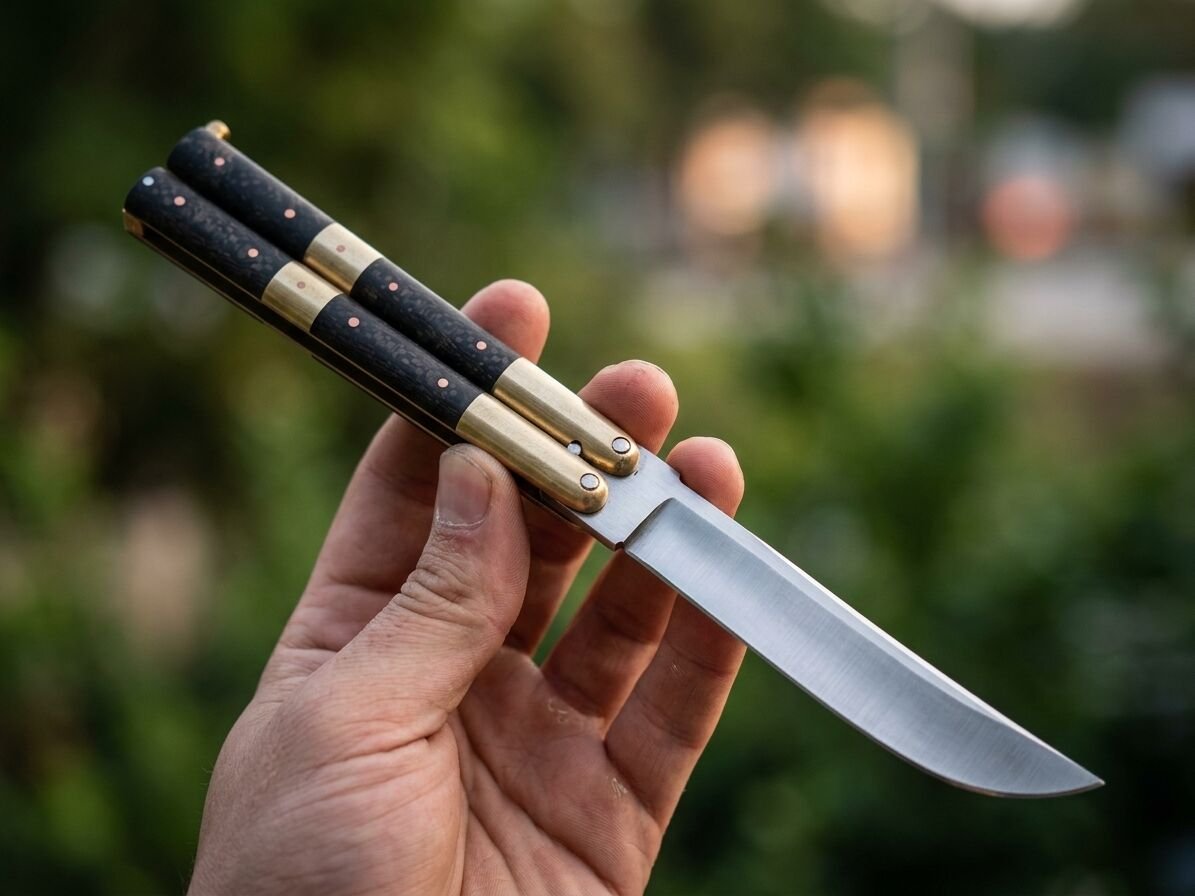
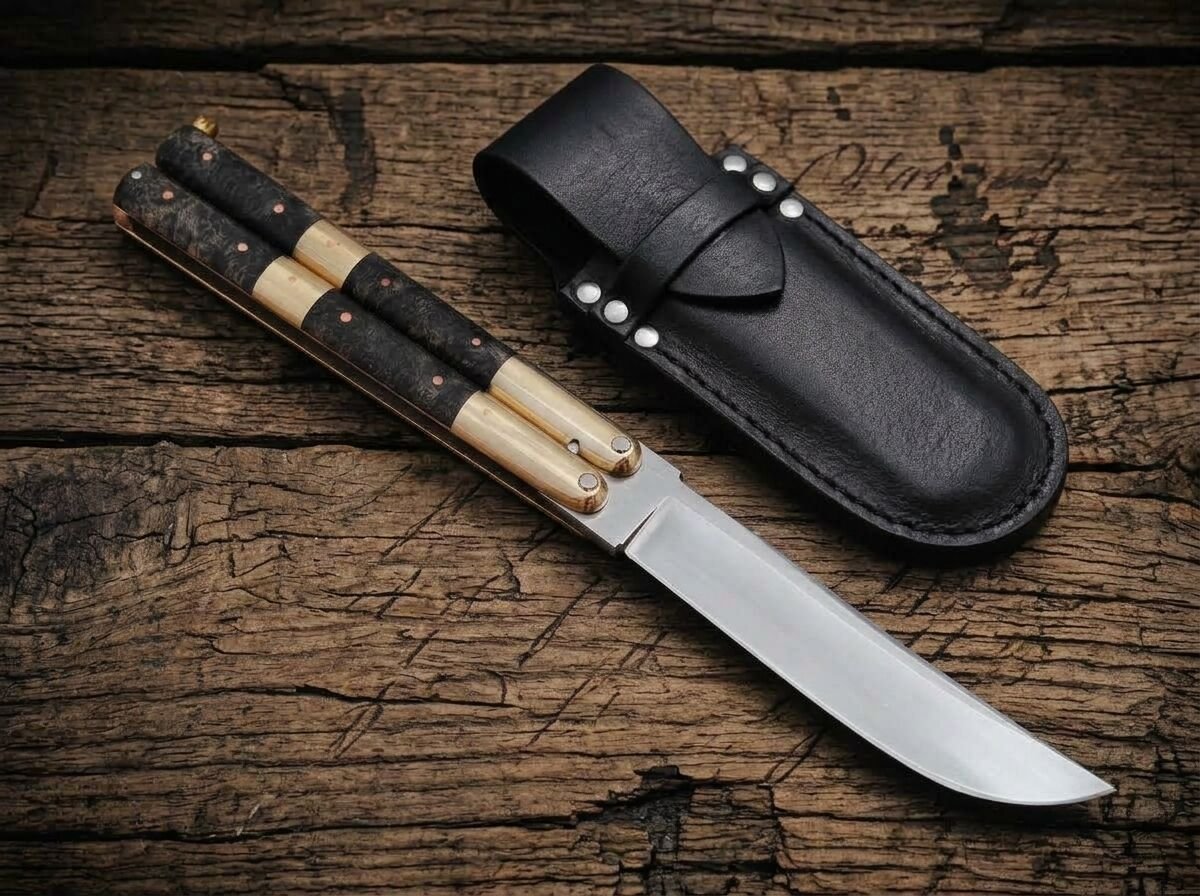
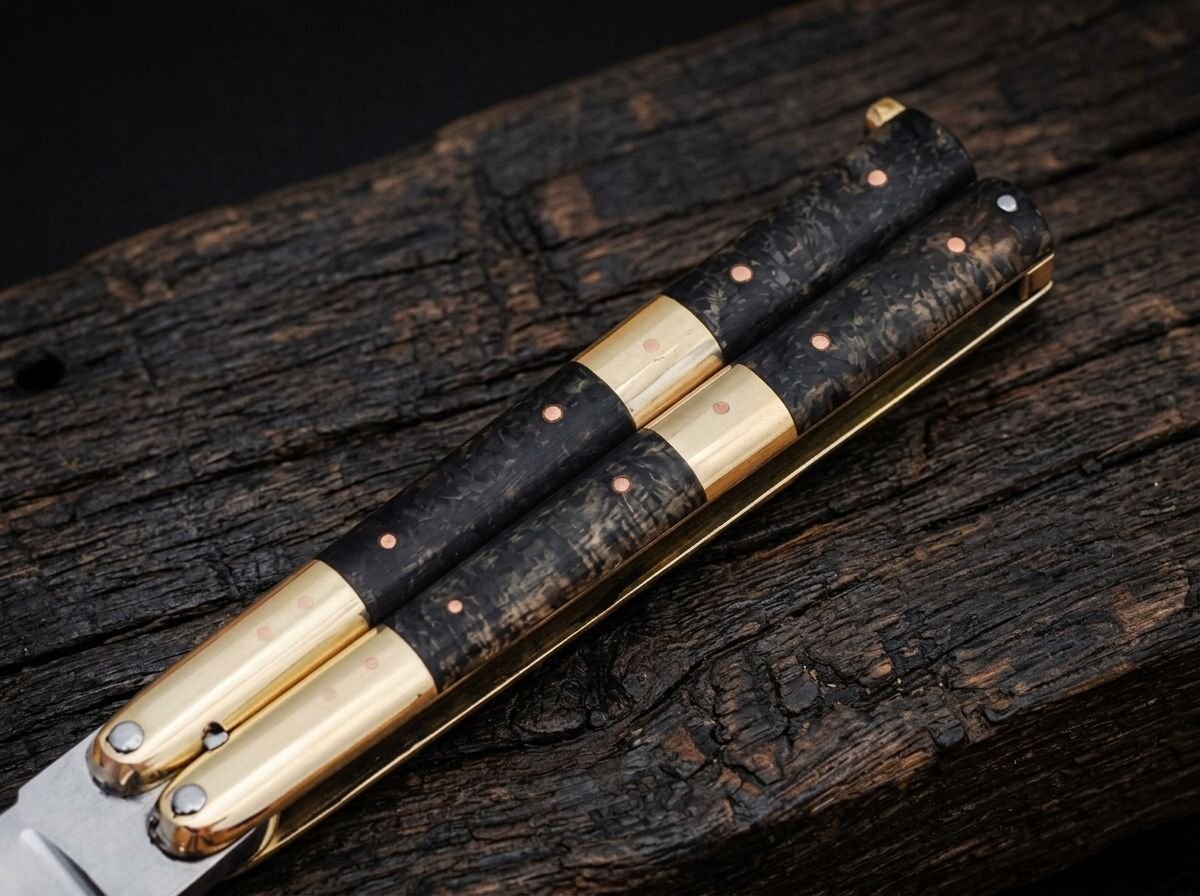
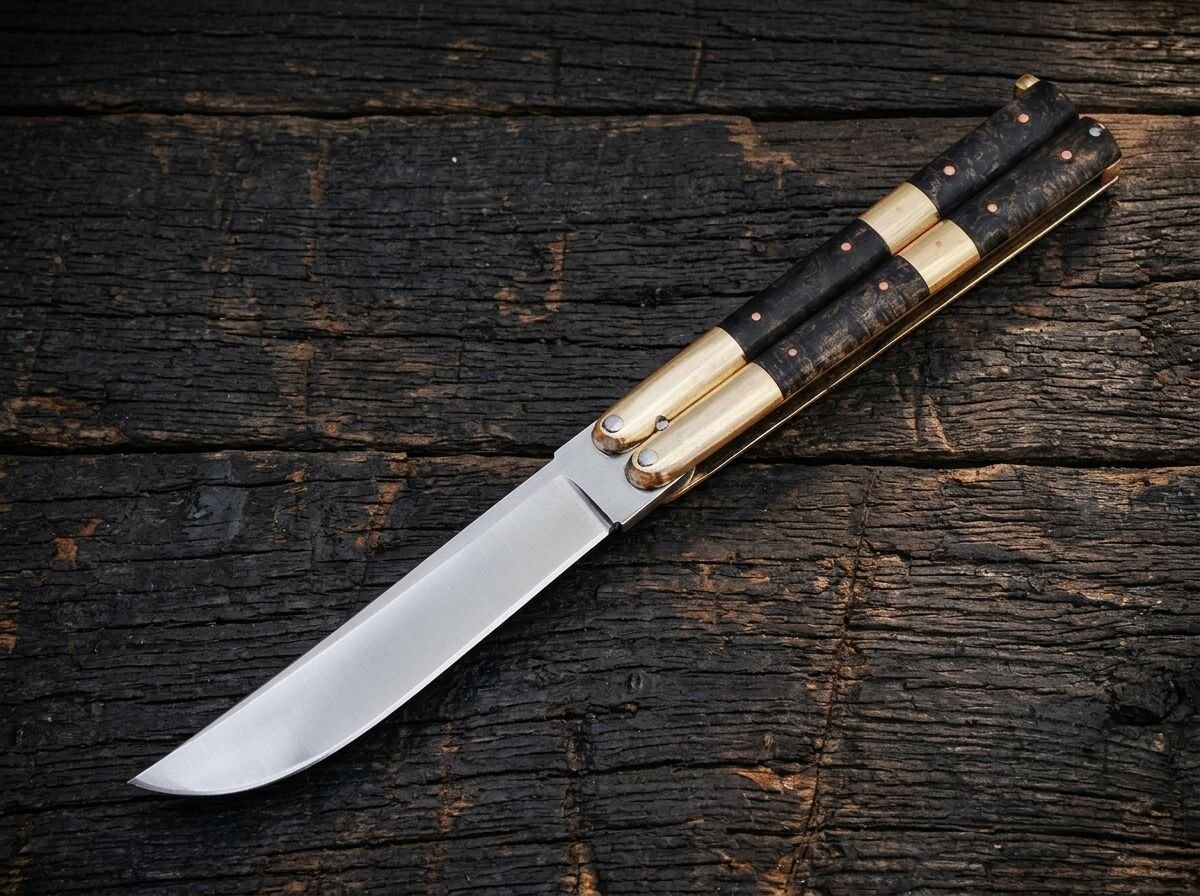
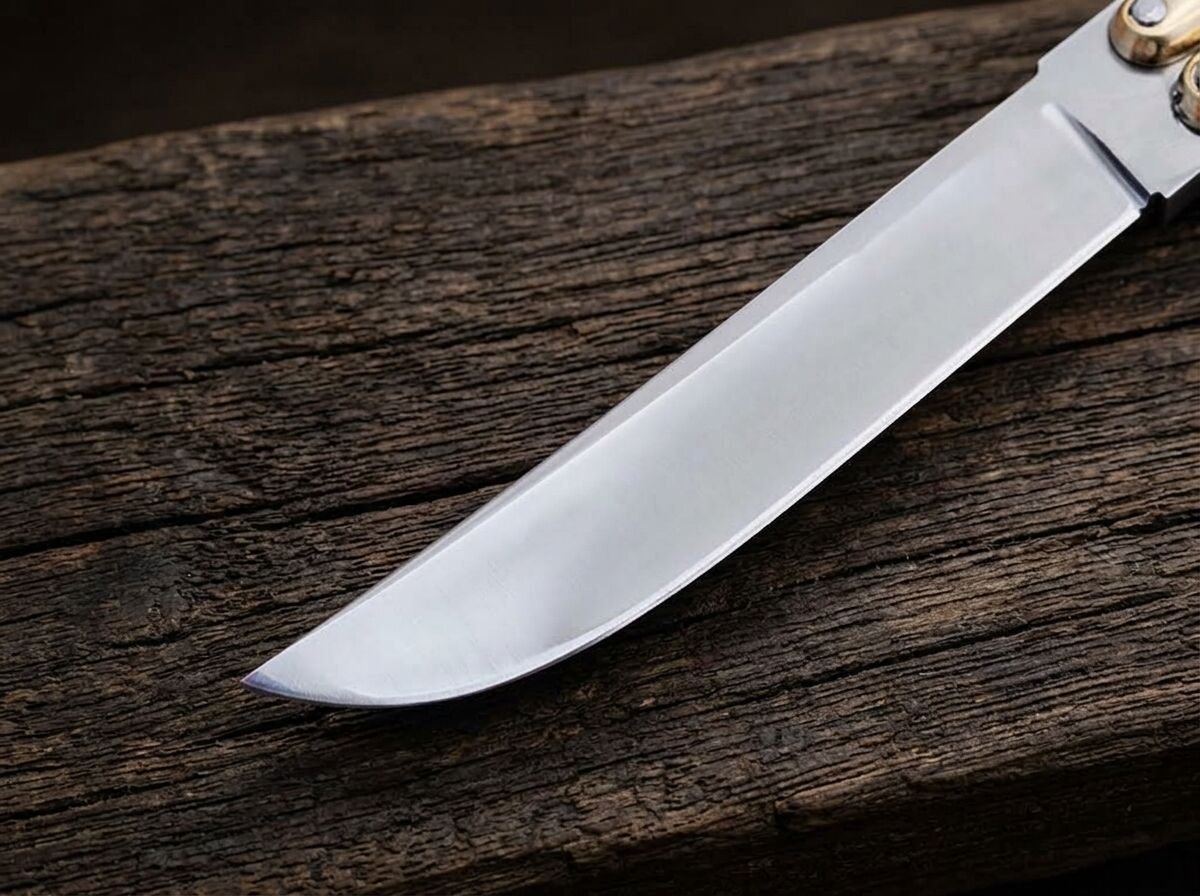
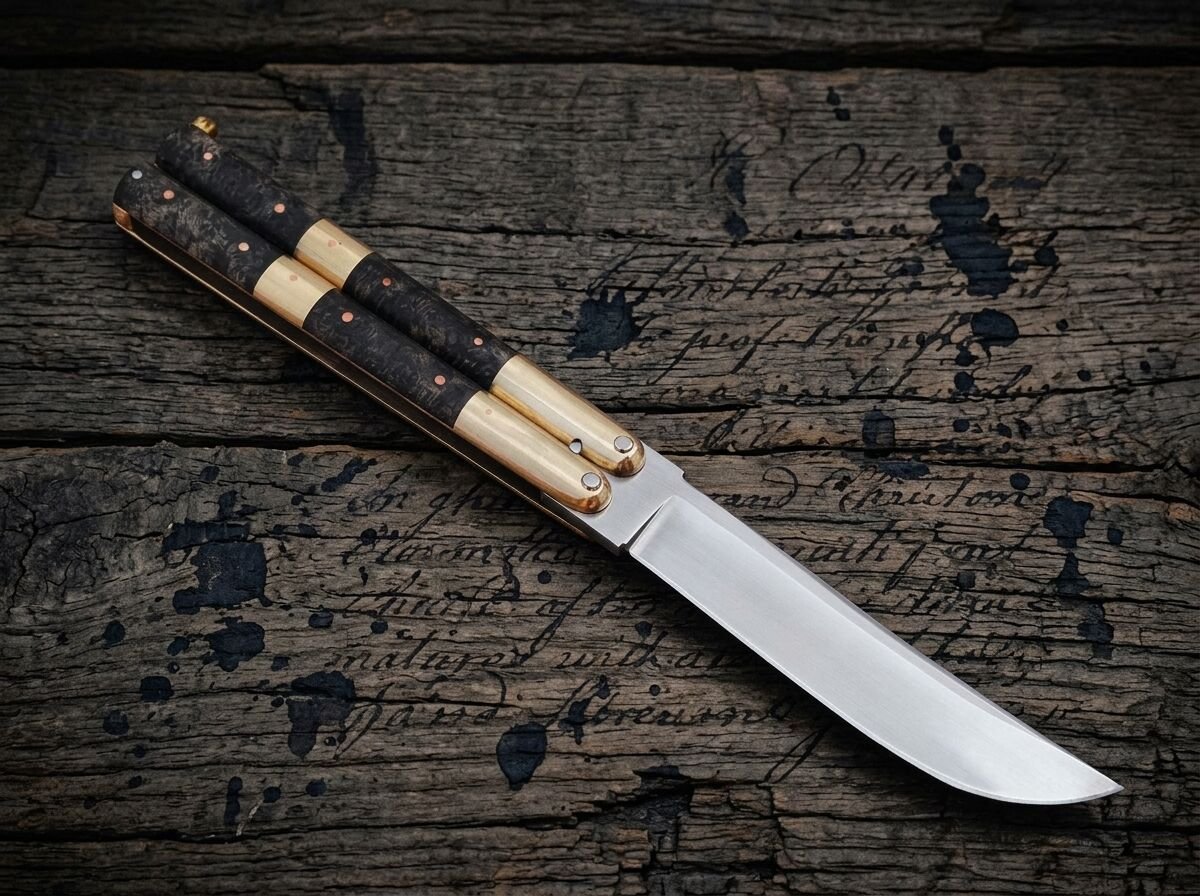
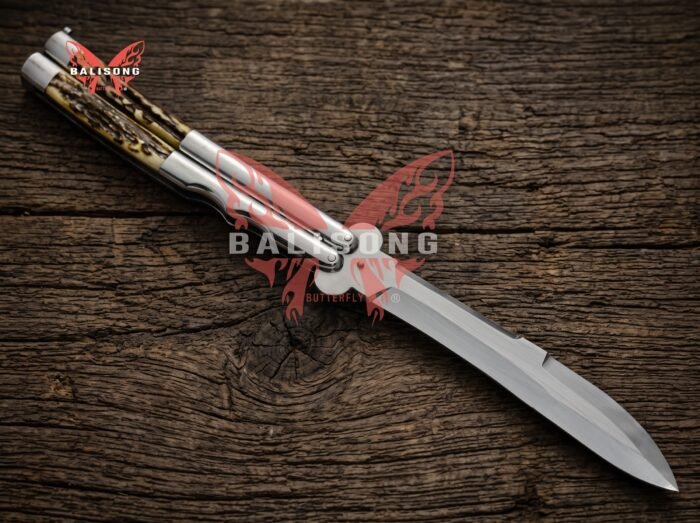
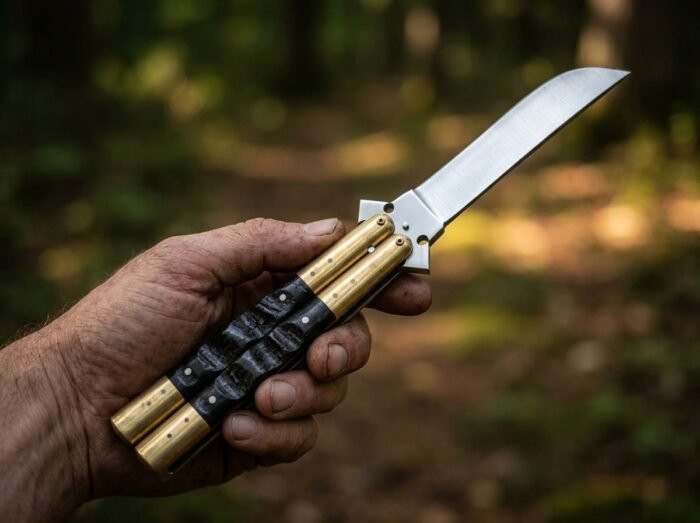
The plain Batangas outline with nothing added, in D2 tool steel, where rose wood against brass keeps it warm rather than showy. 24cm open, 12cm blade, 220g. The blade is a straightforward traditional profile, so let us talk about the handle, because on this knife the handle is the interesting half.
Why rose wood ended up on balisong handles
Not because somebody decided it looked expensive. Rose wood is dense, oily and dimensionally stubborn, and those three properties are exactly what a handle needs.
Dense means it resists denting when you drop it, which you will. Oily means it carries its own moisture resistance rather than depending on a finish that wears off. Dimensionally stubborn means it does not swell in humidity and shrink in a dry room, which matters enormously on a balisong where the handle has to keep its relationship with a brass bolster and a pivot pin through every season.
A handle material that moves is a handle material that eventually rattles. Rose wood mostly does not move.
What it will look like in ten years
Different, and better, and there is nothing you need to do to make that happen.
| Roughly |
What you will see |
| Out of the box |
Lighter than you expected. Grain crisp, surface slightly matte |
| First few months |
Colour deepens noticeably. Contrast between grain lines softens |
| A year or two |
A low sheen appears where your fingers sit, from handling alone |
| Five years and beyond |
Dark, even, faintly glossy. The brass has gone warm brown alongside it |
People occasionally write to us worried that their knife has darkened. It has. That is the point. A rose wood handle that looks identical after five years is one that has been sitting in a box, which is a sad fate for a knife.
Four ways to ruin it
- Oiling it constantly. Rose wood has its own oil. Flooding it with more leaves a tacky surface that attracts everything in your pocket. Twice a year is generous.
- Soaking the knife. Water will not destroy the wood quickly, but it will sit in the pivot and around the pin, and that is where the damage happens.
- Solvent cleaners. Anything that strips oil strips the finish that took years to arrive.
- A radiator or a car dashboard. Sustained dry heat is the one thing that will actually crack it. Everything else on this list is cosmetic.
The knife care guide covers the pivot side, which is the part that genuinely needs attention.
Wood or horn on a butterfly knife
We build this pattern in both, at similar money, and it is worth knowing which you want before you order.
|
Rose wood (BF-109) |
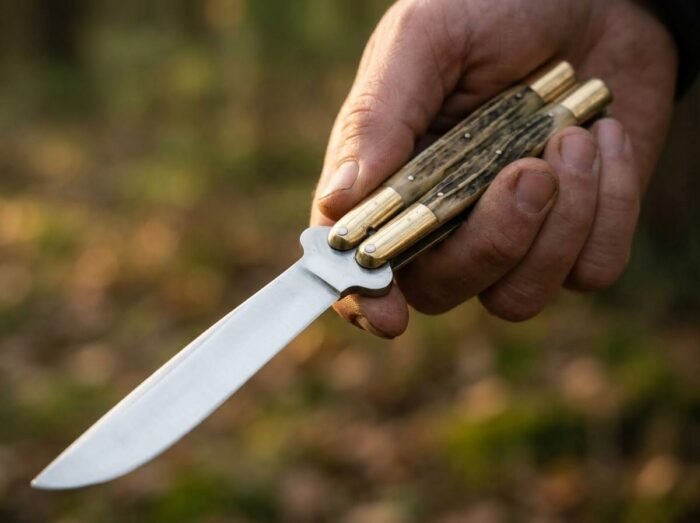
Stag horn |
| Surface |
Smooth, warms in the hand |
Textured, natural ridges |
| Grip when damp |
Adequate |
Better |
| Consistency between examples |
Varies within a family resemblance |
Varies wildly, no two alike |
| Ageing |
Darkens steadily |
Yellows and mellows |
If you want the knife you get to look like the knife in the photograph, rose wood is the safer choice. If you want the opposite, the BF-118 is the same pattern in stag horn.
The brass is not a random partner
Brass and rose wood have been paired on this pattern for a long time, and it is not only that somebody liked the colour. The two materials age toward each other. Brass oxidises warm and brown, rose wood darkens, and after a couple of years the bolster and the scale sit in the same tonal family instead of drifting apart the way a bright modern metal would.
There is a practical half as well. Brass is soft enough to be worked down flush against wood without chipping the grain at the join, so the transition can be finished until your thumb cannot find it. A harder bolster material tends to leave a step, and a step is where dirt collects and where a handle starts to feel cheap.
Specification for this D2 rosewood balisong
- Blade: D2 tool steel
- Hardness: 58-60 HRC
- Handle: brass with rose wood
- Overall length: 24cm open
- Blade length: 12cm
- Weight: 220g
- And the same as an unsharpened trainer
Everything above about the handle is a story of a material changing. The blade is the half that does not. Steel held at 58-60 HRC does not soften with handling or with years, so while the wood is quietly going darker the bevel is doing nothing whatsoever, which is the entire job description.
The trainer option is above Add to Cart. It is this knife with the bevels left blunt, identical in every other respect, and it costs the same because it takes the same work to build. More in the trainer guide.
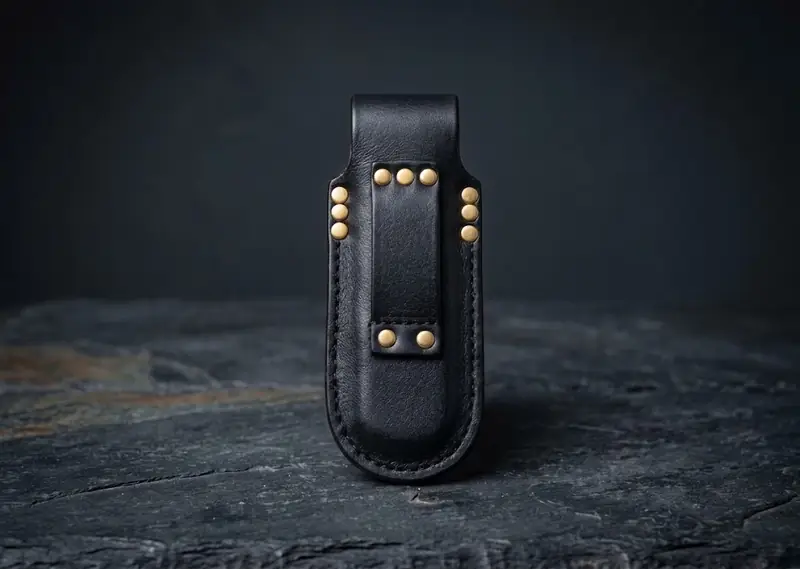
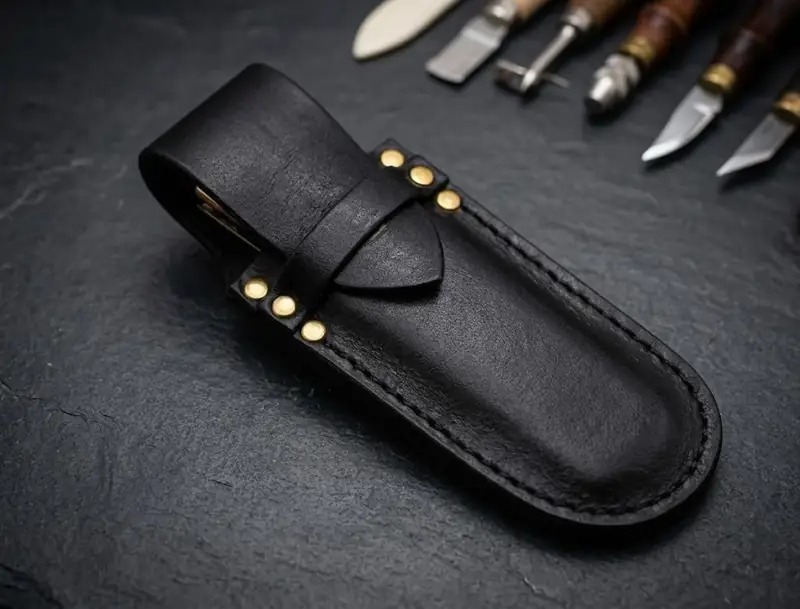
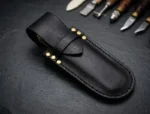
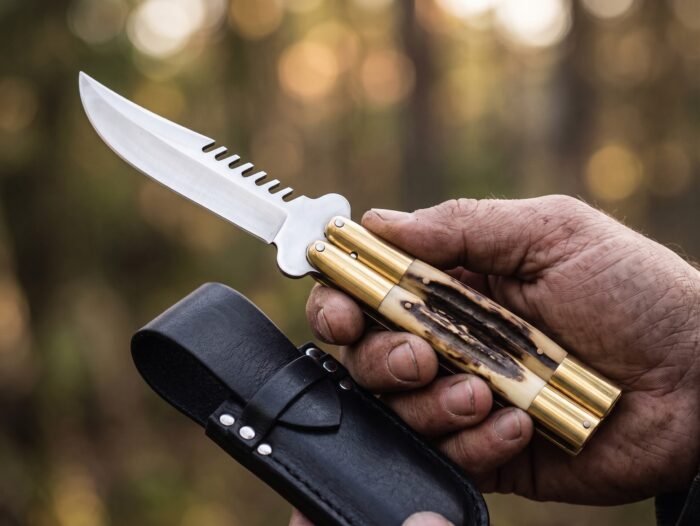
Fitted leather sheath included. Free shipping inside the US, flat $49 everywhere else.




Matthew Wright –
Been eyeing this design for months and it did not disappoint. Handle scales feel great in hand even during longer flip sessions. Weight is perfectly balanced for flipping. This is my new favorite in the collection.
Jennifer Rogers –
Not going to lie. This exceeded my expectations by a lot. Handles have a great grip even during fast flips. Love that this comes from real Filipino balisong tradition but still ships worldwide this quickly. Shipping was fast and everything arrived well packaged. Balisong Butterfly’s attention to detail is honestly unmatched.
Adam Ortiz –
Feels way more premium than the price suggests. Comes with a nice pouch which is a nice touch. Balisong Butterfly keeps setting the bar higher with each order. Pivots feel dialed in with zero blade play. This flips cleaner than knives twice the price. Will definitely order again for another one.
Barbara Lee –
This balisong completely won me over the moment I flipped it. This flips cleaner than knives twice the price. Action is smooth right out of the box, no break in needed. Latch snaps shut clean every time. Can’t wait to see what else this store has to offer.