
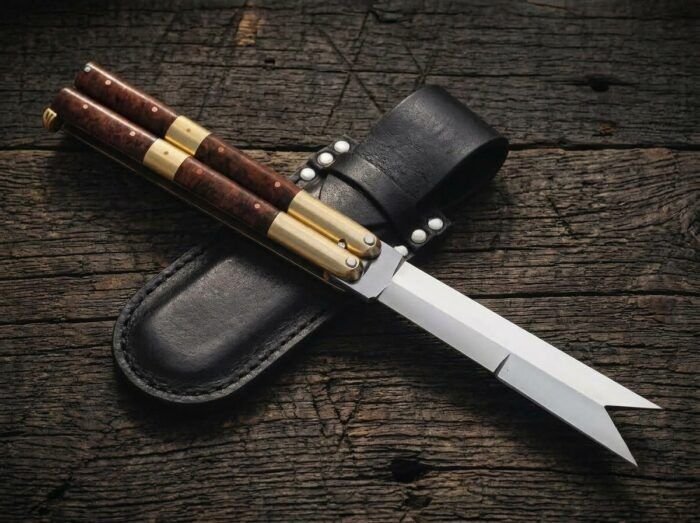
Amihan Filipino Traditional Series D2 Steel Beautiful Butterfly Balisong Knife USA Made With Rose Wood Handle BF-99
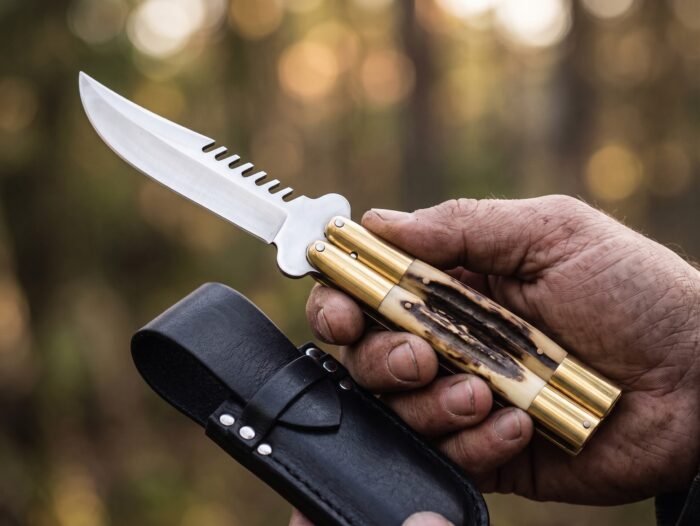
Antelope Handmade 440C Stainless Steel Original Filipino Balisong Butterfly Knife with Brass and Philippine Deer Horn Handle | 24cm EDC Flipper Gift for Him | BF-06
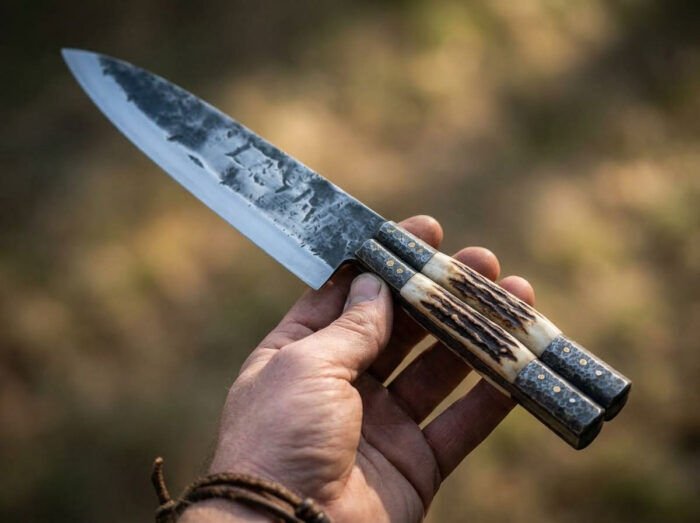
Apoy Handmade Balisong Kitchen Chef Knife | Forge Finished High Carbon Steel | Stag Handle with Leather Sheath BF-165
The black on this blade is not a coating. It is what the forge left behind, and we ground the edge bevel bright so you can see exactly where one ends and the other begins.
Blade Material – High Carbon Steel, forge finish with polished bevel
Handle Material – Stag with steel bolsters
Overall Length – 30.5 cm (12 in)
Blade Length – 18 cm (7 in)
Hardness – 58-60 HRC
Sheath – Fitted leather, included
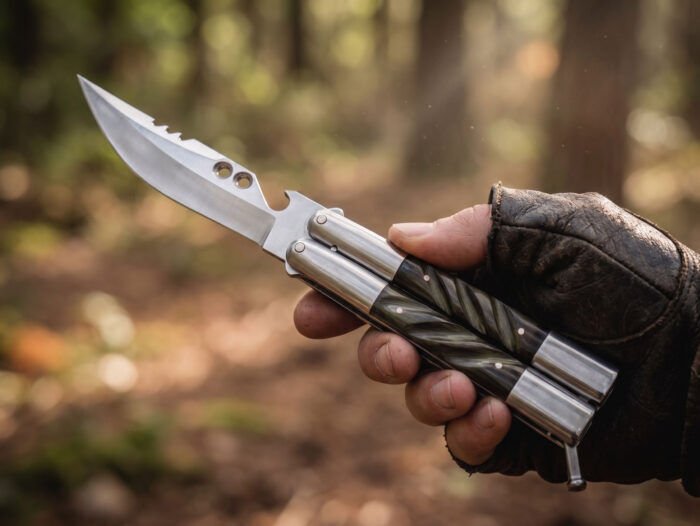
Argentine Ant Handmade 440C Stainless Steel Original Filipino Balisong Butterfly Knife with Stainless Steel and Carabao Horn Handle | 22cm EDC Flipper Gift for Him | BF-02
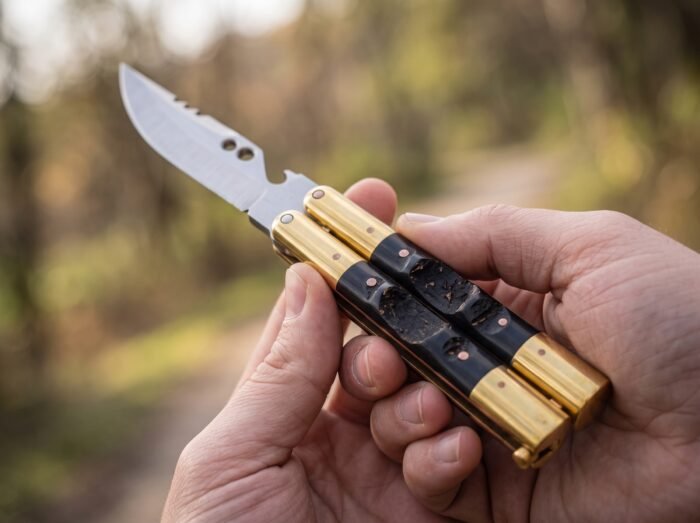
Asian Palm Civet Handmade 440C Stainless Steel Original Filipino Balisong Butterfly Knife with Brass and Carabao Horn Handle | 24cm Lightweight Flipper Gift | BF-08
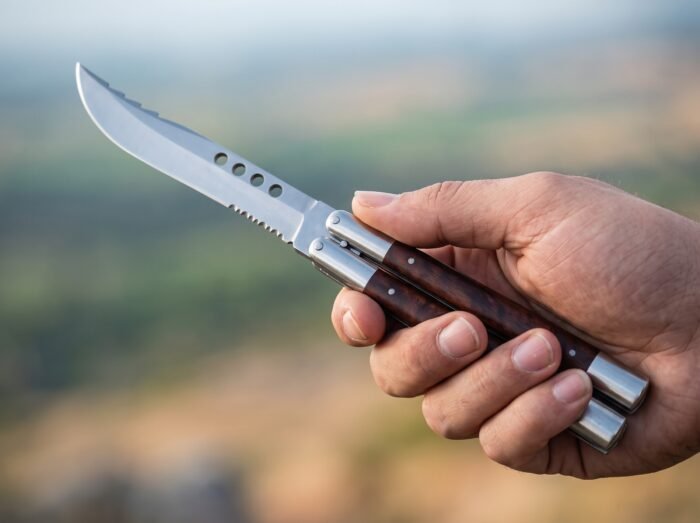
Aurochs Handmade 440C Stainless Steel Original Filipino Balisong Butterfly Knife with Stainless Steel and Kamagong Wood Handle | 24cm EDC Flipper Gift for Him | BF-09
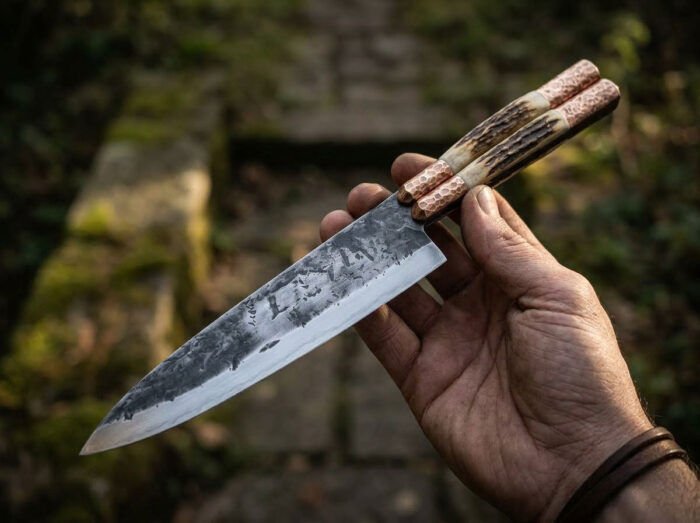
Baga Handmade Balisong Kitchen Chef Knife | Forge Finished High Carbon Steel | Stag Handle with Copper Bolsters and Leather Sheath BF-172
Same forged blade as the BF-165, but the bolsters are copper, and copper is the one metal on a knife that is supposed to change colour.
Blade Material – High Carbon Steel, forge finish with polished bevel
Handle Material – Stag with copper bolsters
Overall Length – 30.5 cm (12 in)
Blade Length – 18 cm (7 in)
Hardness – 58-60 HRC
Sheath – Fitted leather, included
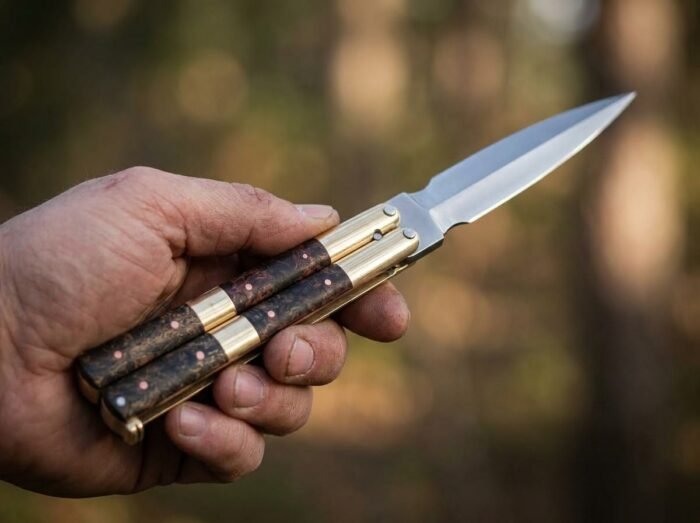
Bagani Filipino Traditional D2 Steel Beautiful Dagger Blade Butterfly Balisong Knife USA Made Gift For Him With Rose Wood Handle BF-111
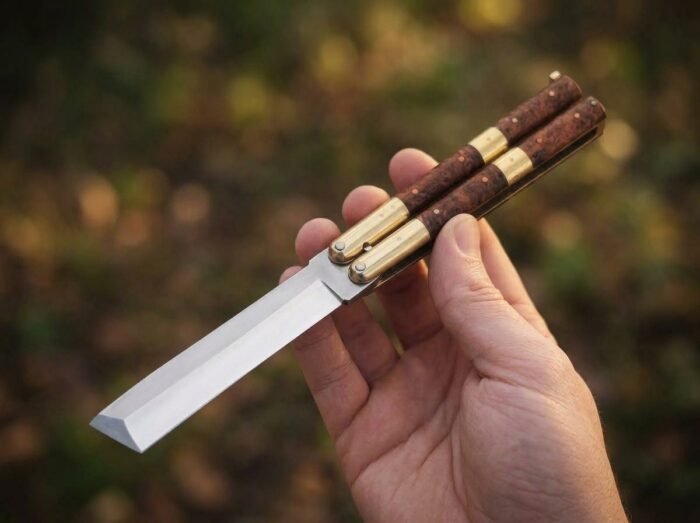
Bagwis Filipino Traditional Series D2 Steel Beautiful Tanto Blade Butterfly Balisong Knife USA Made With Rose Wood Handle BF-100
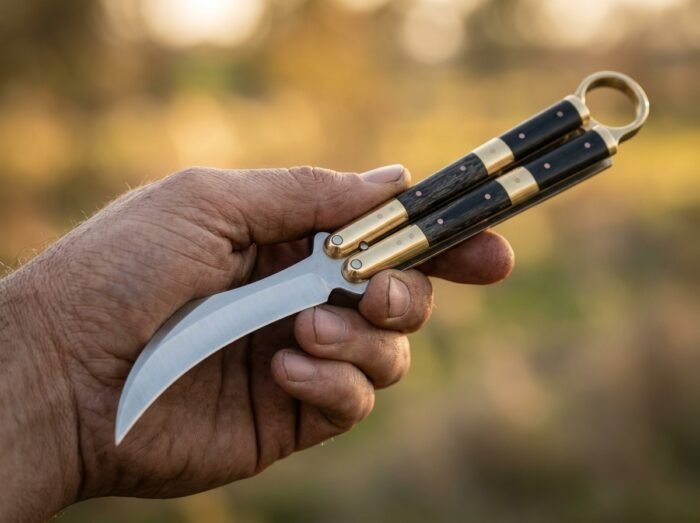
Bagyo Handmade Karambit Balisong Butterfly Knife | Satin Polished High Carbon Steel | Buffalo Horn and Bone Handle with Brass Frame and Leather Sheath BF-181
Black horn and pale bone alternating down a brass channel, with a brass ring at the butt. This is the oldest way of building a balisong handle, put on the newest shape in the range.
Blade Material – High Carbon Steel, satin polished
Handle Material – Buffalo Horn with bone spacers in a brass frame, brass finger ring
Overall Length – 24 cm
Blade Length – 12 cm
Hardness – 58-60 HRC
Sheath – Fitted leather, included
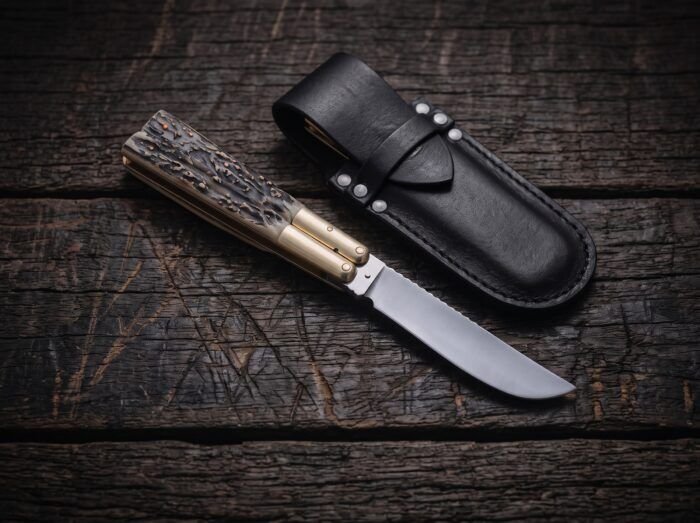
Balete Philippine Visayan D2 Steel Blade Butterfly Balisong Knife USA Made Gift For Him With Stag Horn Handle BF-122
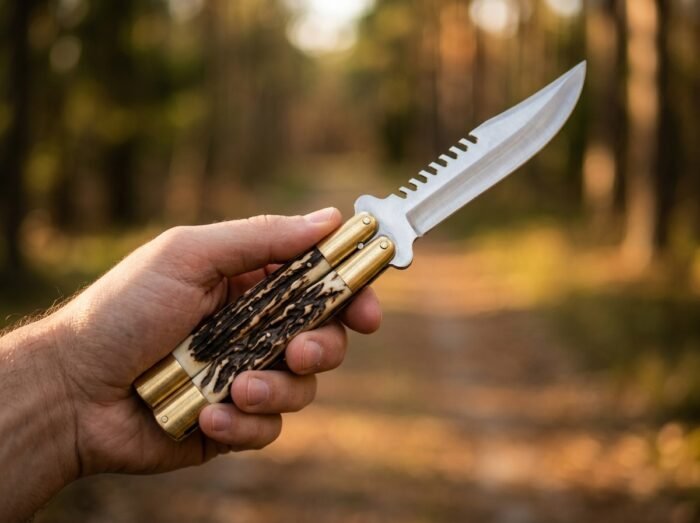
Banded Sugar Ant Handmade 440C Stainless Steel Original Filipino Balisong Butterfly Knife with Brass and Philippine Deer Horn Handle | 29cm Full Size Collector Gift | BF-04
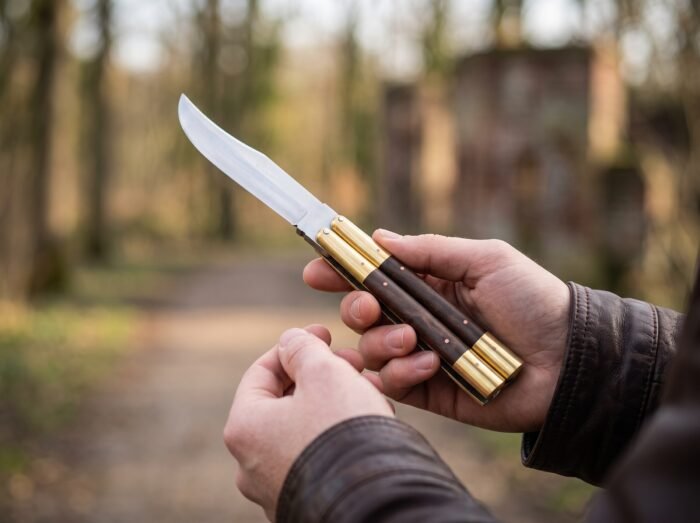
Barb Handmade 440C Stainless Steel Original Filipino Balisong Butterfly Knife with Brass and Kamagong Wood Handle | 24cm EDC Flipper Gift for Him | BF-10
Barn Owl Handmade 440C Stainless Steel Original Filipino Balisong Butterfly Knife with Brass and Kamagong Wood Handle | 24cm Lightweight Flipper Gift | BF-11
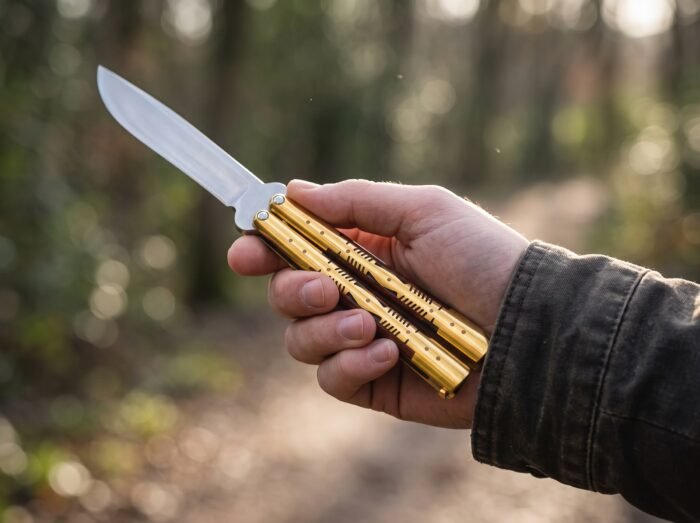
Bear Handmade 440C Stainless Steel Original Filipino Balisong Butterfly Knife with Brass and Kamagong Wood Handle | 24cm EDC Flipper Gift for Him | BF-13
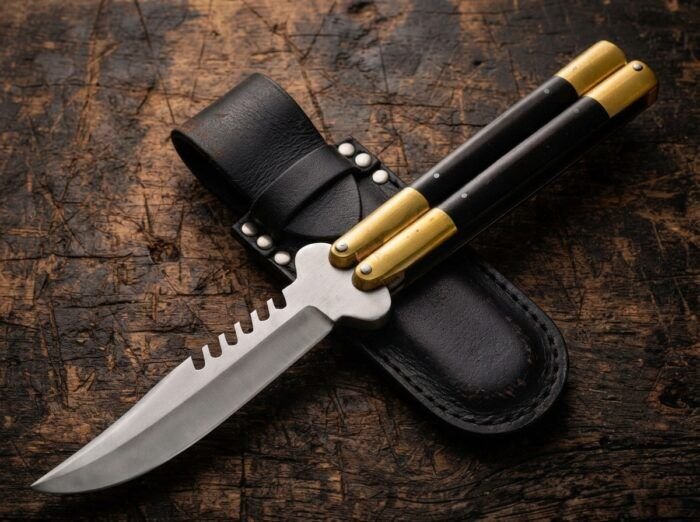
Beetle Handmade 440C Stainless Steel Original Filipino Balisong Butterfly Knife with Brass and Kamagong Wood Handle | 24cm EDC Flipper Gift for Him | BF-14
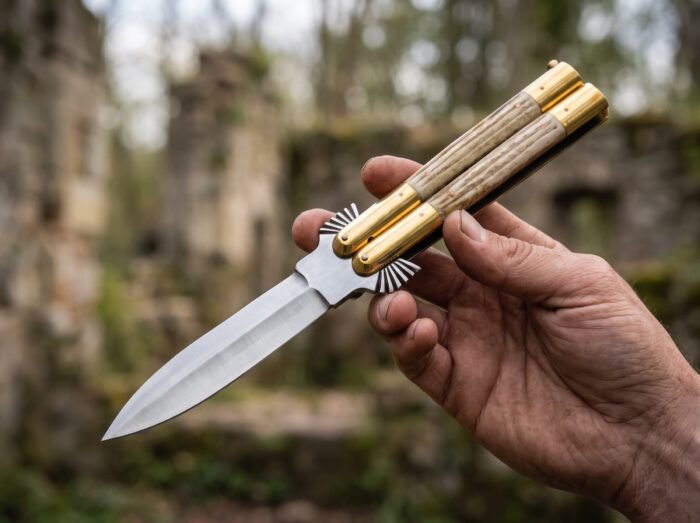
Bird Handmade 440C Stainless Steel Original Filipino Balisong Butterfly Knife with Brass and Bone Handle | 24cm EDC Flipper Gift for Him | BF-16
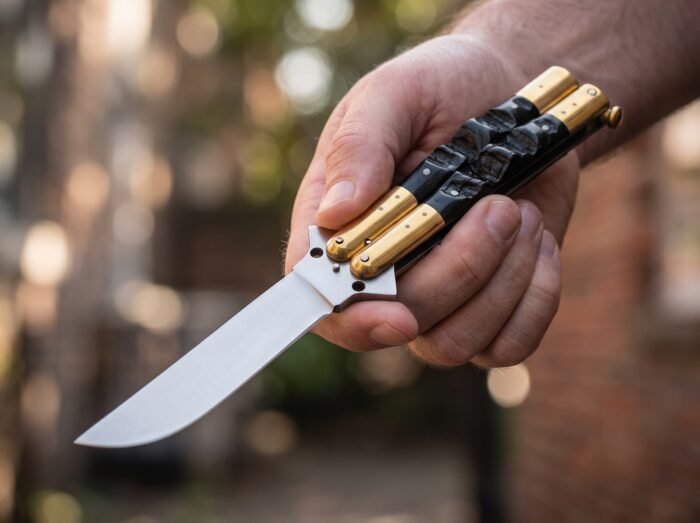
Black Widow Spider Handmade 440C Stainless Steel Original Filipino Balisong Butterfly Knife with Brass and Carabao Horn Handle | 24cm Lightweight Flipper Gift | BF-17
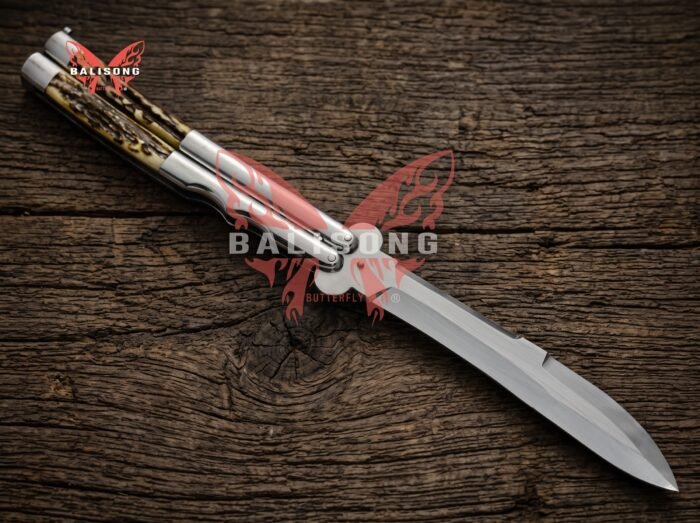
Bullet Ant Handmade 440C Stainless Steel Original Filipino Balisong Butterfly Knife with Stainless Steel and Philippine Deer Horn Handle | 29cm Full Size Collector Gift | BF-01
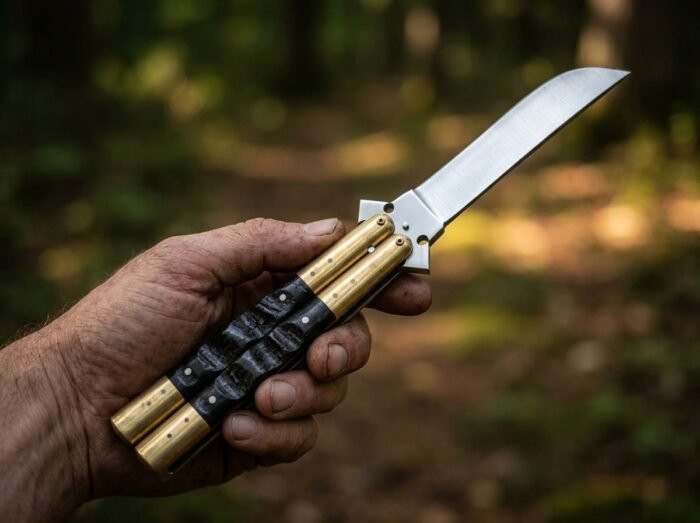
Bumblebee Handmade 440C Stainless Steel Original Filipino Balisong Butterfly Knife with Brass and Carabao Horn Handle | 24cm EDC Flipper Gift for Him | BF-18
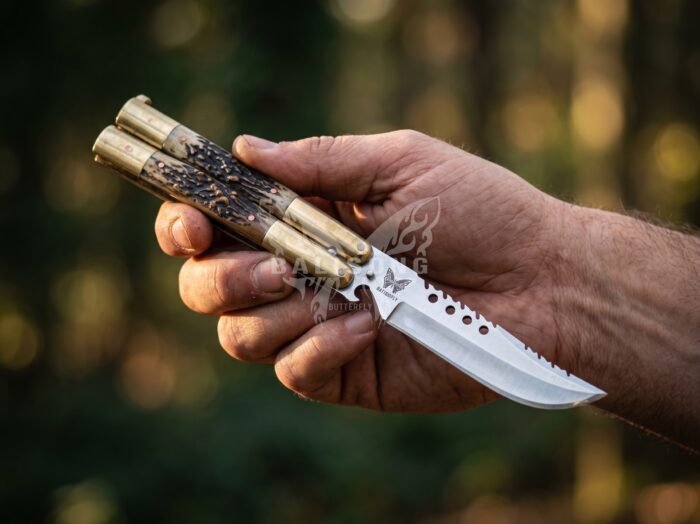
Bundok Philippine Visayan D2 Steel Blade Butterfly Balisong Knife USA Made Gift For Him With Stag Horn Handle BF-121
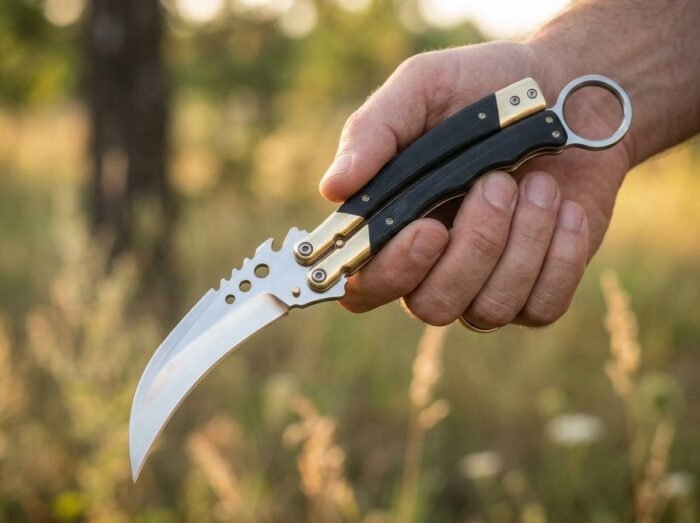
Buwan Handmade Karambit Balisong Butterfly Knife | High Polished Blade | Buffalo Horn Handle with Brass Bolsters and Leather Sheath BF-173
Black horn, brass bolsters, mirror polished blade and a steel ring. The most traditional set of materials we put on the least traditional shape in the range.
Blade Material – High Carbon Steel, high polished
Handle Material – Buffalo Horn with brass bolsters, finger ring
Overall Length – 24 cm
Blade Length – 12 cm
Hardness – 58-60 HRC
Sheath – Fitted leather, included
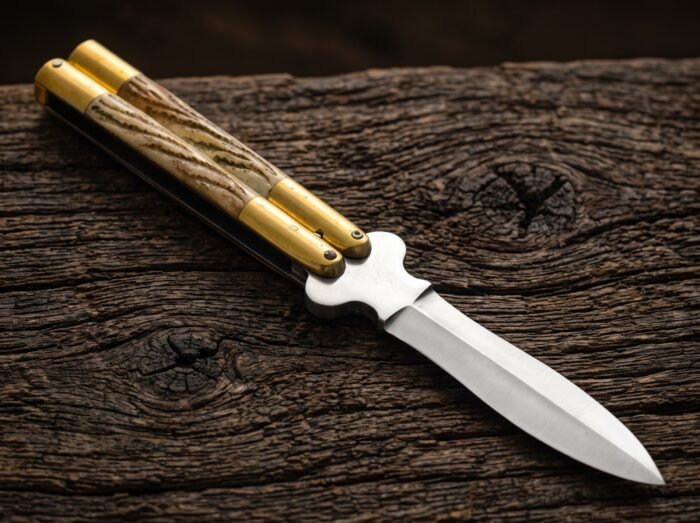
Cat Handmade 440C Stainless Steel Original Filipino Balisong Butterfly Knife with Brass and Bone Handle | 24cm EDC Flipper Gift for Him | BF-19
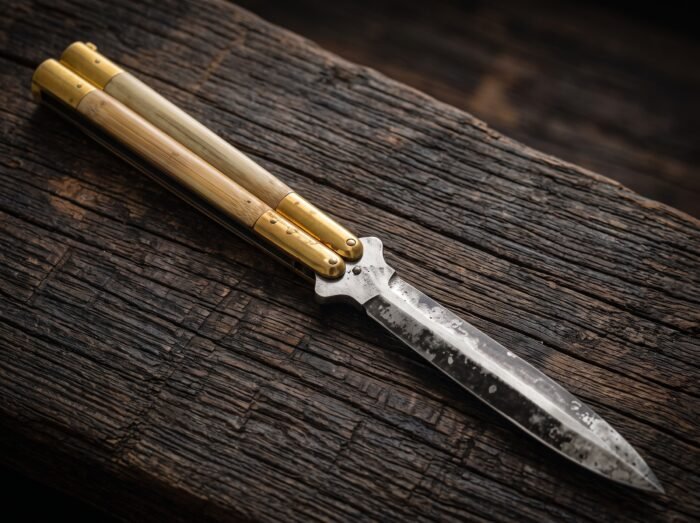
Caterpillar Handmade 440C Stainless Steel Original Filipino Balisong Butterfly Knife with Brass and Bone Handle | 29cm Full Size Collector Gift | BF-20
High Carbon Balisongs: The Traditional Choice
This is the largest shelf on the site. 89 high carbon balisong butterfly knives, from $110.00 to $247.50, with the median knife at $140.80. High carbon is the steel the Batangas smiths worked in long before stainless existed, and it is still what a lot of serious flippers come back to.
The reason is simple. High carbon steel takes a keener edge than stainless and it takes that edge back faster. A carbon steel balisong that has gone dull will come back on a basic stone in a few minutes, where a stainless blade of the same hardness will fight you. If you actually use your knife, that matters more than the spec sheet suggests.
The Trade-off Nobody Should Hide From You
High carbon steel rusts. Not slowly, not conditionally. Leave it wet and it will spot within a day. The knives on this shelf need to be wiped dry and given a film of oil, and if you cannot commit to that, buy a VG10 or 440C stainless balisong instead and be happier for it.
What you get in exchange is a blade that develops a patina: a grey-blue oxide layer that forms with use and then protects the steel underneath. Collectors want it. It is the visual difference between a knife that has been carried and one that has sat in a drawer.
What Is on This Shelf
| Detail | |
|---|---|
| Knives available | 89 |
| Price range | $110.00 – $247.50 |
| Median price | $140.80 |
| Handle materials | Stag horn, rosewood, wenge, micarta, brass and steel bolsters |
| Blade shapes | Classic Batangas, tanto, dagger, shark, mini |
| Trainer option | Free on every knife |
High Carbon Against the Alternatives
Against D2 tool steel: D2 holds an edge longer and resists rust better, but it is markedly harder to resharpen and costs more. Against 440C and VG10 stainless: those two are the low-maintenance choice, but neither will take quite the same screaming edge. Against Damascus: Damascus is bought for the pattern, and most Damascus is itself high carbon underneath.
If you want one sentence: buy high carbon if you sharpen your own knives and enjoy doing it.
Caring for a High Carbon Balisong
Wipe the blade dry after handling. Skin oil is acidic and will mark bare carbon steel. A drop of mineral oil on a cloth once a week is enough. Do not store the knife in its leather sheath long-term; leather holds moisture. If a spot of red rust appears, it comes off with a soft eraser and oil before it becomes a pit.
Common Questions
Is high carbon steel better than stainless for a balisong? Better at taking and regaining an edge, worse at resisting rust. For a knife you sharpen and use, high carbon wins. For a knife that lives in a pocket in a humid climate, stainless wins. There is no universal answer.
Will a high carbon balisong rust? Yes, if you let it. Wipe it dry, keep a light film of oil on the blade, and do not store it in leather. Done properly a carbon steel blade lasts generations: the Batangas knives that survive from the 1950s are all carbon steel.
What is a patina and should I remove it? A patina is the stable grey oxide that forms on carbon steel with use. It is not rust. It actually slows rust down. Most owners leave it. Red or orange spotting is rust and should come off.
How hard is a high carbon balisong to sharpen? Easy. That is the main practical argument for it. A basic whetstone and a few minutes will bring back a working edge, where D2 needs diamond and patience.
Can I get these as a trainer? Yes. Every high carbon knife on this shelf can be ordered as an unsharpened trainer for the same price. Same steel, same handle, same balance, edge left blunt. You choose on the product page.
What handle should I pick for a carbon steel balisong? Stag horn if you want the traditional look and no two alike. Rosewood or wenge if you want warmth and stability. Micarta if the knife will get wet, since the handle will not care even though the blade will.
The high carbon shelf, cheapest first
High carbon is for people who do not mind a knife that changes colour. It will patina, that is not a defect, and a forced patina looks better than the one neglect gives you. Sharpens easier than anything else on this site and rusts if you leave it wet, which is the whole deal. Fitted leather sheath included, trainer or live blade at the same price, 58-60 HRC.
- BF-63 Human High Carbon Steel Original Filipino Balisong butterfly Knife - $121.55
- BF-64 Ibis High Carbon Steel Original Filipino Balisong butterfly Knife - $125.40
- BF-67 Kingfisher High Carbon Steel Original Filipino Balisong butterfly Knife - $126.50
- BF-62 Horse High Carbon Steel Original Filipino Balisong butterfly Knife - $126.50
- BF-60 Hoopoe High Carbon Steel Original Filipino Balisong butterfly Knife - $129.25
- BF-59 Honey Bee High Carbon Steel Original Filipino Balisong butterfly Knife - $129.80
- BF-56 Hare High Carbon Steel Original Filipino Balisong butterfly Knife - $130.90
- BF-74 Malayan Civet High Carbon Steel Original Filipino Balisong butterfly Knife - $132.00
- BF-61 Hornbill High Carbon Steel Original Filipino Balisong butterfly Knife - $132.00
- BF-57 Hedgehog High Carbon Steel Original Filipino Balisong butterfly Knife - $132.00
- BF-72 Long-Eared High Carbon Steel Original Filipino Balisong butterfly Knife - $132.55
- BF-75 Masked Palm High Carbon Steel Original Filipino Balisong butterfly Knife - $133.10
- BF-71 Lizard High Carbon Steel Original Filipino Balisong butterfly Knife - $133.10
- BF-76 Mayfly High Carbon Steel Original Filipino Balisong butterfly Knife - $133.65
- BF-70 Liger High Carbon Steel Original Filipino Balisong butterfly Knife - $133.65
- BF-69 Leopard Cat High Carbon Steel Original Filipino Balisong butterfly Knife - $134.20
- BF-68 Ladybug High Carbon Steel Original Filipino Balisong butterfly Knife - $134.75
- BF-65 Insect High Carbon Steel Original Filipino Balisong butterfly Knife - $134.75
Guides worth reading before you buy
We wrote these because the same questions keep landing in our inbox, and because most of what the internet says about balisongs is wrong.
- What is a butterfly knife? The anatomy, the real Batangas origin, and the 1710 myth that will not die.
- Butterfly knife tricks, in the order you should actually learn them.
- Balisong for sale: how to tell handmade from CNC, and what a fair price looks like.
- Karambit butterfly knife: what the curved blade changes.
- Butterfly knife trainers: the same knife unsharpened, same price, chosen above Add to Cart.
Buying for a wedding party? The groomsmen butterfly knife sets come as six matched knives, 15% less than buying them singly, and each one can carry its own engraved name.
Comparing high carbon against D2, VG10 or Damascus? All of them sit side by side in our full range of balisong knives.
About our balisongs
The balisong began in Batangas, in the Philippines, and every knife in this collection is made in that tradition. Our knives are made by Filipino artisans and metalworkers, many from families with generations of experience, now working in the United States.
Blades are ground in 440C stainless, D2 tool steel, VG10, high carbon and Damascus steel. Handles are fitted in kamagong ebony, carabao horn, Philippine deer horn and bone, and every knife ships with a fitted leather sheath. Both live blades and trainers are offered.
Before a knife leaves the bench it passes a four-step quality process: detailed hand inspection, smoothness and pivot testing, blade alignment checks, and durability and finish quality control. If a knife doesn't meet our standards, it never reaches our customers.
Most orders ship in 1 to 3 business days and arrive in 4 to 8 business days across the USA, or 8 to 14 business days internationally. Out of stock knives are handcrafted to order in 2 to 3 weeks, and every order ships worldwide with tracking.