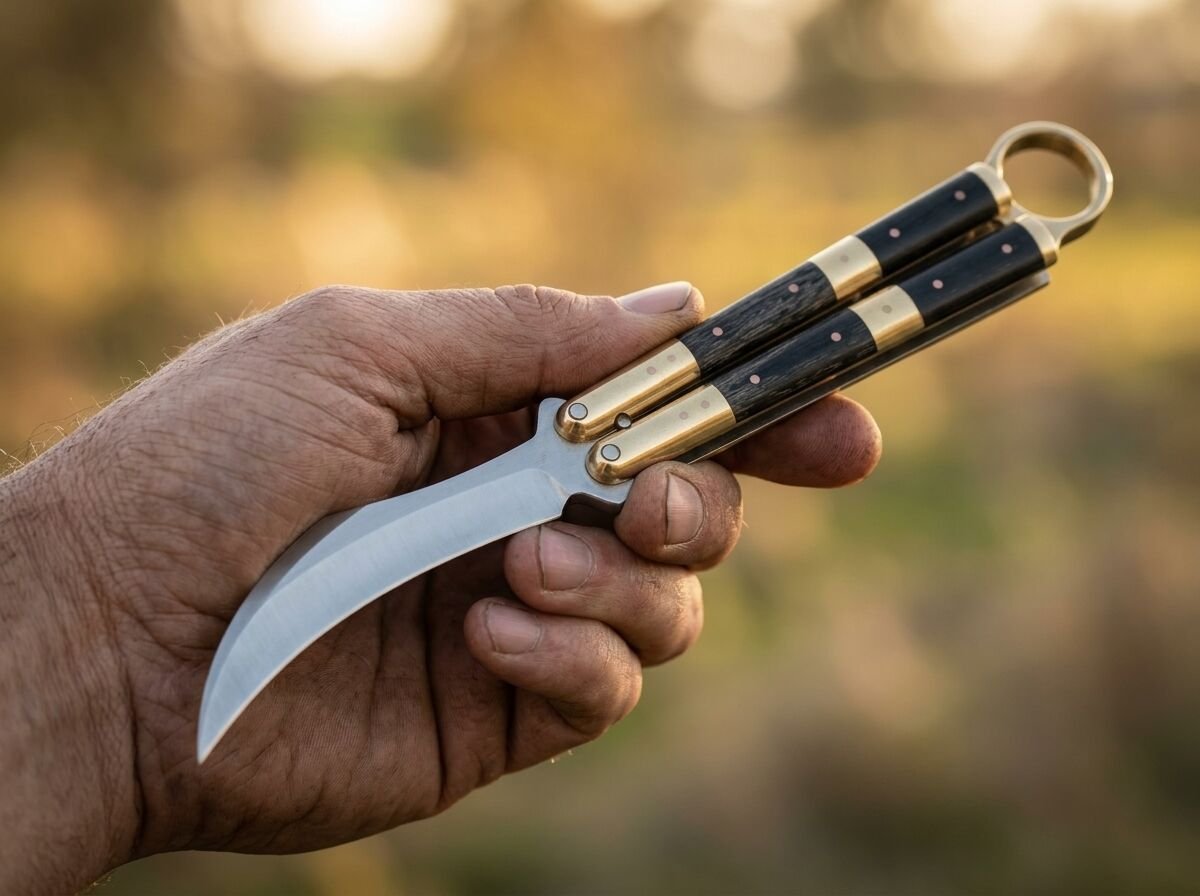
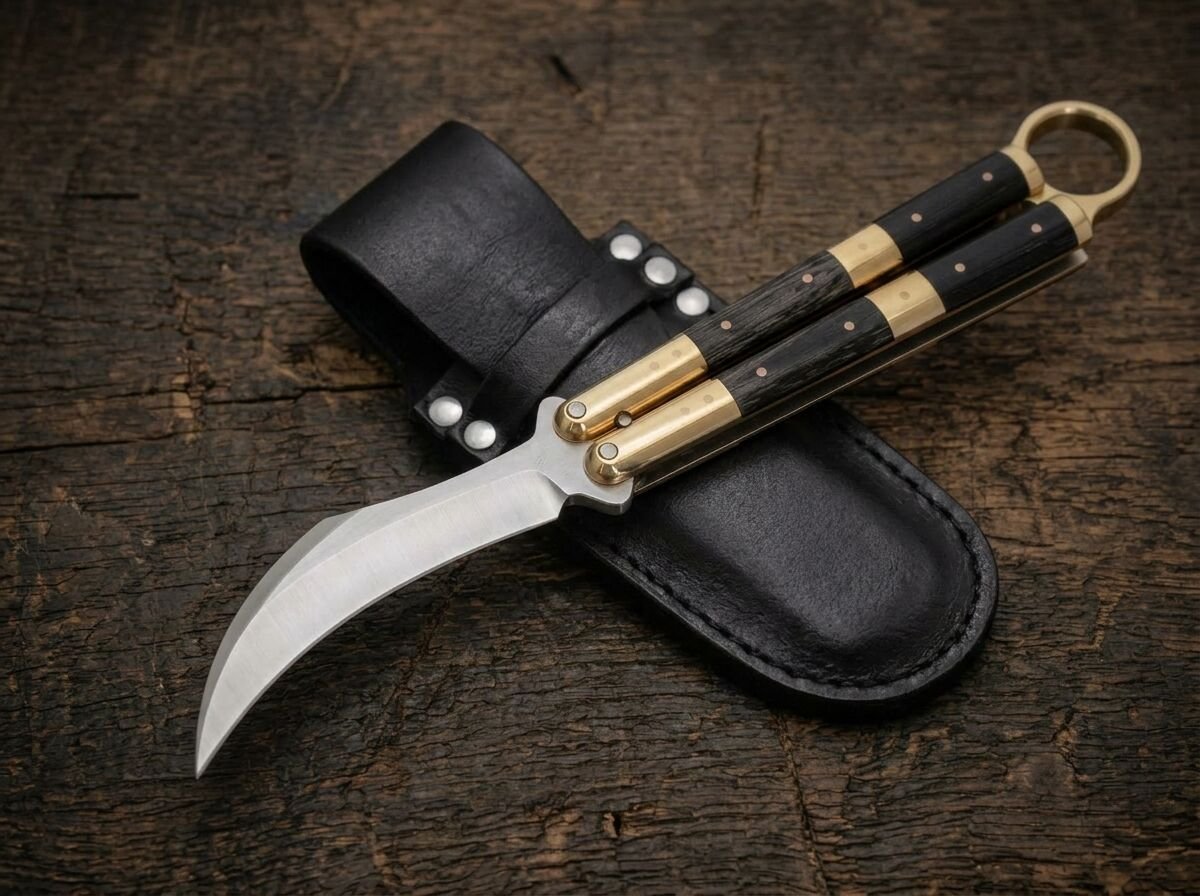
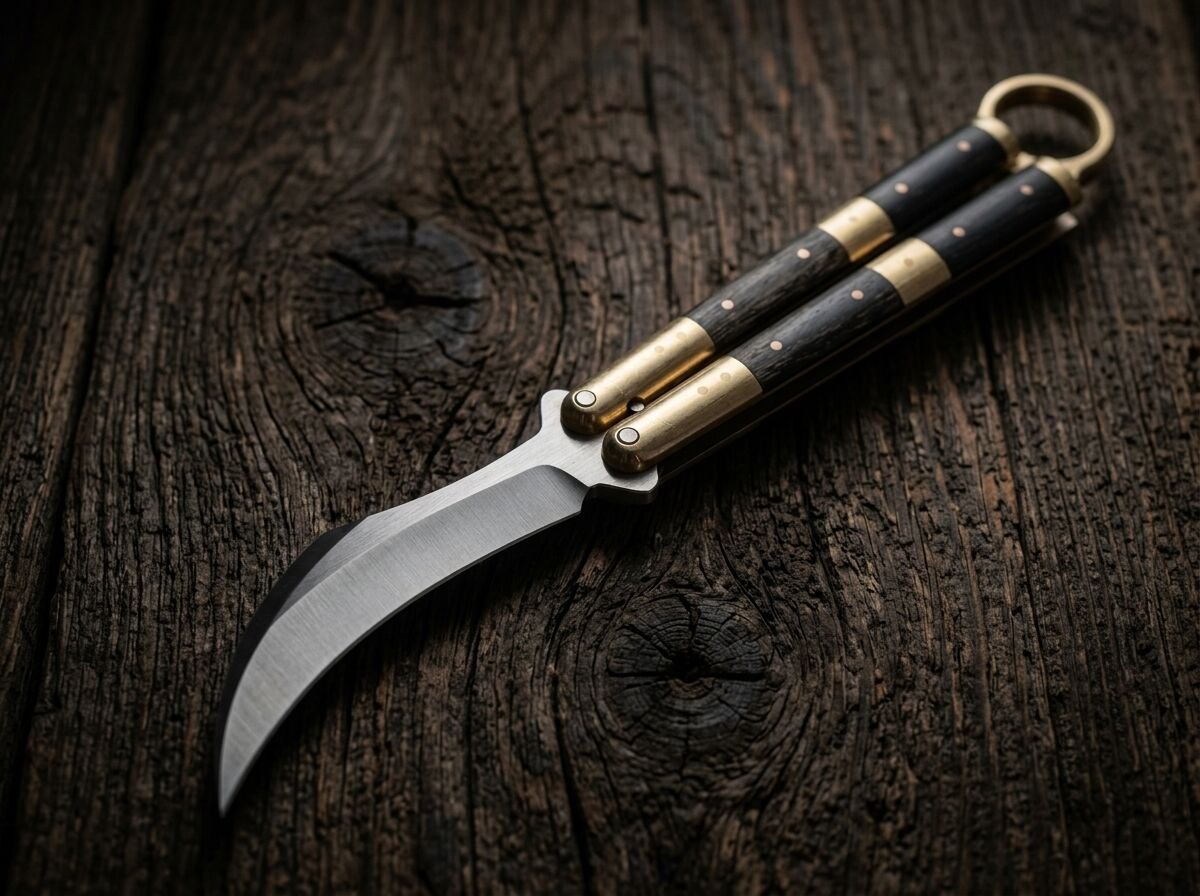
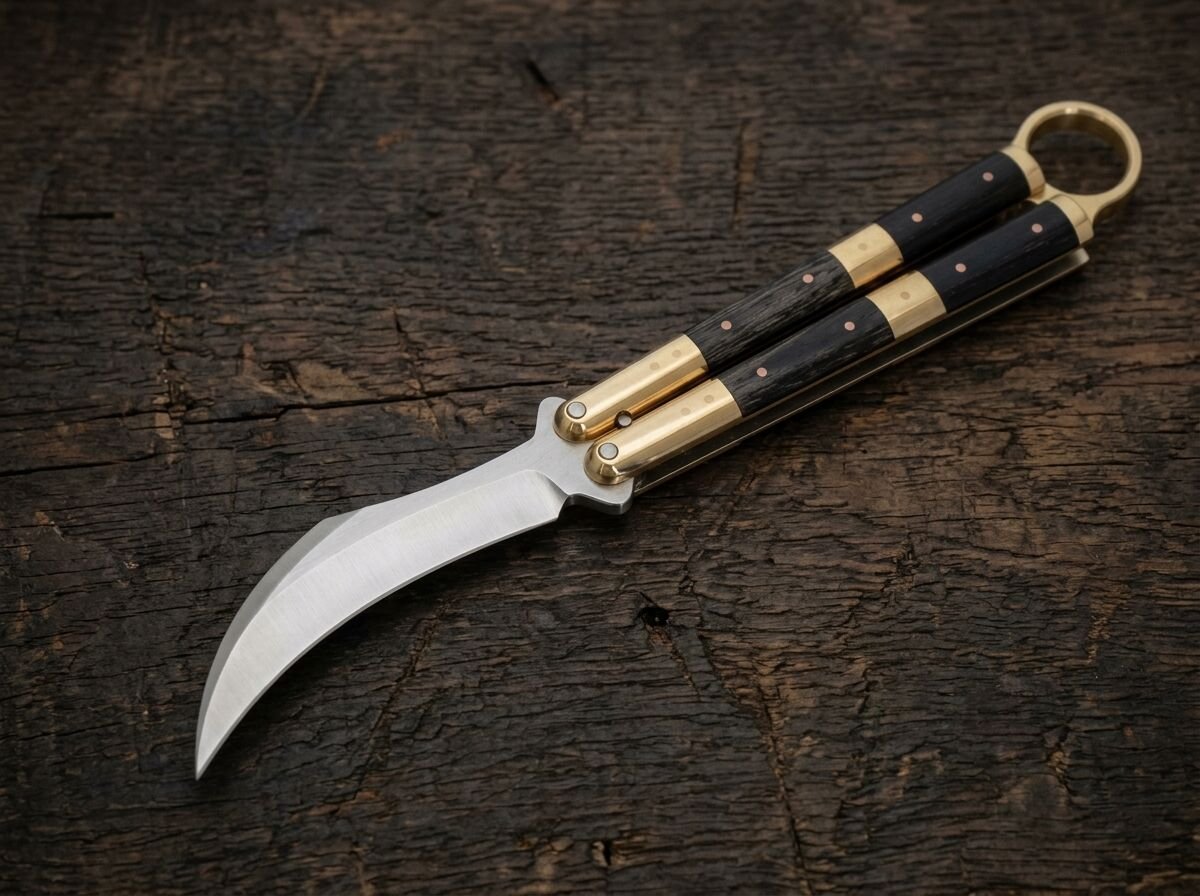
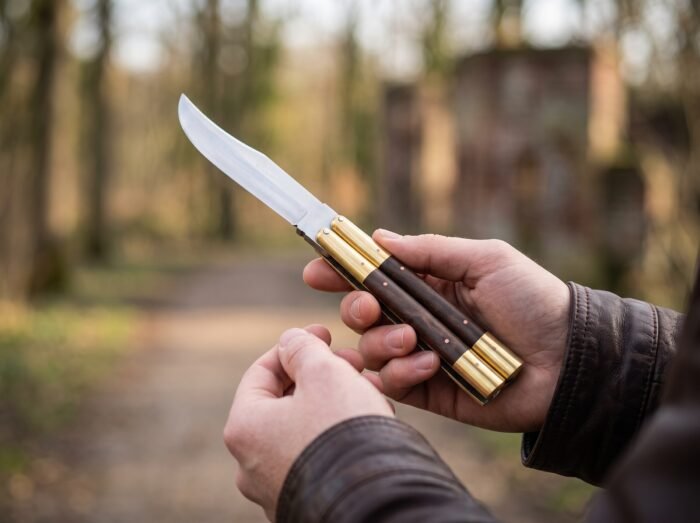
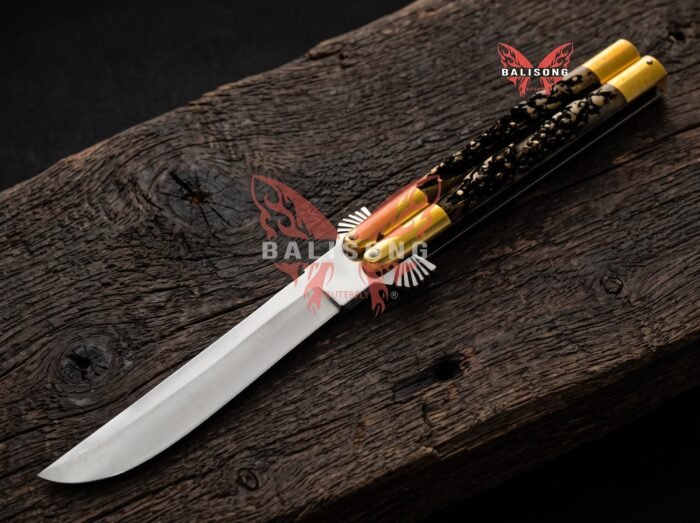
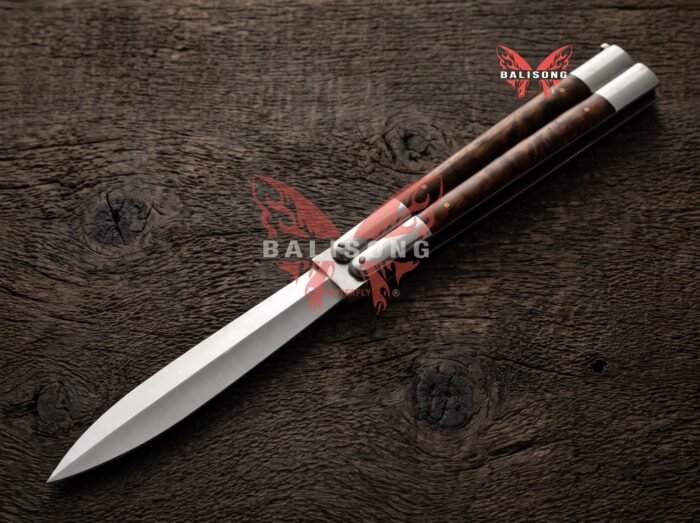
The BF-181 is a karambit balisong built the traditional Batangas way: a brass channel frame with blocks of buffalo horn and bone stacked inside it, and a brass ring at the end.
How a sandwich handle is actually made
The brass is not a decorative strip. It is a folded channel, and it is the structural handle. The pivot goes through it, the ring is fixed to it, and everything it carries could be removed without the knife falling apart.
Inside that channel, blocks of material are stacked end to end and pinned through. Horn, then a thin slice of bone, then horn again. Each block is fitted individually, filed flush with the brass, then the whole assembly is finished as one piece so that your hand cannot feel the joins.
It is slow work and there is no way to speed it up, which is why almost nobody builds handles this way any more. Two flat panels screwed to a frame takes a fraction of the time.
Why the spacers exist at all
Originally, economy. Horn came in irregular pieces off an animal and long clean sections were the valuable ones. Building a handle from short blocks meant the offcuts became usable, and a pale spacer hid the join between two pieces that did not quite match.
The visual effect was a by product that turned out to be better than the intention. Alternating dark and light down the length gives the eye a rhythm and makes the handle read as longer and slimmer than a single block of the same size.
So a cost saving became a signature. That is how most good design happens and it is worth saying, because the alternative story, that somebody sat down and designed it, is usually a lie.
Two materials, two different care needs
|
Buffalo horn |
Bone |
| What it is |
Keratin, same protein as a fingernail |
Mineralised collagen |
| Dislikes |
Prolonged dryness, which can crack it |
Long soaking and thermal shock |
| Care |
A trace of mineral oil once a year if it lives in a case |
Nothing at all |
| Ages by |
Deepening, showing more amber in the light |
Warming slightly to cream |
In practice, handling the knife covers the horn’s needs on its own and the bone never asks for anything. The only real mistake is leaving it wet.
A satin blade, not a mirror
Satin is a directional finish, ground and then hand finished in one direction so the surface carries fine parallel lines. It sits between a mirror and a stone wash: brighter than matte, far more forgiving than a polish.
On a traditional handle it is the correct choice. A mirror would out shine the brass and turn the whole knife into a jewellery piece, which this is not.
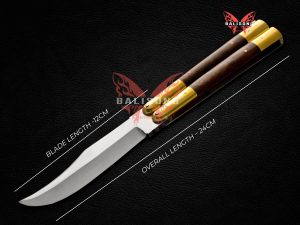
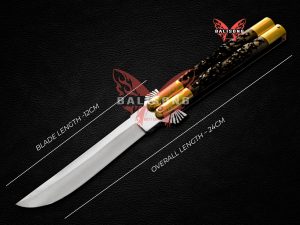
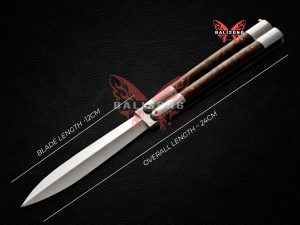
Specifications for this traditional karambit balisong
| Overall length |
24 cm |
| Blade length |
12 cm |
| Blade |
High carbon steel, satin polished |
| Hardness |
58-60 HRC |
| Handle |
Buffalo horn with bone spacers in a brass frame, brass finger ring |
| Sheath |
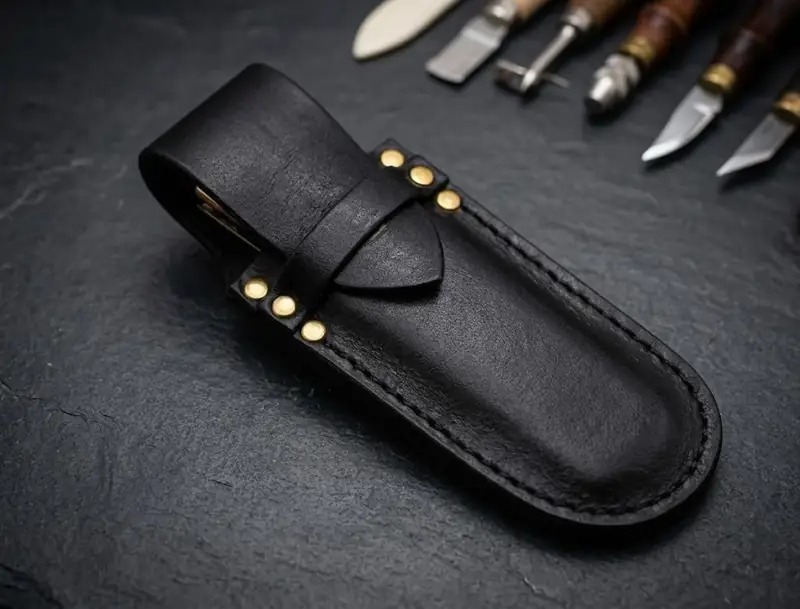
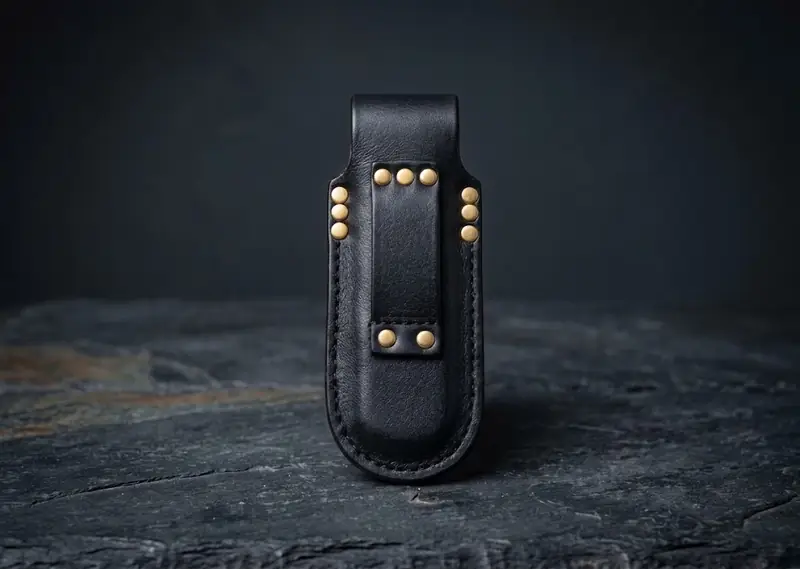
Fitted leather, included |
Ordering the BF-181
Sharpened, tuned and checked by hand, with a fitted leather sheath and a gift box. High carbon steel, so wipe it dry and store it out of the sheath.
Or take it as a trainer instead. Identical frame, identical weight, no cutting edge, and the price does not move.
Laser engraving is $29, chosen on this page. Free shipping inside the United States, flat $49 worldwide.
Building a sandwich handle from stacked blocks of horn and bone inside a brass channel is slower than fitting two flat panels, and our guide on how a balisong is made explains why so few workshops still build handles this way. The Bagyo belongs to our karambit balisong range. The Ulan uses the same brass frame construction with buffalo bone standing alone against the forged blade.
Buying for groomsmen? This balisong also comes as a matched set of 6, 15% less than buying six singly, and each one can carry its own engraved name.




Eric Bishop –
This balisong is a genuine work of art. Ordered from Balisong Butterfly before and the quality stays consistent every time.
James Ward –
This is one of those purchases that just makes you smile. Definitely bookmarking this seller for future orders.
Christine Jones –
This is exactly what I wanted and then some. Pivots feel dialed in with zero blade play. Handles have a great grip even during fast flips. Weight is perfectly balanced for flipping. Happy customer here, through and through.