
Trainer Butterfly Knives
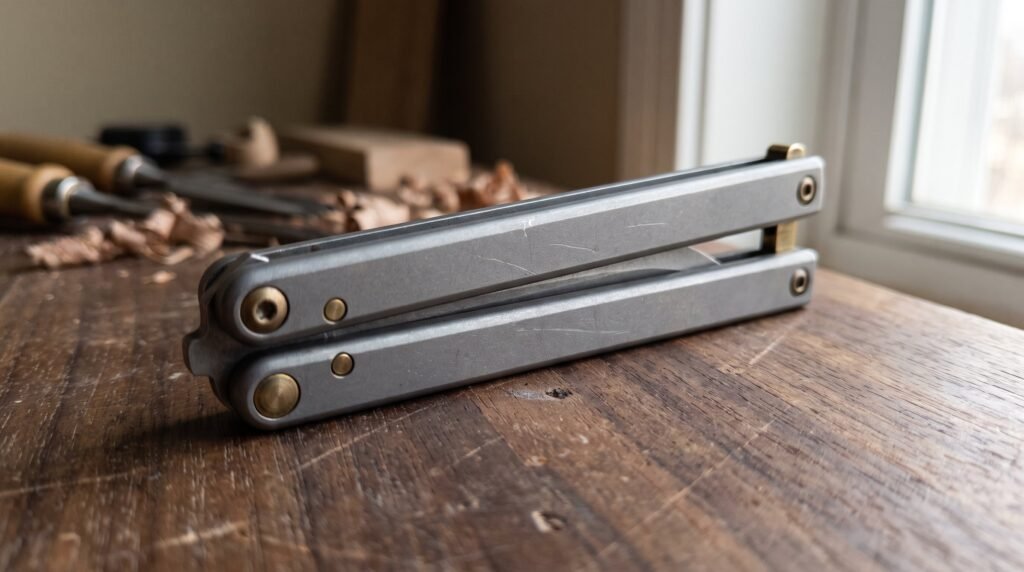
A trainer is the same balisong as the live blade, with the same steel, the same handles and the same hand-tuned pivots, and the cutting edge left unsharpened. You choose Sharp or Trainer on the product page, just above Add to Cart, and the trainer costs exactly the same as the live blade.
- A trainer is not a toy and not a cheaper knife. It is the same knife, unsharpened.
- Sharp is the default. Pick Trainer on any product page if you want the blunt edge.
- Trainer or sharp, the price is the same. You are choosing which one knife you receive, not adding a second one.
- Trainers are how every serious flipper learns. Fingers heal slowly; steel does not care.
- Engraving works on a trainer exactly as it does on a live blade. Text $19, your own logo $29.
How to Order a Trainer Butterfly Knife
- Open any knife in the collection. Every one of them can be built either way.
- In the Choose your blade box above Add to Cart, select Trainer. Sharp is selected by default.
- If you want it personalised, tick engraving in the same place. Initials or a short line for $19, your own logo for $29.
- Add to cart and check out. The workshop sees the trainer instruction on the order and leaves the final sharpening pass off.
Made-to-order pieces take 2 to 3 weeks whether they are sharp or blunt, and engraving adds 1 to 3 business days on top. In-stock knives ship in 1 to 3 business days.
What a Butterfly Knife Trainer Actually Is
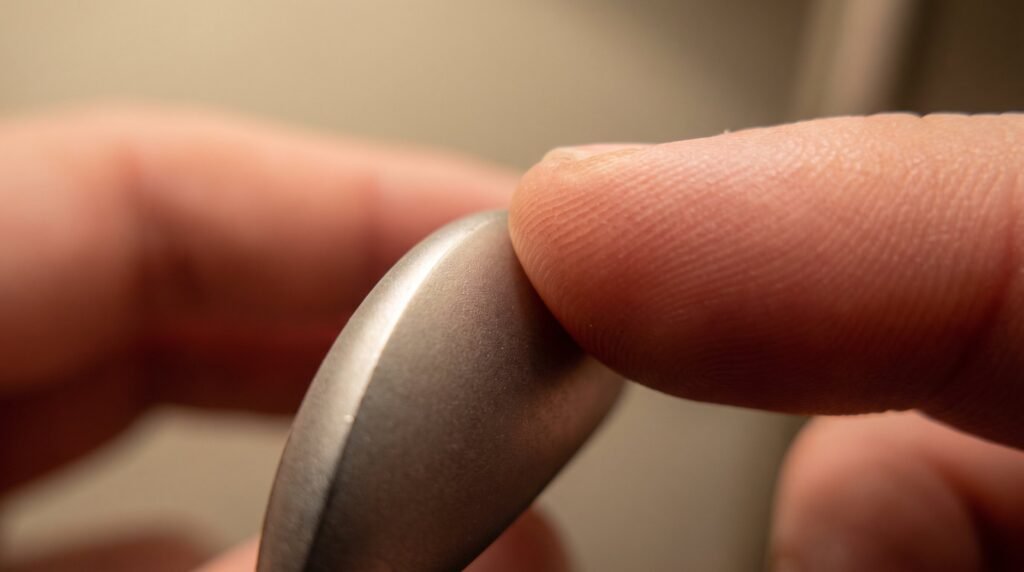
The blade is ground, shaped and finished the same way as a live blade, then stopped before the final sharpening pass. The edge is left flat and dull. It still has the weight, the balance and the sound of the real knife, because it is the real knife: the pivots are tuned by hand, the tang pins are set the same, and the handles are the same kamagong ebony, carabao horn, deer horn, bone or brass.
That matters more than it sounds. A cheap aluminium trainer from a bulk supplier teaches you the rhythm of a cheap aluminium knife. When you move to a hand-forged balisong, the balance point has moved and the muscle memory does not transfer cleanly. Learning on the same knife you intend to carry means nothing changes when the sharp one arrives.
Balisong Trainer, Butterfly Knife Trainer, Practice Knife. All the Same Thing
The names get used interchangeably and it confuses people who are shopping. A balisong trainer, a butterfly knife trainer, a trainer butterfly knife, a training butterfly knife, a practice butterfly knife and a plain butterfly trainer all describe one object: a butterfly knife with an unsharpened edge, made to be flipped rather than cut with. “Balisong” is the Filipino name and the older one; “butterfly knife” is the English description of how the handles open. Nothing about the knife changes with the label.
What does change, and what almost nobody selling one tells you, is what the trainer is made of. Most balisong trainers on the market are a blunt aluminium blank between aluminium or G10 handles: a separate, cheaper product line built to be a trainer and nothing else. Ours are not. Every butterfly knife trainer here is a hand-forged D2, Damascus, high carbon, VG10 or 440C balisong with the last pass on the stone left off.
The Best Balisong Trainer Is the One You Will Actually Carry
Every “best butterfly knife trainer” list ranks aluminium trainers against each other on price and bearing smoothness. That is a reasonable way to shop if a trainer is all you ever want. It is the wrong way to shop if you intend to own a real balisong eventually, because the trainer you learn on is what sets your muscle memory.
A cheap aluminium trainer weighs 90 to 120 grams. A hand-forged balisong weighs 160 to 200. When you move up, the balance point has shifted, the swing arc has changed, and half of what you learned has to be unlearned first. Starting on the exact knife you intend to carry removes that step completely.
So the honest answer to “what is the best balisong trainer” for anyone who wants a real knife in the end: pick the balisong you actually want, order it as a trainer, and flip it until the trick is boring. Then order the same knife sharp.
A mid-weight knife around 175g with brass bolsters, in 440C or VG10 stainless, ordered as a trainer. Heavy enough to swing predictably, stainless so a beginner never has to think about rust, and between $110 and $140.
What a Practice Butterfly Knife Costs Here
Nothing extra. That is the whole answer, and it is the part people do not believe the first time they read it.
Every knife on this site, all 161 of them from $109.45 to $549.45, has a Sharp option and a Trainer option at the same price. A practice balisong here is not a cheaper product with cheaper parts. Same steel, same kamagong, ebony, horn, bone or brass handle, same hand-tuned pivots, same fitted leather sheath, same price. The workshop simply stops before the final sharpening pass.
Most shops cannot make that offer, because their trainers and their live blades are different products from different production lines. Ours come off the same bench, made by the same hands, on the same day.
What We Do Not Sell: Plastic and Toy Butterfly Knives
If you are looking for a plastic butterfly knife, a toy butterfly knife or a $12 comb trainer, this is not the right shop, and we would rather say so than waste your afternoon. Those exist, they are fine for what they are, and they are sold everywhere.
What we make is hand-forged Filipino balisongs in the Batangas tradition, starting at $109.45. The trainer version is that same knife with a blunt edge. Not a toy version of it.
Balisong Trainer or Sharp: How to Choose
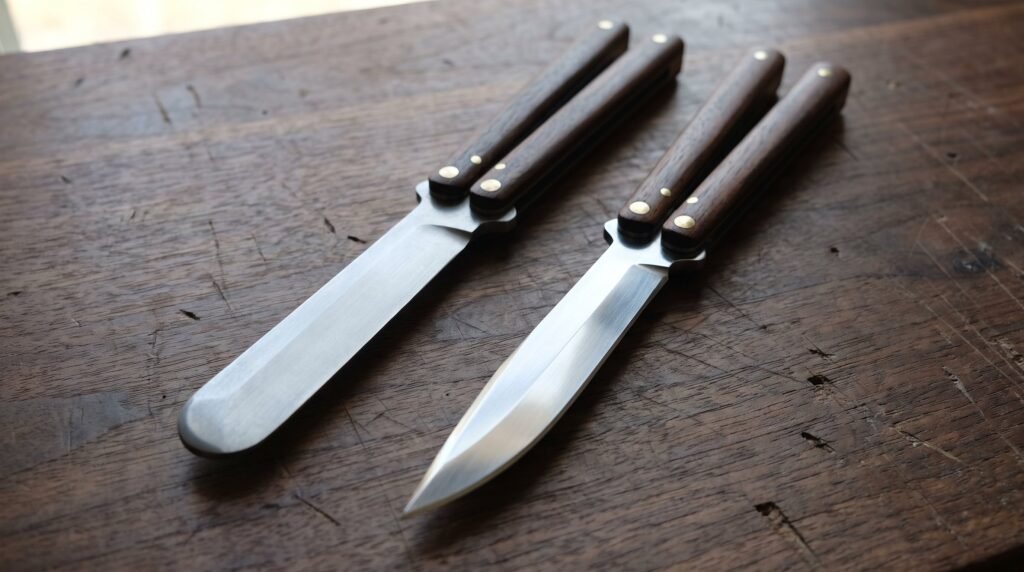
| Trainer | Sharp | |
|---|---|---|
| Edge | Blunt, unsharpened | Sharpened by hand |
| Price | Same | Same |
| Steel, handle, sheath | Identical | Identical |
| Best for | Learning flips, practising daily, gifting to someone new to balisongs, display where children visit | Collecting, everyday use, gifting to an experienced owner |
| Can be engraved | Yes | Yes |
| Can it be sharpened later | Yes, by a competent knife sharpener | Already sharp |
Buy a trainer if
You are learning to flip, you practise where you might drop it, you are buying for someone under twenty, or you want the knife on a shelf in a house with curious hands.
Buy sharp if
You already flip confidently, you want a working knife, or the knife is going into a collection where it will be handled carefully and rarely opened.
Why Every Flipper Starts on a Practice Butterfly Knife
Flipping is a physical skill learned by dropping things. Aerials, rollovers, chaplins and Y2Ks all begin as failures, and a live blade turns a failure into an injury. The convention across the balisong community is simple and near-universal: learn the trick on a trainer until it is boring, then take it to the live blade.
Even experienced flippers keep a trainer around. New trick, new knife, new grip tape: the trainer comes out first. It is the cheapest insurance in the hobby, and here it is not even an extra cost.
A blunt balisong is still a metal object moving at speed on a hinge. It will bruise knuckles and it will chip a tooth if it gets away from you. Practise over a bed or a couch, keep your fingers off the bite handle until the motion is automatic, and stop when your hands get tired. That is when the drops happen.
Engraving a Balisong Trainer
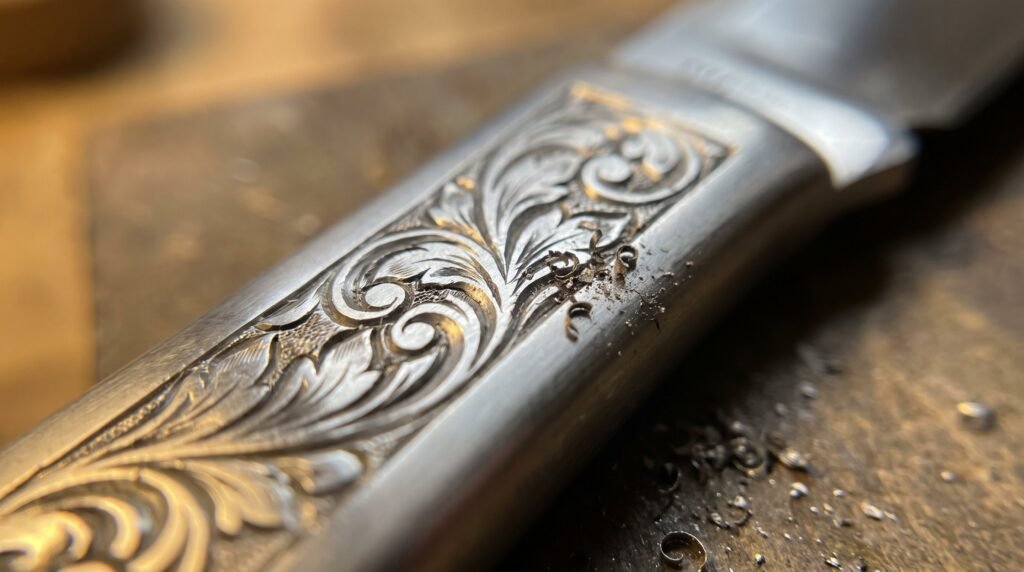
Engraving is cut into the bolster, not the edge, so it makes no difference whether the blade is sharpened. Initials, a name, a date or a short line of text is a flat $19 and you pick the font on the product page. A logo, emblem or company mark is $29, and you upload the artwork file at checkout.
Trainers are the more common engraving order of the two, because they are so often bought as gifts: a first balisong for someone learning, with their initials on the bolster. Bear in mind that engraved knives are permanent and therefore final sale. Full detail is on the engraving page.
Buying Butterfly Knife Trainers for a Club, a School or a Shop
Trainers are the one balisong almost anyone can buy, teach with and resell, which is why clubs, flipping schools, stage and film prop houses and knife shops tend to order them by the box rather than one at a time. Bulk orders are quoted individually against the models, the quantity and any marking you want on them, and a trainer costs exactly what the same knife costs with an edge on it, so nothing changes except the last pass on the stone.
Put your club name or your shop mark on the bolster and the whole batch matches. The wholesale page sets out everything we can do on a bulk order. If you would rather design the trainer from scratch, the custom balisong builder lets you pick the blunt edge for the same price.
Are Butterfly Knife Trainers Legal?
A blunt trainer is treated more leniently than a sharpened balisong in some places and identically in others: the mechanism, not the edge, is what most legislation names. Do not assume a trainer is automatically legal where a live blade is not. Rules differ by country, by US state and sometimes by city, and they change. Check your own local law before ordering, and read our state-by-state guide as a starting point rather than as legal advice.
Looking After a Balisong Trainer Knife
The same as any other balisong. Wipe the pivots and the blade down after a long session. Hands leave salt behind. A drop of light oil on each pivot every few weeks keeps the action smooth. Store it in its fitted leather sheath, not loose in a drawer where the handles can knock. Our knife care guide covers rust prevention and pivot tuning in detail.
One trainer-specific note: because the edge is flat, it collects grime more readily than a sharpened edge sheds it. Run a cloth along it now and then.
159 hand-forged balisongs, every one available sharp or blunt at the same price, each with a fitted leather sheath.
Common questions
Is the trainer cheaper than the sharp version?
No, and it is not more expensive either. It is the same knife and the same price. Choosing Trainer simply tells the workshop to leave off the final sharpening pass.
Can a trainer be sharpened later?
Yes. The blade geometry is already there, so a competent sharpener can put an edge on it. We would rather you ordered the sharp version if that is what you want, but the option exists.
Is a trainer safe for a beginner?
Safer, not safe. There is no cutting edge, but it is still a weighted piece of steel swinging on a hinge. Expect bruised knuckles while you learn. Practise over something soft.
Does the trainer feel the same as the live blade?
Effectively yes. Same steel, same handle material, same hand-tuned pivots, same weight distribution. The only difference is the last few thousandths of an inch at the edge, which you cannot feel in the flip.
Can I have a trainer engraved?
Yes. Text engraving is $19 and logo engraving is $29, exactly as on a sharp blade. The engraving sits on the bolster.
Which knife should a first-time flipper start with?
Any of them in trainer form. If you want a recommendation, pick a mid-weight knife around 175g with brass bolsters. Heavy enough to swing predictably, light enough that long sessions do not wear your wrist out.
What is the difference between a balisong trainer and a butterfly knife trainer?
Nothing. They are two names for the same object. “Balisong” is the Filipino word and the older one, “butterfly knife” is the English description. A training butterfly knife, a practice balisong and a butterfly trainer all mean the same thing too.
How much does a practice butterfly knife cost?
Here, exactly what the sharp version costs. $109.45 to $549.45 depending on the knife, with no premium and no discount for the trainer option. Elsewhere, aluminium trainers typically run $20 to $60, but those are a different product with different parts.
What is the best balisong trainer for a beginner?
A mid-weight knife around 175g in 440C or VG10 stainless with brass bolsters, ordered as a trainer. Roughly $110 to $140. Stainless means no rust to worry about while you learn, and the weight matches what you will eventually carry sharp.
Do you sell plastic or toy butterfly knives?
No. Every knife here is hand-forged steel starting at $109.45. If you want a plastic or toy butterfly knife, buy one elsewhere. We would rather tell you that than sell you the wrong thing.
Can I buy training butterfly knives in bulk for a club or a school?
Yes. Clubs, flipping schools, prop houses and shops order trainers by the box. Bulk pricing is quoted against the models, the quantity and any bolster marking you want. The wholesale page covers what is possible.
Shop the collection
Ready to move to a live blade? Browse the authentic Filipino balisong collection, or start at the Balisong Butterfly homepage to see every steel and handle we make.
Most flippers move onto a high carbon balisong or a D2 tool steel balisong first, and check the balisong laws by state before carrying a live blade.
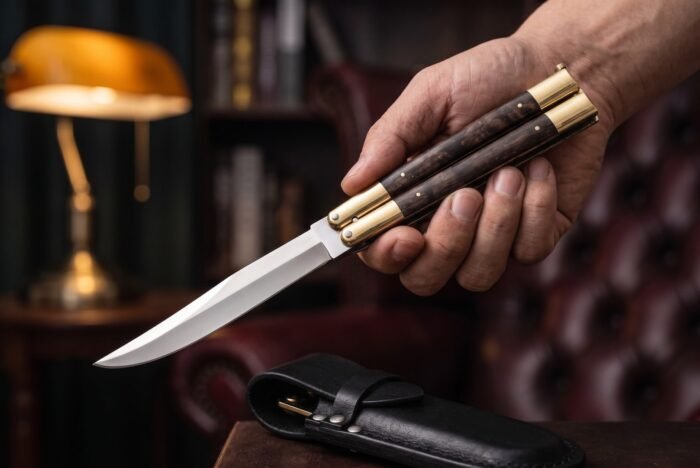
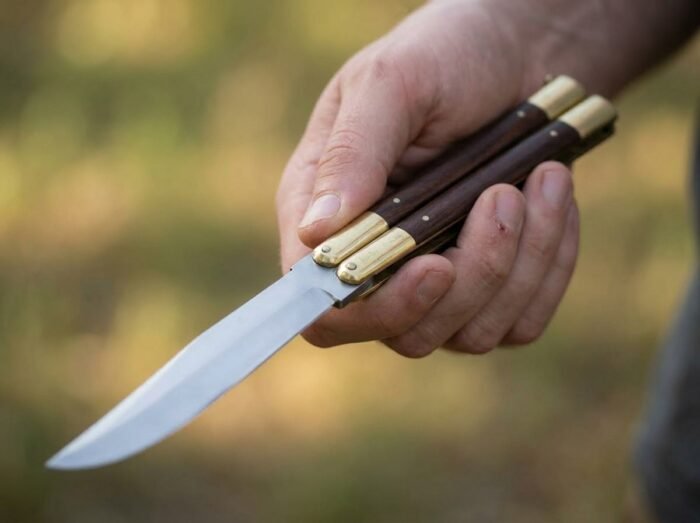
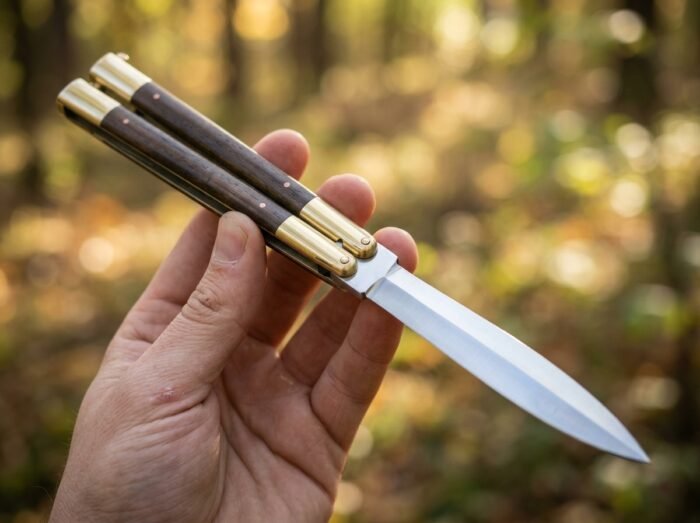
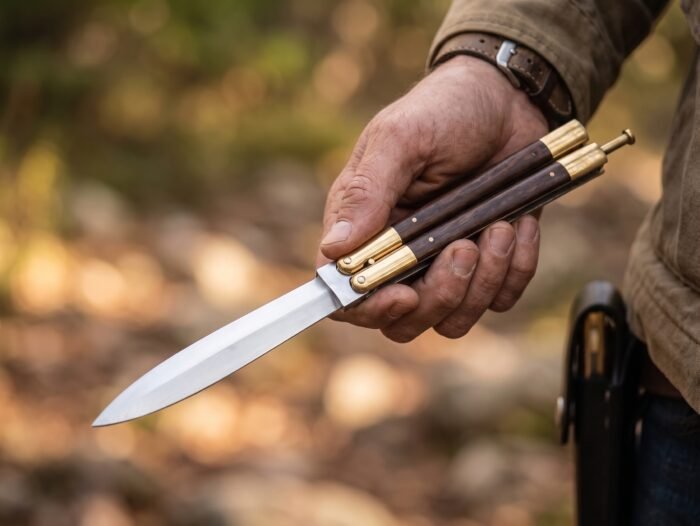
Every knife here also comes as a blunt Trainer. Choose Trainer on the product page.
Shop all High Carbon Balisong Butterfly