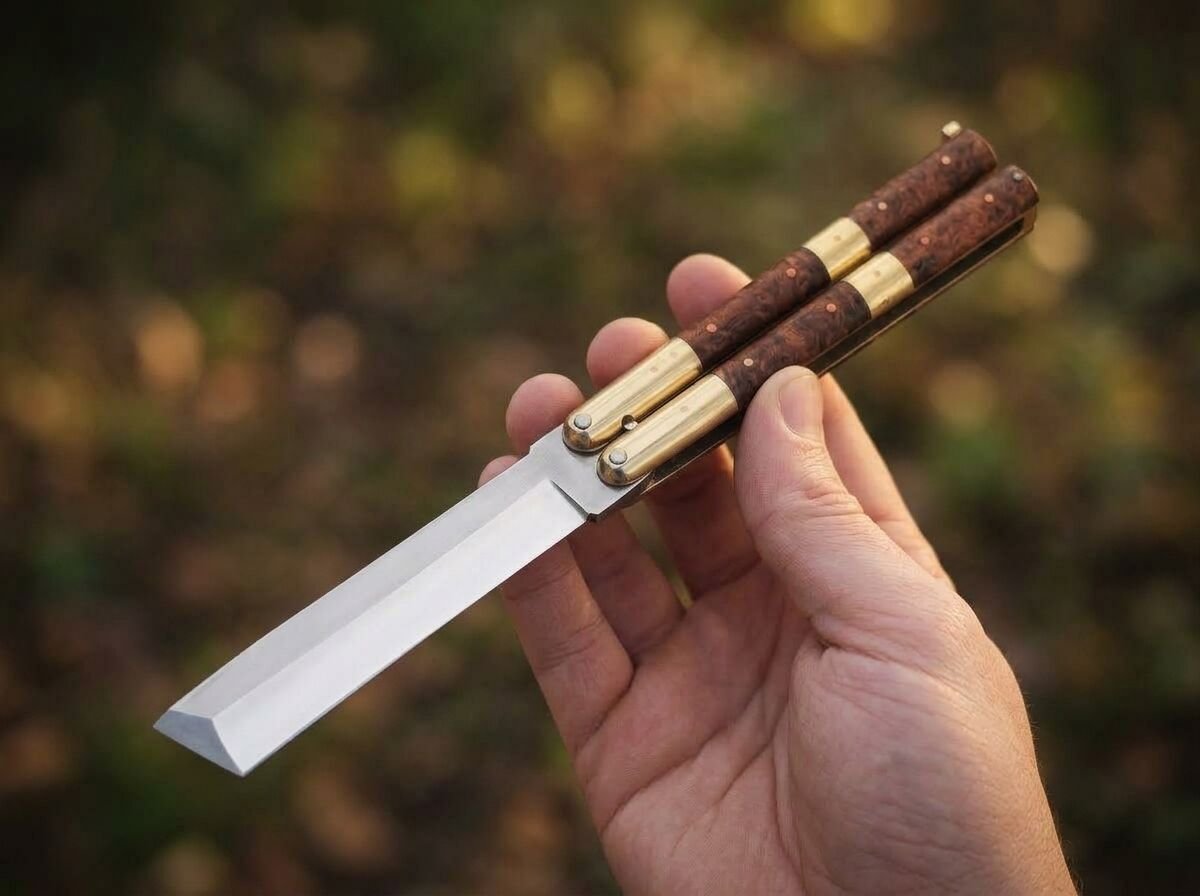
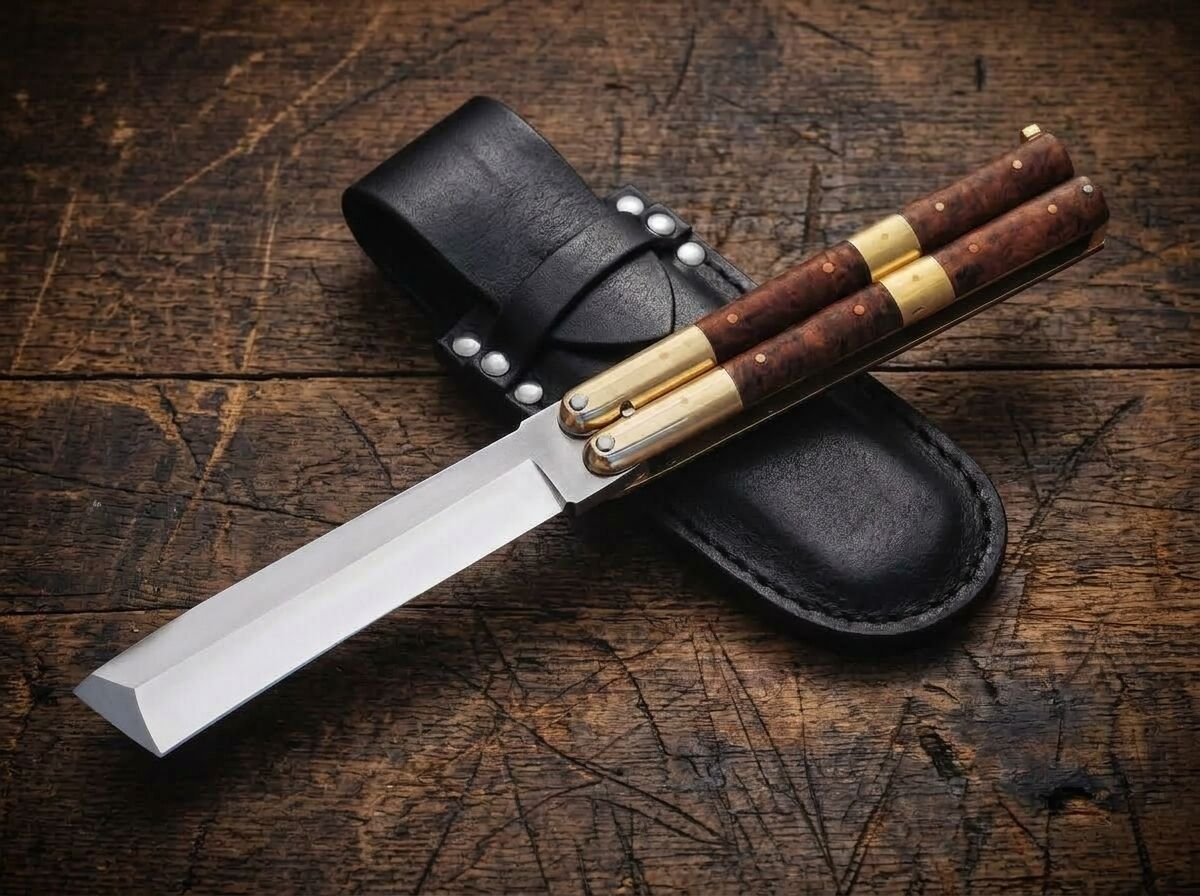
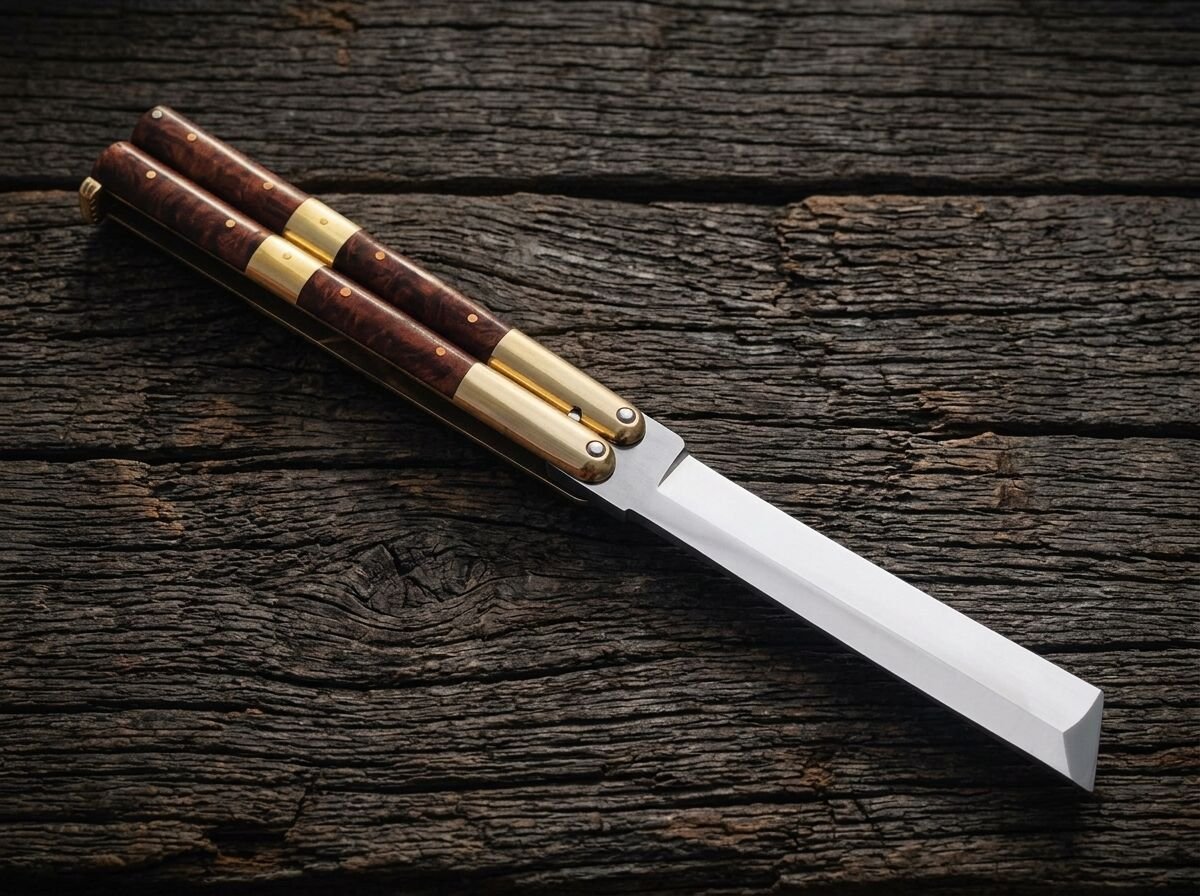
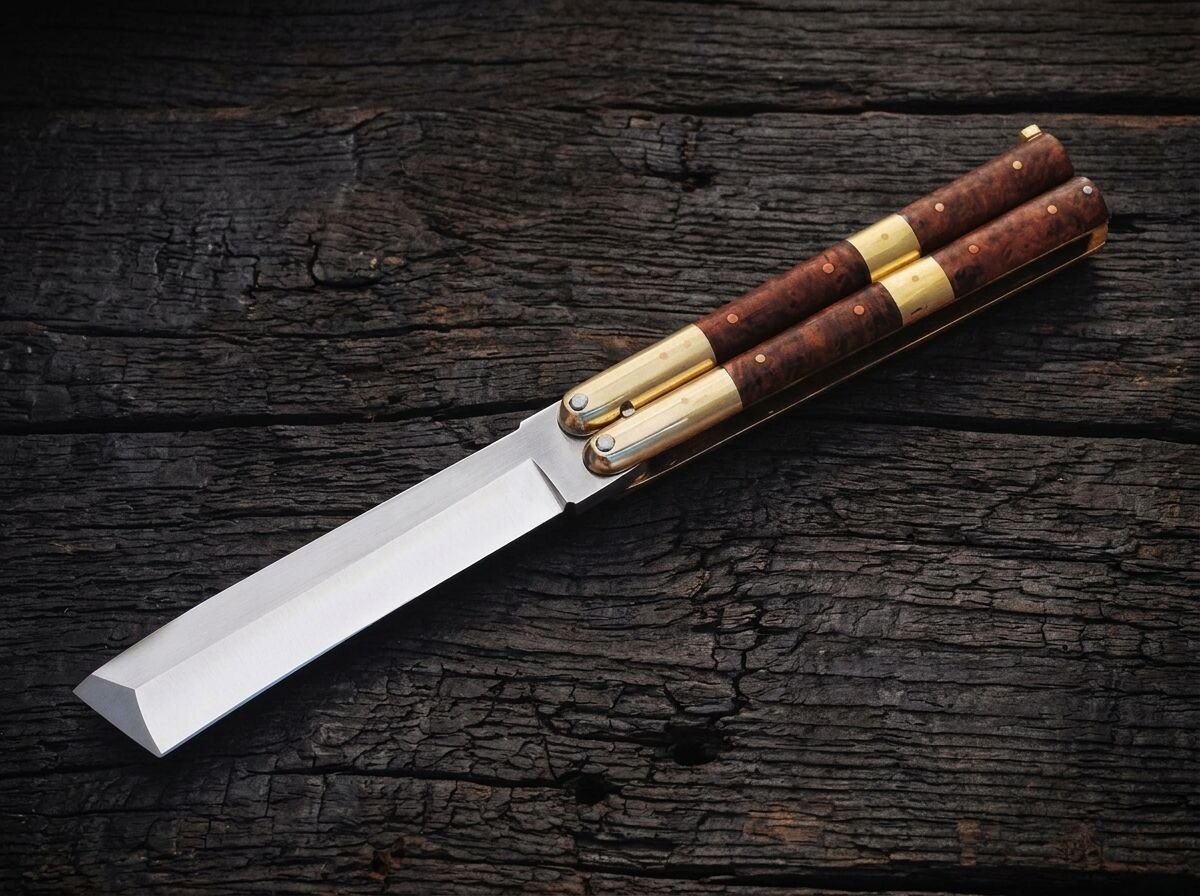
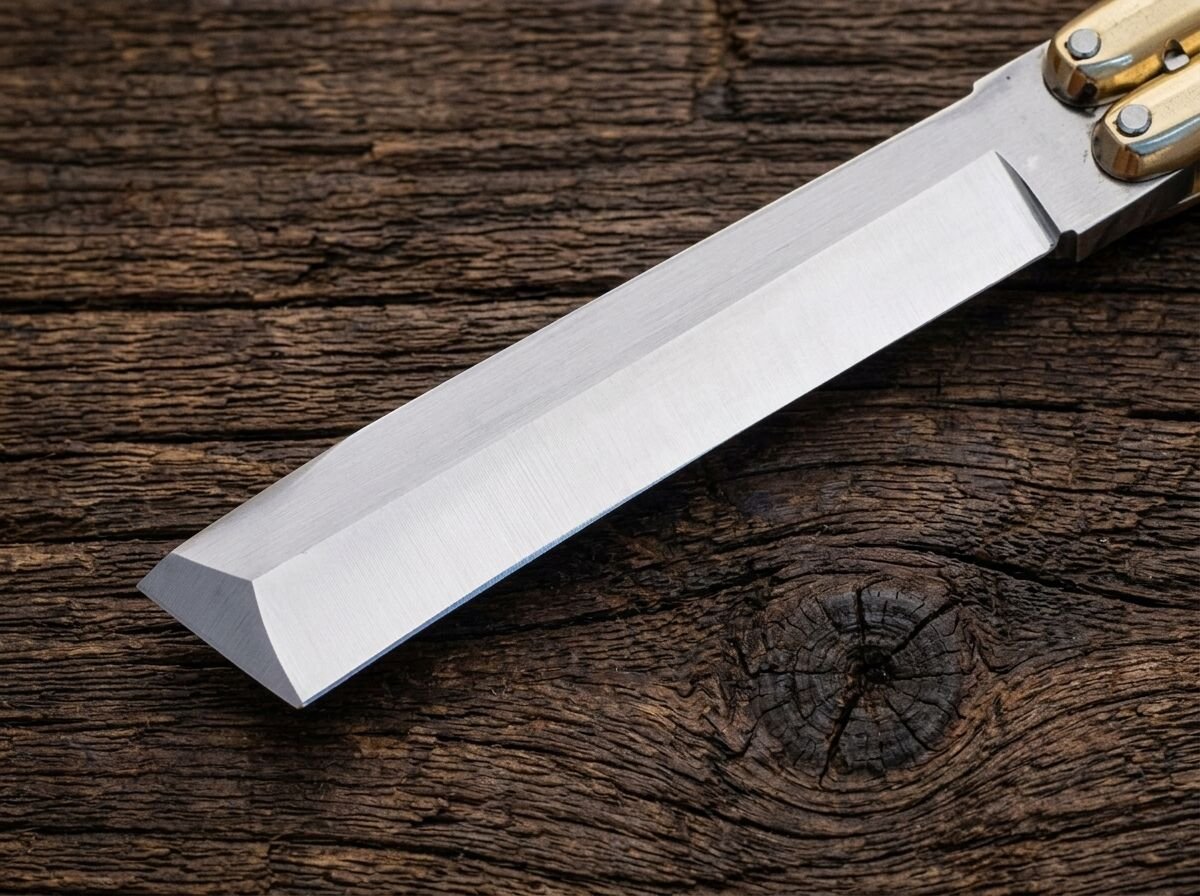
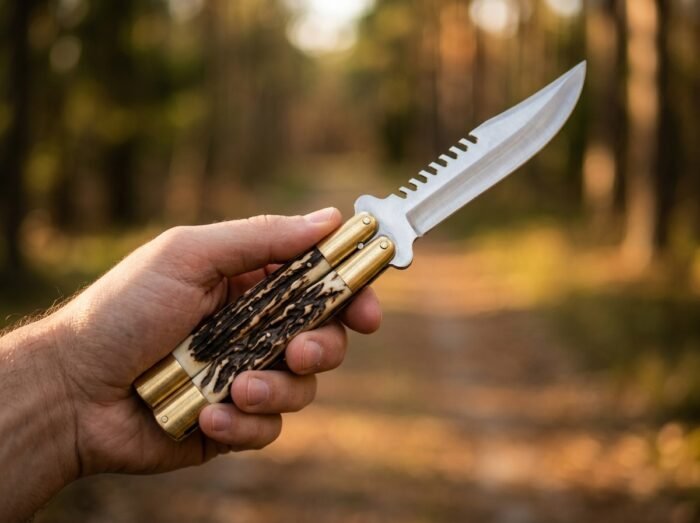
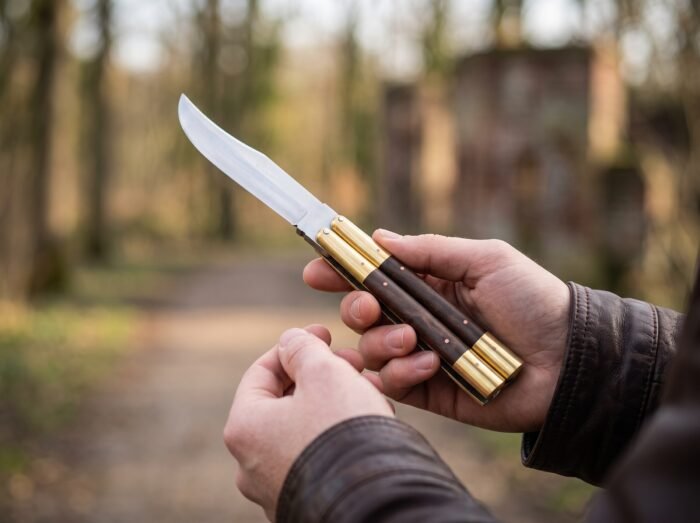
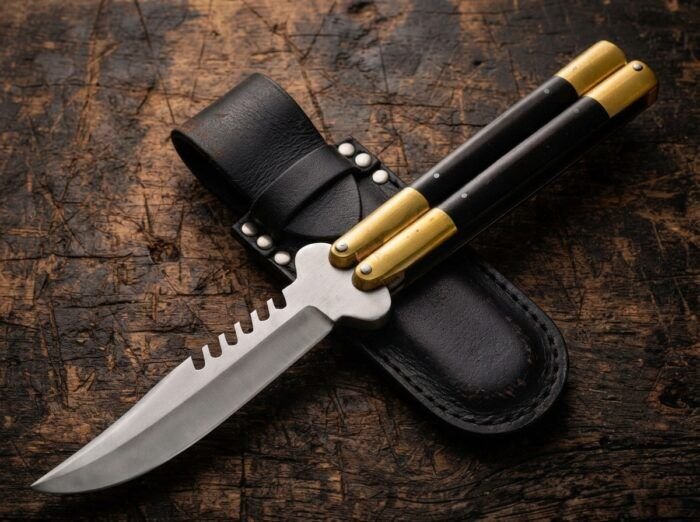
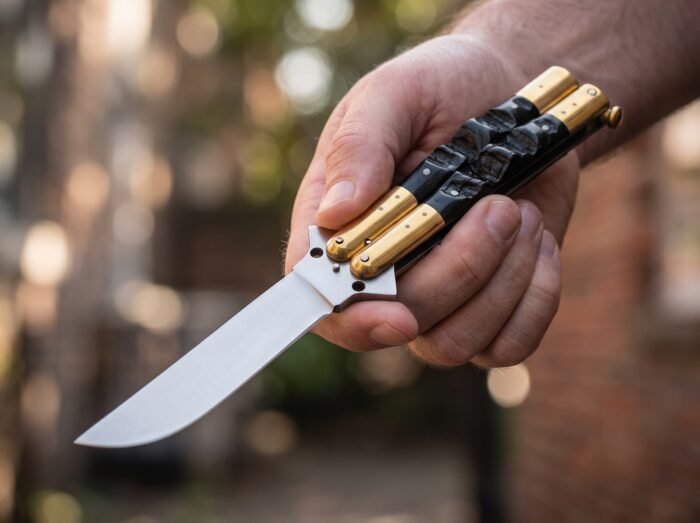
The BF-100 is one of the two most expensive knives we make. Twenty-four centimetres, a 12cm D2 tanto blade, 200g, brass with rose wood. This page is about the top of the range, which is a more interesting subject than most shops let it be.
Where handmade pricing actually stops
It is roughly where the hours in a knife like this run out, and we have deliberately not gone past it.
We could. There is a whole market above this price built on numbered editions, certificates, presentation boxes, exotic inlays and names in italics. Some of it is genuinely superb work. A good deal of it is the same knife with a story attached and a zero added, and the honest way to tell the difference is to ask what changed about the object rather than about the packaging.
What would actually justify more money: significantly more hand time, a materially harder insert to fit, or a process step that a machine cannot do. What does not: the word limited, a serial number, or a felt-lined tin.
|
This knife |
Our cheapest Traditional |
| Blade steel |
D2, 58-60 HRC |
Damascus or D2, same hardness |
| Blade grinding time |
Highest in the series |
Standard |
| Handle contour hours |
Highest in the series |
Standard |
| Brass finishing stages |
The most we do |
Standard |
| Pivots, tang pin, tolerances |
Identical |
Identical |
| Sheath |
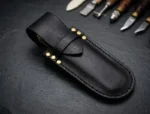
Fitted leather, included |
Fitted leather, included |
| How long it lasts |
Decades |
Decades |
The last row is the one worth sitting with. Nothing on this list makes the expensive knife last longer than the cheap one. It makes it a more finished object, which is a real thing to want and a poor thing to pretend is performance.
Why the tanto tip costs grinding time
A tanto has two flats meeting at an angle rather than a curve running to a point. That geometry puts a great deal of steel immediately behind the tip, which is why a tanto tip is the hardest to break and why the shape survived on a working blade.
It is also harder to grind well. A curve forgives a wandering hand because the eye reads it as a curve. Two flats and a defined angle do not forgive anything, and a tanto that is a degree out looks wrong from across a room. That is where the extra time goes.
What you give up is cutting length. A tanto has less usable belly than a hunting profile, so it is worse at drawing cuts and better at anything that ends in a point.
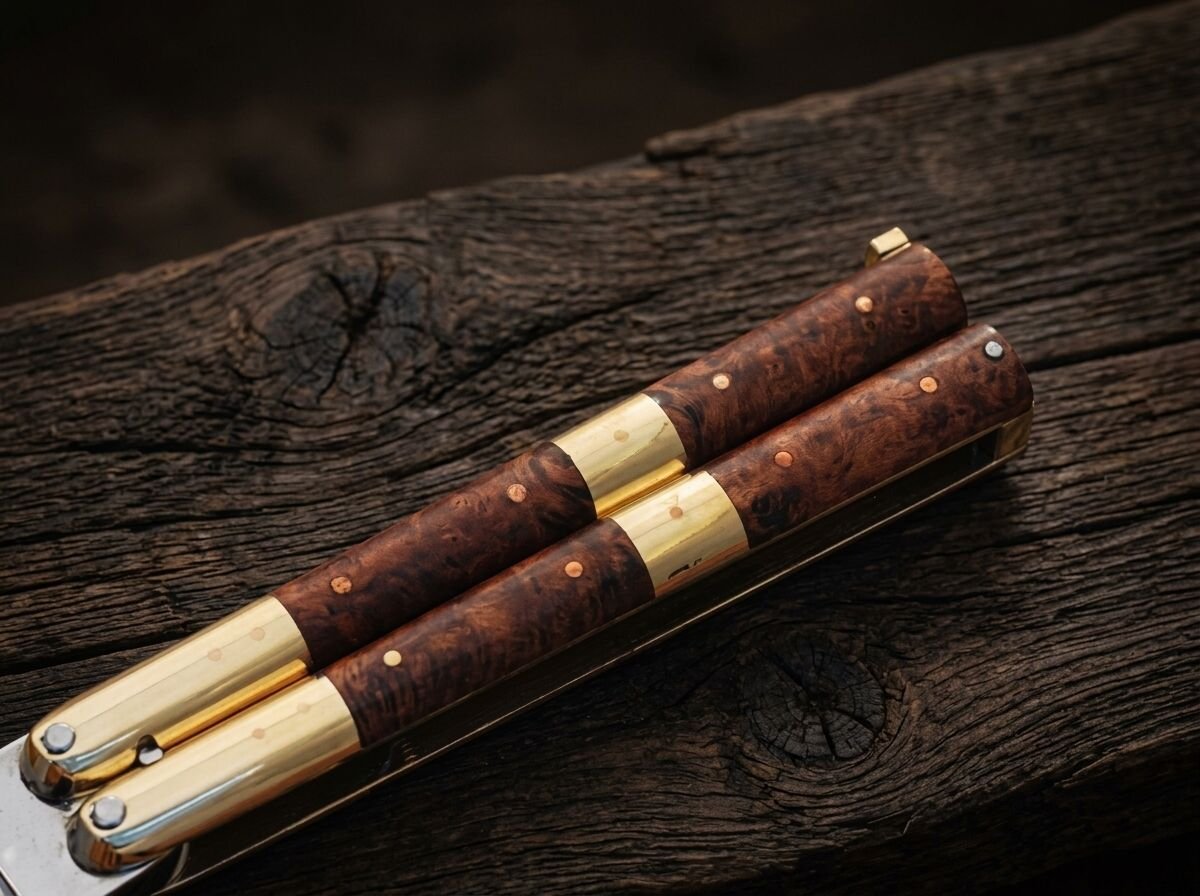
Rose wood balisong handle, brass and 200 grams
Rose wood is dense, warm brown and regular in its grain, so two of these knives look broadly alike. It darkens with the years and takes a soft polish where your hand sits. The brass goes brown and there is no version of owning brass where it does not.
Two hundred grams on a 24cm frame is the lighter of the two weights in this series. It rotates a shade more willingly than the 220g knives and tires your arm less across a long session.
D2 steel on a tanto butterfly knife
An air-hardening tool steel: roughly one and a half percent carbon and eleven to twelve percent chromium, sitting just under the threshold where a steel counts as stainless. Best edge retention we sell, stubborn to sharpen, wants a diamond plate. Twice a year and forget it.
Heat treated to 58-60 HRC rather than higher, because a carbide-heavy steel taken further chips on impact and this knife will be dropped like every other one.
Should you buy this one
If you want a tanto and you want the best-finished example of it we make, yes. If you want a knife to flip and cut and stop thinking about, buy something further down the range and put the difference somewhere useful. We will still be here.
Ordering this D2 tanto balisong
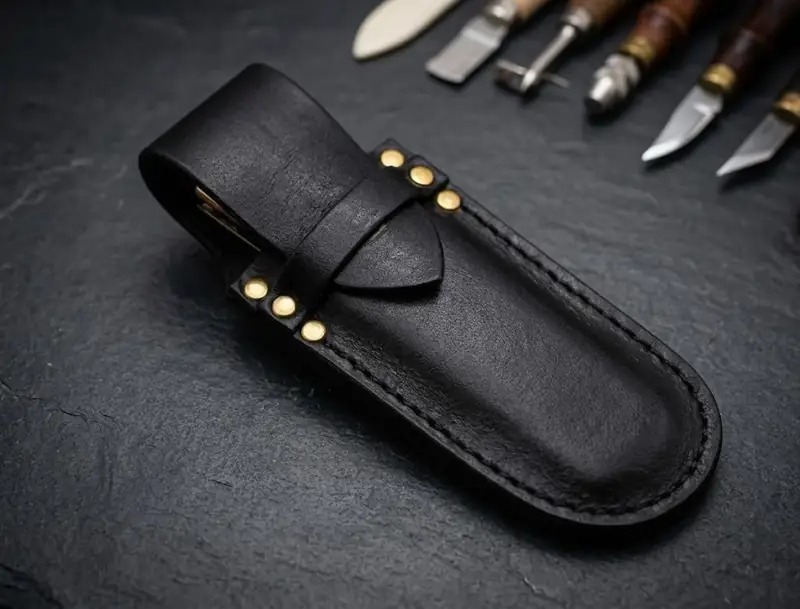
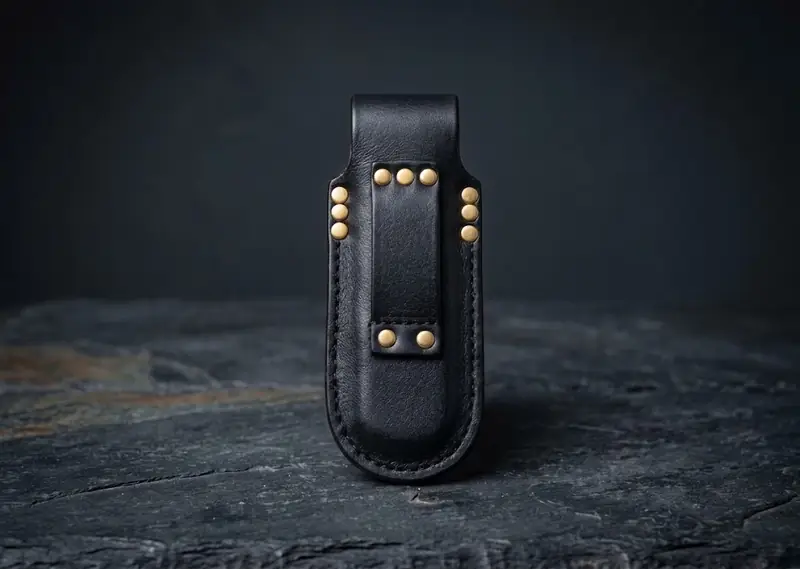
Unsharpened trainer, chosen above Add to Cart. The leather sheath is cut to this frame and comes with it. Nothing to pay on US delivery, and $49 flat for the rest of the world however many knives are in the box.
A tanto point trades belly for strength, and that trade is set out clearly in our guide to butterfly knife blade types. The Bagwis is part of the D2 Tool Steel Butterfly lineup. For the same rosewood and brass build with a plain edge instead of a tanto, the Dangal is cut to identical dimensions.




Wayne Martin –
It’s okay. Not great not bad. Action is okay but not as smooth as I hoped. Made in the USA and shipped from the US, arrived in a reasonable time. It’s okay for the price.
Jennifer Jones –
This is exactly what I wanted and then some. Weight is perfectly balanced for flipping. This shop clearly takes pride in their work.
Cynthia Davis –
Really happy with this balisong overall. Handle feels solid, just a touch heavier than I expected. Would buy from this shop again.
Nathan Gomez –
This is exactly what I wanted and then some. Pivots feel dialed in with zero blade play. Bushings feel buttery smooth after just a bit of use. Would not hesitate to order again.
Kenneth Carter –
Bought this on a whim and it turned out to be one of my favorite pickups this year. Comes with a nice pouch which is a nice touch. If you’re on the fence just get it. You won’t regret it.
Nicholas Nelson –
Ended up ordering a second one after how happy I was with the first. Pivots feel dialed in with zero blade play. Already telling my flipper friends to check this out.
Mark Rivera –
This exceeded what I pictured in my head before ordering. Made in the USA and shipped worldwide with no long wait on my end. Handles have a great grip even during fast flips. Latch snaps shut clean every time. This is exactly why I keep coming back to this company.
Dennis Wells –
Showed up right on time and looked even better than the photos. This one’s a keeper for sure.
Diego Nelson –
Wasn’t sure what to expect but this one nailed it. Zero complaints from me on this purchase.
Christopher Cox –
Set my expectations low going in and this blew right past them. Handles have a great grip even during fast flips. Bushings feel buttery smooth after just a bit of use. Respect to the Filipino craftsmanship behind this, all made and shipped from the USA. Zero complaints from me on this purchase.
Anna Torres –
Excellent craftsmanship on this one. Blade came shaving sharp straight out of the box. Cool that these are made by actual Filipino craftsmen right here in the USA. Couldn’t be happier with this.