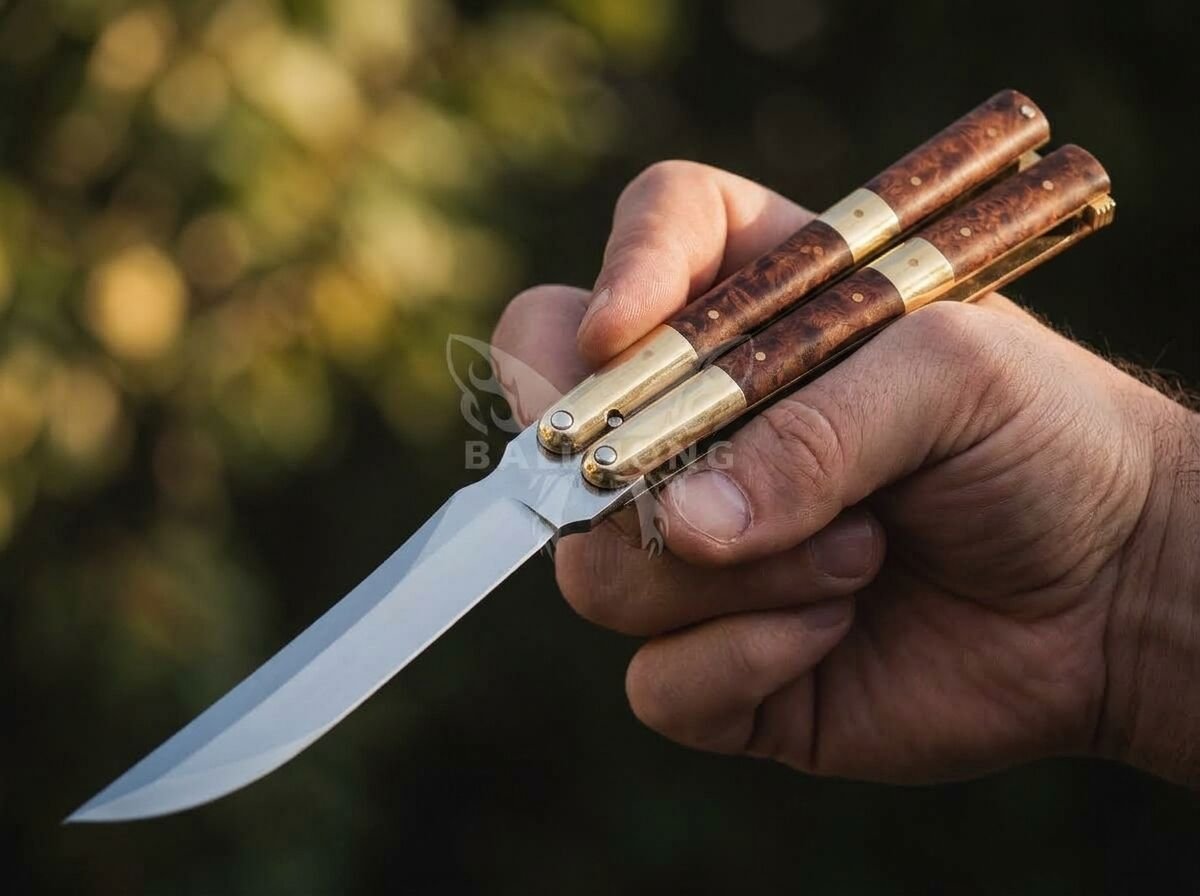
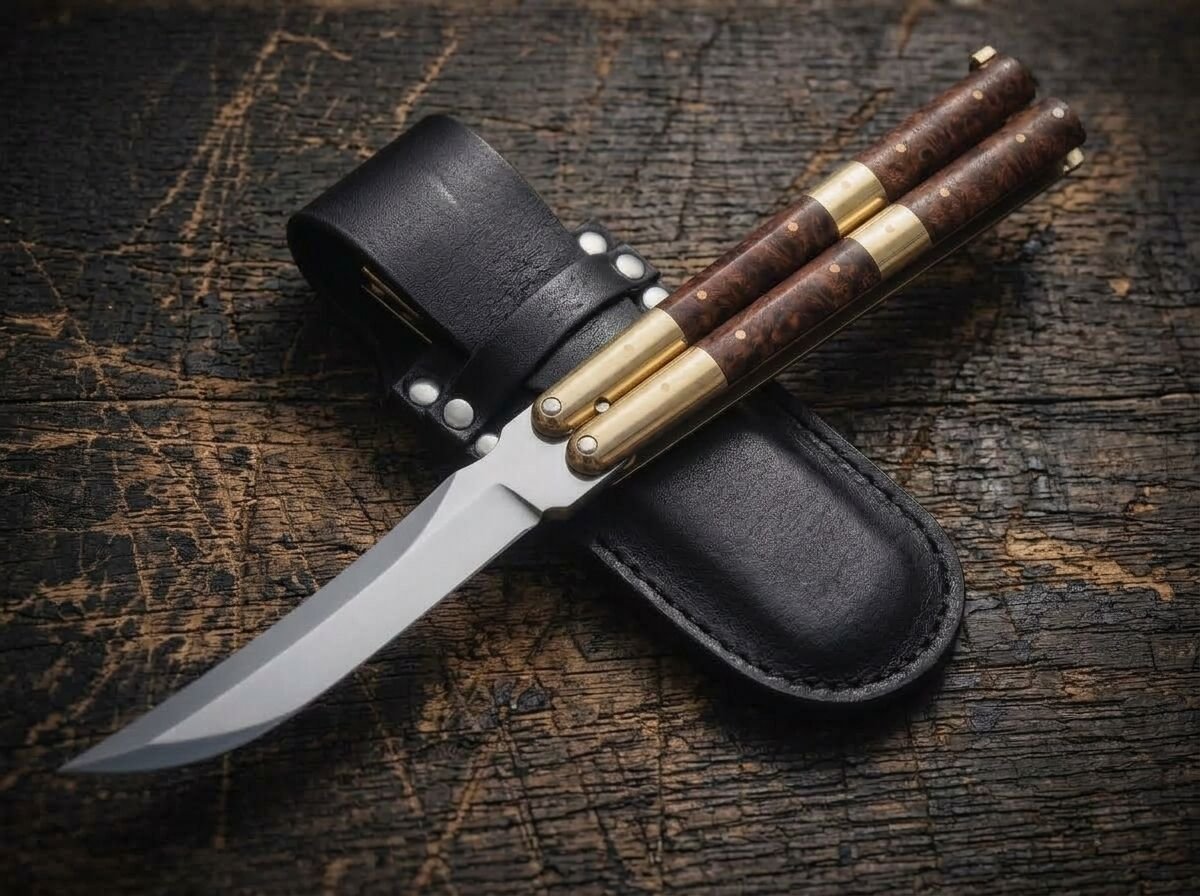
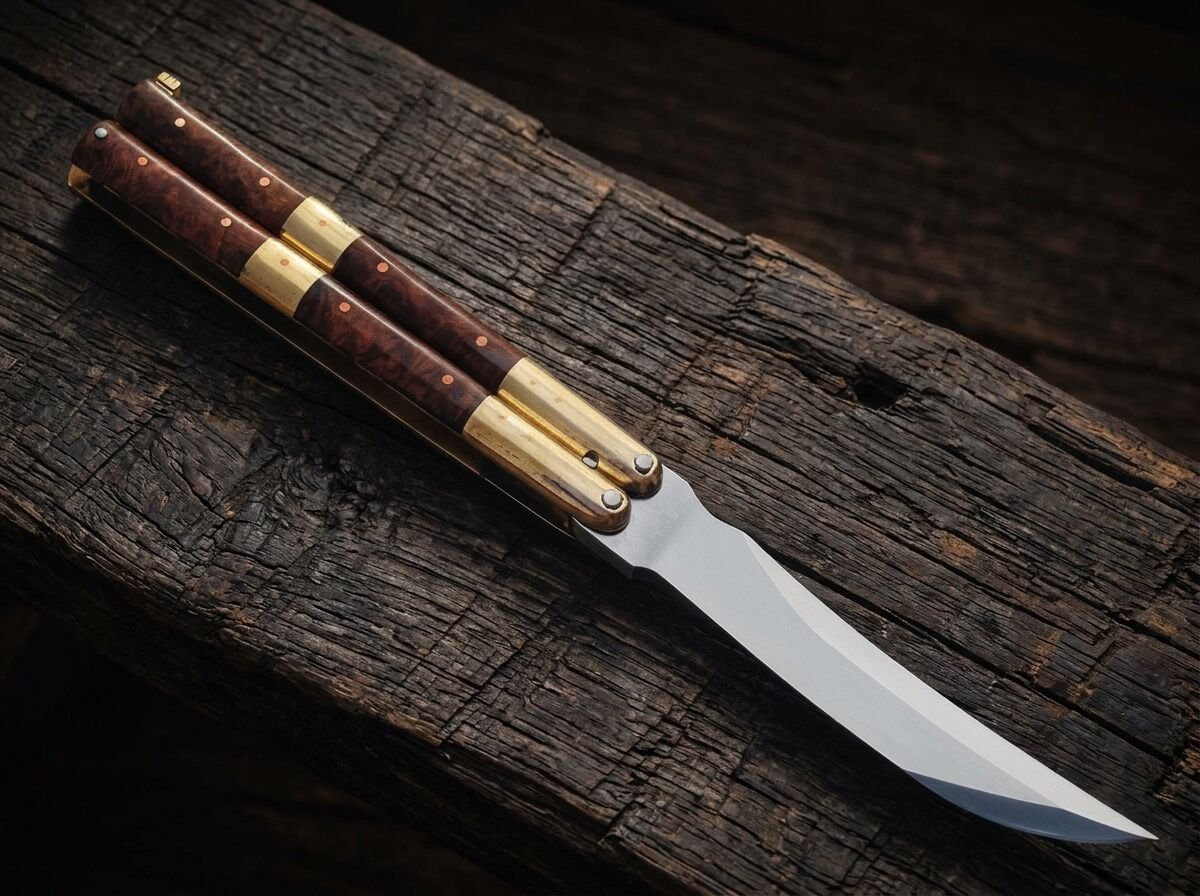
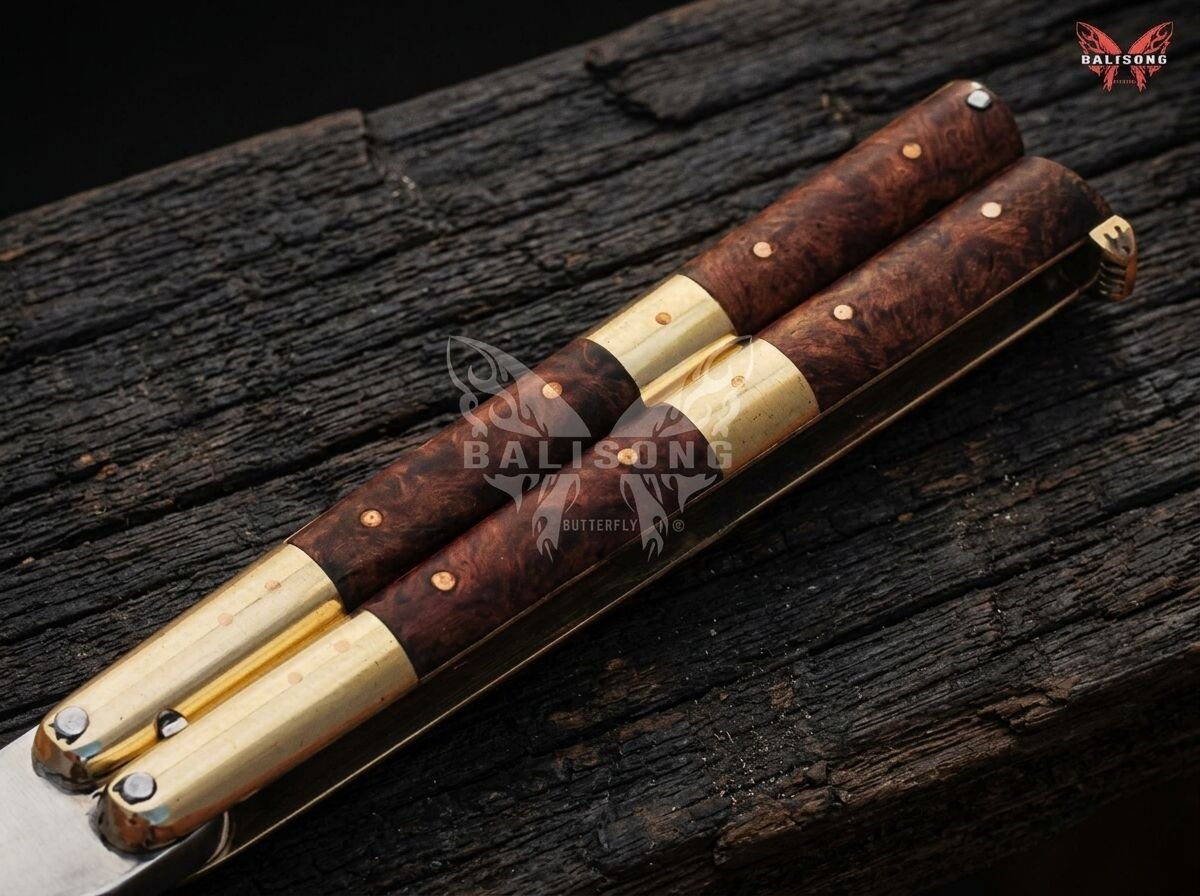
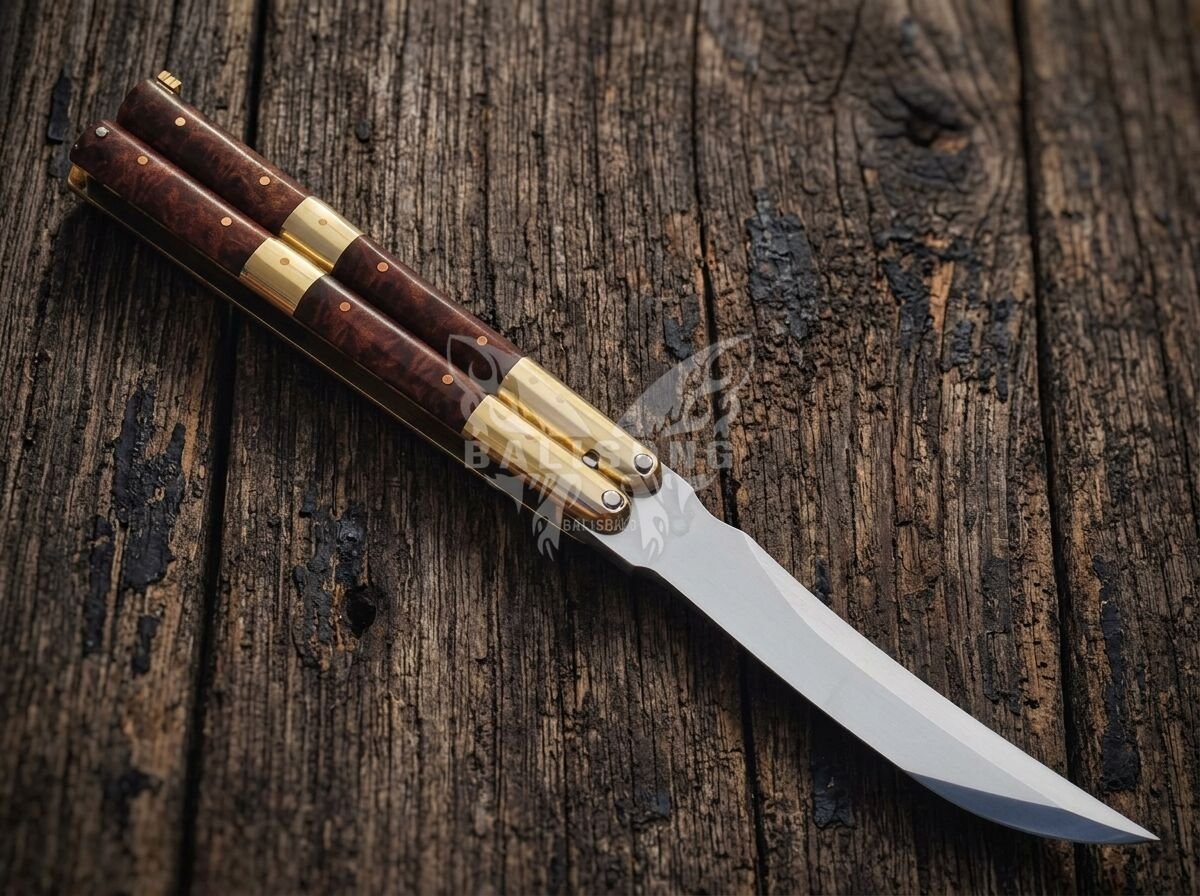
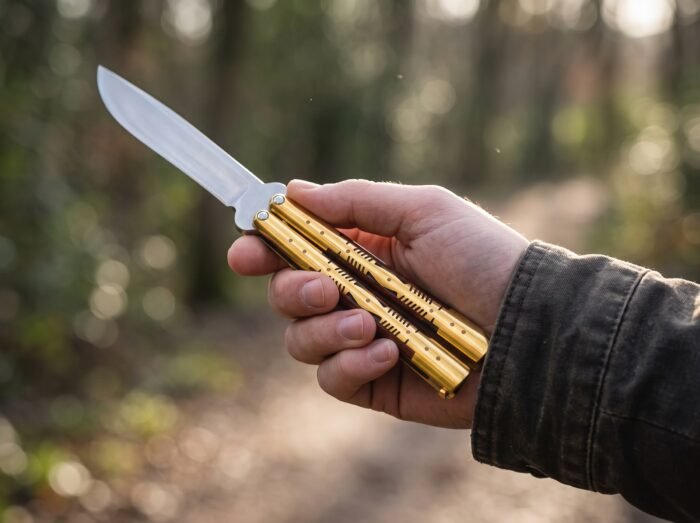
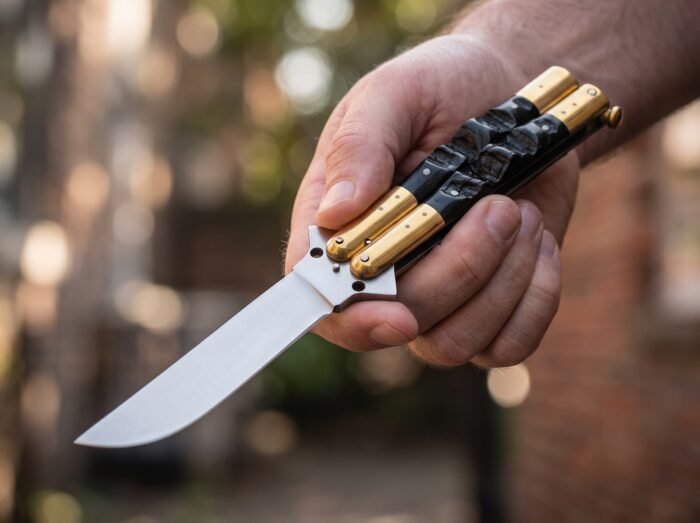
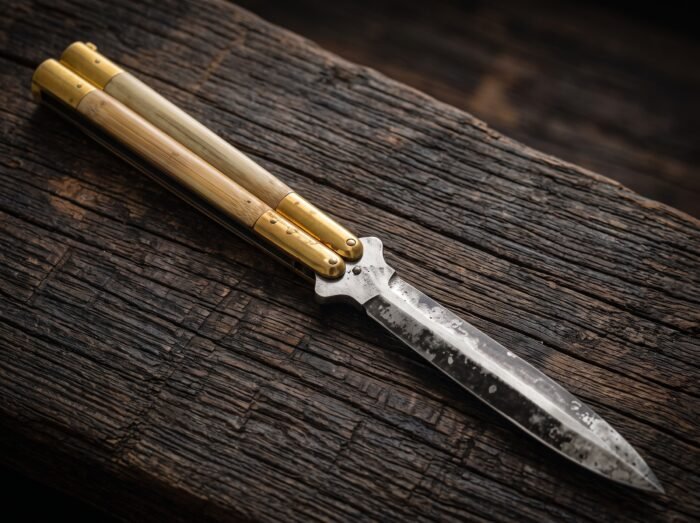
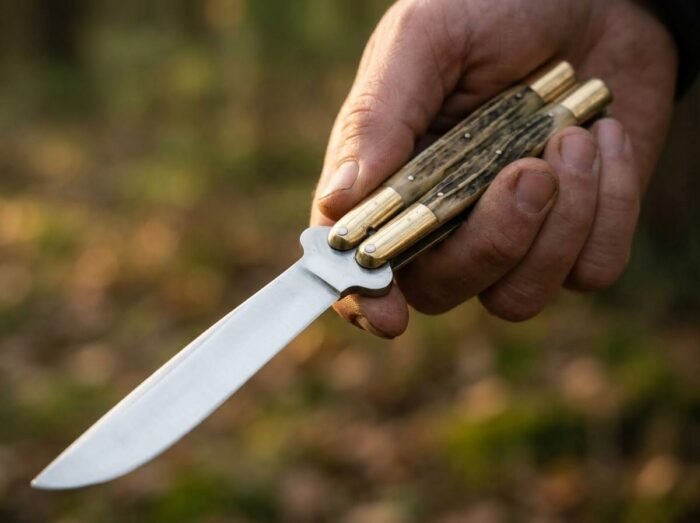
The BF-101 is the plain one. A 24cm Filipino Traditional balisong with a 12cm D2 blade, 200g, brass and rose wood. No tanto, no dagger, no swedge, no filework, and it is one of the two most expensive knives we make. That combination needs explaining.
Plain is the hardest thing to sell and the best thing to own
A knife with a feature has something to point at. A tanto has a tip you can argue about, a dagger has symmetry, a burl handle photographs. This one has a shape, and either the shape is right or there is nowhere to hide.
That is exactly why it costs what it costs. Every hour that would have gone into a distinctive grind on another knife goes into getting the ordinary proportions correct on this one, and ordinary proportions are unforgiving because everybody has seen a thousand of them and knows instinctively when one is off.
What proportion actually means here
- Blade to handle. Twelve centimetres of blade in a 24cm frame. The blade is exactly half the open length, which is why the knife looks settled rather than stubby or over-bladed.
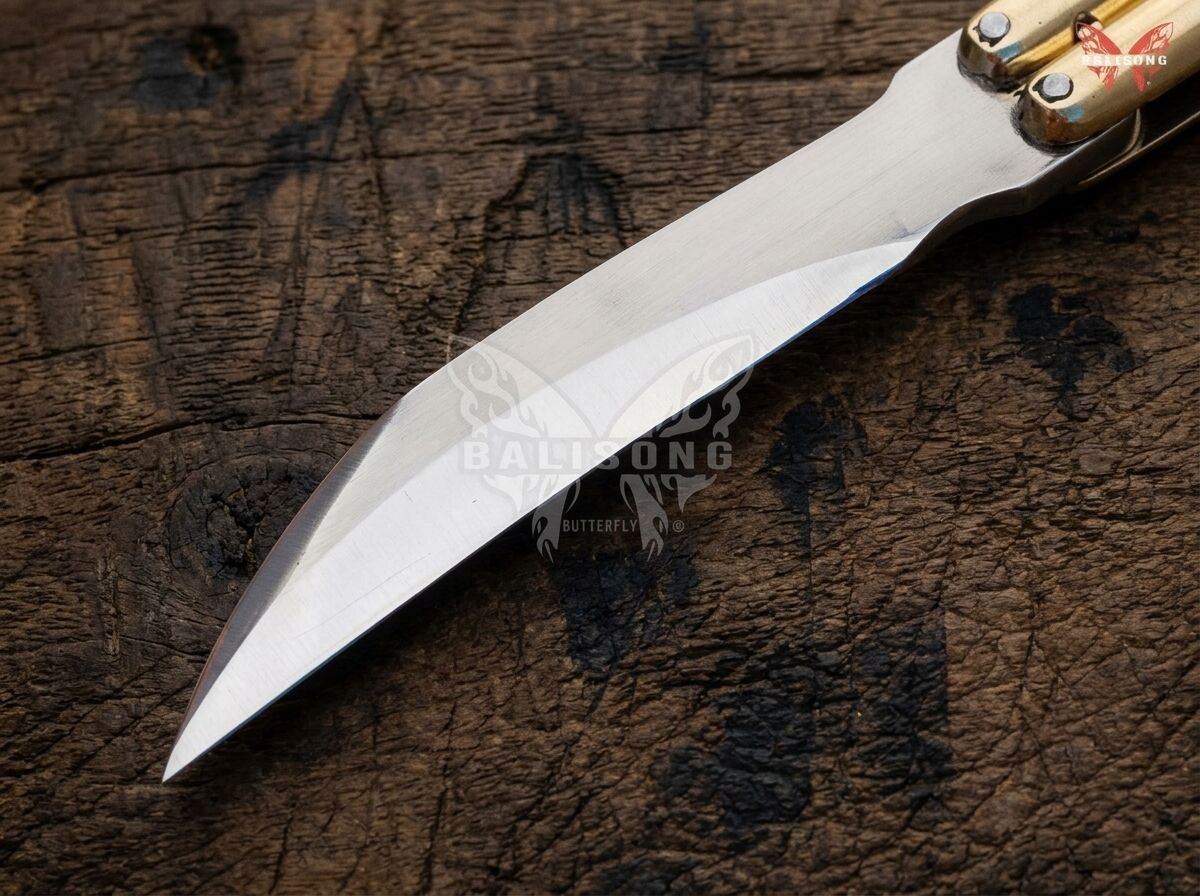
- Where the belly starts. On this profile the curve begins about two thirds along, so the straight section handles push cuts and the curve handles draws. Start it earlier and the knife loses its point. Later and there is no belly worth having.
- Handle width against blade spine. The handles have to hide the blade completely when closed and not look bloated when open. There is very little tolerance in that.
- The taper. The handles narrow toward the pivot end. That is what makes the knife look like it is going somewhere rather than sitting there.
None of that shows up in a specification and all of it is what you are actually looking at.
The Batangas silhouette
This shape is old. It settled in Taal in Batangas province in the early 1900s, and it settled because it worked rather than because anybody was designing. The knife had to cut, fold small, come open one-handed and be repairable by the person who owned it, and this profile is what those four requirements produce.
Every decorative variation we sell is a departure from this. That is not a criticism of the variations, some of which we like a great deal, but this is the one that came first.
This one has more shaping in the handle and more finishing on the brass. You can see it and feel it. Whether that is worth thirty-eight dollars fifty depends on whether you are buying an object or a tool.
If you want a knife to flip and cut and not think about, there are knives further down the same series in the same steel that will do it just as well and last just as long. We would rather say so than take the money quietly and hope you never compare.
Rose wood and brass on a balisong handle
Rose wood is dense, warm brown and regular in its grain, which means two of these knives look broadly alike where a burl handle never would. On a plain knife that consistency is the right choice, because the point here is the shape and a chaotic handle would fight it.
It darkens with the years and takes a soft polish where your hand sits. The brass goes brown and always will. Polishing it back resets the clock and nothing more.
D2 and 200 grams in a butterfly knife
An air-hardening tool steel, roughly one and a half percent carbon and eleven to twelve percent chromium, which is just under the threshold for stainless. Best edge retention we sell, stubborn to sharpen, wants a diamond plate about twice a year.
Heat treated to 58-60 HRC rather than higher, because a carbide-heavy steel taken further chips when the knife lands on a hard floor.
Two hundred grams is the lighter of the two weights in this series. It turns a shade more willingly than the 220g knives and asks less of your forearm across a long session.
Ordering this D2 balisong
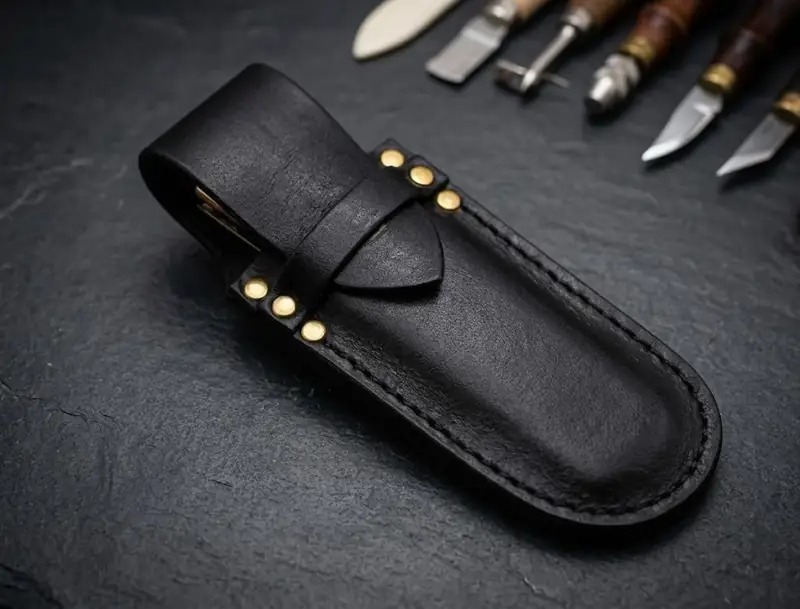
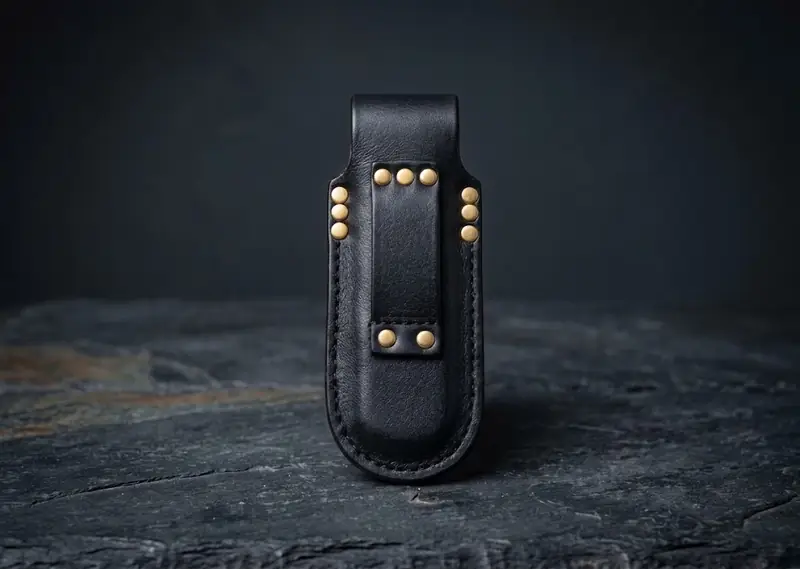
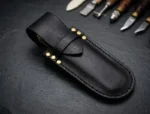
Unsharpened trainer, chosen above Add to Cart. Leather sheath, cut to this frame, included. Nothing to pay on US delivery and $49 flat beyond that, for the order rather than per knife.
Getting a plain blade’s proportions right takes more care than a shaped one, which is the whole subject of our blade types guide. The Dangal sits in the D2 Tool Steel Butterfly category with the rest of this series. If a tanto point suits you better, the Bagwis shares this same 200 gram rosewood frame with a stronger tip instead of extra belly.




Joseph Morgan –
Can’t stop flipping this thing honestly. Even the smaller details like the pivot screws are finished well. Action is smooth right out of the box. No break in needed. 10/10 would buy again.
Jose Hernandez –
Feels way more premium than the price suggests. Handle scales feel great in hand even during longer flip sessions. This is my third order from Balisong Butterfly and they never disappoint. So worth it.
Miguel Richardson –
Showed up right on time and looked even better than the photos. Balisong Butterfly is quickly becoming my go to shop for balisongs. Latch snaps shut clean every time. Shipping was fast and everything arrived well packaged. Made in the USA and shipped worldwide with no long wait on my end.
Wayne Nguyen –
This turned out to be way better than I thought it would be.
Adam Hernandez –
My skepticism about ordering a balisong online disappeared the second this arrived. You can tell real Filipino makers built this. Made in the USA and shipped fast too. Comes with a nice pouch which is a nice touch. Definitely bookmarking this store for future orders.
Anna Clark –
So happy I finally pulled the trigger on this one. Blade came shaving sharp straight out of the box. This flips cleaner than knives twice the price. Weight is perfectly balanced for flipping. Already added a few more items from this company to my cart. I keep coming back to Balisong Butterfly because it’s always this good.
Roger Miller –
This exceeded what I pictured in my head before ordering. Would send this as a gift again in a heartbeat.
David Hunt –
Best butterfly knife I’ve ever owned. Hands down. Weight is perfectly balanced for flipping. Balisong Butterfly has earned a repeat customer with this one. Zero complaints from me on this purchase.