
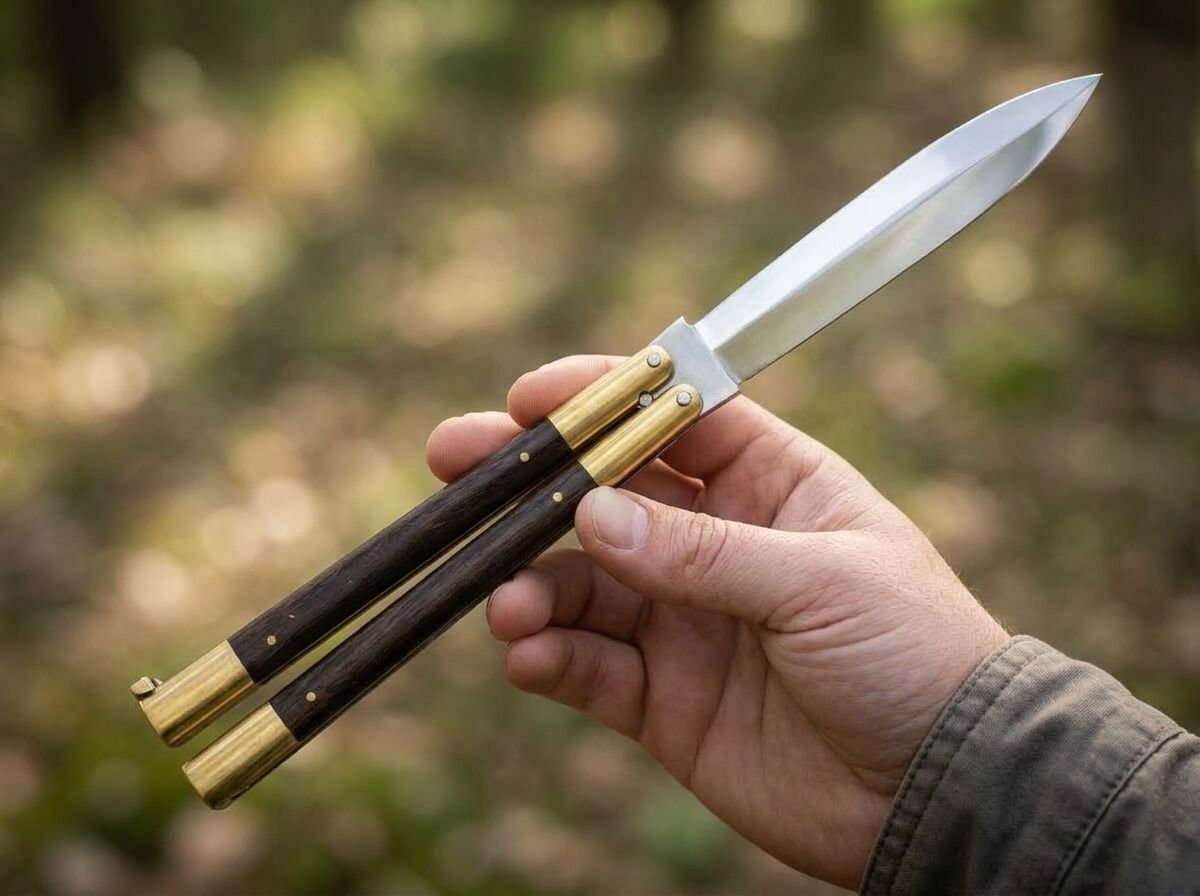
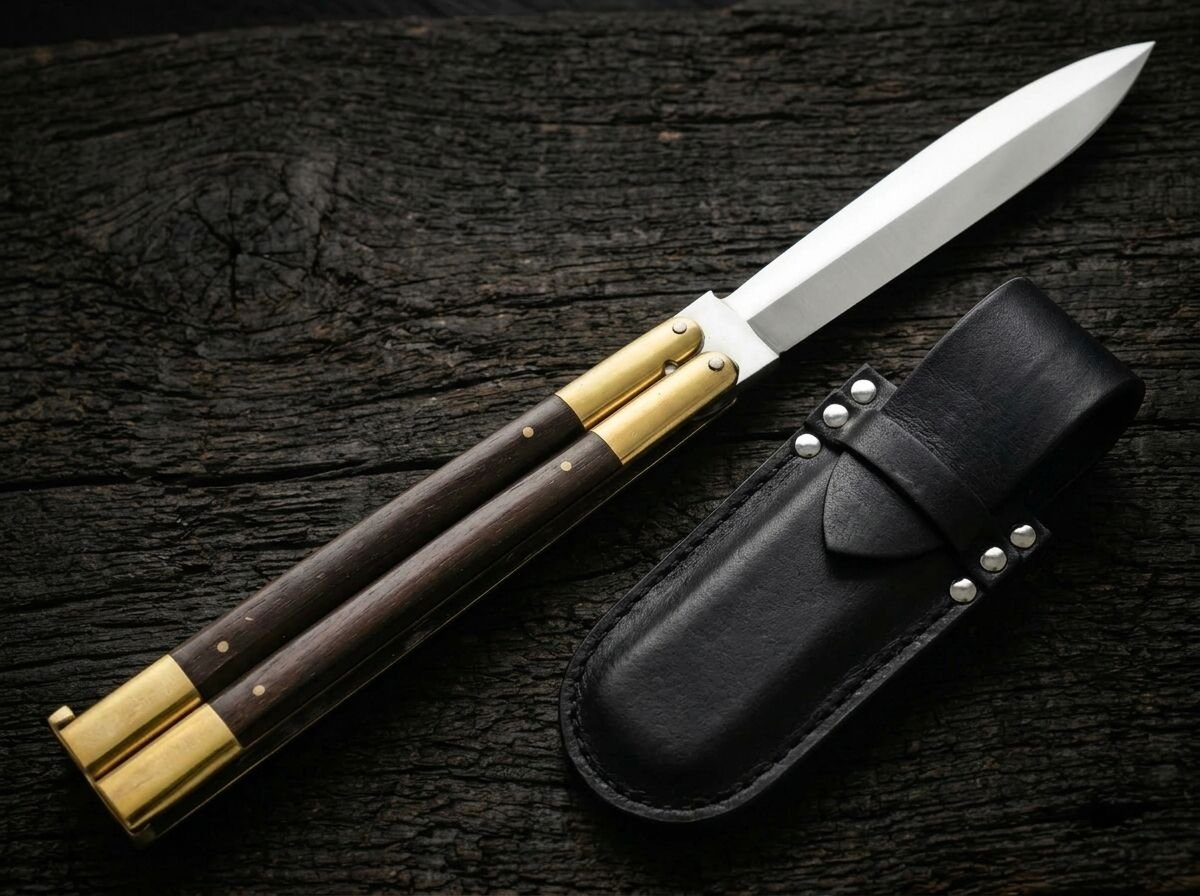
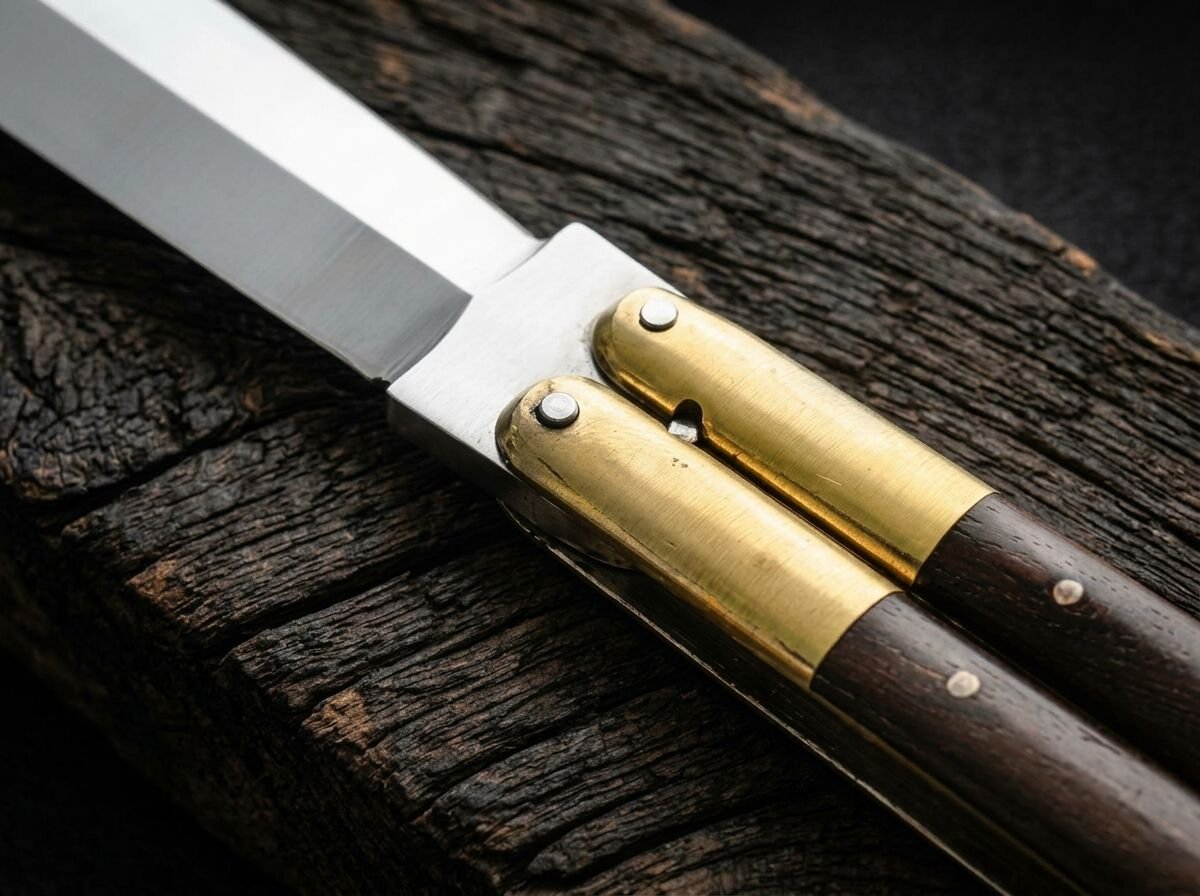
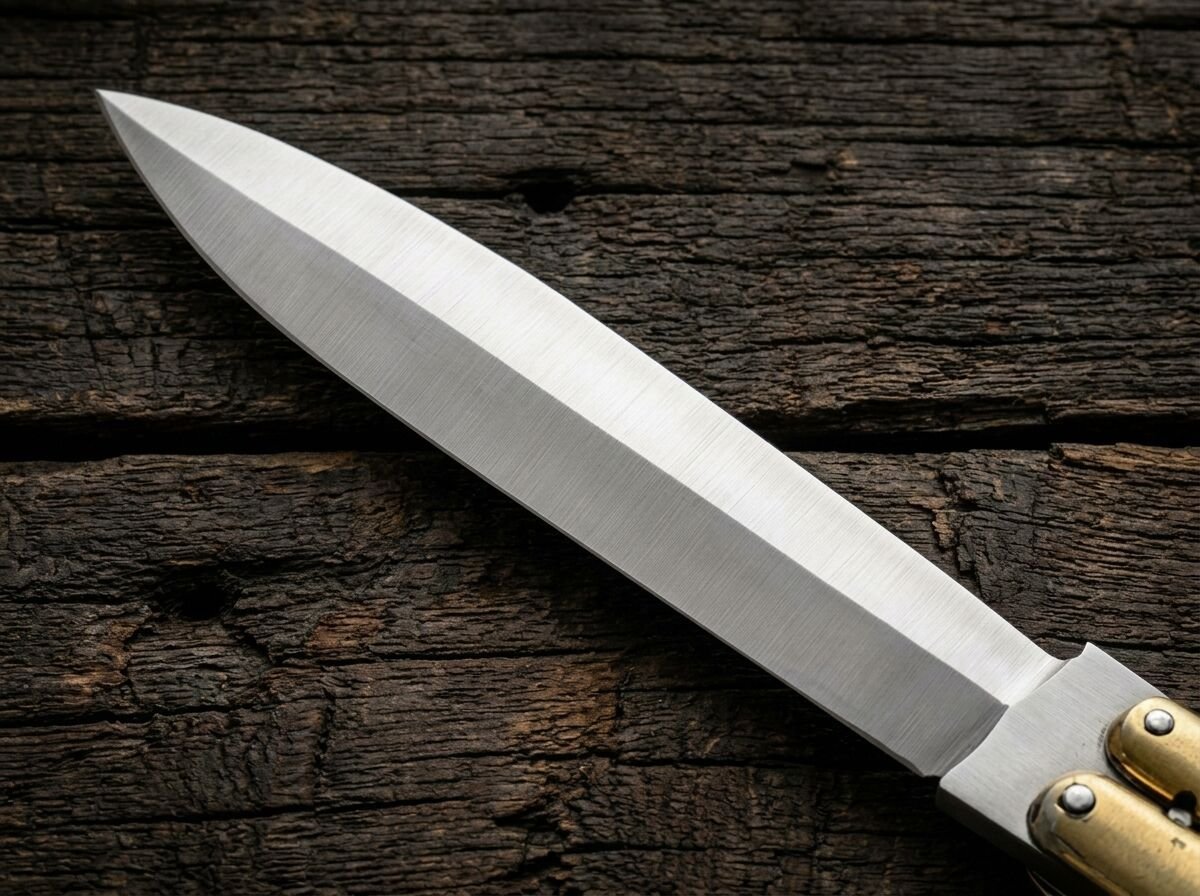
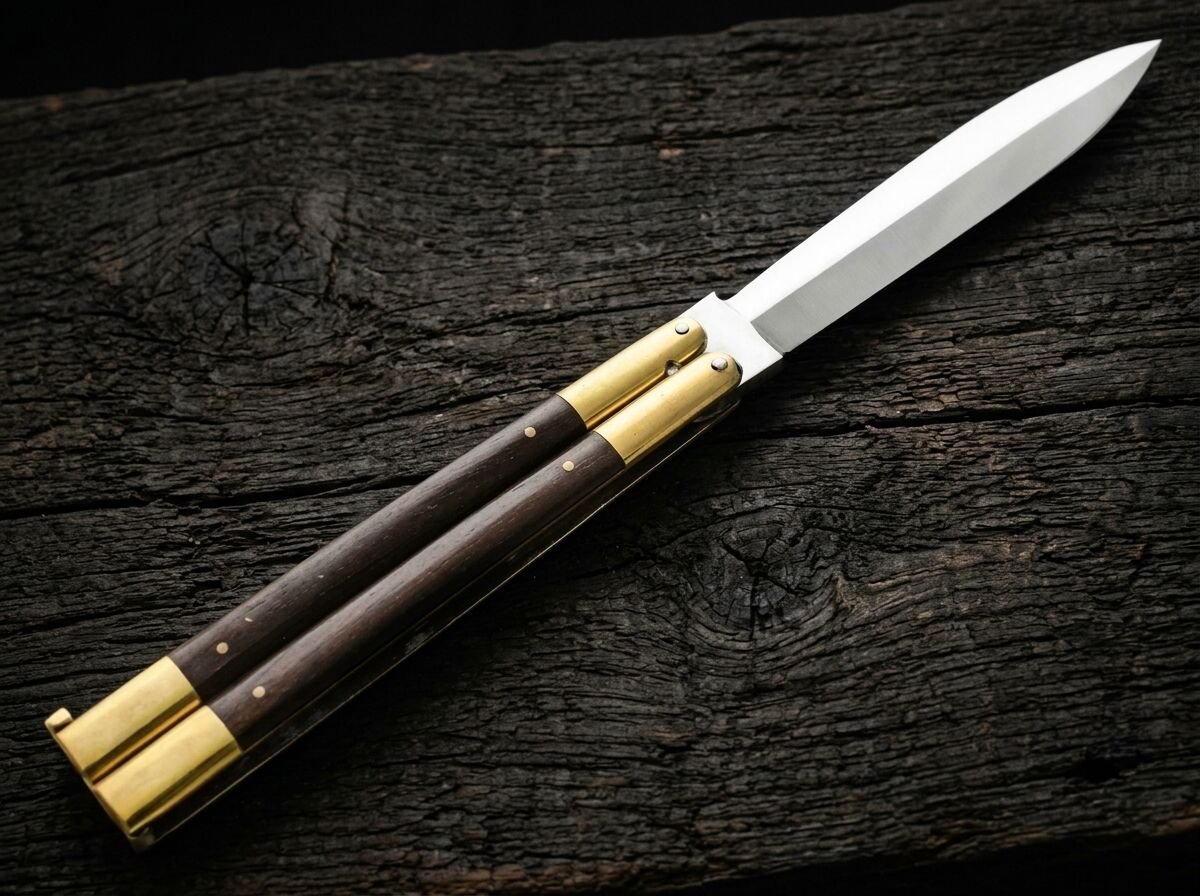
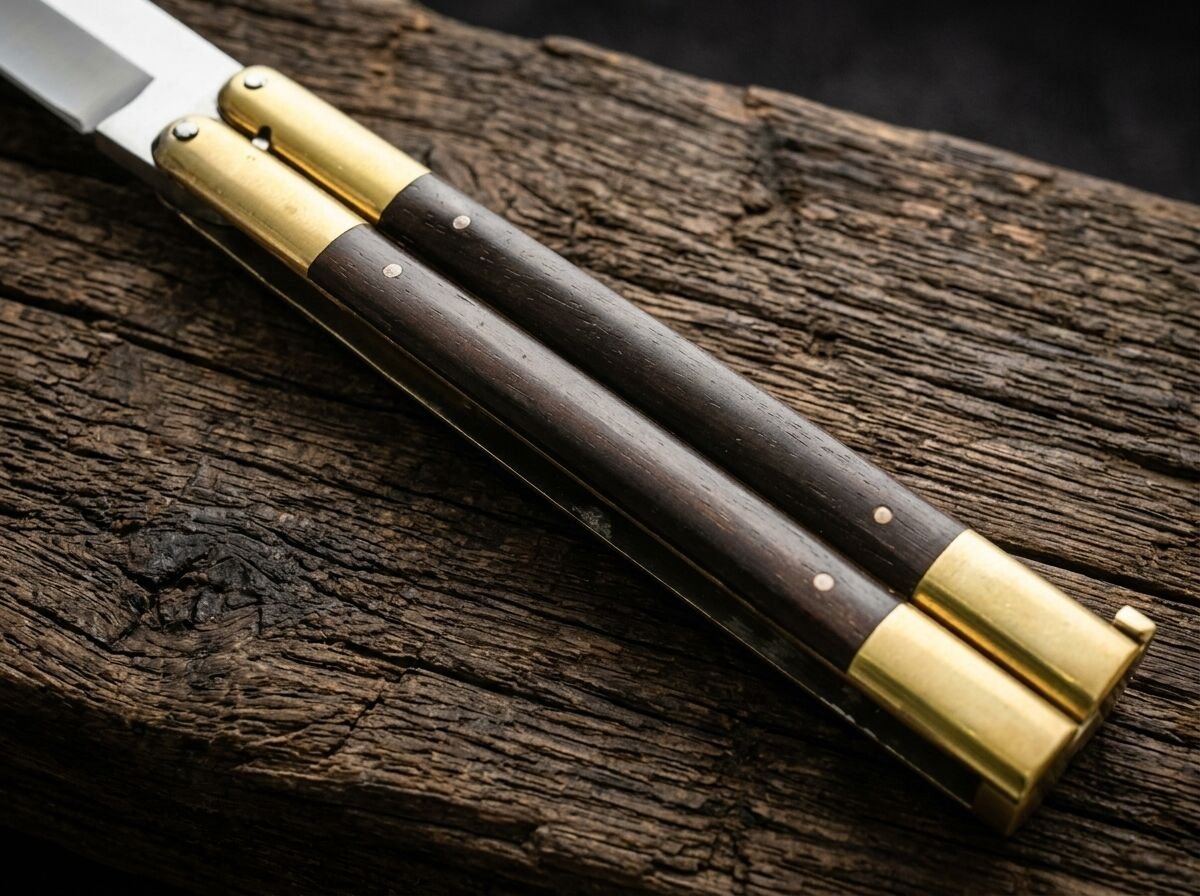


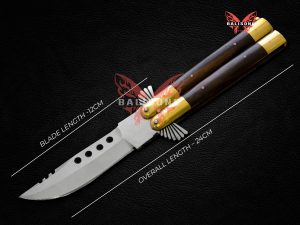
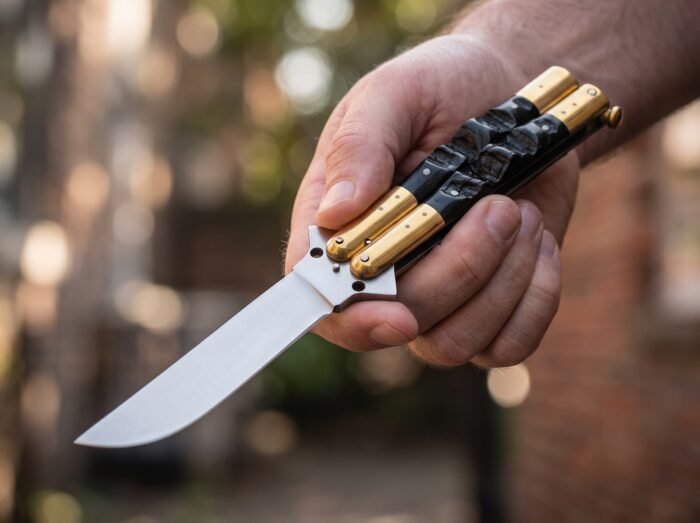
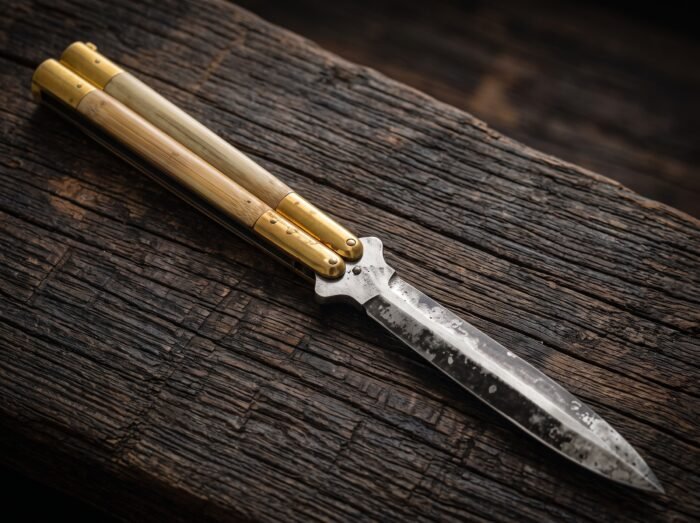
A working high carbon flipper at 180g, brass and kamagong, built to be used daily.
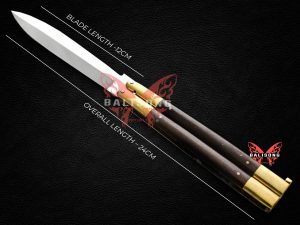
Blade Materials – High Carbon Steel
Handle Materials – Brass with Kamagong Wood Inserts
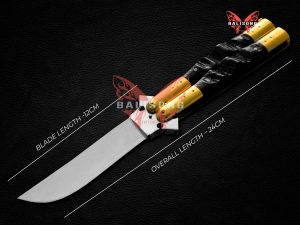
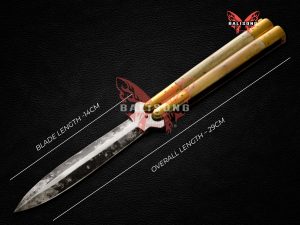
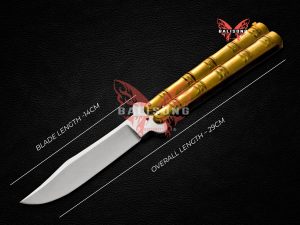
Overall Length – 24cm
Blade Length -12cm
Weight -180g
Handmade in Austin, TX. Ships Worldwide.
Every knife is built by hand in our workshop in Austin, Texas, by Filipino makers trained in the Batangas tradition. We ship to any country we are allowed to send a knife to. Free shipping inside the United States, 49 USD flat everywhere else. Shipping and delivery times
Hand-forged in the Batangas tradition
The balisong was born in Batangas, Philippines. Every knife in this catalogue is made by Filipino artisans and metalworkers, many from families with generations of experience, now working in the United States. Blades are ground from 440C stainless, D2 tool steel, VG10, high carbon and Damascus, and fitted to handles of kamagong ebony, carabao horn, Philippine deer horn and bone.

Checked four times
Detailed hand inspection, smoothness and pivot testing, blade alignment checks, and durability and finish quality control. If a knife doesn't meet our standards, it never reaches our customers.
Engraving available
Initials or short text $19 in the font you choose, a custom logo $29. Select it above Add to Cart and upload the logo file at checkout.
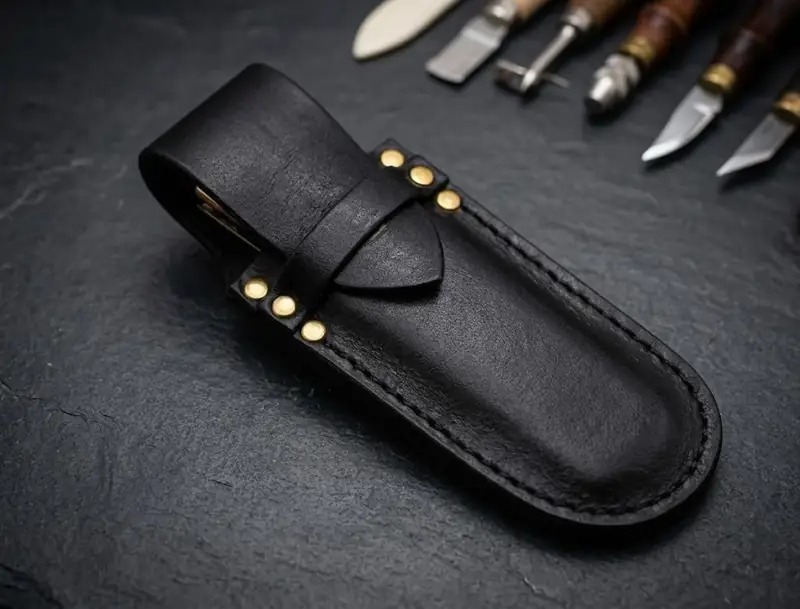
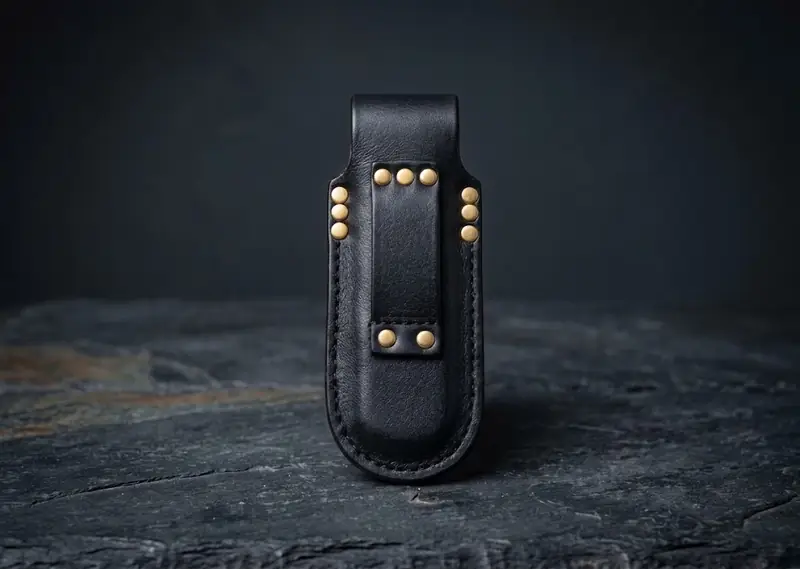
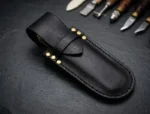
A sheath with every knife
Every knife includes a fitted leather sheath. Both live blades and trainers are offered, and every order ships worldwide with tracking.
Buying more than one?
Trade pricing starts at ten pieces and reaches 45% under retail at volume, with your logo on the bolster. See wholesale and bulk, or design one from scratch.
Shipping and returns
Processing
Most orders ship in 1 to 3 business days.
USA delivery
4 to 8 business days, tracked door to door.
International
8 to 14 business days. Customs times vary by country.
Made to order
Out of stock pieces are handcrafted for you in 2 to 3 weeks.
We ship worldwide. The customer is responsible for customs, VAT and local legality.
Returns and exchanges Read the warranty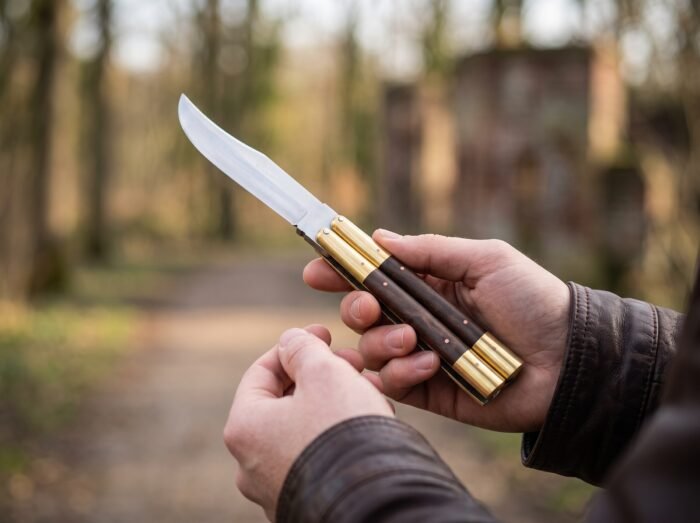
 Blade Materials – 440c Stainless steel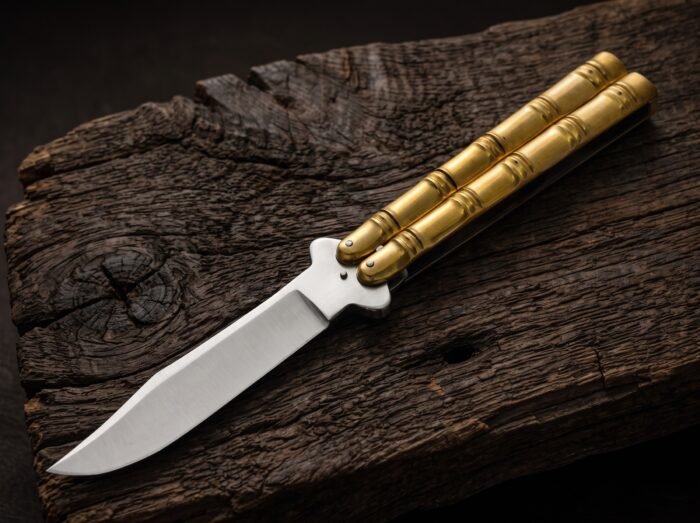
Reviews
There are no reviews yet.