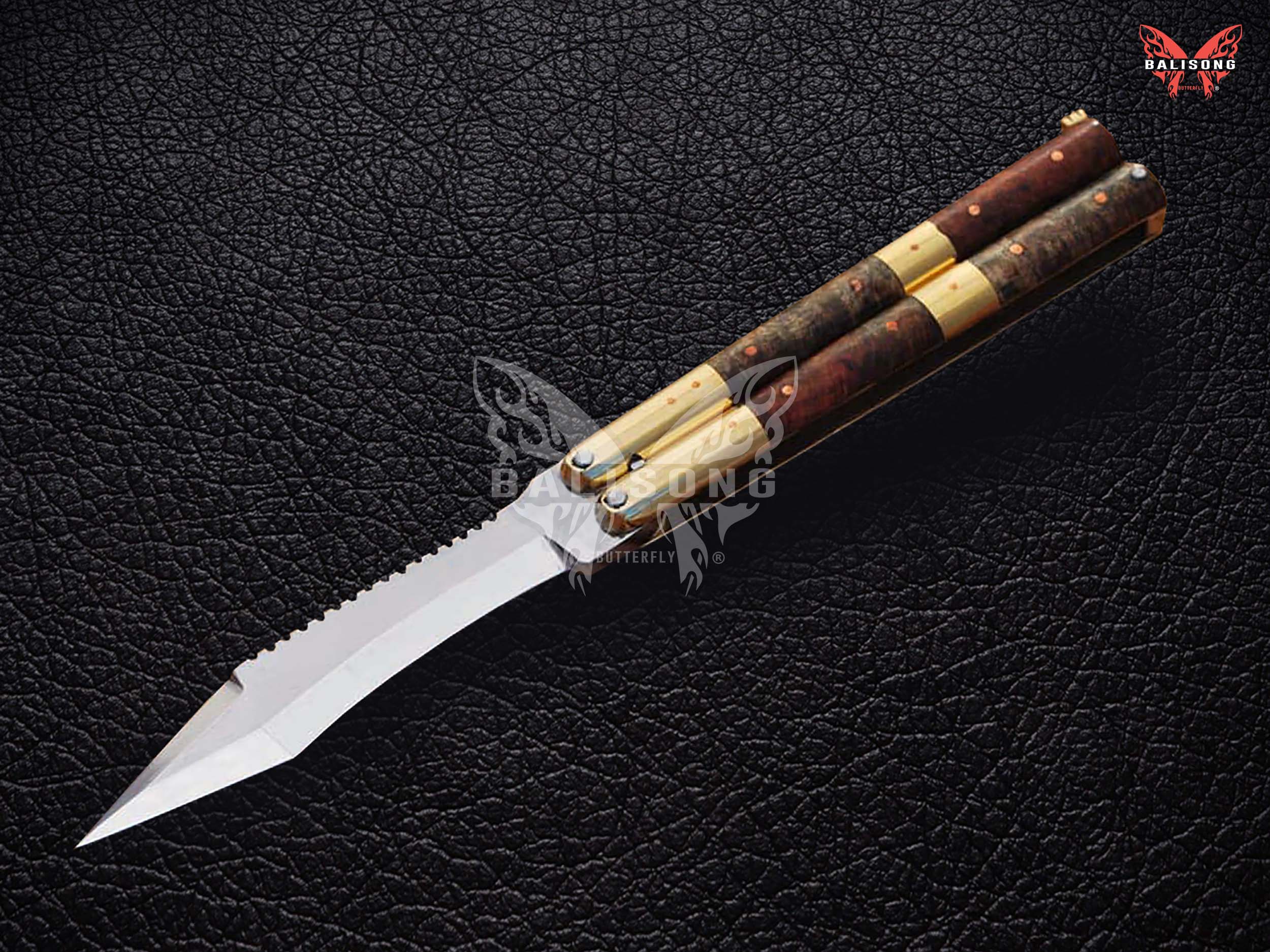
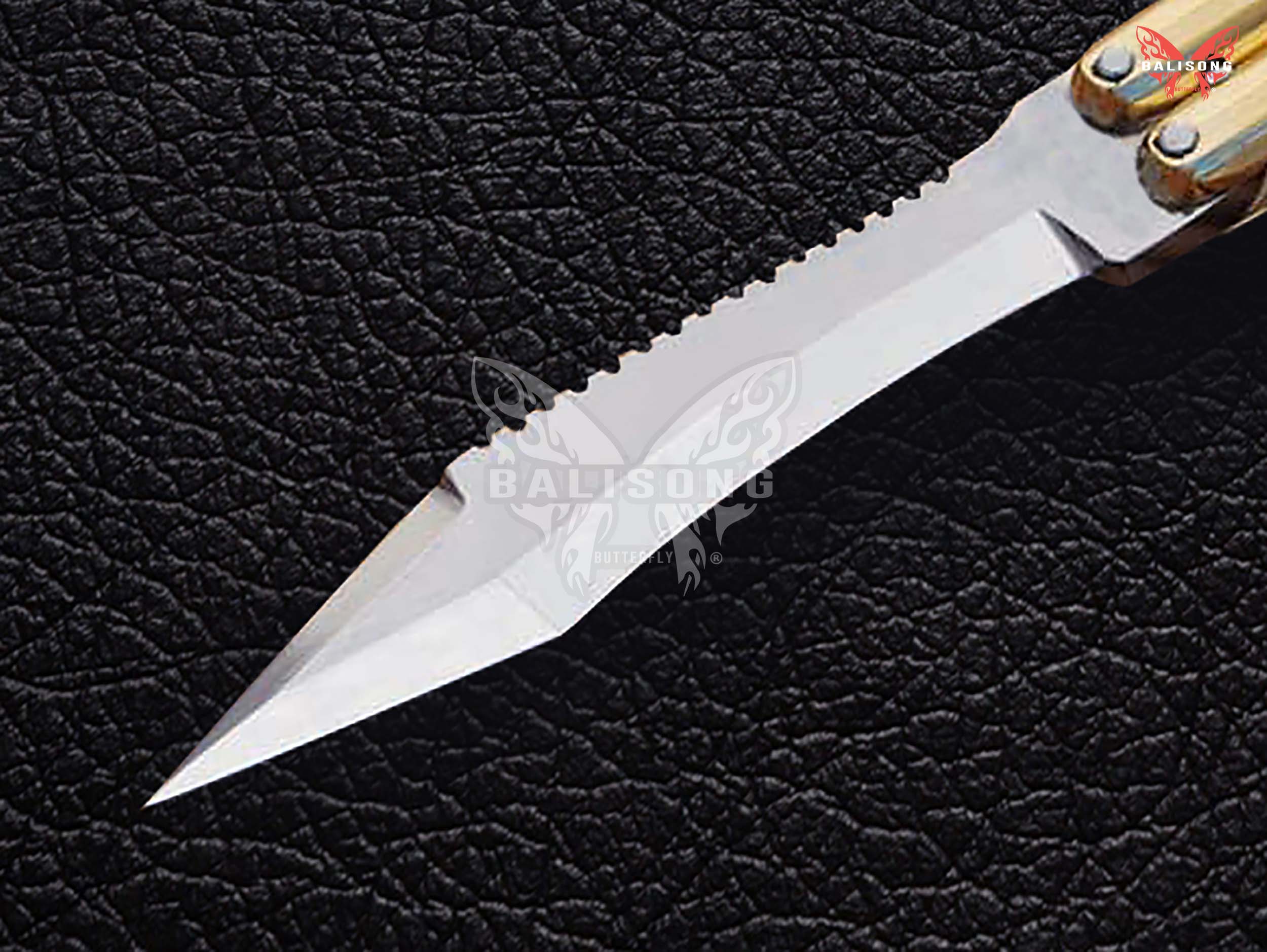
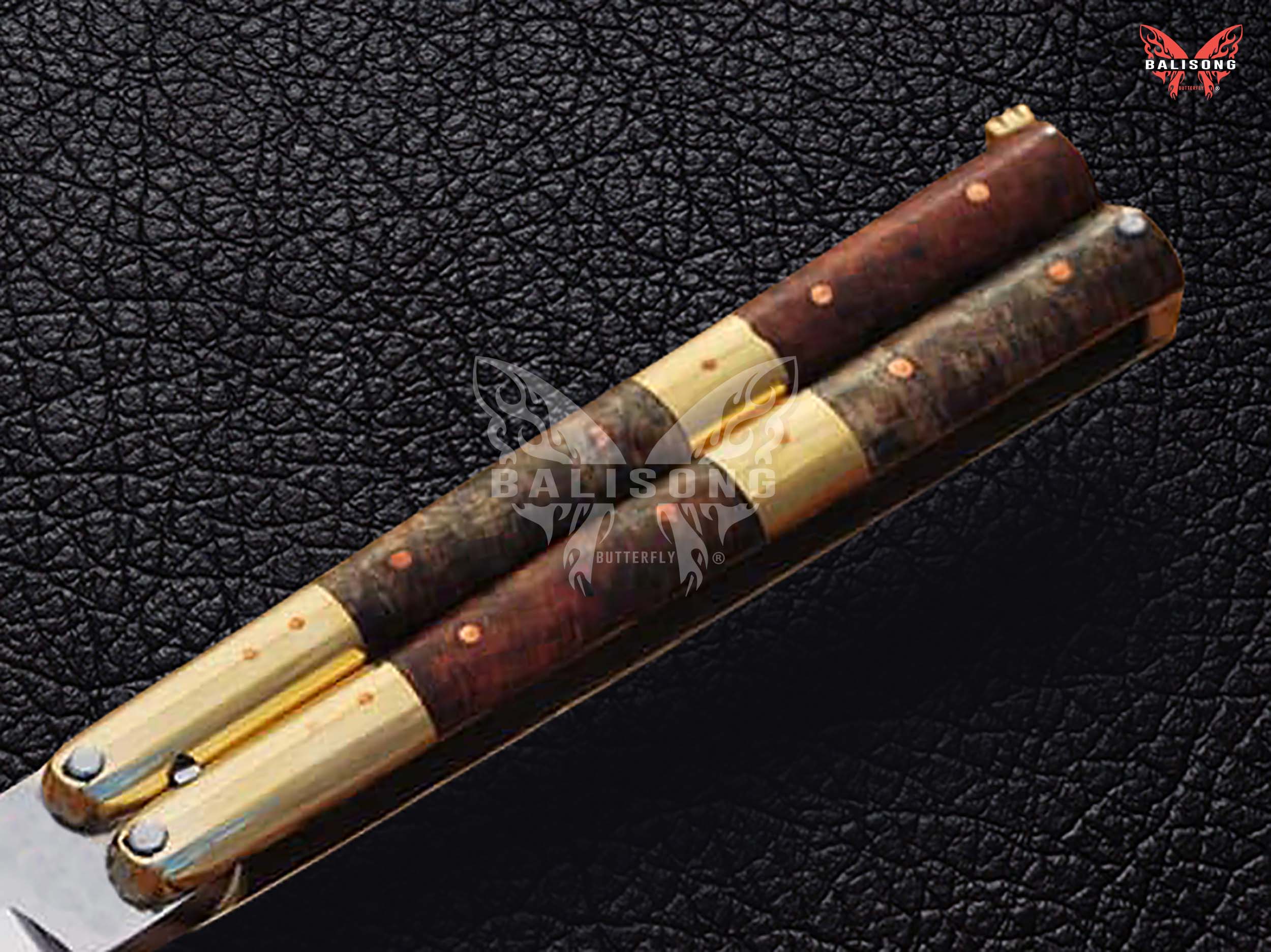
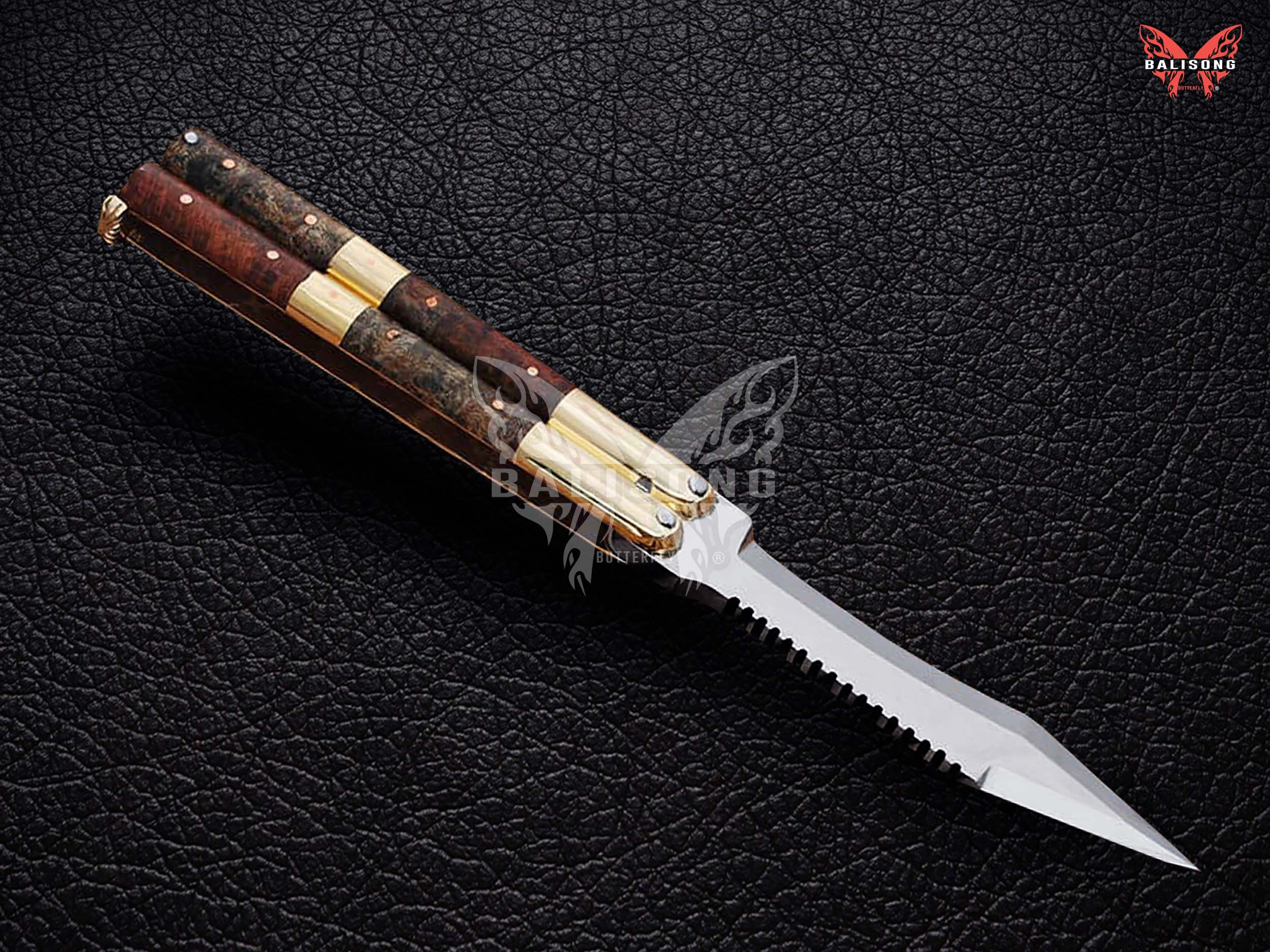
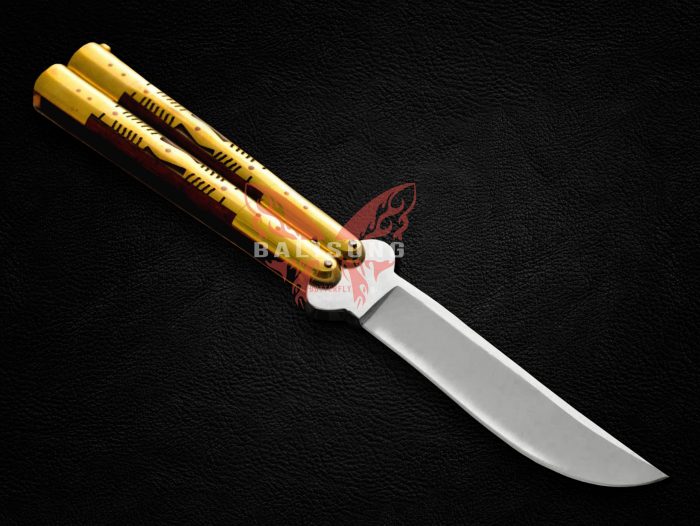
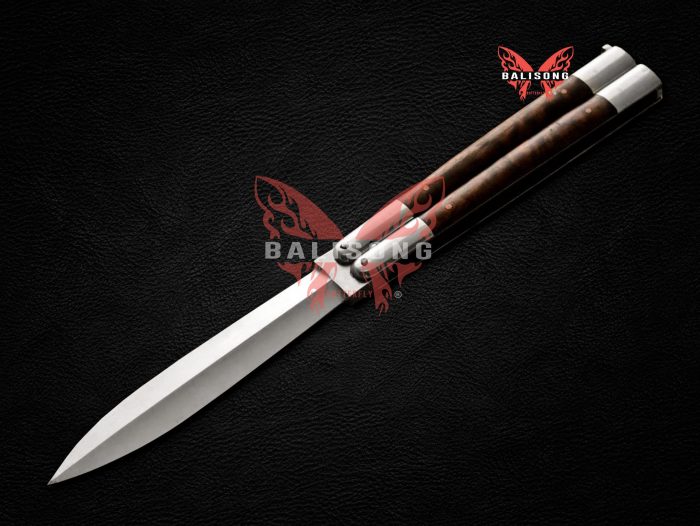
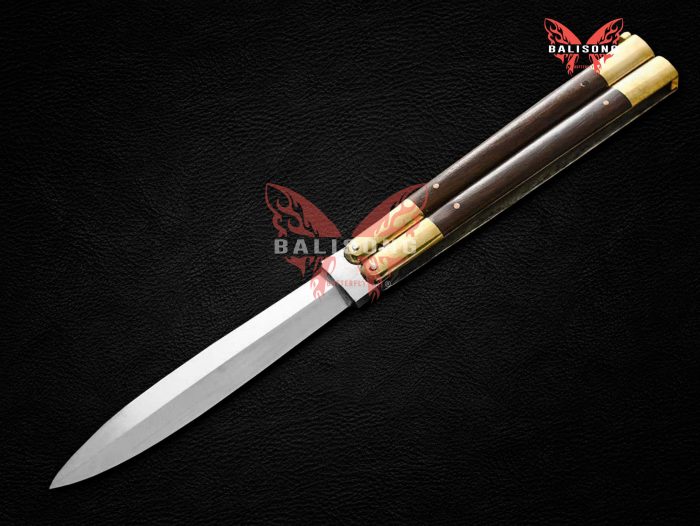
The BF-102 is the dagger blade in the Filipino Traditional line: 24cm open, a 12cm D2 blade, 200g, brass and rose wood. We build six different blade profiles across this series and nobody explains what they actually do, so here is that page.
The six shapes, and what each is for
| Profile |
What it is |
Good at |
Bad at |
| Plain |
A straight spine running to a modest point, curve in the last third |
Everything, adequately. The default for a reason |
Nothing in particular. Nothing exceptional either |
| Dagger |
Symmetrical, two edges, point on the centreline |
Balance in the hand. Piercing. Looking like nothing else |
Draw cuts, food, anything needing a spine to push on |
| Tanto |
Two flats meeting at an angle rather than a curve |
Tip strength. It will not snap |
Slicing. Very little usable belly |
| Hunting |
Belly carried forward, generous curve |
Drawing cuts, actual work |
Fine point control |
| Shark |
High flat spine dropping to a shallow point |
Push cuts, controlled work, safety near a thumb |
Piercing. There is barely a point to pierce with |
| Snake |
Decorative spine profile on a plain grind |
Being looked at |
Nothing, but it earns nothing either |
What a dagger actually gives you
Symmetry, and symmetry is not just aesthetic. Because the point sits on the centreline, the blade balances the same either way up and the knife handles identically whichever way it opens. On a balisong, where the blade arrives in your hand in an orientation you did not entirely choose, that is a real advantage rather than a talking point.
It also means twice the grinding. A symmetrical blade has to agree with itself along the whole length, and a dagger that is half a degree out reads as wrong immediately in a way a hunting blade never does. That is the hardest grind we do and it is most of why this profile costs more than the plain one.
What a dagger takes away
Two edges means no spine. There is nowhere safe to put a thumb, which rules out a great deal of controlled cutting, and it is poor at drawing cuts because there is very little belly on either side.
Sharpening takes twice as long, because you are doing two bevels rather than one and a bevel that meets on a centreline gives you no reference to work from.
There is also a legal point, and this is not a joke section. Double-edged blades are treated differently from single-edged ones in a number of jurisdictions, sometimes very differently, regardless of length. If you are buying a dagger profile, read the rule that applies at your own address before you order rather than after. We ship what is legal for us to ship and the local rule is yours to know.
D2 steel and a rose wood balisong handle
D2 is an air-hardening tool steel: about one and a half percent carbon, eleven to twelve percent chromium, just under the stainless threshold. It holds an edge longer than anything else we sell and wants a diamond plate when it eventually needs work, roughly twice a year.
We heat treat to 58-60 HRC, which on a dagger matters more than usual, because a symmetrical point has less steel behind it than a tanto and a harder blade would find that out on the first drop.
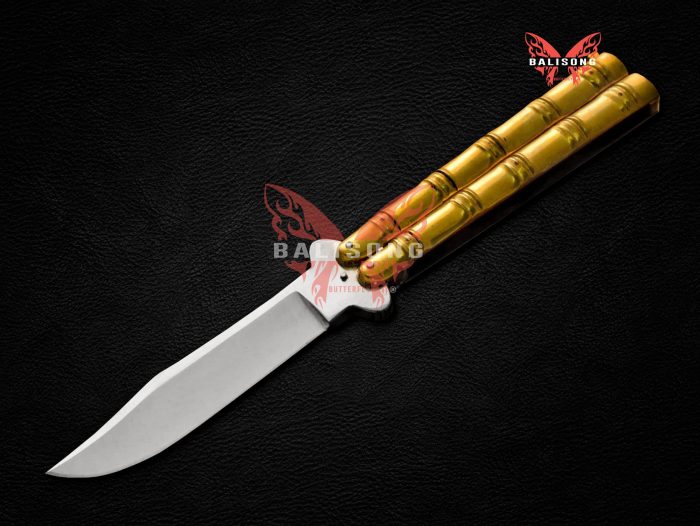
Rose wood is dense, warm brown, regular in the grain, and it darkens quietly over the years. The brass goes brown alongside it.
Two hundred grams
The lighter of the two weights in this series. It rotates a shade more willingly than the 220g knives and tires your arm less across a long session, which suits a blade profile you will probably be flipping more than cutting.
Ordering this D2 dagger balisong
Unsharpened trainer, selected above Add to Cart, and on a double-edged blade that is a more serious recommendation than usual.
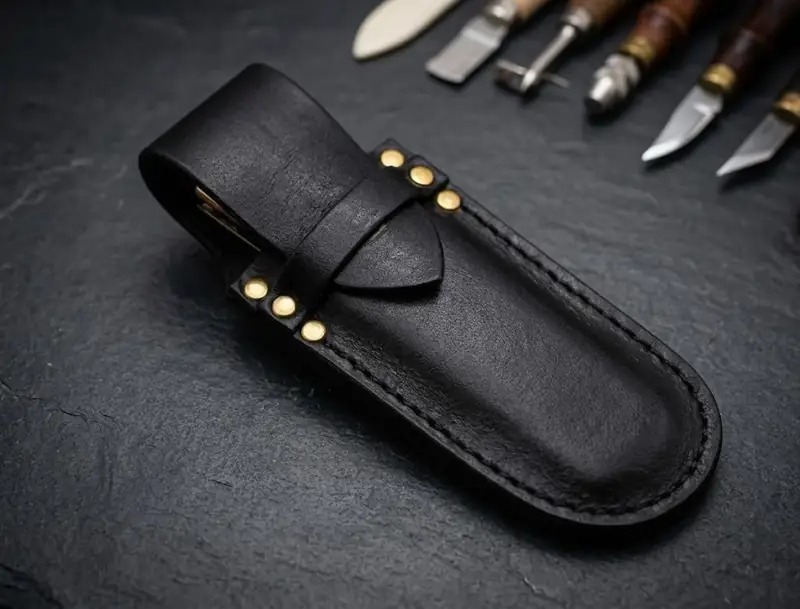
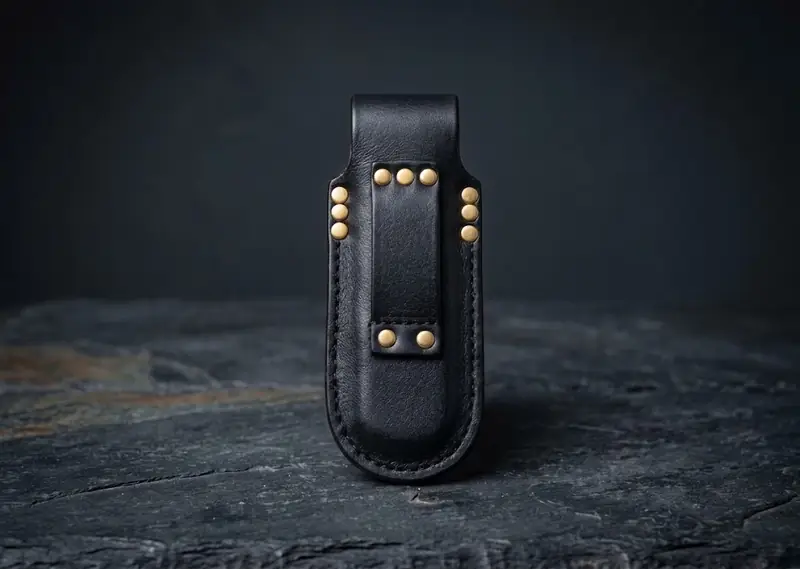
Leather sheath, fitted to this frame, in the box. US delivery is on us. Beyond that it is $49 for the order however large.





Reviews
There are no reviews yet.