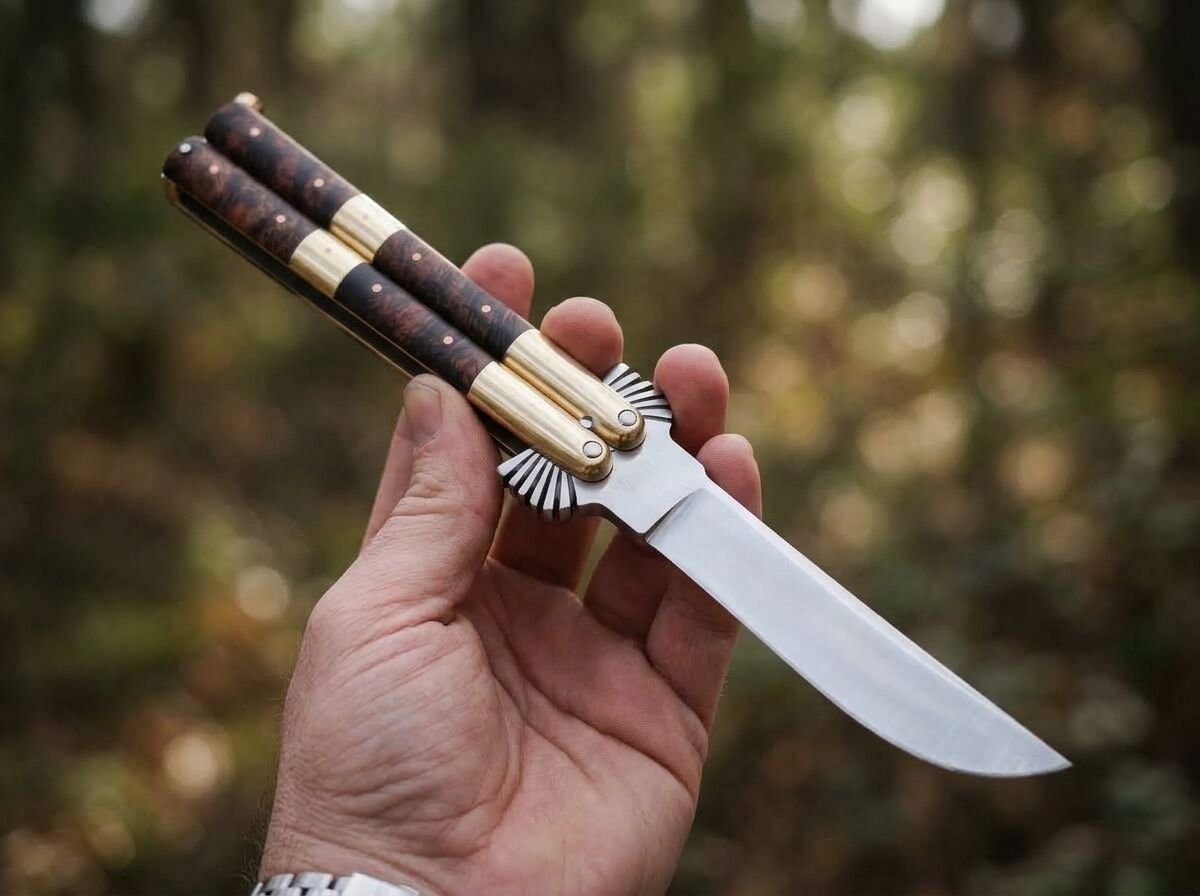
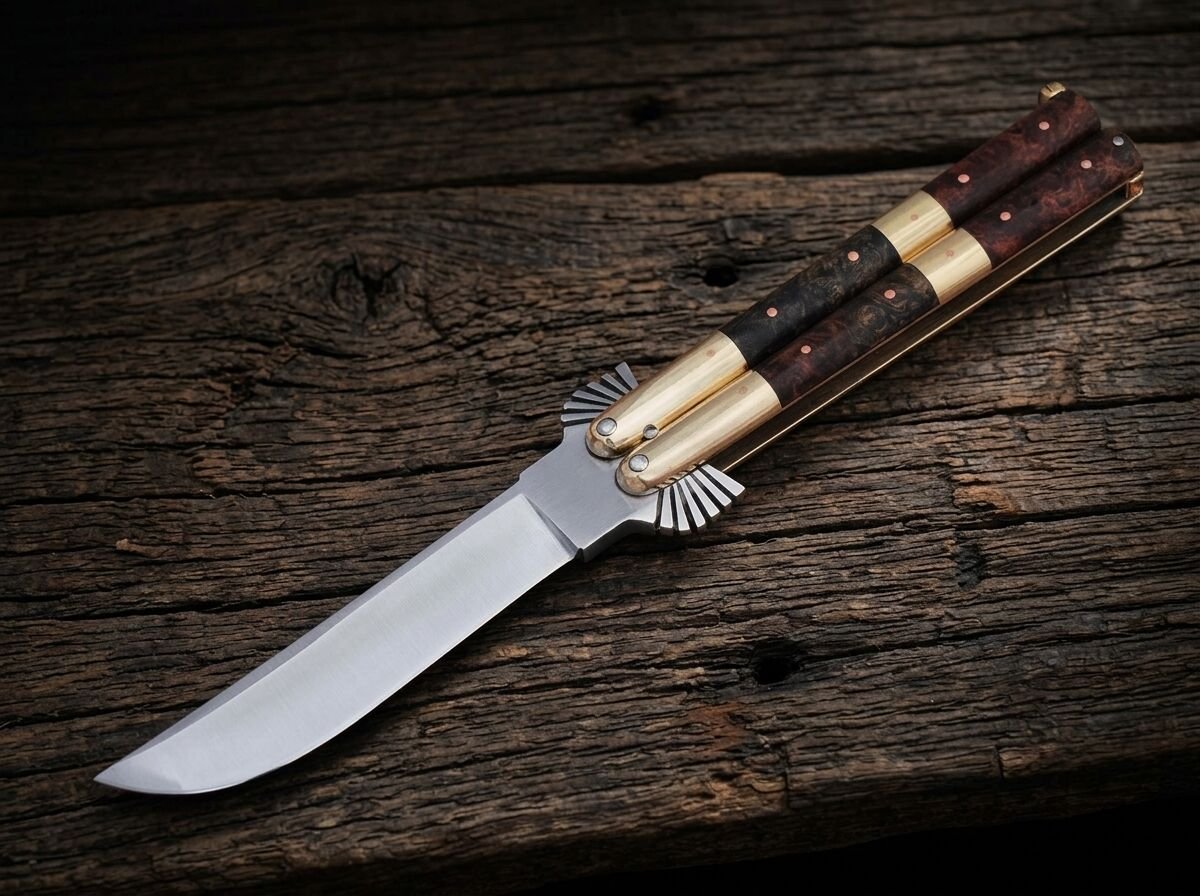
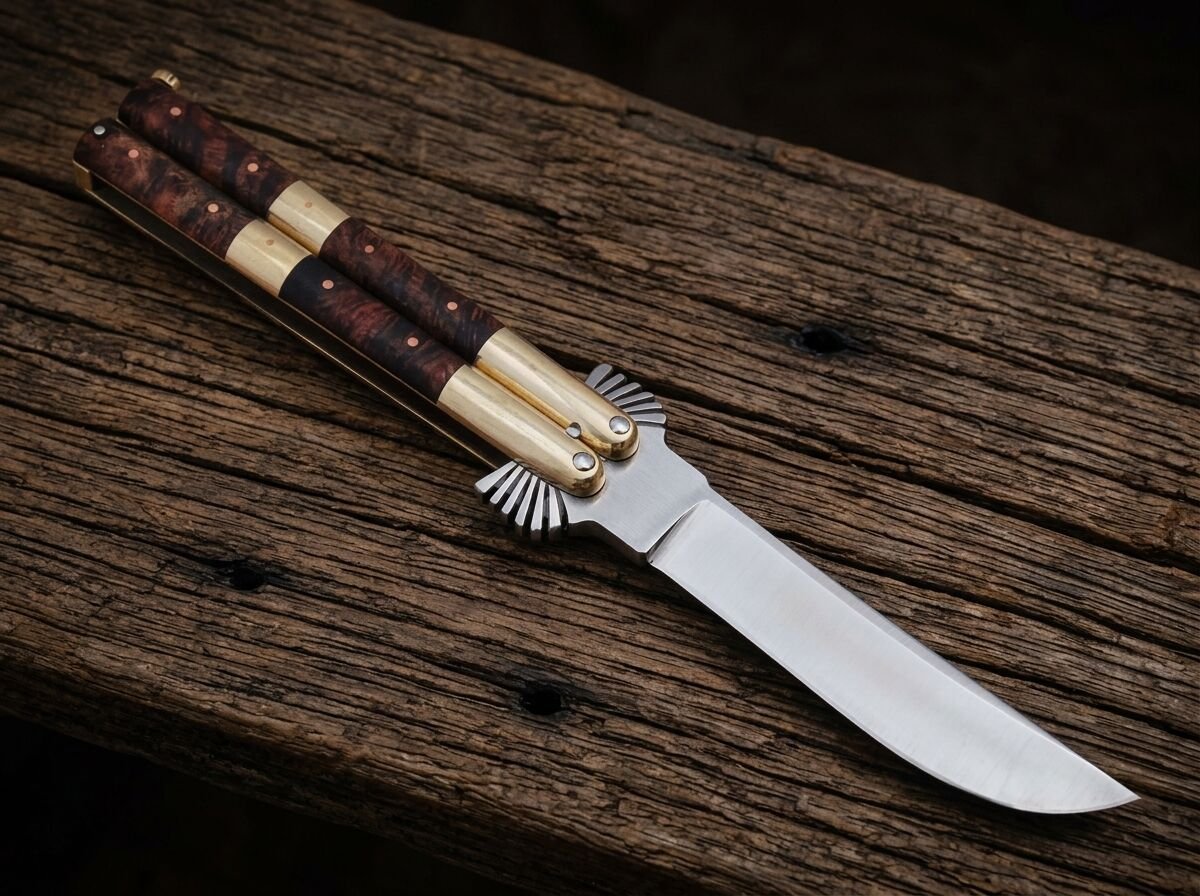
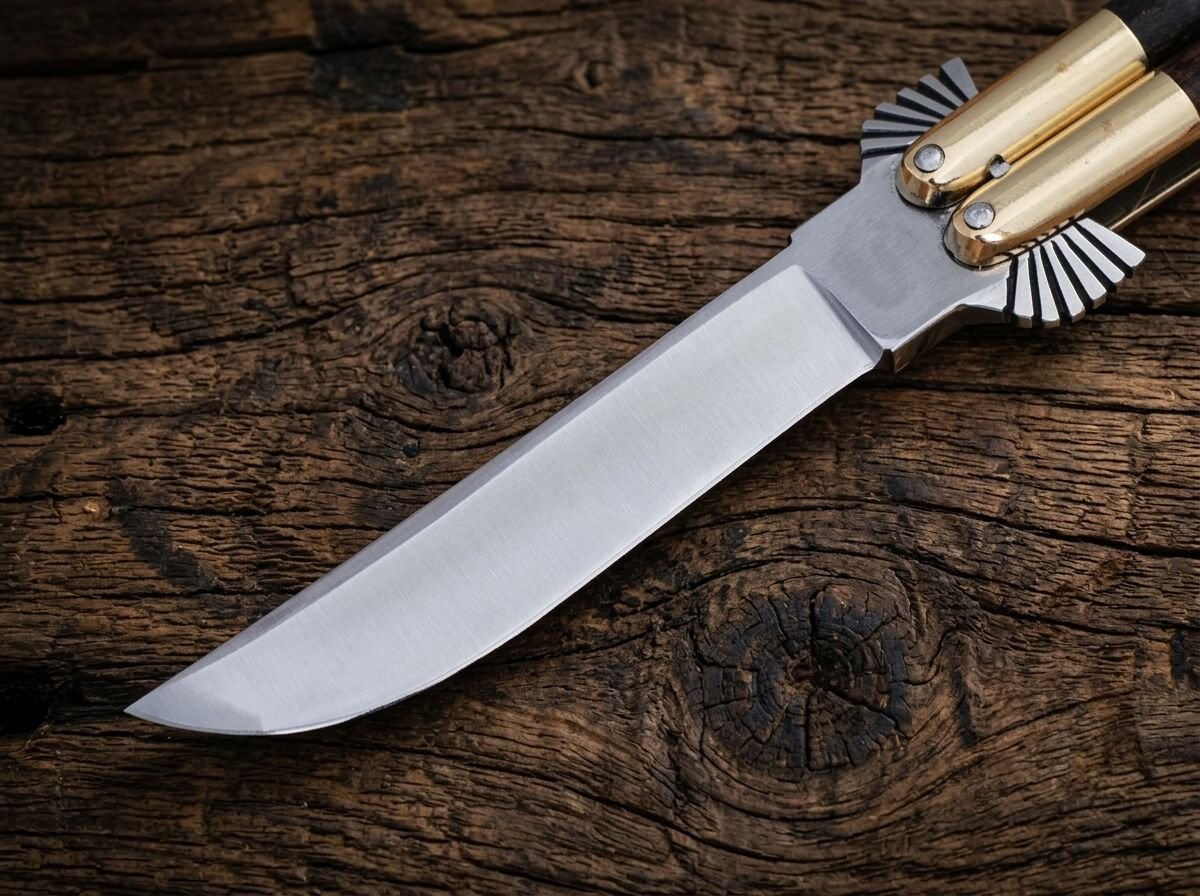
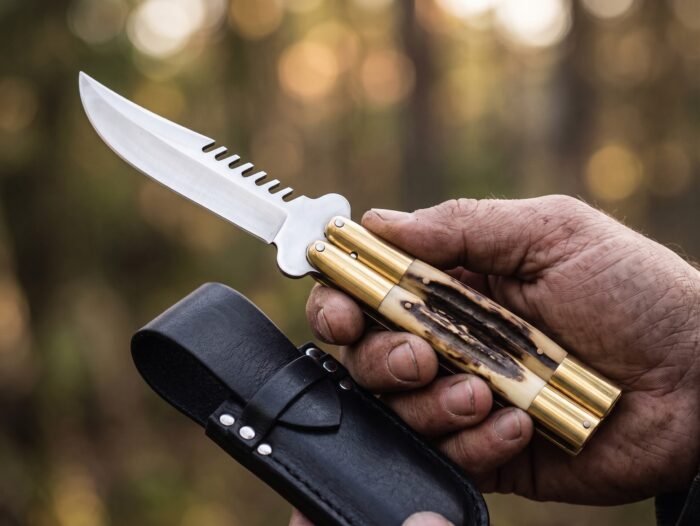
D2 tool steel, brass and rose wood, 24cm open, 12cm blade, 220g. Every BF-105 is made by hand rather than run off a machine by the thousand, and this page is mostly about what that actually means when the box arrives, because the phrase gets used by a lot of people who do not mean it.
“Handmade” has been worn out, so here is the specific version
Blanks are cut, then the bevels are ground by a person against a reference line. Handles are fitted to their blade rather than to a drawing. Pivots are set and tested by hand until the knife falls open the way it should, and if it does not, it goes back rather than forward.
What none of that means is that we chisel the steel out of a mountain. Stock removal is stock removal, and anybody implying otherwise about a production balisong at this price is having you on.
So what varies between two BF-105s
Quite a lot, actually, and you should know which parts are the material talking and which parts would be us doing a bad job.
| What you might notice |
Verdict |
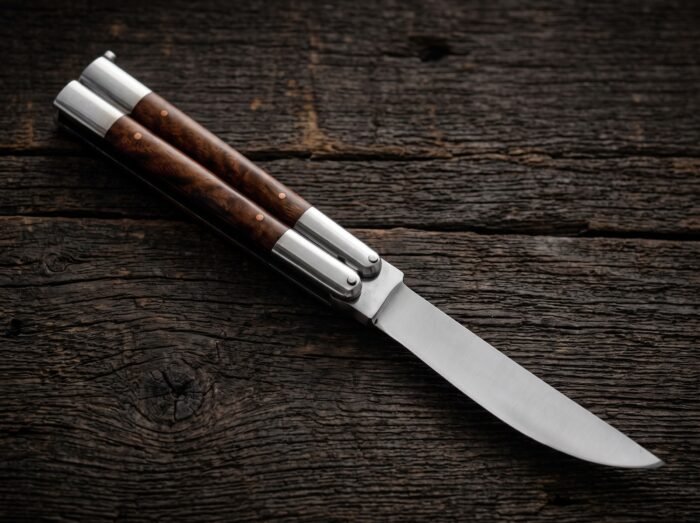
| Grain figure completely different from the photo |
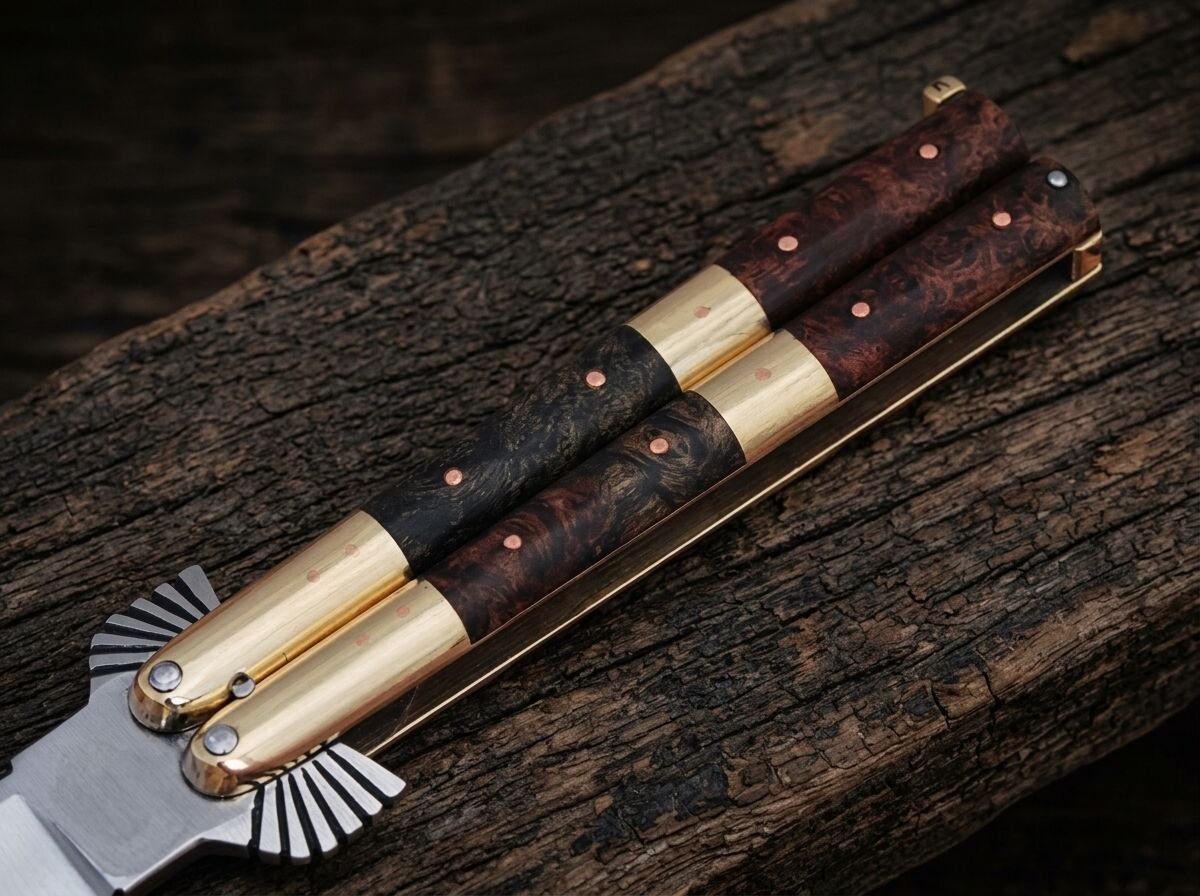
Normal. Rose wood is a tree, not a print run |
| Colour a shade lighter or darker than the listing image |
Normal, and it will darken further anyway |
| Brass slightly less bright than in studio lighting |
Normal. Brass dulls from the day it is cut |
| Grind line sitting a hair differently to another example |
Normal within limits, and the limit is whether you can see it without hunting for it |
| One handle heavier than the other in a noticeable way |
Not normal. Tell us |
| Handles that do not close flush, or a blade that touches a channel wall |
Not normal. Tell us |
| A pivot that will not hold a setting |
Not normal. Tell us |
One thing on this knife does not vary at all, and it is the hardness. Every blade goes through the same cycle and comes out between 58 and 60 HRC, because that is a number set by an oven and a timer rather than by how the afternoon at the bench went.
The top half of that table is why people buy handmade.
The pattern has not needed updating
The outline is the traditional Batangas one, which came out of the smithies around Taal, and there is nothing on this knife that does not earn its place. No thumb ramp. No jimping. No coating hiding the steel underneath it.
That is partly taste and partly a decision about what to do with limited bench hours. Add a feature and it needs finishing, and finishing time comes out of the same afternoon that could have gone into the grind. We would rather the grind won.
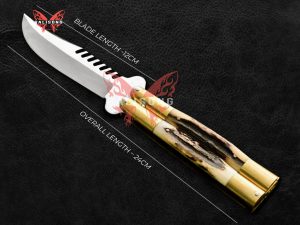
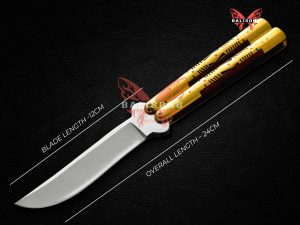
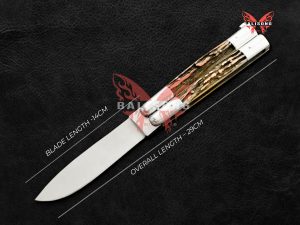
Specification for this D2 rose wood balisong
- Blade: D2 tool steel
- Hardness: 58-60 HRC
- Handle: brass with rose wood
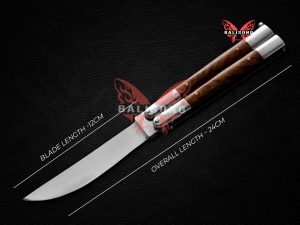
- Overall length: 24cm open
- Blade length: 12cm
- Weight: 220g
What to do in the first ten minutes
Open the box and check the pivots before you do anything clever with it. A knife that has been in transit for a week has been vibrating in a truck, and pivot screws occasionally arrive fractionally tighter or looser than they left.
You want the handles to swing under their own weight with a slight resistance, not to flop and not to fight. Adjust in very small increments. The knife care guide covers this properly, and getting it right is the difference between a knife that feels alive and one you quietly stop picking up.
Then wipe the blade. It ships lightly oiled and that oil is for the journey, not for you.
Sharp or blunt.50 for this D2 butterfly knife
The option sits above Add to Cart. The trainer is this knife with the bevels left unsharpened, identical in weight and balance, and it exists because learning to flip on a live edge is a way of finding out how good your local urgent care is.
If you already flip, order it sharp. If you do not, order it blunt and then order it sharp in six months. The trainer guide lays out why we sell them at the same price rather than discounting the blunt one, which is a question we get more than any other.
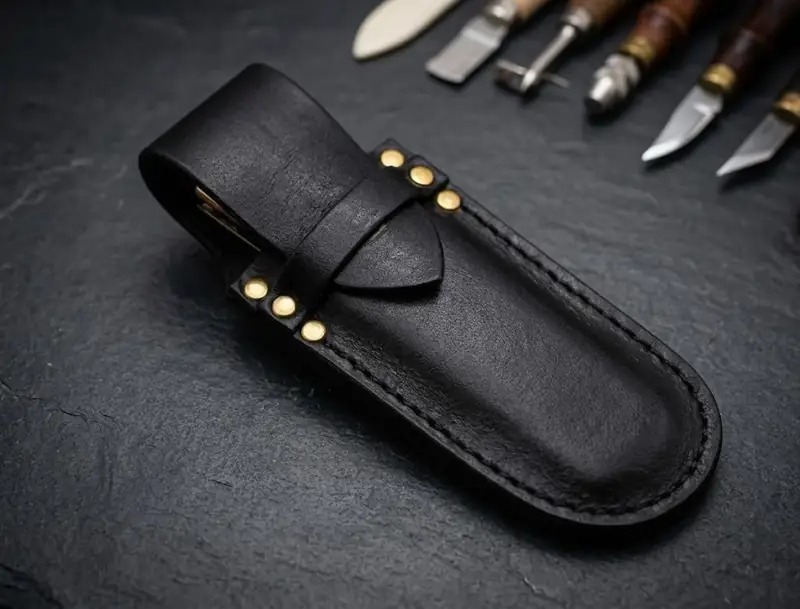
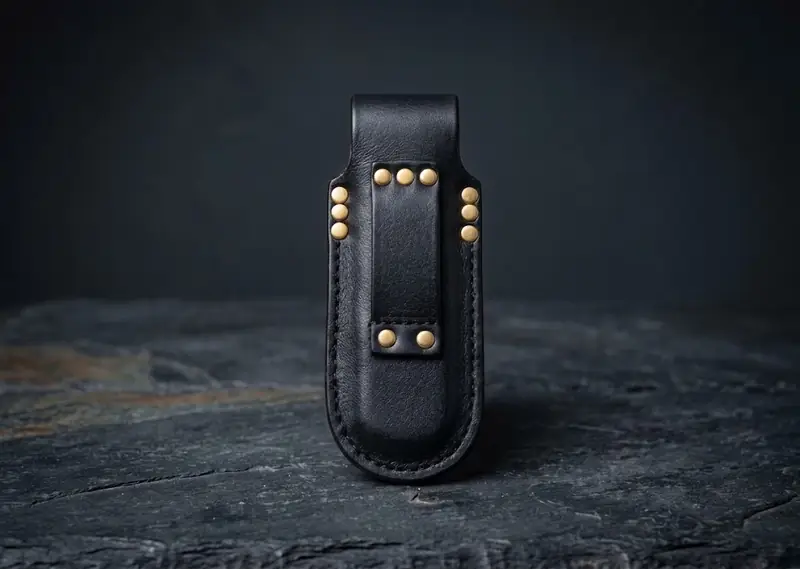
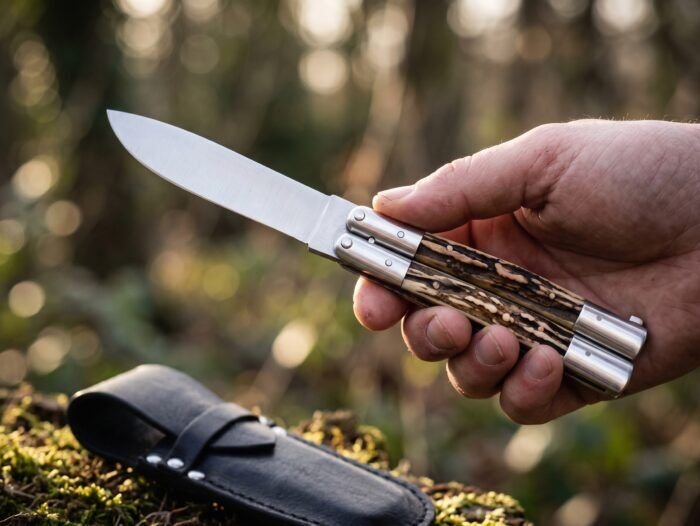
Fitted leather sheath included. Free US shipping, flat $49 worldwide. The rest of the pattern lives in the traditional Filipino collection.




 Blade Materials – 440c Stainless Steel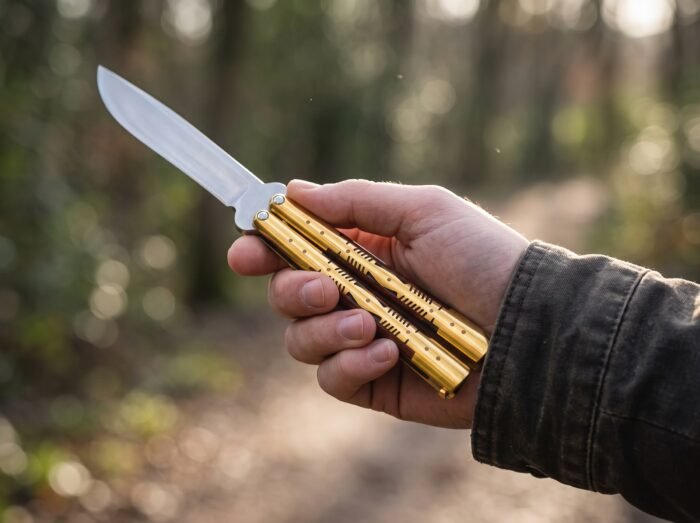
Thomas Edwards –
Absolutely love this balisong. Bushings feel buttery smooth after just a bit of use. This shop clearly takes pride in their work. Balisong Butterfly is quickly becoming my go to shop for balisongs.
Trevor Sanchez –
Everyone who’s seen this flip has asked where I got it. Bushings feel buttery smooth after just a bit of use. This is exactly why I keep coming back to this company.
Ruth Gonzalez –
This has quickly become my favorite piece in the collection. Weight is perfectly balanced for flipping. Already telling my flipper friends to check this out.
Mark Anthony Chavez –
Was nervous ordering a balisong online but so glad I did. Love that it’s rooted in real Filipino balisong tradition but made and shipped from the US. Definitely bookmarking this company for future orders.