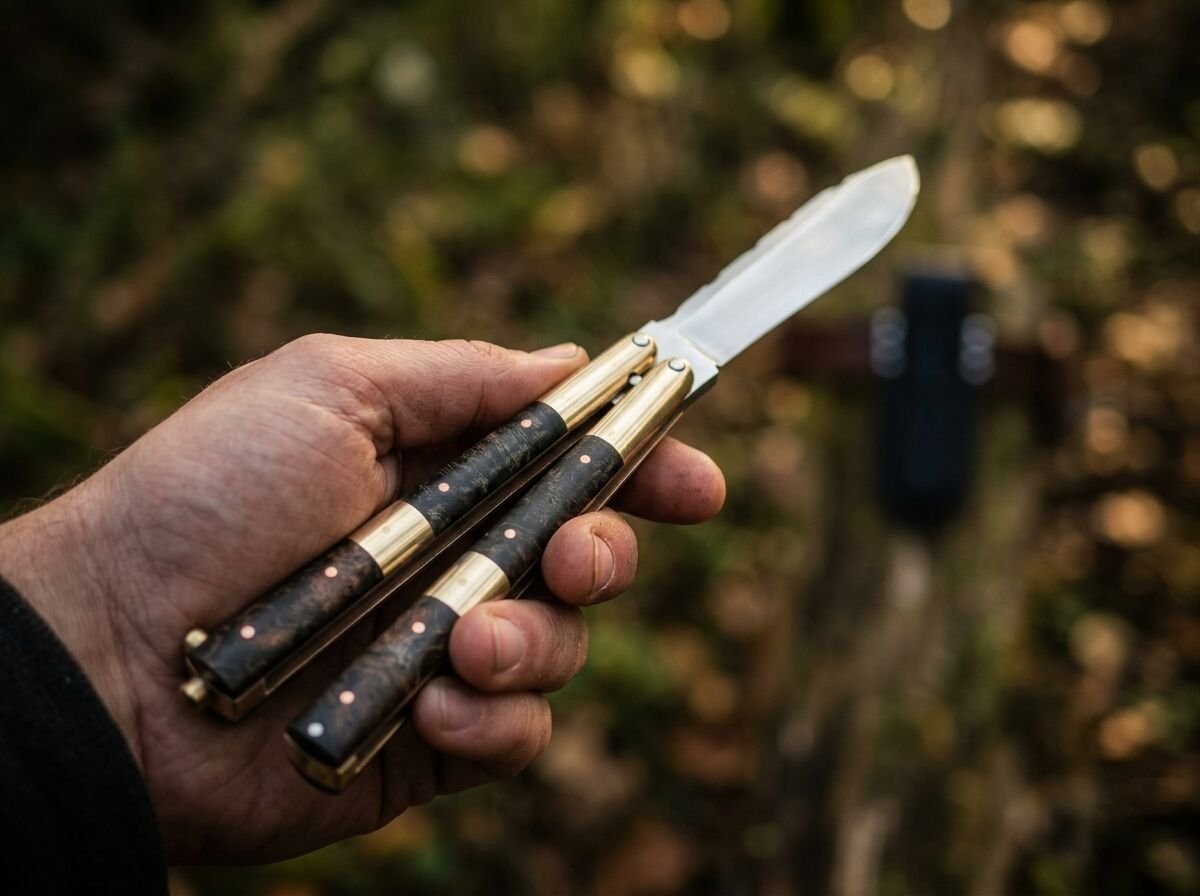
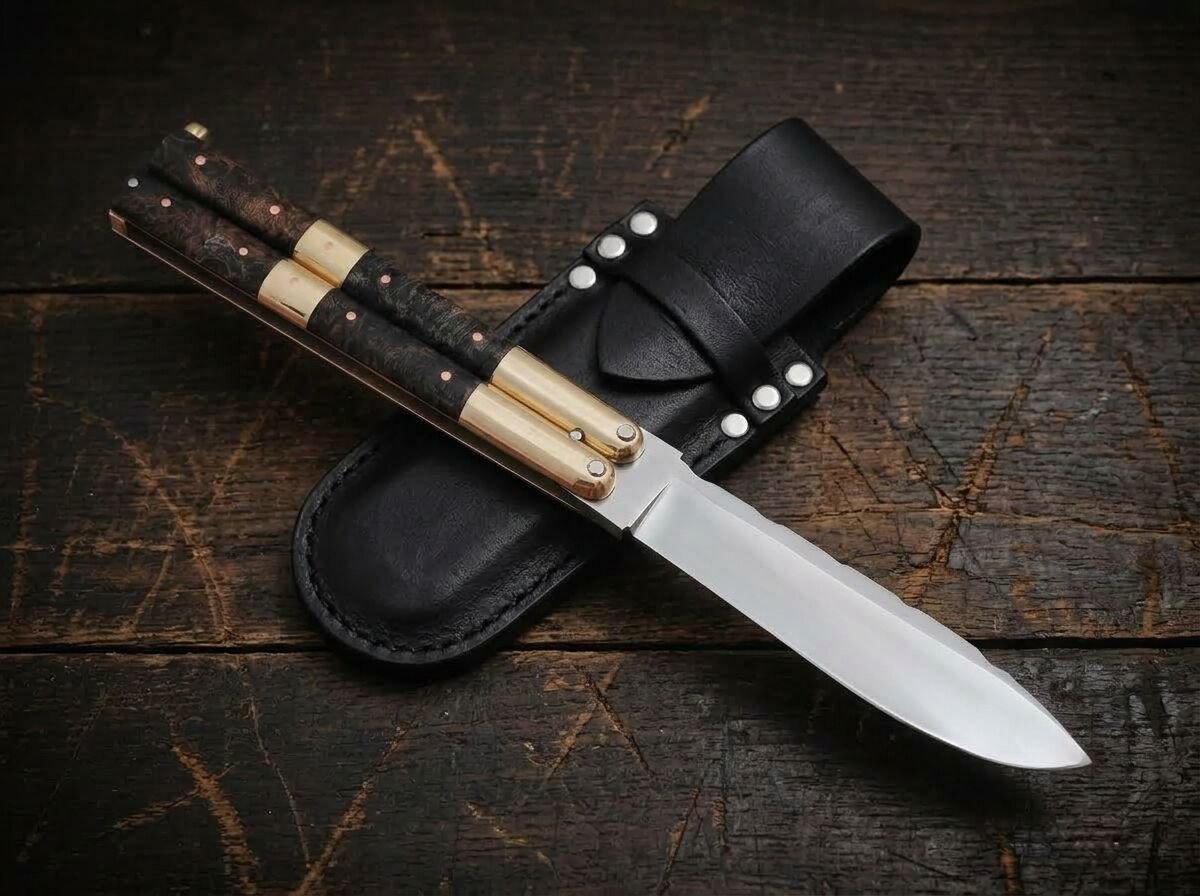
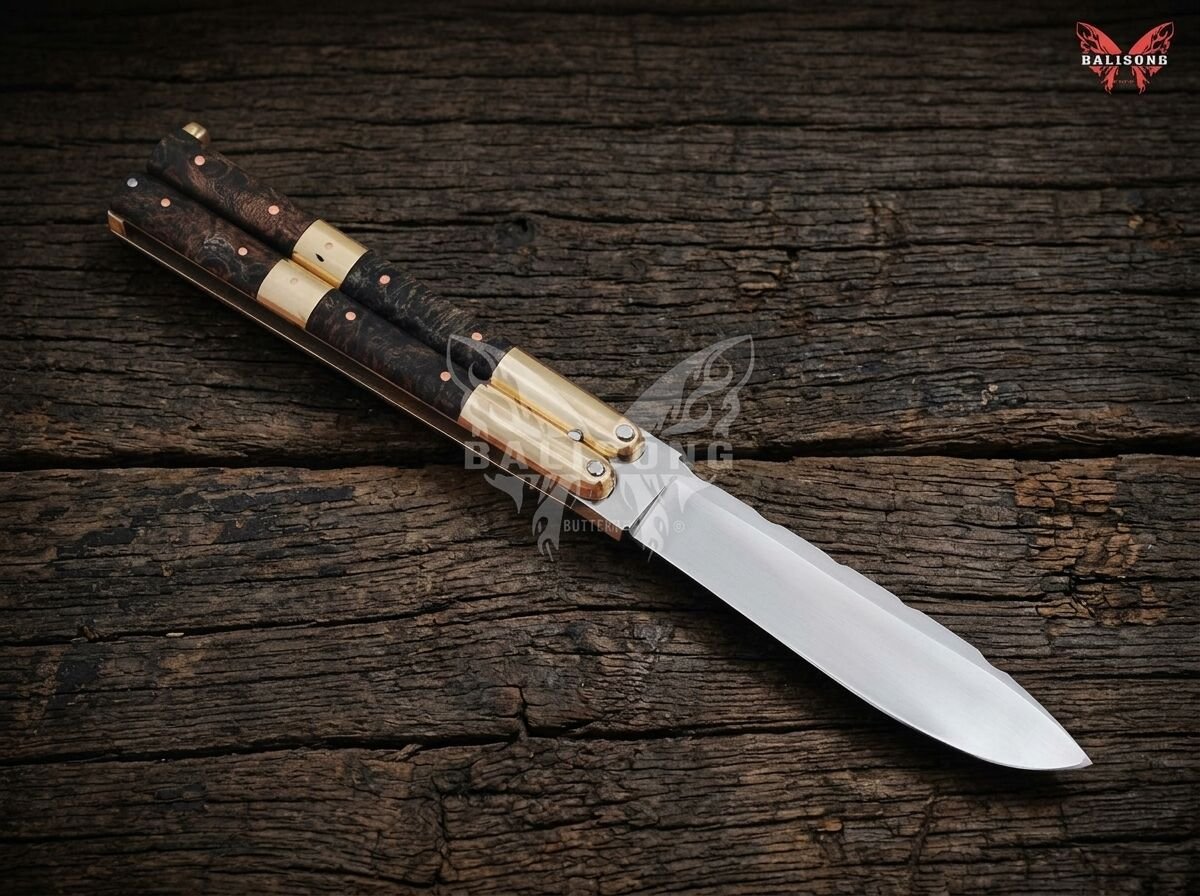
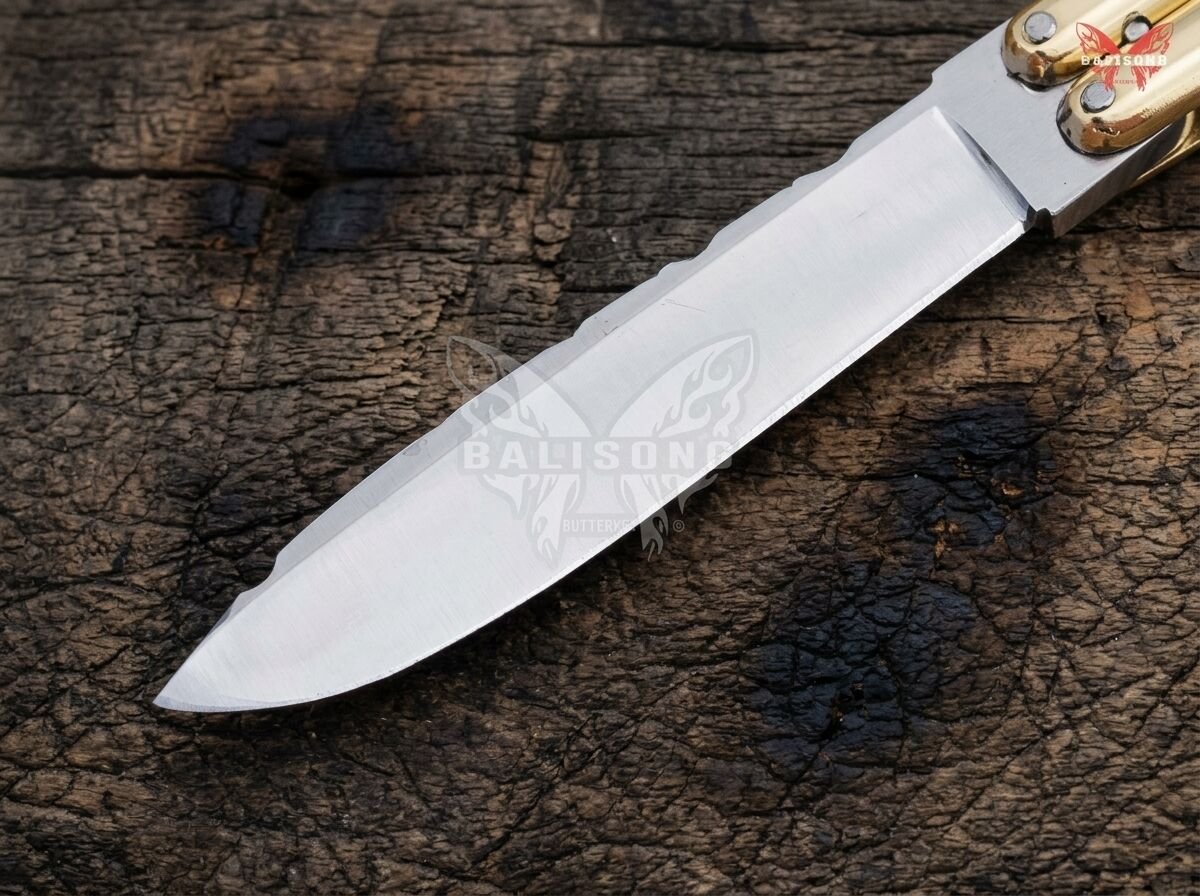
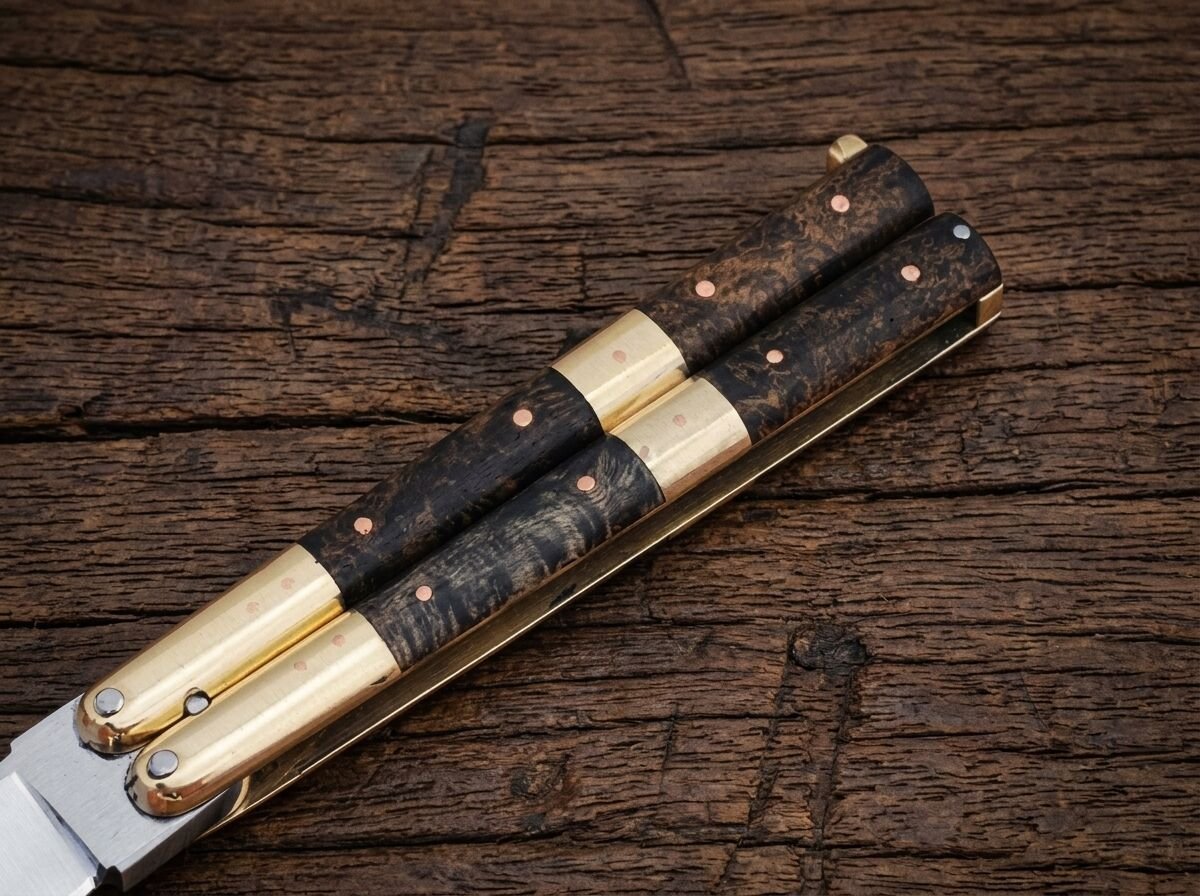
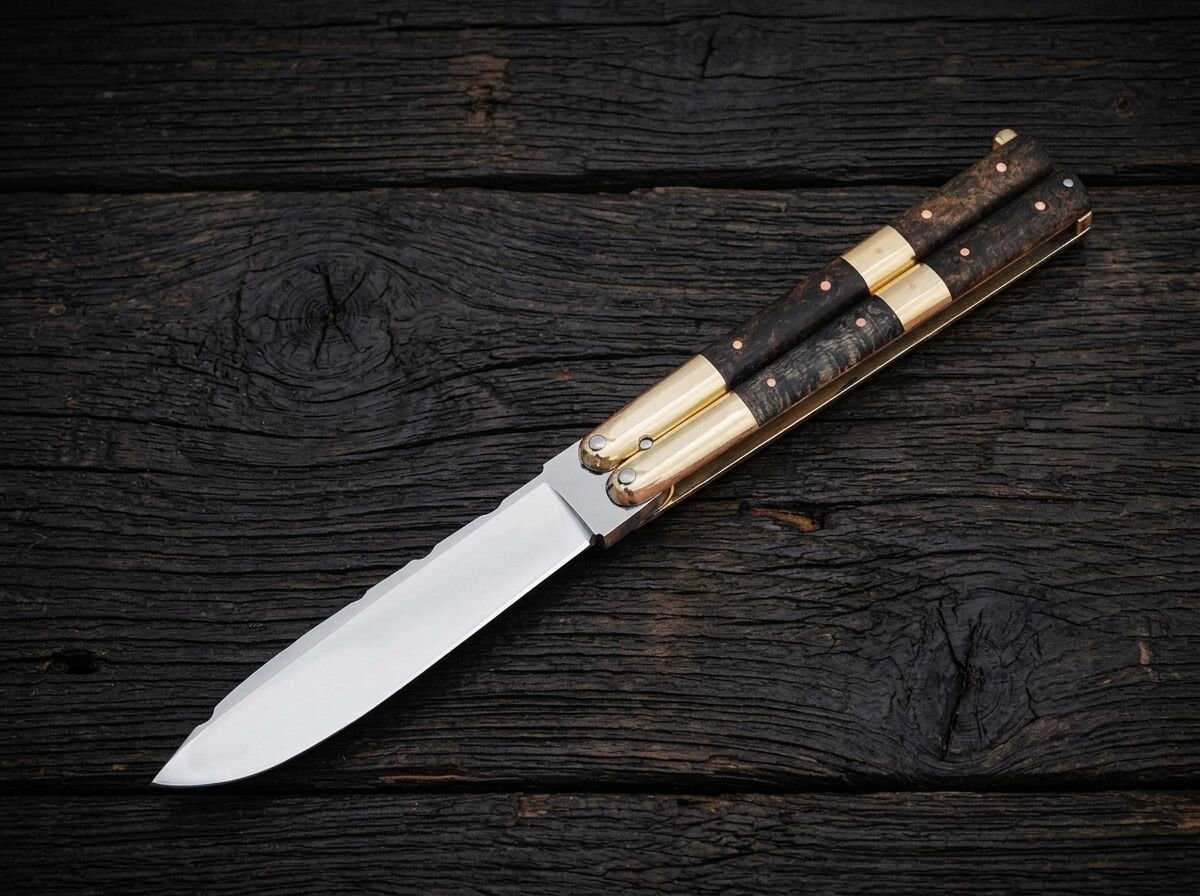
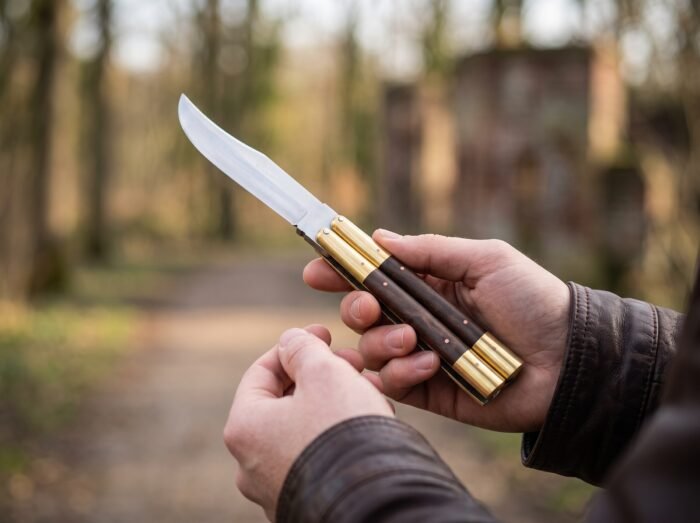
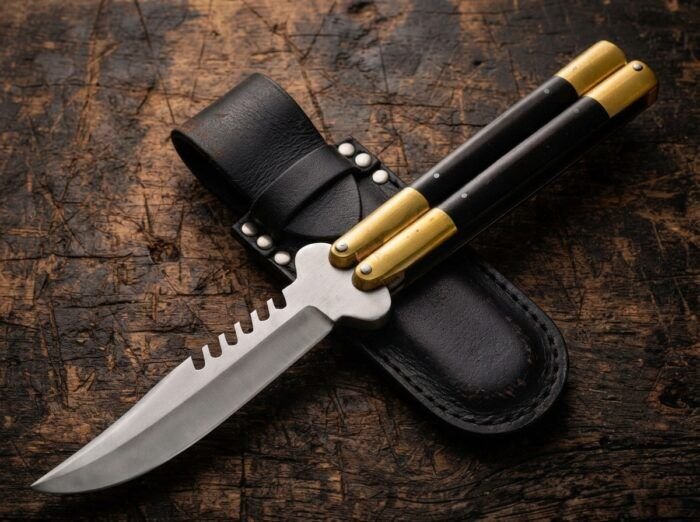
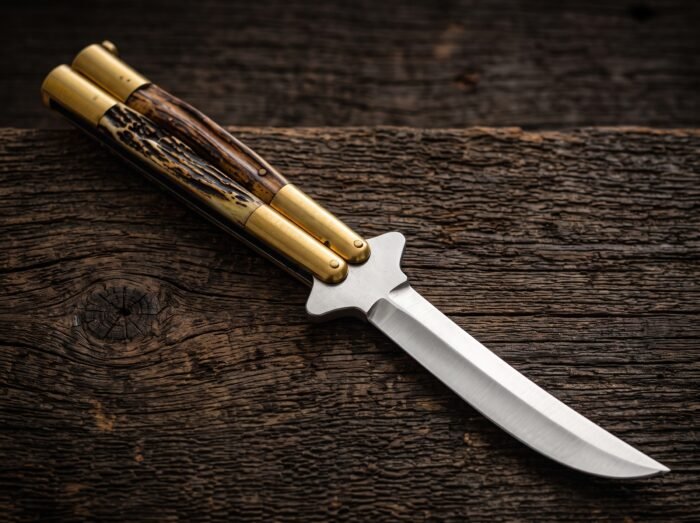
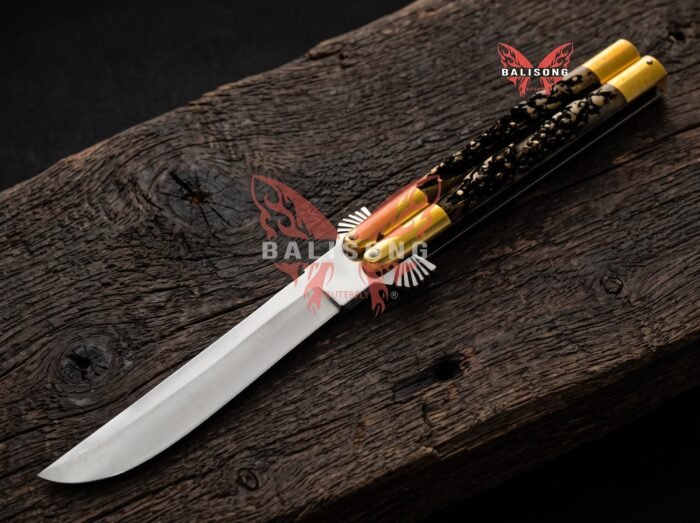
The BF-110 is a plain-bladed Filipino Traditional balisong: 24cm open, a 12cm D2 blade, 220g, brass with rose wood. We use three woods across the range and people ask which is best roughly as often as they ask about steel, so this is that page.
Three woods, three different answers
|
Rose wood (this knife) |
Kamagong |
Narra burl |
| What it is |
Dense tropical hardwood, warm brown |
Philippine ebony, near black |
Burl growth from the Philippine national tree |
| Grain |
Regular, linear, visible |
Very tight, almost featureless |
Chaotic swirl. Never repeats |
| Colour |
Warm reddish brown |
Black to very dark brown |
Red brown, figured |
| Two knives alike? |
Broadly, yes |
Yes |
Never |
| Density |
High |
Very high. Sinks in water |
Moderate |
| Ages by |
Darkening steadily |
Barely changing |
Deepening in red |
| Sunlight |
Fades slowly |
Almost immune |
Fades fastest. Keep it out of the window |
| Maintenance |
None |
None |
None |
How to choose between them
- You want the knife to look like the photograph. Kamagong, then rose wood. Never burl.
- You want a knife nobody else has an exact copy of. Narra burl, and it is not close.
- You want maximum contrast against polished brass. Kamagong. Near black against gold is the strongest look in the range.
- You want a handle that reads warm rather than severe. Rose wood. That warmth is why the entire Traditional series uses it.
- The knife will live on a sunny windowsill. Kamagong, and move it anyway.
None of them need oiling, waxing, feeding or any of the ritual that gets attached to wood handles online. All three are dense enough to look after themselves. A wipe with something light once a year is optional and does no harm.
Why rose wood on the Traditional line specifically
Because the Traditional series is about proportion and silhouette rather than spectacle, and rose wood is the wood that stays out of the way. It is warm enough to look like a considered choice and regular enough that it does not compete with the shape of the knife.
It is also consistent, which matters more than people expect on a line where we build fourteen closely related models. A burl handle on every one of them would make the series look like a lottery.
What happens to it over ten years
It darkens. Slowly, evenly, and mostly from light rather than handling. A rose wood handle at ten years old is noticeably deeper in colour than one straight off the bench, and the areas your fingers touch will have taken a soft sheen that no finish reproduces.
What it will not do: crack, shrink, swell, or lift away from the brass. It is dense enough to ignore the seasonal humidity swings that ruin open-grained timber.
D2 at 220 grams on a butterfly knife
An air-hardening tool steel: roughly one and a half percent carbon and eleven to twelve percent chromium, which sits just below the threshold for stainless. It holds an edge longer than anything else we sell, and it is stubborn to sharpen, wanting a diamond plate rather than ceramic. Twice a year and otherwise ignore it.
Heat treated to 58-60 HRC rather than higher, because a carbide-heavy steel taken further chips when the knife meets a hard floor.
Two hundred and twenty grams on a 24cm frame is the heavier option in this series. The rotation carries itself and you get real time to fix a mistake. It changes direction more slowly and it will find your forearm after an hour.
Ordering this rosewood balisong
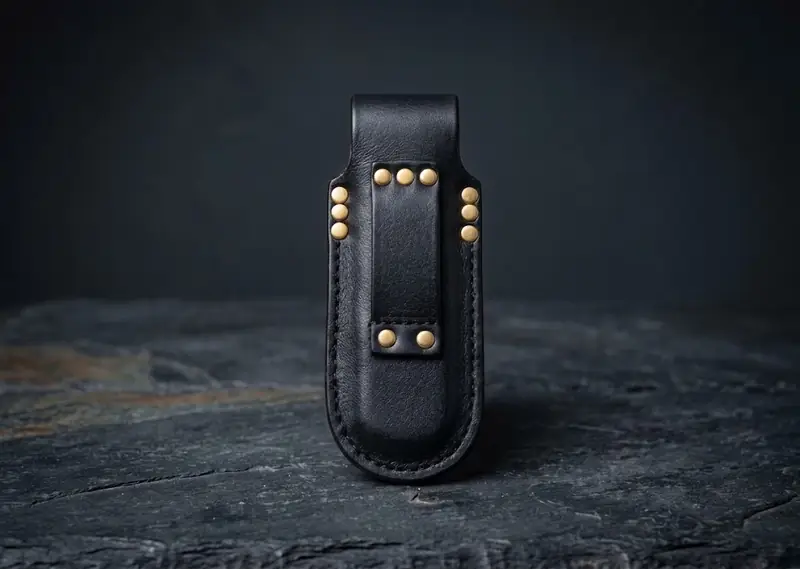
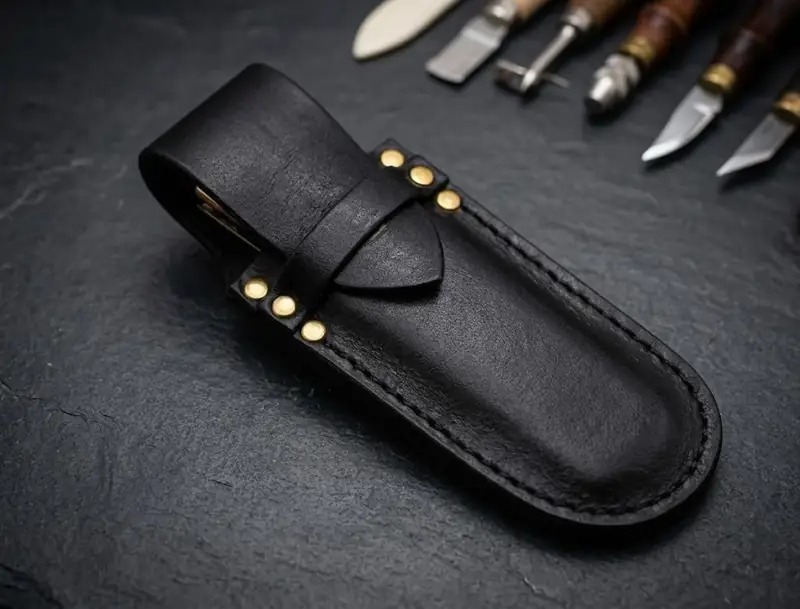
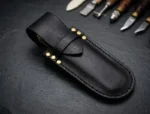
Unsharpened trainer, chosen above Add to Cart. Same wood, same weight, no edge. A fitted leather sheath comes with it. US shipping is free, flat $49 to anywhere else for the whole order.
Rosewood, kamagong and narra burl each age differently on a balisong handle, and the full comparison sits in our handle materials guide. The Dalisay is part of the D2 Tool Steel Butterfly collection. Its plain blade and 220 gram weight match the Marilag closely, with the difference coming down to which handle you prefer.




Sophia Long –
No regrets on this purchase at all. Highly recommend this one to any flipper.
Colton Jackson –
I collect balisongs and this one is right up there with my favorites. Weight is perfectly balanced for flipping. Made in the USA and shipped worldwide with no long wait on my end. Love it.
Derek Evans –
I collect balisongs and this one is right up there with my favorites. Even the smaller details like the pivot screws are finished well. Ordered from Balisong Butterfly before and the quality stays consistent every time. Already planning my next pickup from this shop.
Amanda Wood –
This thing flips like a dream. Bushings feel buttery smooth after just a bit of use. Love that it’s rooted in real Filipino balisong tradition but made and shipped from the US. Already planning my next pickup from this shop.
Timothy Nguyen –
This blade came razor sharp out of the box. Handle scales feel great in hand even during longer flip sessions. Action is smooth right out of the box. No break in needed. Blade came shaving sharp straight out of the box. Worth every penny.
Lisa Phillips –
Photos don’t do this knife justice at all. Action is smooth right out of the box, no break in needed. Blade came shaving sharp straight out of the box. Love that it’s rooted in real Filipino balisong tradition but made and shipped from the US. This flips cleaner than knives twice the price. Would not hesitate to order again.
Dustin Thompson –
This balisong completely won me over the moment I flipped it. Comes with a nice pouch which is a nice touch. Bushings feel buttery smooth after just a bit of use. Beyond happy with how this turned out.
Peter Green –
Photos don’t do this knife justice at all. Weight is perfectly balanced for flipping. Can’t wait to see what else this maker has to offer.
Wyatt Ortiz –
Feels way more premium than the price suggests. Made in the USA and shipped worldwide with no long wait on my end. Latch snaps shut clean every time. Great buy overall.
Cynthia Foster –
This shop clearly knows what they’re doing with quality like this. Great buy overall.