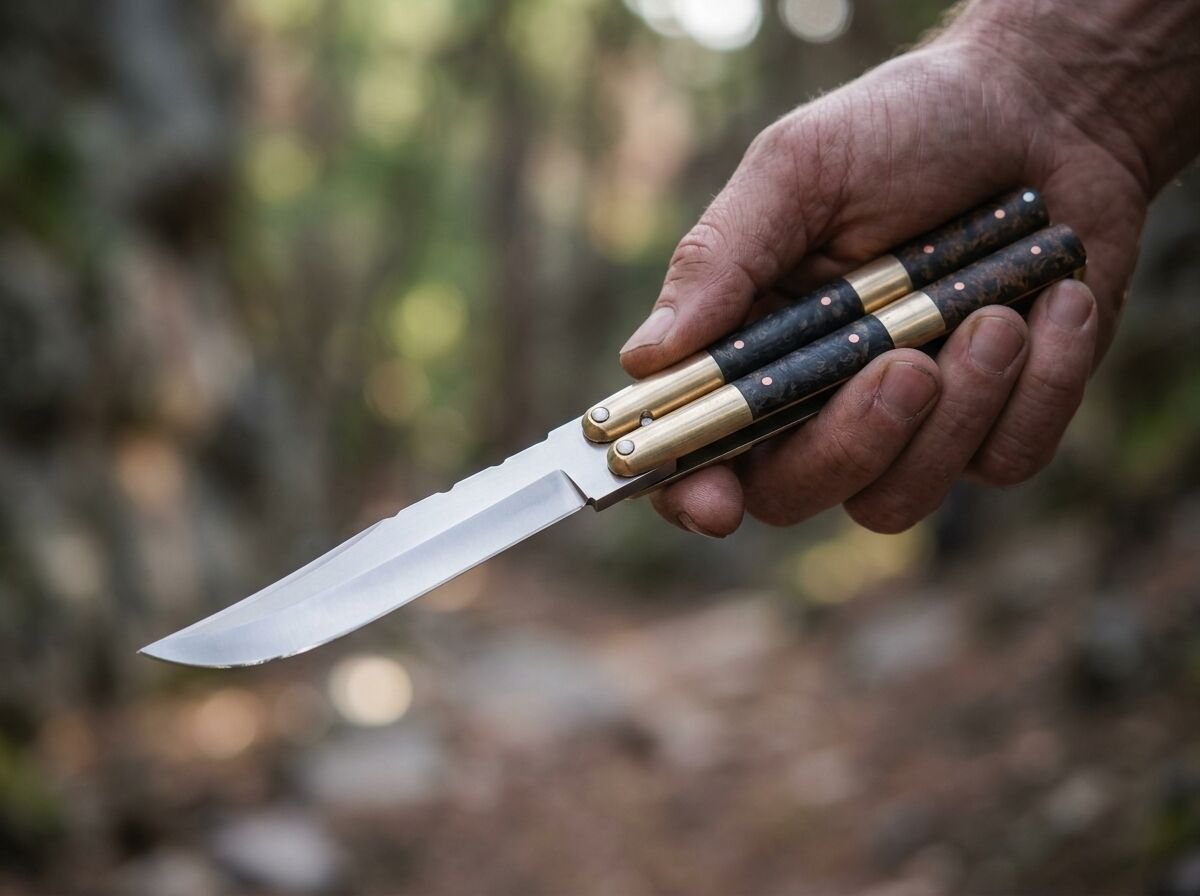
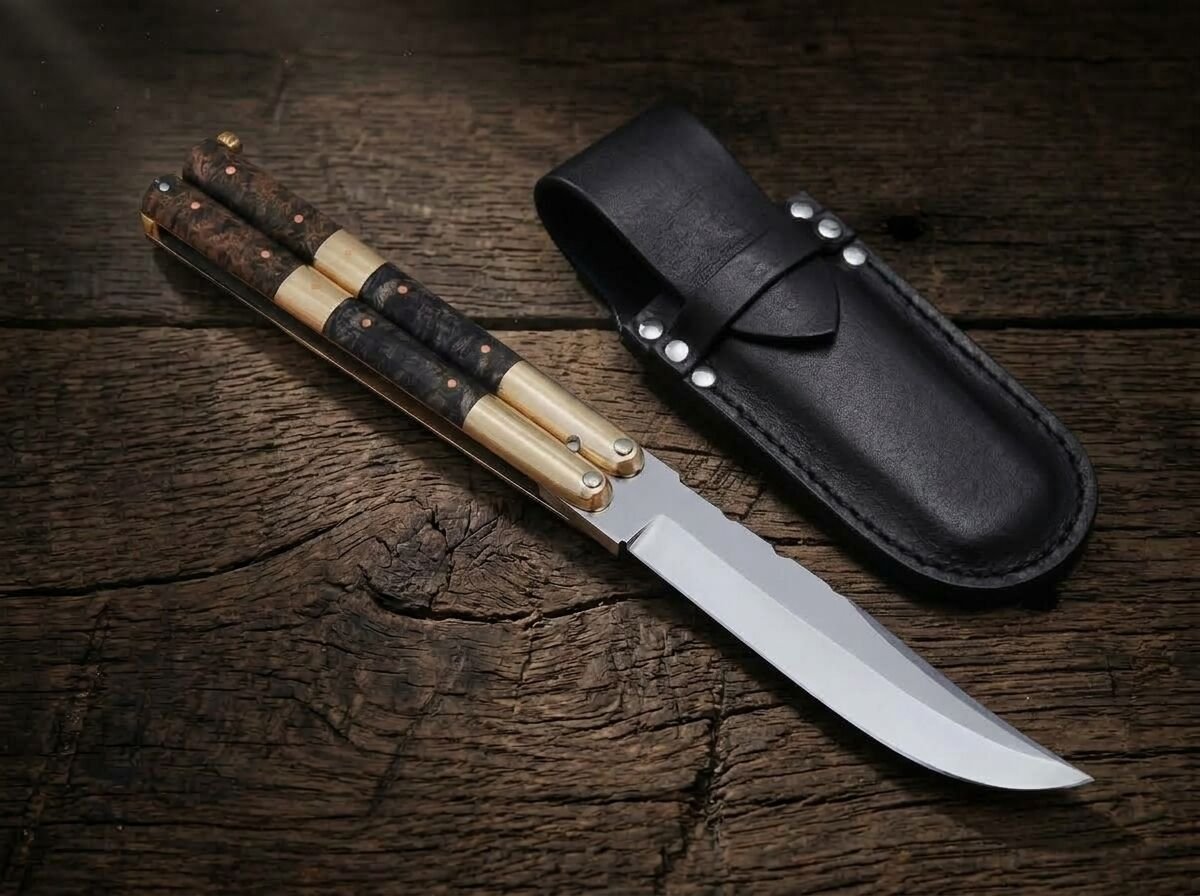
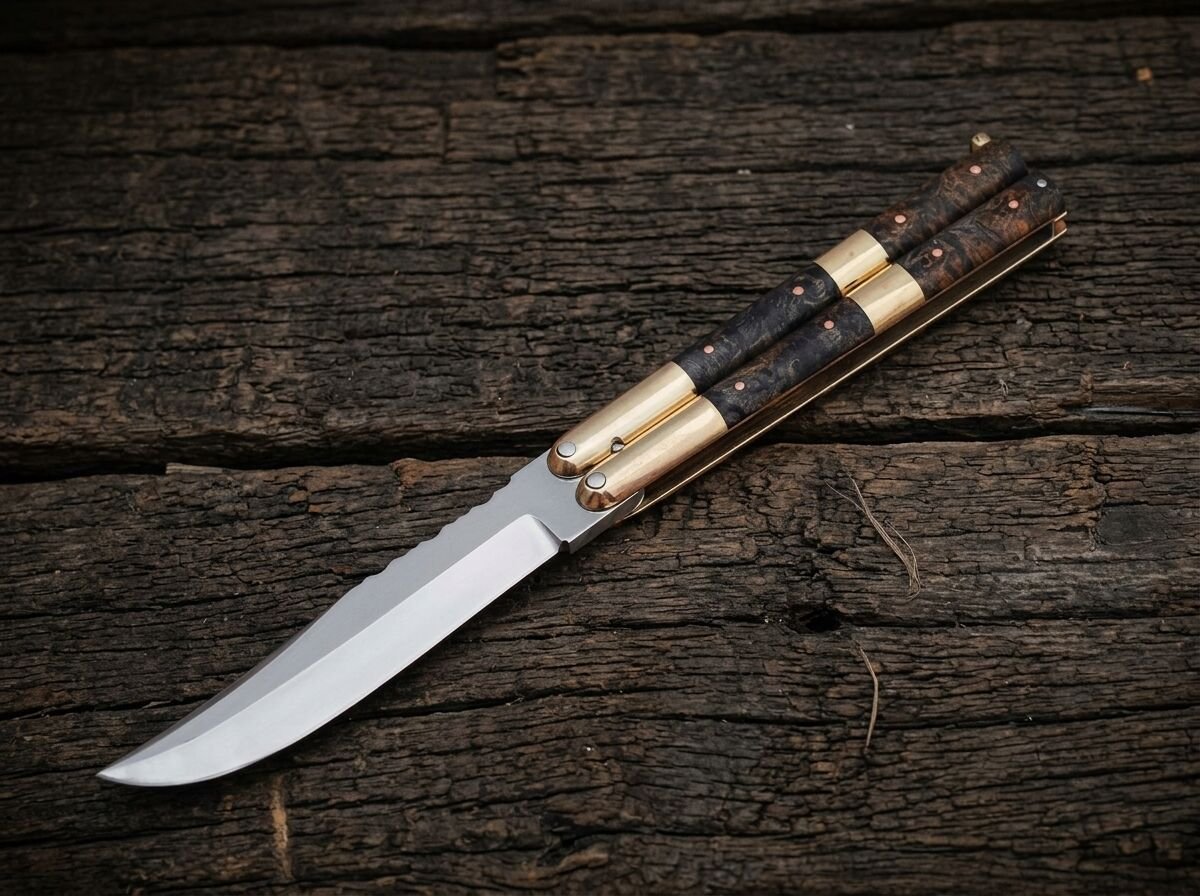
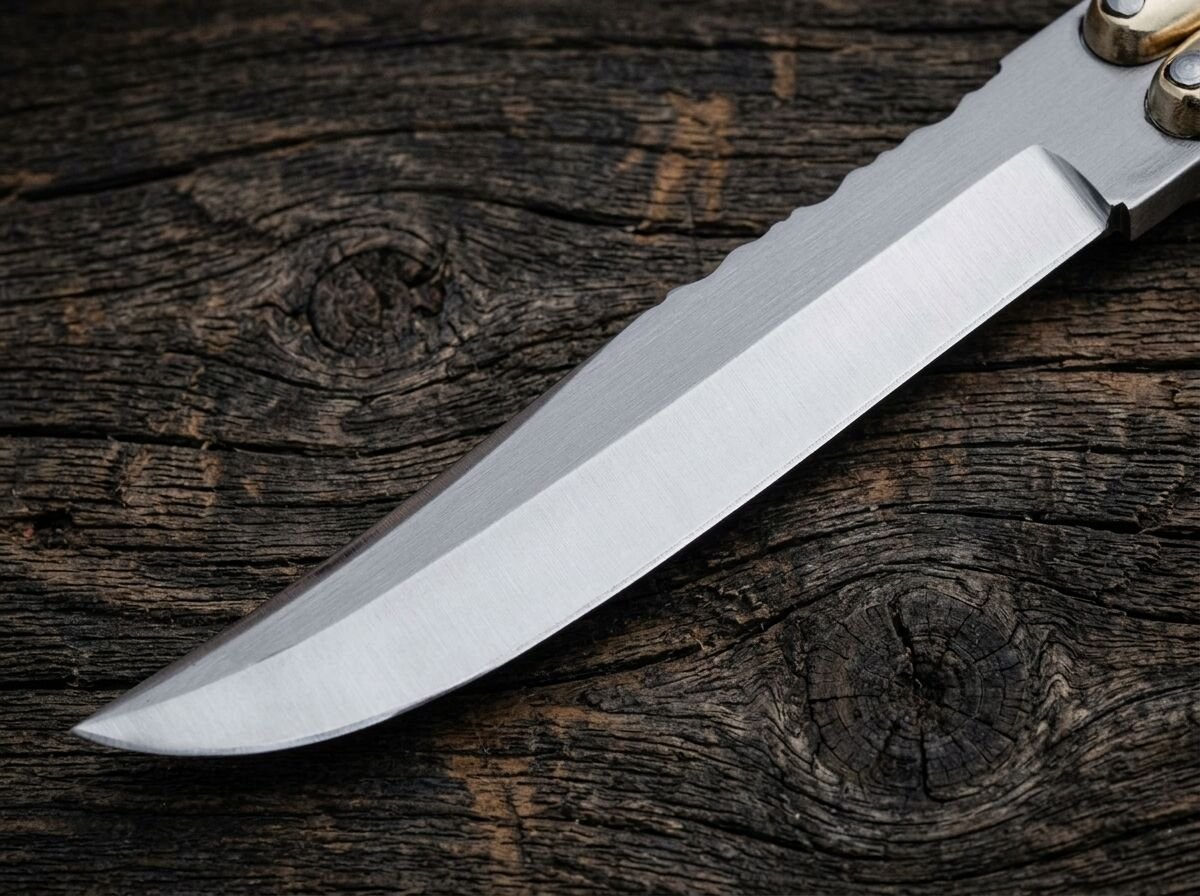
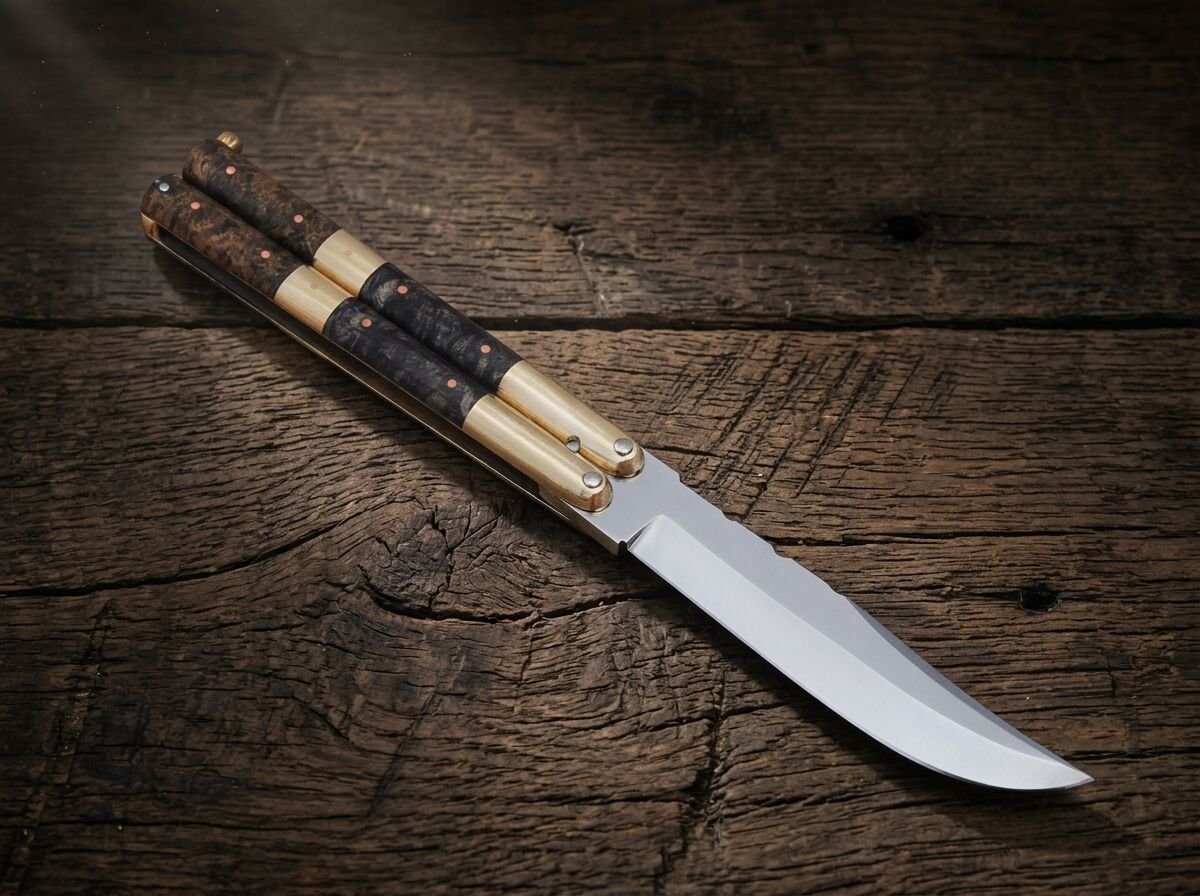
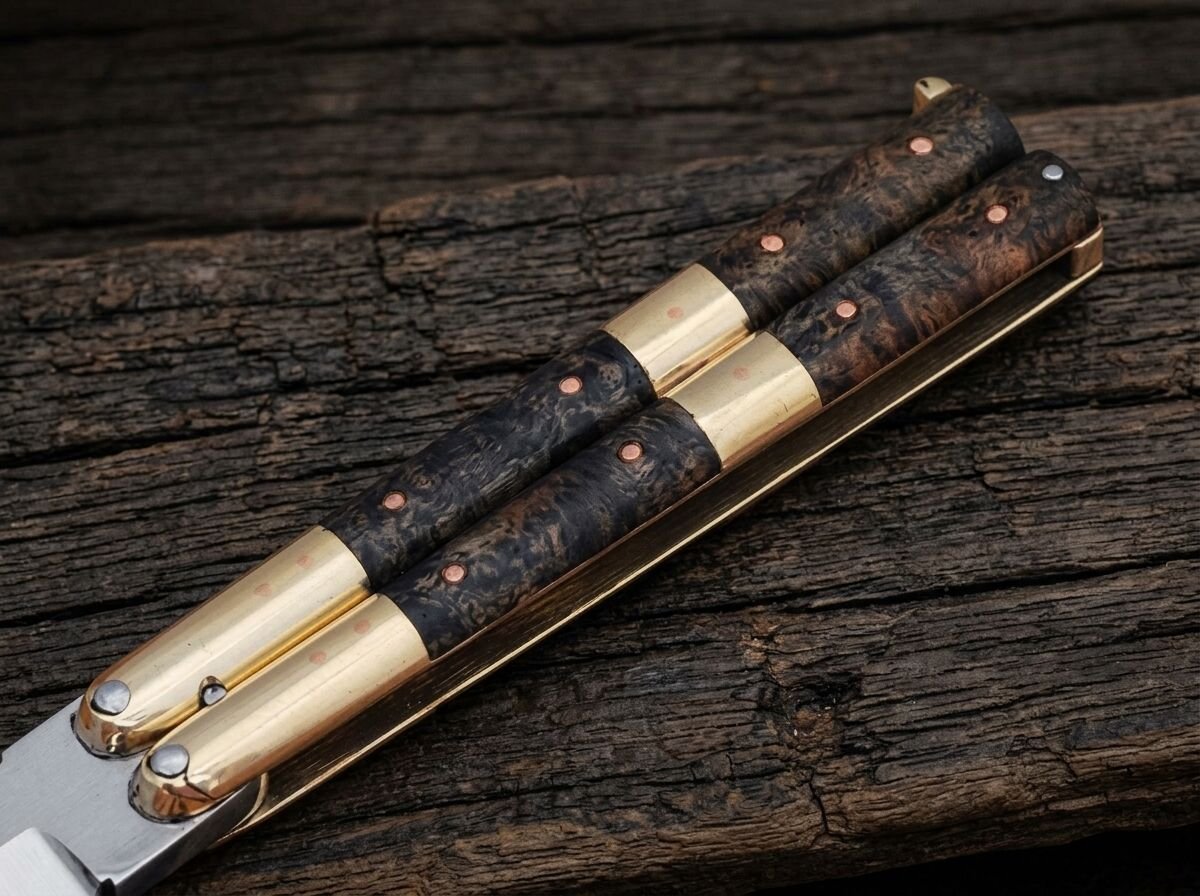
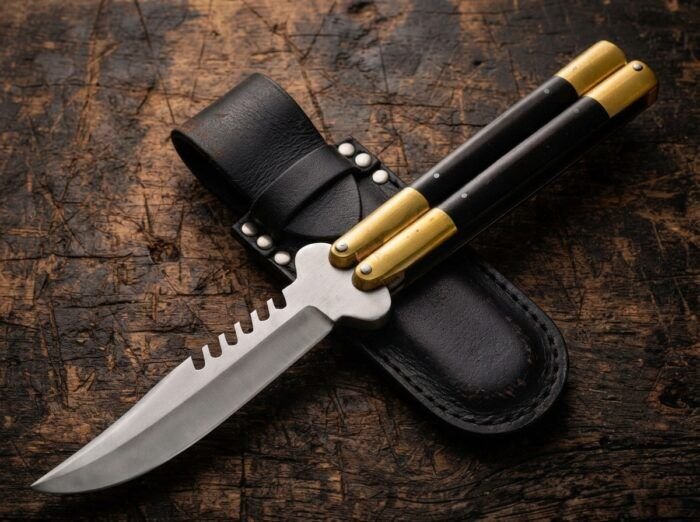
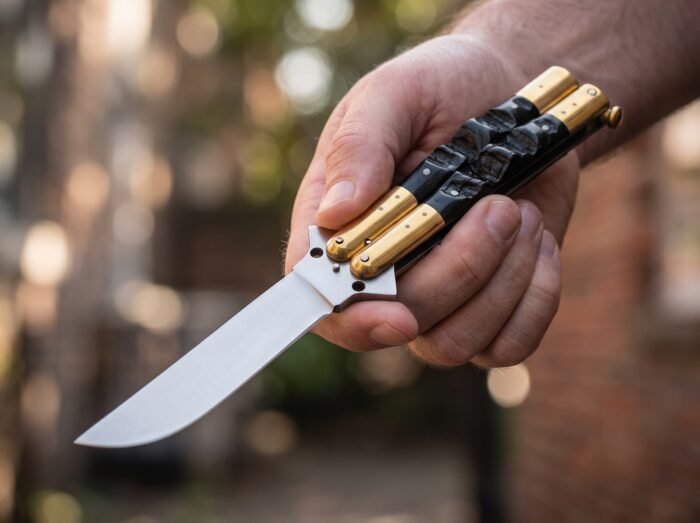
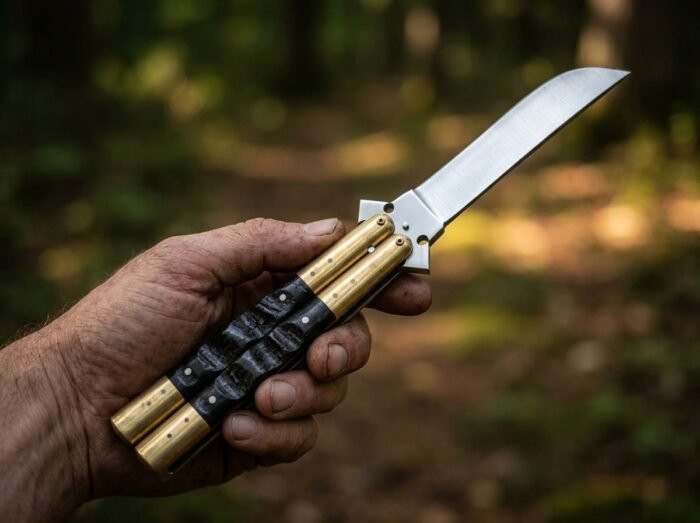
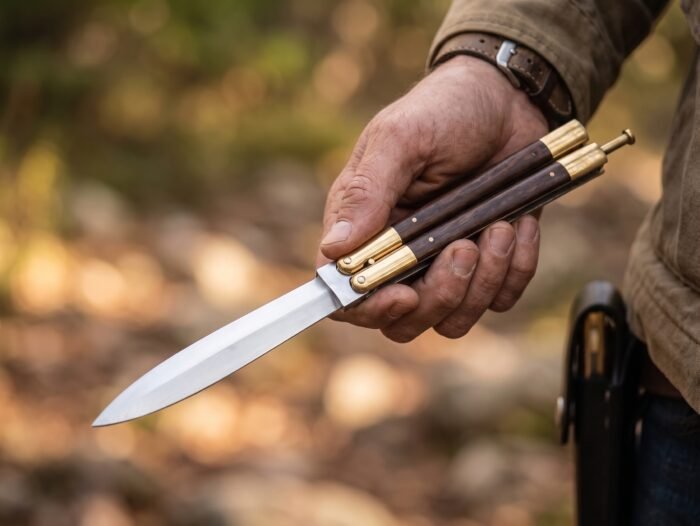
The BF-112 is a plain-bladed Filipino Traditional balisong: 24cm open, a 12cm D2 blade, 220g, brass with hand-fitted rose wood. A knife like this does not arrive finished. It arrives ready, and the first month changes it more than the next ten years will.
What actually happens in the first month
| When |
What changes |
| First hundred rotations |
The action loosens noticeably. This is break-in, not wear |
| First week |
The pivots settle. Whatever tightness it had from new is gone |
| Two to three weeks |
The brass loses its shine where your fingers sit. First visible sign it is yours |
| First month |
The rose wood starts taking a faint sheen at the contact points |
| Six weeks |
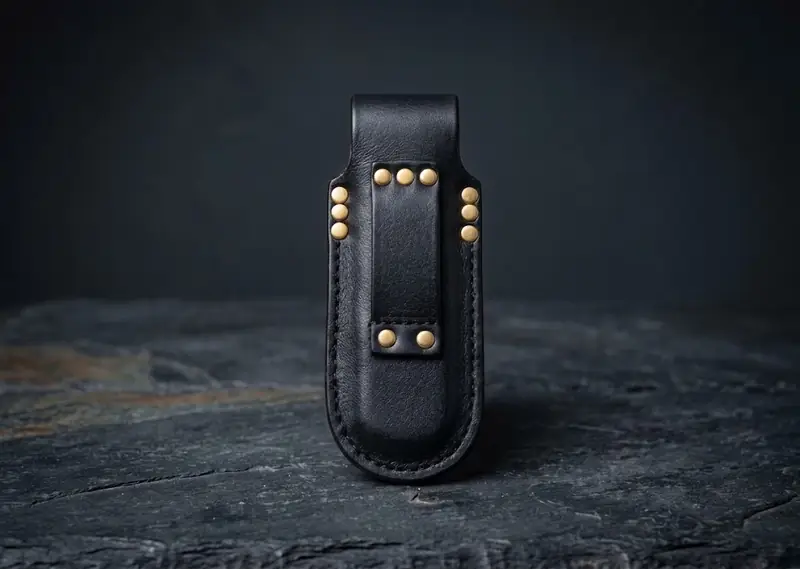
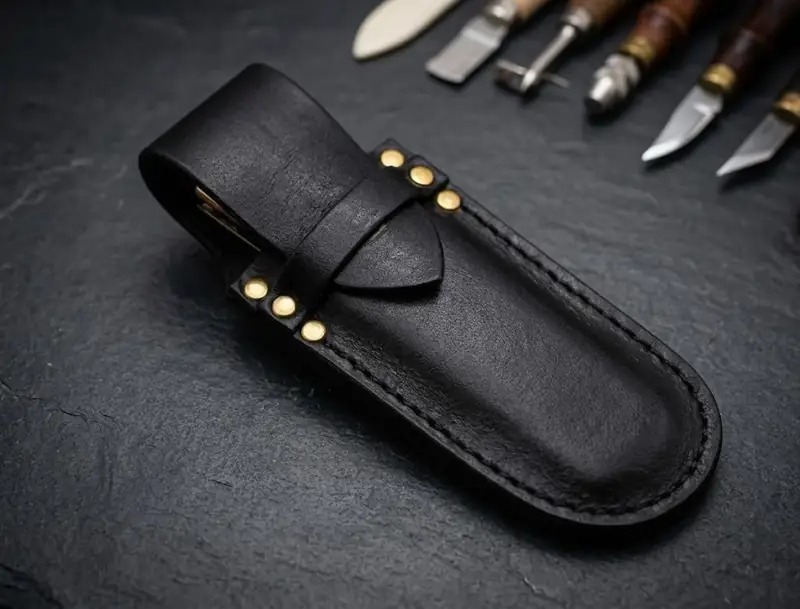
The leather sheath has stopped being stiff and has taken the shape of this knife |
| Three months |
The action has stabilised. What it feels like now is what it will feel like for years |
Break-in is real and it is not wear
Two brass surfaces rotating against a steel pin have microscopic high points on them. The first few hundred rotations flatten those, and the knife goes from slightly reluctant to freely falling without a single component getting thinner in any way you could measure.
This is why we set pivots on the loose side of the middle. A knife that is perfect on the bench will be loose in a month. A knife that is a shade tight on the bench will be perfect in a month, and a new owner can tighten it in thirty seconds if they disagree.
The practical instruction: if it feels tight out of the box, flip it a hundred times before you touch anything. Nine times in ten that is the whole fix.
What does not change
The blade geometry, the heat treat and the tang pin stop. Those are what they are from the day it is finished, and if any of them is wrong on arrival it will not improve with use, which is why the check is worth doing early.
The rose wood also will not move. It is dense enough to ignore the seasonal humidity that lifts an open-grained timber away from its bolster, so a seam that is clean at the start stays clean.
Hand-fitted, and what that means for the wood
The inserts are cut to the brass rather than the brass being cut to a standard insert. That is slower, it means the two handles on your knife are matched to each other rather than to a drawing, and it is the reason the seams are as tight as they are.
It also means every knife has slightly different handles, and two of these side by side will not be identical. Rose wood is regular enough that they will look like siblings rather than strangers, which is exactly why this series uses it.
D2 steel at 220 grams on a drop point balisong
An air-hardening tool steel: roughly one and a half percent carbon and eleven to twelve percent chromium, sitting just under the stainless threshold. Best edge retention we sell, stubborn to sharpen, diamond plate about twice a year and otherwise leave it alone.
Heat treated to 58-60 HRC rather than higher, because a carbide-heavy steel taken further chips when the knife lands on something hard, and it will.
Two hundred and twenty grams on a 24cm frame is the heavier option here. The rotation is deliberate and carries itself, which is forgiving while you are learning and slower when you want to snap between moves.
What to do at the three month mark
Blow the handle channels out, run a cotton bud along them until it stops coming out grey, and put one drop of light oil on each pivot. That is the entire maintenance schedule for the next six months.
Ordering this D2 rose wood butterfly knife
Unsharpened trainer, selected above Add to Cart. It breaks in on exactly the same schedule, which makes it a good way to learn what a settled action feels like without a live edge involved.
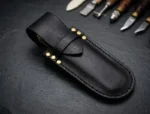
A fitted leather sheath comes with it. Free US shipping, flat $49 to anywhere else for the entire order.
The first three months change a handmade balisong more than the next ten years will, and that break in process is worth reading about before you judge a stiff pivot, which our balisong tuning guide covers in detail. The Marilag is listed under the D2 Tool Steel Butterfly category. Its plain blade and 220 gram weight are shared with the Dalisay, which differs mainly in how the rosewood is finished.




Arjun Rivera –
Can’t stop flipping this thing honestly. Weight is perfectly balanced for flipping. Highly recommend this one to any flipper.
Paul Santos –
This is exactly what I wanted and then some. Pivots feel dialed in with zero blade play. Worth every penny.
Mark Ortiz –
Nice pickup for the price. Action is good though it needed a little tightening on the pivots. Good product. Just not quite perfect.
Sandra Gray –
Can’t stop flipping this thing honestly. Action is smooth right out of the box. No break in needed. Worth every penny.
Edward Torres –
So happy I finally pulled the trigger on this one. Pivots feel dialed in with zero blade play. Great buy overall.
Gary Murphy –
Did not expect this level of fit and finish for the price. Fit and finish is way above what I expected at this price. Weight is perfectly balanced for flipping. Latch snaps shut clean every time. Highly recommend this one to any flipper.
Thomas Campbell –
This blade came razor sharp out of the box. This is my third order from Balisong Butterfly and they never disappoint. Pivots feel dialed in with zero blade play. Great buy overall.
Brian White –
Happy with this one for the most part. Would buy from this shop again.
Cynthia Kim –
Best butterfly knife I’ve owned so far. Pivots feel dialed in with zero blade play. This shop clearly takes pride in their work.
Larry Kelly –
My buddy was speechless when he tried flipping this. Comes with a nice pouch which is a nice touch. 10/10 would buy again.
Ronald Santos –
Got this as a housewarming gift and it exceeded what I expected. Weight is perfectly balanced for flipping. Beyond happy with how this turned out.
Eric Edwards –
I collect balisongs and this one is stellar.
Andrew Davis –
Not going to lie. This exceeded my expectations by a lot. Zero complaints from me on this purchase.