Blog
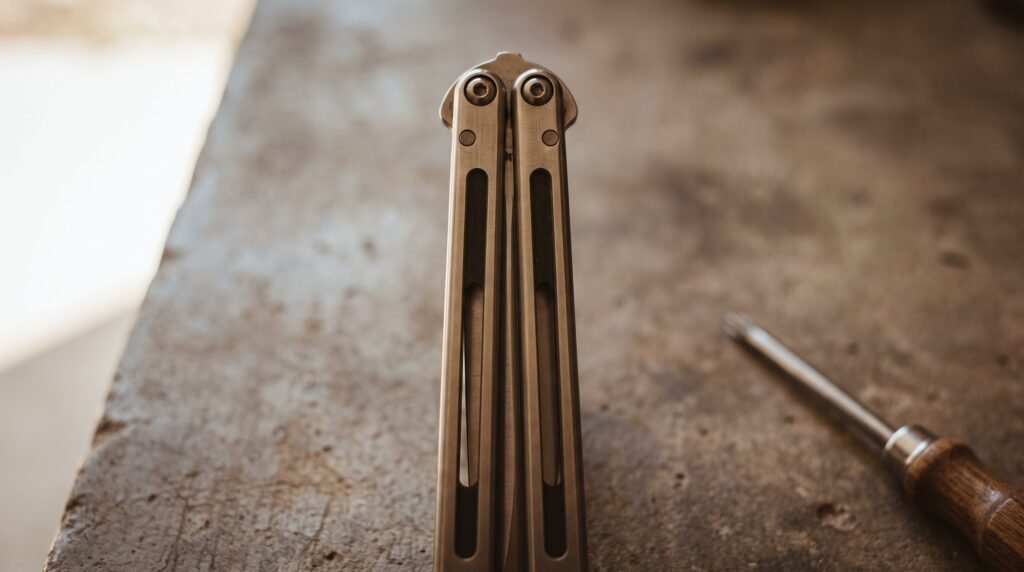
Tuning a balisong means adjusting the pivots so the handles swing freely with as little play as possible. Diagnose first: work out whether you have side-to-side play, vertical play, off-centre blade, tang tap or a rattling latch, because each has a different cause. Then tighten both pivots fully, back each off in roughly one-sixteenth turns until the swing returns, and lubricate. Most knives take ten minutes.
That is the short version. Below is the full method, including the diagnosis table we use at the bench, what to do about thread locker, and the point at which a knife stops being a screwdriver job and becomes a smith’s job.
What Tuning Can and Cannot Fix
Tuning adjusts clearance at the pivots. That is all it does. It will fix a knife that has gone loose from flipping, a knife that is binding because someone cranked the pivots down, a blade sitting off-centre because one side is tighter than the other, and most latch rattle.
It will not fix a tang that was ground too narrow, worn-out pivot holes, a bent handle, or a knife that was built to the wrong tolerances in the first place. If you can tighten the pivots to the point where the handles will not swing and the blade still moves between them, you have a geometry problem, not a tuning problem.
It also will not fix a knife with peened pins instead of pivot screws. Traditional Batangas balisongs are pinned, not screwed. There is nothing to turn. Skip to the last section.
Diagnose Before You Adjust
Five minutes with the knife closed and open, in good light, saves an hour of guessing. Do each of these deliberately.
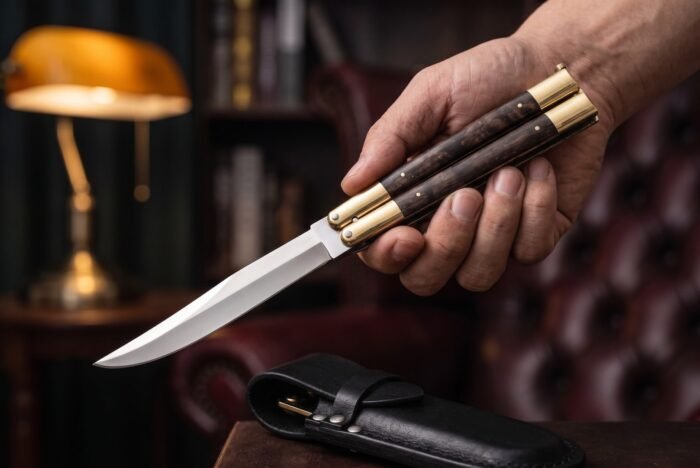
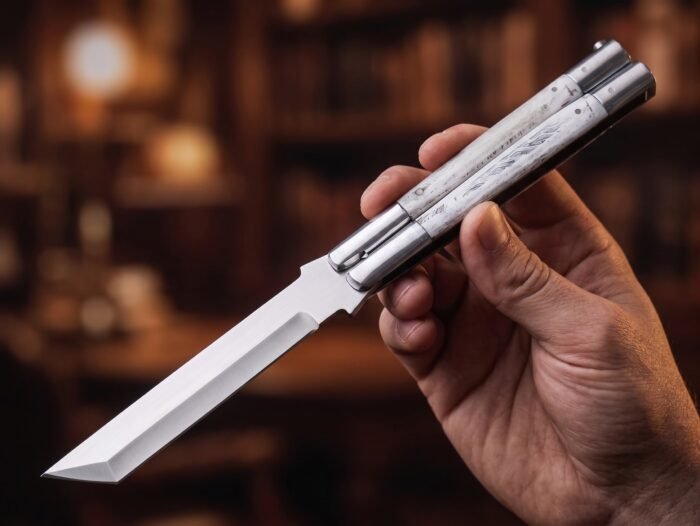
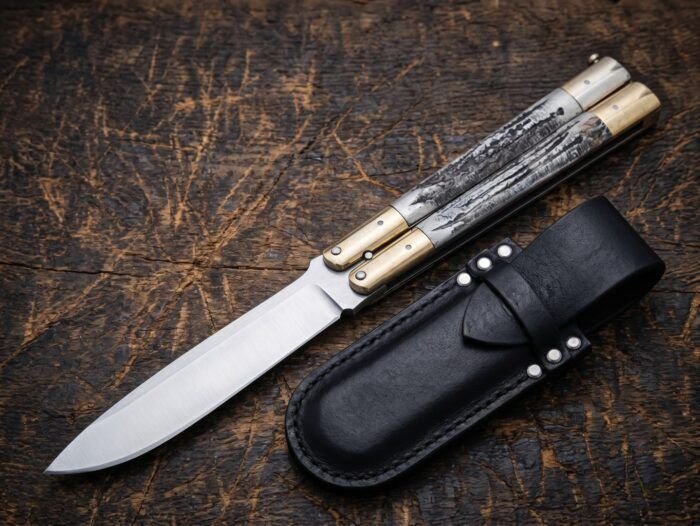
- Side-to-side play. Hold one handle, grip the other, and press them gently apart and together sideways. Any movement is handle play.
- Vertical play. With the knife open and latched, try to lift and press the blade along the line of the handles. Movement here usually points at the pivot fit rather than the washers.
- Centring. Close the knife and sight down it. The blade should sit evenly between the handles, not resting against one.
- Swing. Hold the safe handle horizontally and let the other handle fall. It should swing freely and stop cleanly.
- Sound. Shake the closed knife next to your ear. A rattle that changes when you hold the latch is a latch rattle. A rattle that does not is hardware.
Write down what you find before touching anything. If you adjust first and diagnose afterwards you will have no idea which change did what. If the part names in this list are unfamiliar, our balisong anatomy guide covers every one of them.
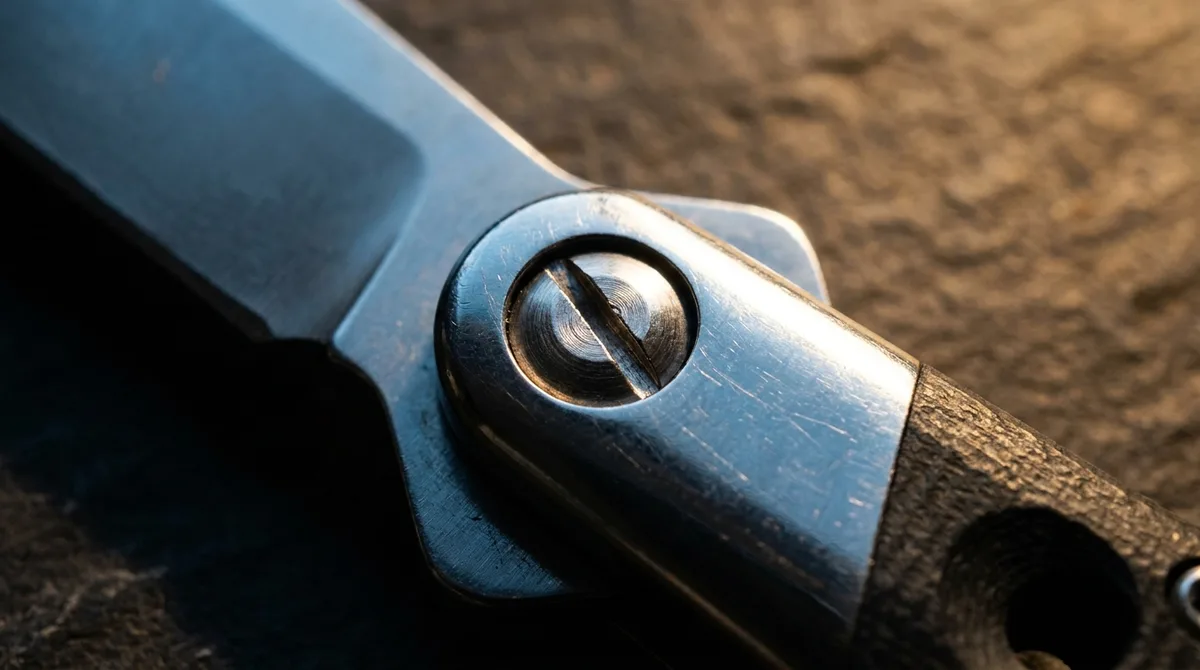
Symptom, Cause and Fix
| Symptom | Most likely cause | Fix |
|---|---|---|
| Side-to-side handle play | Pivot screws backed off from flipping | Retighten both pivots and re-set the swing in small increments |
| Play that returns within a day | No thread locker, or old thread locker has failed | Clean the threads, apply fresh low or medium strength locker, re-tune, let it cure |
| Vertical play with the knife open | Worn pivot holes or a loose pivot barrel | Tighten first. If it persists, this is a smith’s job |
| Blade sits against one handle when closed | One pivot tighter than the other, or washers of unequal thickness | Balance the two pivots; if that fails, swap or shim washers |
| Handles do not close fully onto the blade | Debris in the channel, or a bent tang pin or zen pin | Clean the channel first. Inspect the stops. Do not force it |
| Handles close too far and meet each other | Missing, sheared or loose tang or zen pin | Stop flipping. Replace the stop before the handles mark the blade |
| Tang tap: blade contacting the inside of a handle | Excess clearance at the pivot, or handles pinched inward | Retighten. If it persists at correct tension, the tolerance is wrong |
| Gritty, notchy swing | Debris in washers or bearings, or a dry pivot | Strip, clean and re-oil. See the cleaning guide |
| Squeak | Dry washers, metal on metal | One drop of oil per pivot |
| Latch rattle | Loose latch pin or a worn latch catch | Tighten or shim the latch pin. A worn catch needs a maker |
| Handle rattle on a sandwich knife | Loose spacer or scale screws | Tighten every non-pivot fastener before you touch the pivots |
| Knife binds or will not swing | Overtightened pivots, or crushed washers | Back off in small increments. Replace washers if they are deformed |
Tools, and the Ones That Wreck Knives
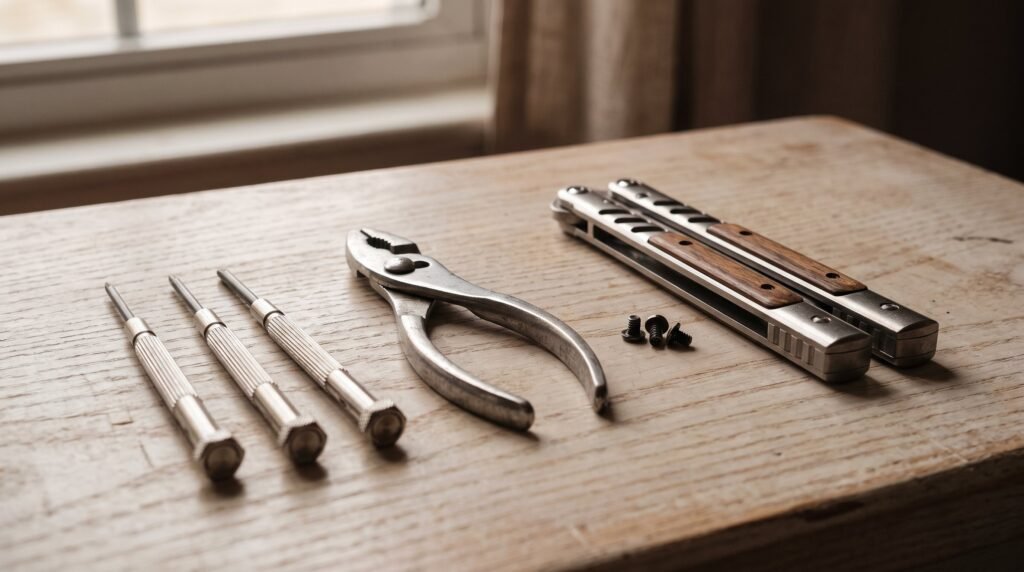
You need drivers that actually fit. Balisong hardware is small, often Torx, and the difference between a T6 and a T7 is the difference between a tuned knife and a rounded screw head you now need to drill out. Buy the correct sizes for your specific knife before you start, not during.
Useful: a set of precision Torx and hex drivers, a soft cloth, isopropyl alcohol or acetone for cleaning threads, a light knife oil, cotton swabs, and a tray so the small parts do not vanish. Actively harmful: pliers, adjustable spanners, oversized drivers, and any tool you are holding because it was the closest one.
Order of Operations: The Tightening Method
Do these in order. The order is the method.
- Clean first. Tuning a dirty knife just locks the dirt in place. Wipe the channels and pivot area, and if the swing is gritty, strip and clean it properly before adjusting anything.
- Tighten every non-pivot fastener. Spacer screws, scale screws, zen pin screws, latch hardware. Snug, not brutal. Half the rattles people bring us are here, not at the pivot.
- Tighten both pivots fully, until the handles will not swing at all. This seats everything.
- Back off one pivot by about a sixteenth of a turn. Test the swing. Repeat on the other pivot. Alternate between the two so the tension stays balanced.
- Stop at the first point where both handles swing freely. Not the loosest point that works. The tightest point that works.
- Re-check play and centring. If the blade has gone off-centre, the two pivots are at different tensions. Nudge the tighter one out rather than cranking the looser one in.
- Lubricate. One small drop of oil per washer or bearing, worked in by swinging the handles.
- Flip it for a few minutes, then re-check. Fresh tunes settle. A knife that felt perfect on the bench often needs one more small adjustment.
About Torque Figures
We are not going to give you an inch-pound figure, because there is not an honest one to give. Balisong makers do not generally publish torque specifications for pivot screws, and the correct tension varies with the pivot system, the washer material, the screw size and how the individual knife was fitted. Any number you find quoted as a universal balisong pivot torque is somebody’s guess presented as a spec.
The tighten-fully-then-back-off method exists precisely because it does not need a number. It finds the correct tension for the knife in your hand by feel, which is how this has always been done at the bench. If you own a torque driver and want repeatability, note the setting that worked for that specific knife and reuse it. That is a record, not a specification.
One thing worth being firm about: overtightening does more damage than undertightening. A loose knife rattles. An overtightened knife crushes washers, galls bearing races, deforms liners and strips threads, and every one of those is a parts replacement rather than an adjustment.
Centring, Tang Tap and Handle Tap
Centring is a balance problem between the two pivots, not a tightness problem. Work on the tight side, not the loose side: back the tighter pivot off slightly and let the blade move back toward the middle. If the two pivots are visibly at very different tensions before you touch them, that is worth noticing, because it usually means one has been backing itself off.
Tang tap is the blade contacting the inside face of a handle mid-swing. Tighten the pivots properly first. If it survives a correct tune, the clearance between tang and handles is larger than the design intends, and the honest answer is that no adjustment will cure it. Some flippers live with a small amount of it. It is not dangerous, but it will mark the flats of the blade over time.
Handle tap, where the handles strike each other on closing, means a stop has failed. Check the tang pins, zen pins or kicker. Do not keep flipping a knife whose handles are meeting, because the next thing they meet is the edge.
Latch Rattle and Loose Hardware
Latch rattle is the most common complaint about an otherwise sound knife and usually the easiest fix. Work through it in this order: tighten the latch pin or screw if it has one; check whether the rattle is the latch itself or the hardware behind it; and if the latch has worn its catch so it no longer holds shut, that is a fitting job for a maker rather than something to bend into shape with pliers.
Resist the urge to bend a latch. Latches are usually thin and often hardened. Bending one to take up slack works exactly once, and then it cracks.
Thread Locker, Honestly
Thread locker stops pivot screws backing out under the vibration of flipping. It is genuinely useful and also the most common way people ruin their own hardware, so read this part twice.
| Grade | Typical colour | Balisong use | Warning |
|---|---|---|---|
| Low strength | Purple | Small screws: zen pin screws, scale and spacer screws, latch hardware | The safest default for small fasteners you will want to remove again |
| Medium strength | Blue | Pivot screws on knives that keep loosening | Removable with a good driver, but be certain your driver fits first |
| High strength | Red | Effectively none on a balisong | Usually needs heat to remove. On a knife with heat-treated steel and natural handle materials, that is a bad trade |
Practical rules. Clean the old locker off the threads before applying new, using acetone or isopropyl alcohol, because fresh locker on top of cured residue does not bond properly. Use a very small amount on the threads only, not on washers or bearings, where it will contaminate the swing. Tune the knife before the locker cures, then leave it alone for a full cure, which manufacturers commonly quote as around 24 hours. And check the product’s own instructions for plastic compatibility if your knife has any polymer parts, because some formulations attack some plastics.
If you own a knife with a bushing pivot, you may not need thread locker at all, because the bushing sets the spacing and the screw can simply be tightened fully. That is one of the real advantages of the system, and we go into it in washers vs bearings.
How Often to Re-Tune
| How you use it | Check play | Full tune | Notes |
|---|---|---|---|
| Daily flipping practice | Weekly | Every two weeks, or when play appears | Flipping is vibration. Screws will move |
| Occasional flipping | Monthly | When the swing changes | Lubricate more often than you tune |
| Cutting and utility use | Monthly | Every few months | Clean before tuning, always |
| Kitchen balisong | Monthly | Every few months | Use a food-grade lubricant, not a general knife oil |
| Collection piece, rarely handled | Every few months | Rarely | Rust prevention matters more than tuning here |
| Trainer in heavy practice | Weekly | Every two weeks | Trainers take more impacts than live blades do |
Those intervals are a starting point, not a rule. The knife tells you. A swing that has changed character since yesterday is asking for attention regardless of what the table says.
When It Needs a Smith, Not a Screwdriver
Stop and send it to a maker if any of these are true: the pivot holes in the tang are visibly elongated or worn oval; a peened pivot pin has gone loose; a handle is bent or twisted; a tang pin has sheared; the blade will not centre no matter how you balance the pivots; a screw head is rounded out; or the knife has play that persists when the pivots are tight enough to stop the swing entirely.
This is worth saying plainly because it costs us sales: on a handmade knife, a repair by someone who understands the construction is almost always better value than replacing it, and considerably better than an afternoon with a drill. Traditional pinned knives in particular are repairable by people who work in that tradition, and effectively unrepairable by anyone else. If you bought a heavily used knife with worn pivots and a bent handle, budget for the repair before you buy, not after.
Butterfly knife laws vary by state, county and city. Check your local law before buying or carrying one.
More reading: Balisong anatomy · Washers vs bearings · Cleaning and oiling a butterfly knife · Learning to flip · Knife care
Frequently Asked Questions
How tight should balisong pivot screws be?
Tight enough that the handles swing freely and no tighter. The reliable method is to tighten both pivots until the handles will not move, then back each off in roughly one-sixteenth turns, alternating sides, until the swing returns. Stop at the first setting that works rather than the loosest one that works.
Is a little blade play on a balisong normal?
A very small amount of side-to-side play is common and usually harmless, especially on knives that get flipped hard. What is not normal is play you can feel growing week to week, play that persists after a correct tune, or vertical play with the knife open. Those point at wear rather than adjustment.
Should I use thread locker on my balisong pivots?
Only if the pivots keep backing out. Use a low or medium strength grade, apply a small amount to the threads only, keep it off the washers and bearings, and let it cure fully before flipping, commonly around 24 hours. Avoid high strength grades entirely: they usually need heat to remove.
Why does my balisong blade sit off centre?
Almost always because the two pivots are at different tensions. Back off the tighter side slightly rather than tightening the looser side, and re-check. If the blade still will not sit centrally at balanced tension, the washers may be different thicknesses, or the pivot holes are worn, which is a maker’s job.
What is tang tap and can I fix it myself?
Tang tap is the blade contacting the inside of a handle during the swing. Retighten the pivots first, because loose pivots are the common cause. If it survives a correct tune, the clearance is wider than the design intends and no adjustment will cure it. It is not dangerous, but it marks the blade over time.
Can I tune a traditional Filipino balisong?
Not with a screwdriver. Traditional Batangas knives use peened pivot pins, hammered over at both ends so they cannot back out. That is why they hold a tune for years, and also why adjusting them is bench work with the right tools. Cleaning and oiling you can do. Pivot work needs a maker.
My knife binds after I tightened it. What did I do wrong?
You went past the correct tension. Back both pivots off in small increments until the swing returns. If it stays stiff at a setting that used to work, check the washers: overtightening can deform soft washers and gall bearing races, and once that has happened the parts need replacing rather than readjusting.
How often should I tune a balisong I flip every day?
Check for play weekly and expect a full tune roughly every couple of weeks, or sooner if the swing changes. Flipping is sustained vibration and screws respond to vibration by moving. If you find yourself tuning it every few days, that is the knife asking for thread locker on the pivots.
Do I need to take the knife apart to tune it?
Usually not. Tightening, backing off and lubricating can all be done with the knife assembled. Full disassembly is for cleaning a gritty pivot, replacing washers or bearings, or investigating a rattle you cannot locate. If you do strip it, photograph the order of the parts before they come off.
Can overtightening damage a balisong permanently?
Yes. Crushed washers, galled bearing races, deformed liners and stripped threads are all real outcomes, and all of them are parts replacement rather than adjustment. A loose knife is an inconvenience. An overtightened knife is a repair bill. When in doubt, err on the loose side and tune up from there.
Balisong knives that arrive tuned
If you would rather skip the washer surgery, our balisong knives are fitted and tuned before they ship. The Filipino balisong collection is a good place to start.