Blog
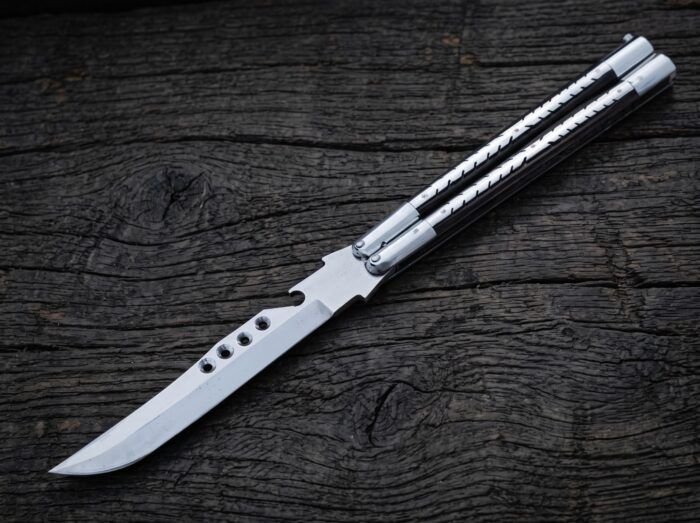
In the Batangas tradition, “29” is a size, not a model name. A 29 balisong is one that measures roughly 29 centimetres — about 11.4 inches — overall when it is open. The same convention gives you a 24, a 22 and so on. What is genuinely contested is where the numbering came from: the length explanation and a much older piece of folklore are both in print, and neither has a primary source we can point to.
That is the short version. If you have searched “29 balisong” or “29 knife balisong” you have probably found three confident and mutually incompatible answers already, at least one of which said 29 inches. Here is what the sources actually say, what can be measured, and what the number is worth to you as a buyer.
What the number actually is
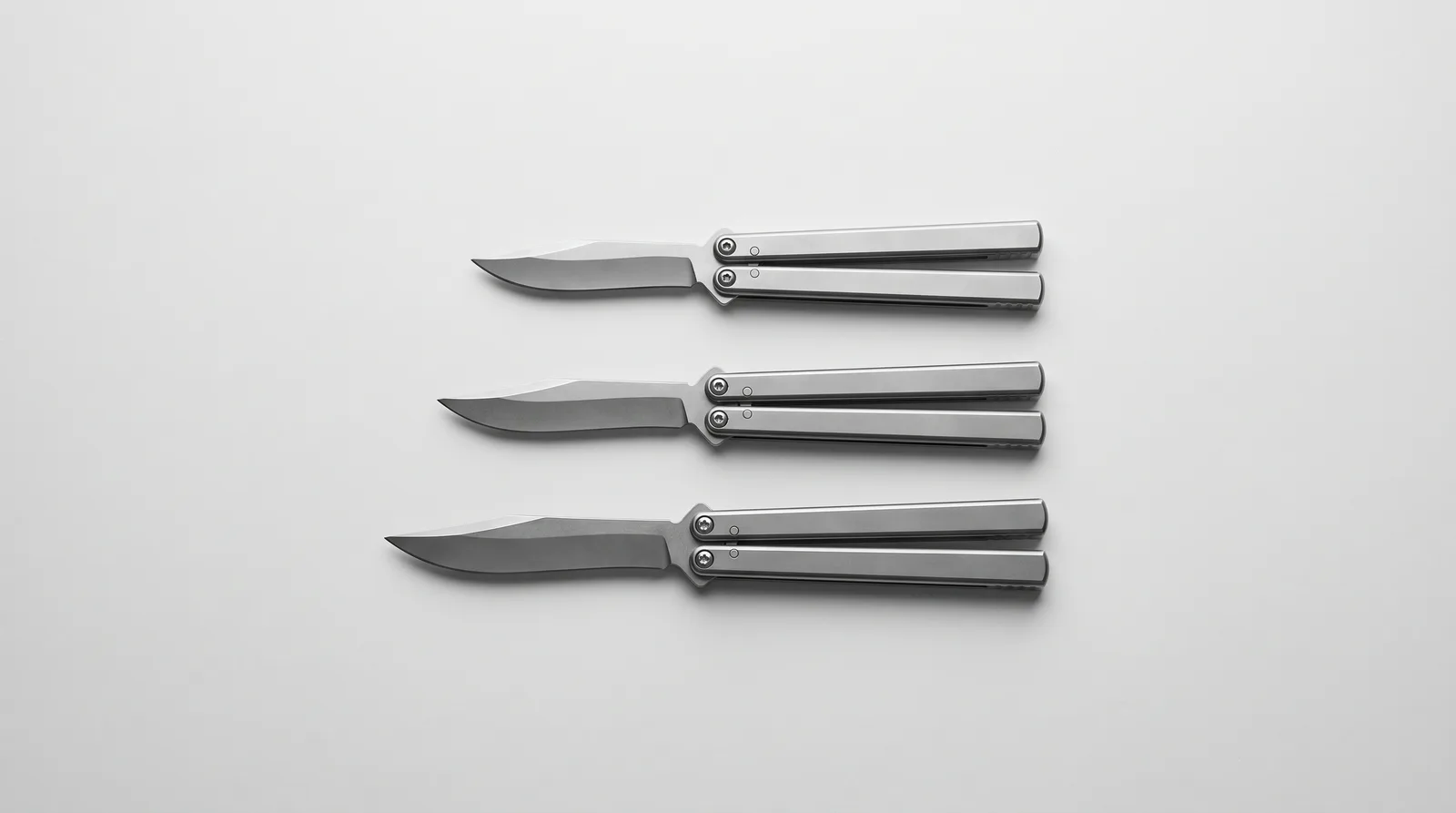
It is an overall length in centimetres, measured with the knife open — blade tip to the end of the handles. Not the blade alone. Not the closed length. Not inches.
That is the reading that survives contact with real knives. On this site, every product described as 29 cm overall carries a 14 cm blade, and every 24 cm knife carries a 12 cm blade. Those are measured figures from the workshop, not marketing rounding. If the number meant blade length, a “29” would be a short sword. If it meant inches, it would be an actual sword.
Where the number came from, and why it is contested
This is the part most pages skip. We are not going to, because the honest answer is that nobody has produced a primary source.
Two explanations circulate widely, both in Filipino-published material. A third exists only as repeated error.
| Explanation | What it claims | Where it appears | How well it holds up |
|---|---|---|---|
| Measurement | The knife is 29 cm long overall when opened, so it is called a veintinueve | Wikipedia’s butterfly knife entry, Filipino travel and martial arts writing, and the working practice of Batangas shops | Consistent with knives you can actually measure. The most defensible reading, but still an explanation of the name rather than documentation of its origin. |
| Folklore | Named for a fighter who is said to have beaten 29 attackers with one, or in a stronger telling a blade that could run through 29 men | Filipino martial arts publishing and travel writing, usually flagged as legend | Repeated often, sourced never. Presented as a story even by the people telling it. Treat it as folklore. |
| Inches | The knife is 29 inches long | At least one martial arts reference page states it this way | Wrong. 29 inches is 74 cm. No balisong is that size, and the same page contradicts itself elsewhere. |
Our position, stated plainly: the centimetre explanation is almost certainly what the number means in practice today, because that is how the sizes line up and how workshops use it. Whether that is also how the name originated, we cannot confirm. Several published accounts present the measurement and the legend side by side without choosing between them, which is a fair reflection of the evidence. If you see a page that states the origin as settled fact, ask what it is citing.
The same caution applies to the word balisong itself. The common etymology is bali (to break) plus sungay (horn), giving “broken horn.” Wikipedia instead derives the name from Barangay Balisong in Taal, the district where the knives were made. Both are in print. Which came first, the place or the knife, is not settled either. The history guide goes further into that.
The number words you will actually see
Batangas sizing uses Spanish numbers, absorbed into Tagalog and often written phonetically. Sellers switch between spellings without warning, which is why searches for the same knife return such different results.
| Number | Spanish | Common Filipino spellings | Approximate open length |
|---|---|---|---|
| 29 | veintinueve | bente nueve, vente nueve, vientenueve | 29 cm / about 11.4 in |
| 24 | veinticuatro | bente kuatro | 24 cm / about 9.4 in |
| 22 | veintidos | bente dos | 22 cm / about 8.7 in |
| 10 | diez | de diez, dies | 10 cm / about 3.9 in |
If you are hunting for a specific knife, search more than one spelling. “Bente nueve balisong” and “veintinueve balisong” will not return the same listings.
Common sizes, measured from our own catalogue
Rather than repeat what other sites say, here is what our own workshop actually produces. These figures come from the 93 products on this site that publish full dimensions, counted today. Prices are the live prices on this site as of writing and will move.
| Size | Blade | Median weight | Models on this site | Median price | Who it suits |
|---|---|---|---|---|---|
| 15 cm | 7 cm | 165 g | 1 | $122 | Novelty and collection pieces; too short for comfortable flipping |
| 20 cm | 9 cm | 135 g | 1 | $134 | Small hands, light pocket knife duty |
| 22 cm | 10 cm | — | 2 | $177 | Compact traditional feel |
| 24 cm | 12 cm | 175 g | 48 | $166 | The default. Best all-round balance of speed and control |
| 29 cm | 14 cm | 205 g | 35 | $236 | The classic bente nueve. Slower, heavier, more presence |
| 30.5 cm | 18 cm | — | 6 | $302 | Large traditional and blade-heavy pieces; display and collection |
Two things fall out of that table. The 24 is the volume size, not the 29 — a 24 is what most people who flip actually reach for. And the 29 is not simply a bigger version of the 24: it gains about 30 g and 2 cm of blade, which changes how it behaves rather more than the numbers suggest.
What changes when the number goes up
Everything you feel, and not much you read on a spec sheet.
- Rotational inertia. A longer handle carries its mass further from the pivot, so the knife rotates more slowly for the same wrist input and keeps going longer once it is moving. A 29 is more forgiving of a late catch and more punishing of a bad one.
- Trick difficulty. Aerials and fast rollovers are harder on a 29 because there is more knife to get around. Slow, wide, presentational manipulations look far better on one.
- Hand fit. A 29’s handles run around 14 to 15 cm. If your palm is small, part of the handle overhangs during a squeeze, and that overhang is what catches your fingers.
- Blade presence. A 14 cm blade is a serious cutting tool. It is also 2 cm more edge travelling past your knuckles on every swing.
- What it costs. More steel, more brass, more horn, more bench time. The median 29 on this site sits about $70 above the median 24, which is roughly what the extra material and labour costs.
The practical differences, and how to match a size to your hand, are worked through properly in balisong sizes explained.
What a Batangas balisong costs
People searching “batangas balisong price” are usually comparing two very different things without realising it: a tourist-market knife bought at a roadside stall in Taal, and a workshop-built knife with a stated steel and a stated hardness.
On local Philippine pricing we will not pretend to precision. One Filipino travel account from 2017 put traditional veintinueve knives at roughly PHP 600 to 800 at source, with smaller knives well under that. We cannot verify that figure today, we did not collect it ourselves, and it is nearly a decade old. Treat it as historical colour, not a current quote.
What we can state is our own catalogue, because we counted it. Across 185 published products, prices run from $50 to $535, with a median of $166. Half the range sits between $131 and $220. The gap between a $50 knife and a $535 one is almost entirely steel, materials and hours — not brand. The butterfly knife price guide takes that apart tier by tier.
What the number does not tell you
This matters more than the number itself. Size says nothing about:
- Steel. A 29 in unhardened mystery metal is worse than a 22 in properly heat-treated 440C. Ask what steel and what hardness, and expect a straight answer.
- Construction. Channel or sandwich, peened pins or screws, brass or steel frames. The making guide covers what each choice does.
- Whether it flips. Tuning, pivot friction and balance decide that. A badly tuned 29 is a paperweight with a latch.
- Whether it is authentic. Any factory can stamp out a 29 cm knife. The Batangas part is who made it and how.
So which number should you buy?
If you are learning to flip: a 24. It is the size most people settle on, it is the size most of our catalogue is built in, and it is forgiving enough to be teachable without being so light that sloppy input goes unpunished. Start with a trainer in the same size if you value your fingers, then move to a live blade. The beginner flipping guide assumes roughly this size.
If you want the traditional Batangas piece, the one the tradition is named around: a 29. It is heavier, slower and more imposing, and it is the knife people mean when they say bente nueve. Browse the authentic Filipino balisongs for that.
If your hands are small or you want something pocketable: 20 to 22 cm. Accept that some tricks will be harder, not easier, because a light knife punishes imprecise input.
Butterfly knife laws vary by state, county and city — check your local law before buying or carrying one.
Three ways people misread the number
- Reading it as a model. “The 29” is not a product, it is a size class. Dozens of different knives are 29s.
- Reading it as blade length. A 29’s blade is about 14 cm, roughly half the number.
- Reading it as inches. It is centimetres. A page that tells you 29 inches has copied an error.
More reading: the Batangas balisong, the history of the balisong, how a balisong is made, identifying a vintage balisong, and balisong sizes explained.
Frequently Asked Questions
What does 29 mean on a balisong?
It is the approximate overall length of the knife in centimetres when it is open, about 11.4 inches. It is a size class rather than a model name, so many different knives are 29s. The blade on a 29 typically runs around 14 cm, roughly half the total. It is not the blade length and not inches.
Is the 29 named after a length or a legend?
Both explanations are published and neither is documented from a primary source. The measurement explanation matches knives you can actually measure, so it is the one we go with in practice. The story about a fighter who beat 29 attackers appears in Filipino martial arts writing, usually flagged as legend. We treat the origin as unresolved.
How long is a 29 balisong in inches?
About 11.4 inches open, since 29 centimetres converts to 11.42 inches. Closed it is roughly half that, around 15 cm or 6 inches, depending on how the handles are built. The blade itself is typically 14 cm, about 5.5 inches. Any source telling you a 29 balisong is 29 inches long has made an error.
What is a bente nueve?
The same knife. Bente nueve is the Filipino phonetic spelling of the Spanish veintinueve, meaning twenty-nine. You will also see vente nueve and vientenueve. Spelling varies between sellers and regions, so search several versions if you are hunting for a specific traditional knife.
What other Batangas sizes are there?
The 24, or veinticuatro, is the most common working size and the one most people learning to flip end up with. You will also find 22 and 20 cm knives, and small de diez pieces around 10 cm. Larger traditional knives run past 30 cm. Sizes are not standardised to the millimetre between workshops.
Is a 29 better than a 24?
No, it is different. A 29 is heavier and slower to rotate, which makes it more forgiving on a late catch and harder for fast aerials. A 24 is quicker, easier on smaller hands and better for learning most tricks. If you want the classic Batangas object, take the 29. If you want to flip, take the 24.
Does the size number tell me anything about quality?
Nothing at all. Size is geometry. Quality comes from the steel, the heat treatment, the construction and the hand tuning. A properly heat-treated small knife beats a large one made from unknown metal every time. Ask what steel it is, what hardness it runs, and how the pivots are built.
How much does a 29 balisong cost?
On this site the 29 cm models have a median price around $236 at the time of writing, against about $166 for the 24 cm models, with the whole catalogue running $50 to $535. The gap is material and bench time. Philippine roadside pricing is a separate market entirely and we cannot quote current figures for it.
Why do different sellers list different lengths for a 29?
Because these are hand-made knives and because measuring conventions differ. Some measure the blade to the plunge line, some to the tang. Handle lengths vary between workshops. A knife sold as a 29 might measure 28.5 or 29.5 cm and still be correctly described. Expect a centimetre of variance.
Do these numbers mean anything on non-Filipino butterfly knives?
No. The centimetre convention is a Batangas practice. Western and production brands normally quote blade length in inches and describe the knife by model name instead, so a “3.75 inch” listing and a “24” listing are using two different systems for two different measurements. Do not try to convert between them; ask for both blade length and overall length.