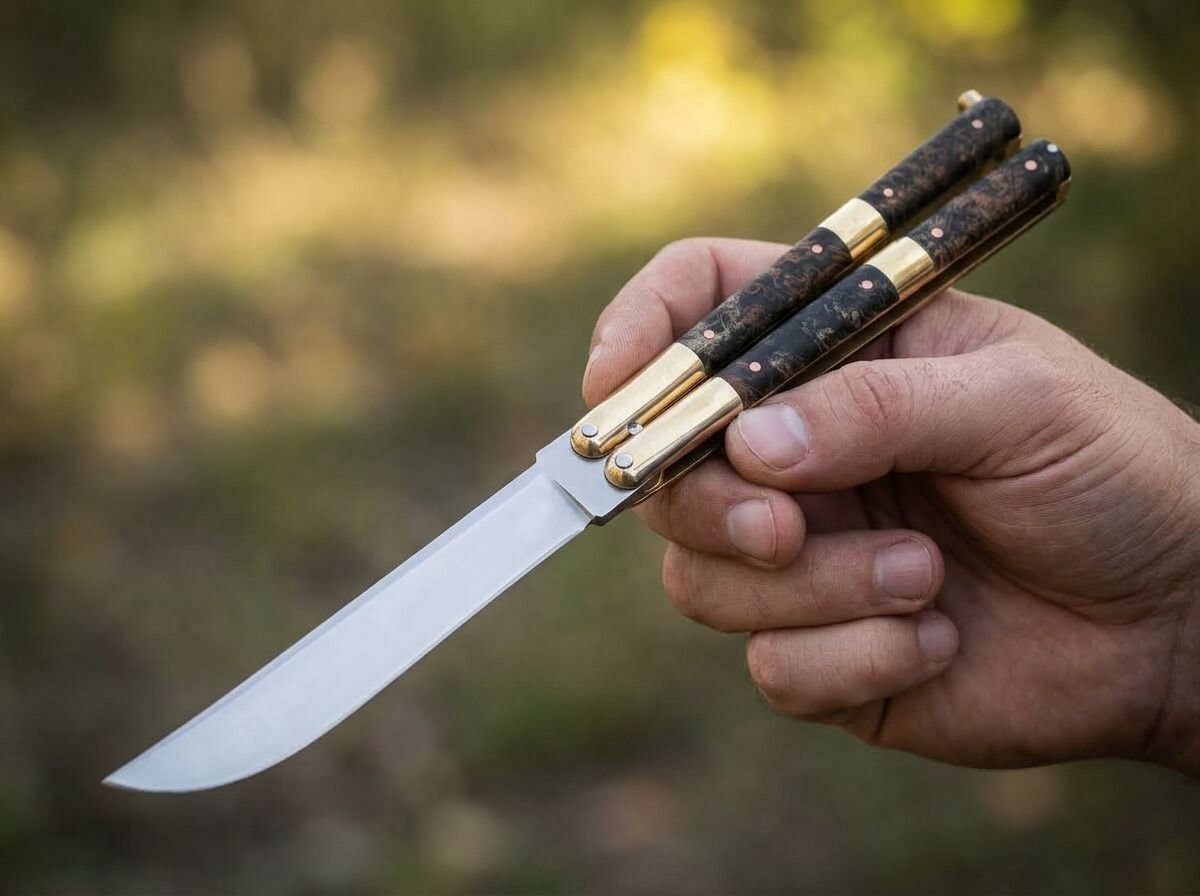
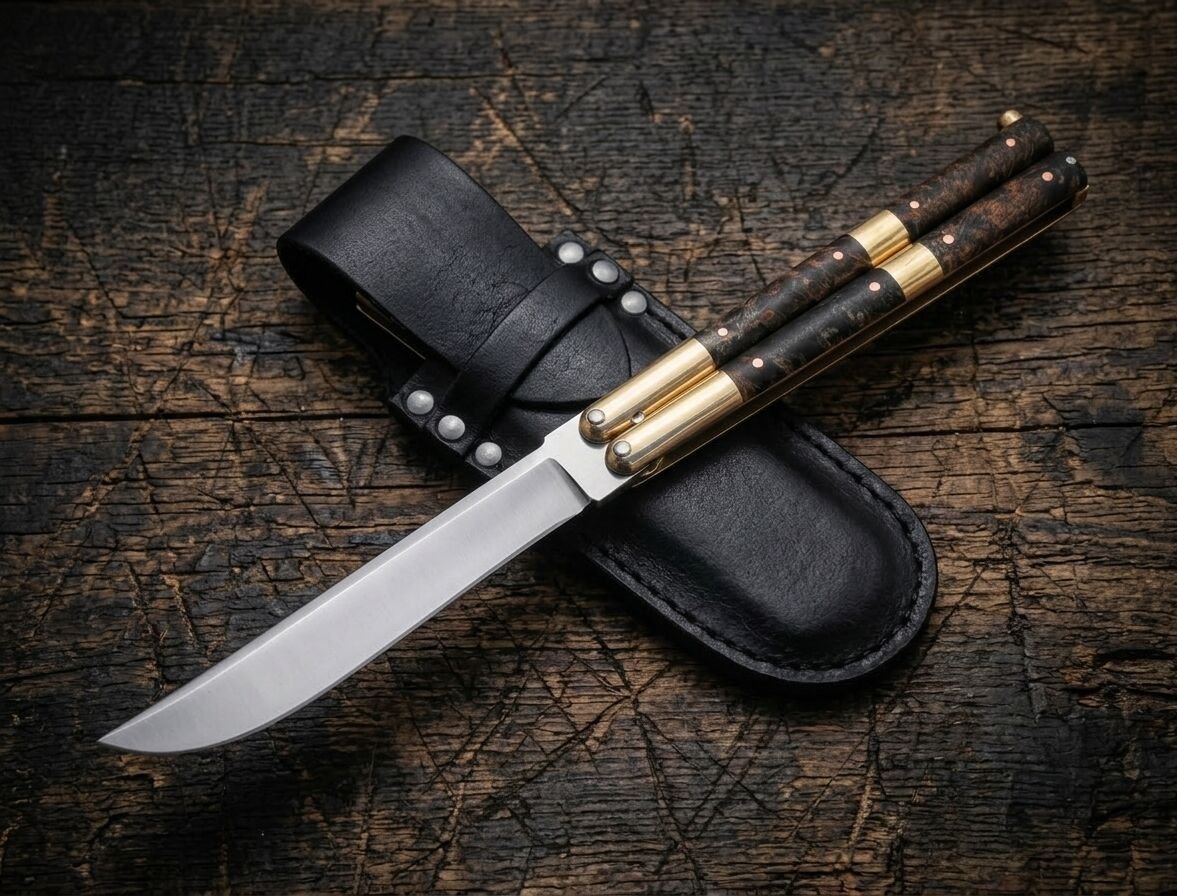
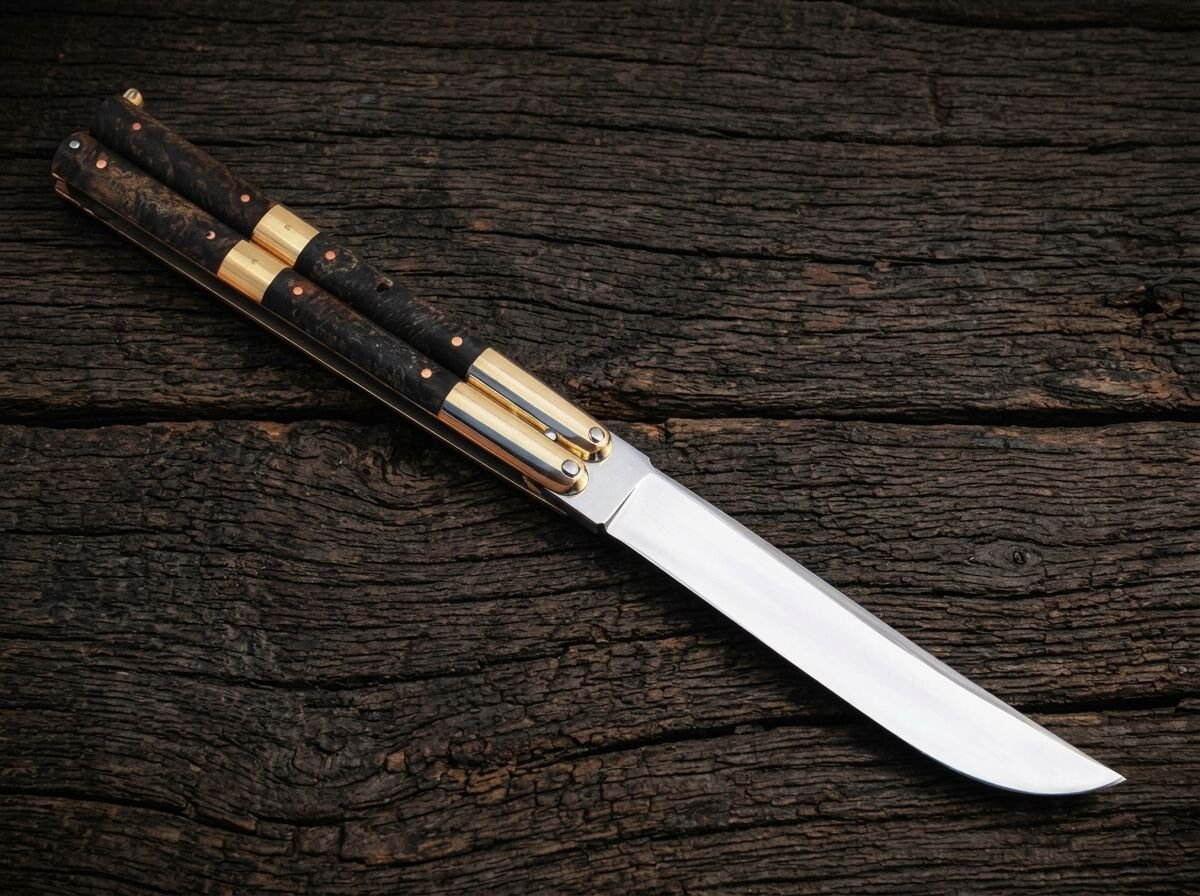
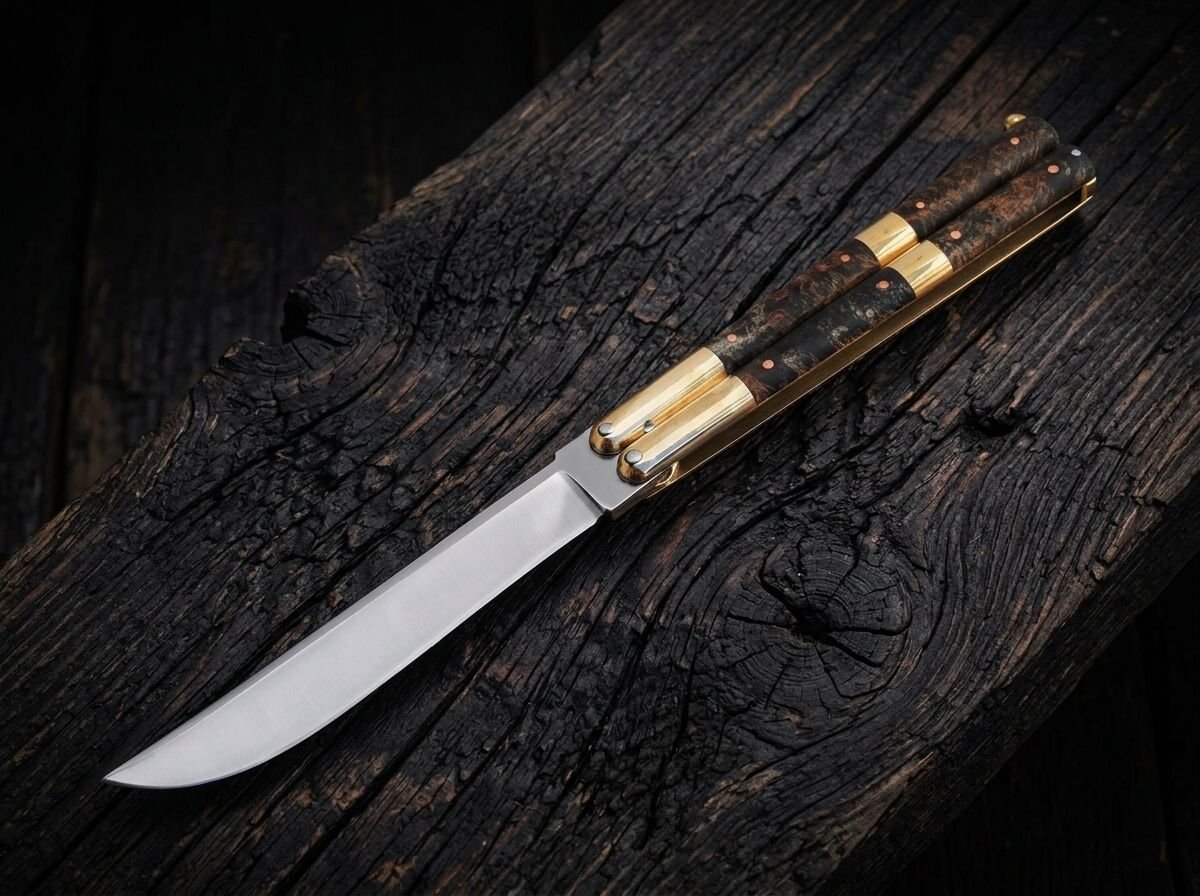
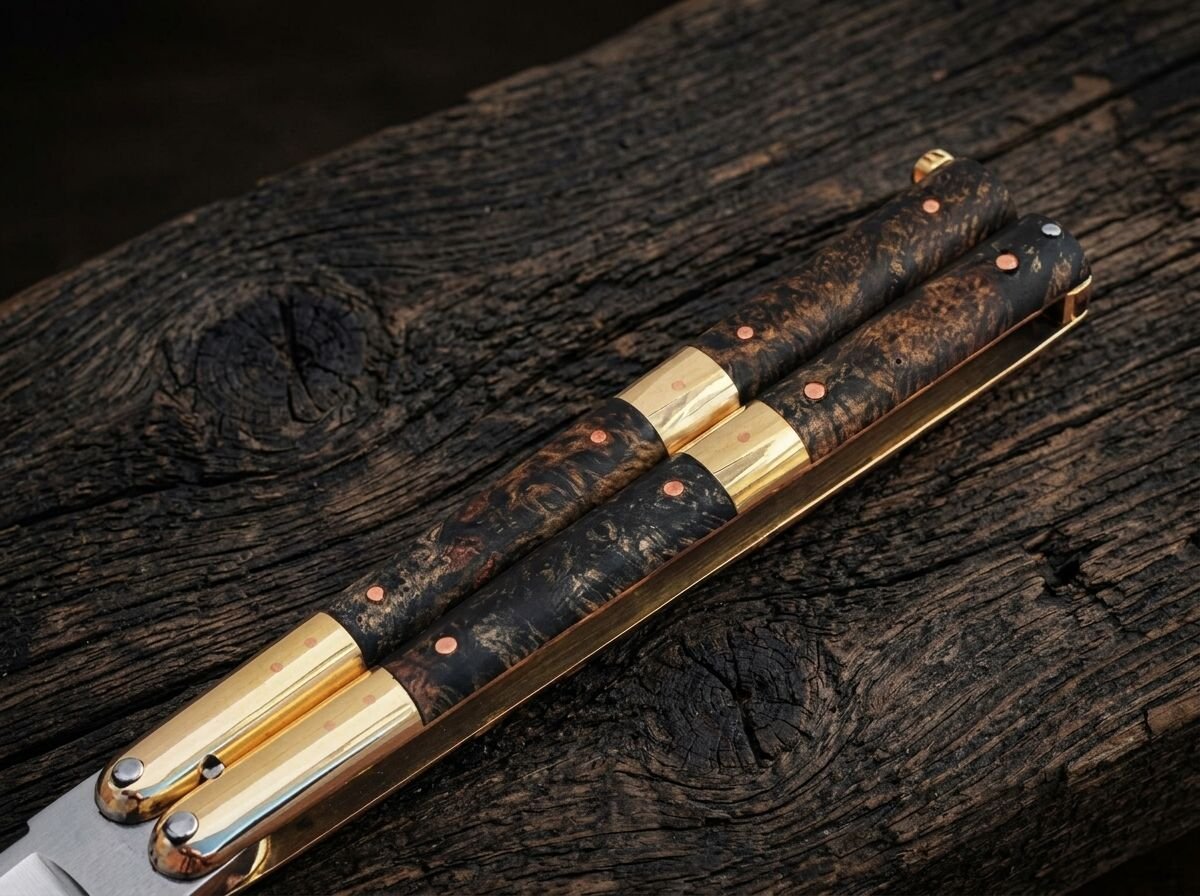
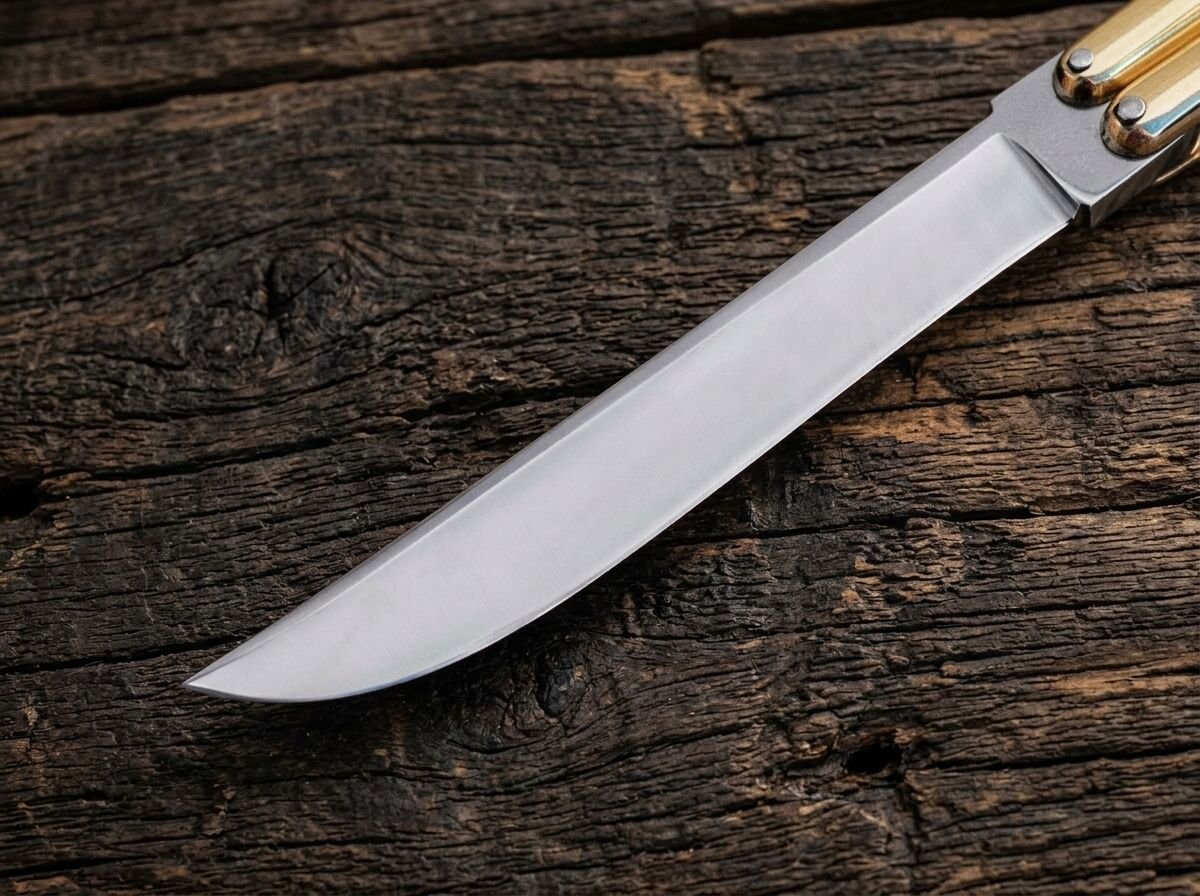
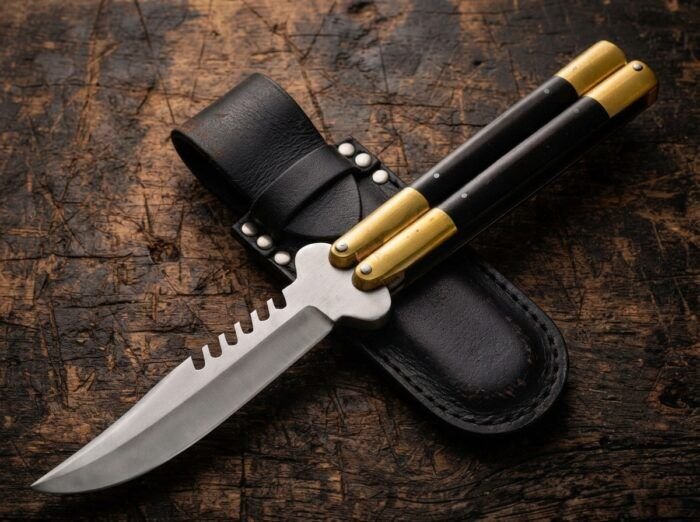
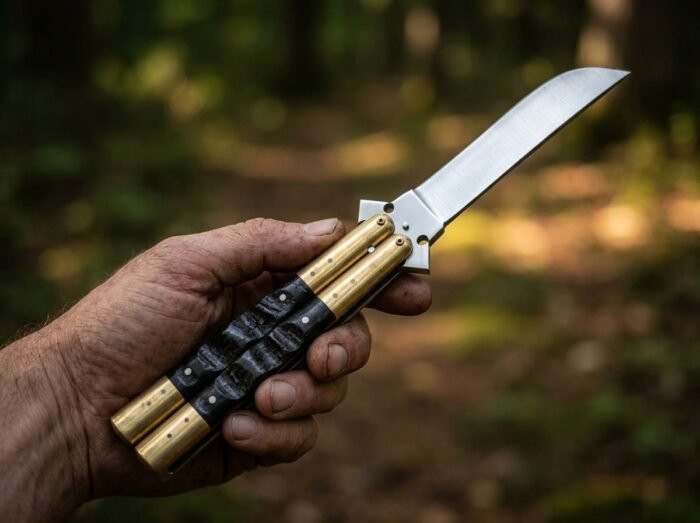
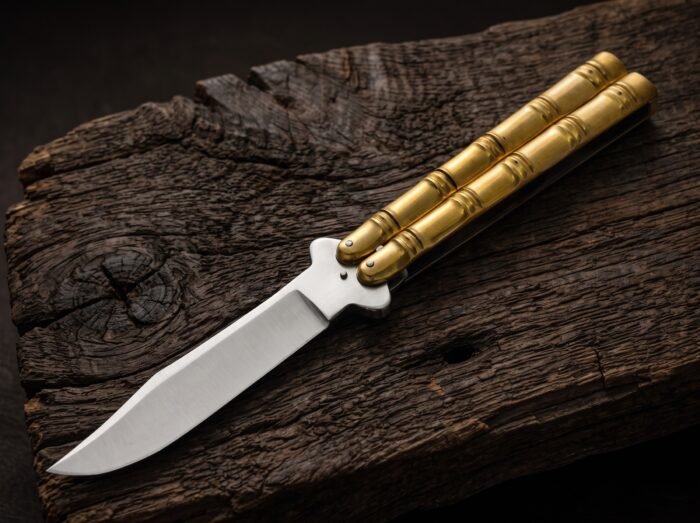
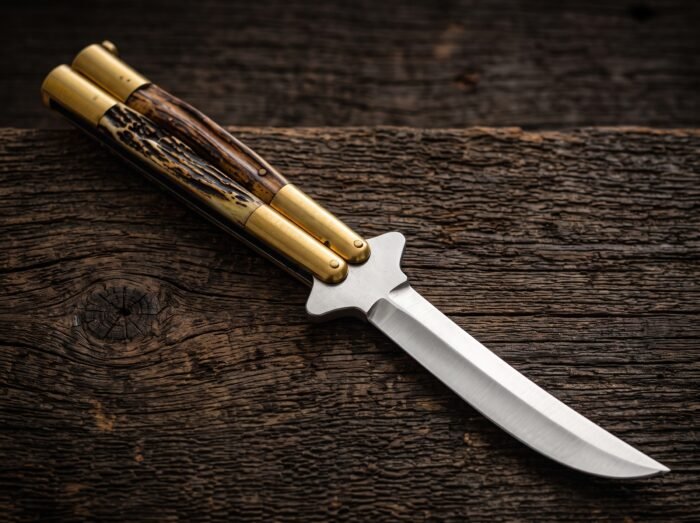
Rose wood, brass, D2 tool steel and dimensions that have not needed changing in generations. 24cm open, 12cm blade, 220g. If you want to own one knife that shows you what a traditional Filipino balisong actually is, before you start chasing steels and pivot systems and limited runs, start here.
The history, with the mythology left out
The balisong comes from Taal in Batangas, in the Philippines, and specifically from Barangay Balisong, the neighbourhood the knife takes its name from. That much is solid.
The older name was baling sungay, meaning folding horn, because the handles were cut from carabao horn. Perfecto de Leon is the name attached to the pattern in the early 1900s, and he is the closest thing this knife has to a documented origin.
The classic full size is called the veinte y nueve, twenty nine, because it measures 29cm open. This one is the shorter 24cm proportion, which is the size most people actually get on with. If you want the full length version, that is what our Philippine Visayan knives are.
Everything beyond those facts should be treated with suspicion. There is a great deal of confident writing online about Spanish colonial origins, secret warrior traditions and precise founding dates, almost none of it sourced. We would rather give you five facts we can stand behind than a page of atmosphere.
What “traditional” means here, specifically
- Sandwich construction. Handles built around channels the blade sits into, held on pins, the way they have always been made.
- Brass bolsters. Structural, not decorative, and responsible for most of the 220g.
- A latch. The traditional pattern has one. Modern trick knives usually do not, because latches get in the way of tricks.
- No modern additions. No jimping, no thumb ramp, no coating, no clip.
- Proportions nobody optimised. The 24cm open, 12cm blade relationship was arrived at by generations of people making knives for people who used them.
What is not traditional is the steel. D2 is a twentieth century tool steel and the old knives were not made from it. We use it because it holds an edge far better than what was available then, and we are not going to pretend otherwise for the sake of a purer story. Nor is the heat treat. The old smiths hardened by colour and by eye and got what they got. Ours leave a controlled cycle at 58-60 HRC every time, which is a better knife and a worse legend.
Specification: D2 drop point, rose wood handle
| Blade |
D2 tool steel |
| Hardness |
58-60 HRC |
| Handle |
Brass with rose wood |
| Overall length |
24cm open |
| Blade length |
12cm |
| Weight |
220g |
If this is your first balisong
Order it as a trainer. The option is directly above Add to Cart and the price does not change.
We know how that reads coming from the people selling the knife, so here is the reasoning. A balisong is learned by dropping it. Not occasionally, repeatedly, for the first few weeks, and the drops that matter are the ones where you catch at it on the way down out of reflex. With a live edge that reflex is expensive.
The trainer is this knife with the bevels left blunt. Identical weight, identical balance, identical everything else, so nothing you learn has to be relearned when you eventually buy the sharp one. Our trainer guide explains why we price them the same rather than discounting the blunt version, which is the question everybody asks.
What you will notice first about this D2 butterfly knife
The weight. 220g is more than most people expect from a knife this size, and it is brass doing that. Traditional balisongs are heavier than the aluminium and titanium flippers the trick scene runs on, and the first ten minutes will feel like hard work.
Then the sound. Brass on brass has a specific low knock to it that people find oddly addictive and that housemates find less so.
Then the pivots, which you should check and set before doing anything ambitious. The knife care guide covers it, and a correctly tensioned balisong feels like a different knife from a badly tensioned one.
Where it sits on price
The steel, the construction and the proportions are shared across that whole spread. Spending more buys finish and handle material rather than a fundamentally better knife.
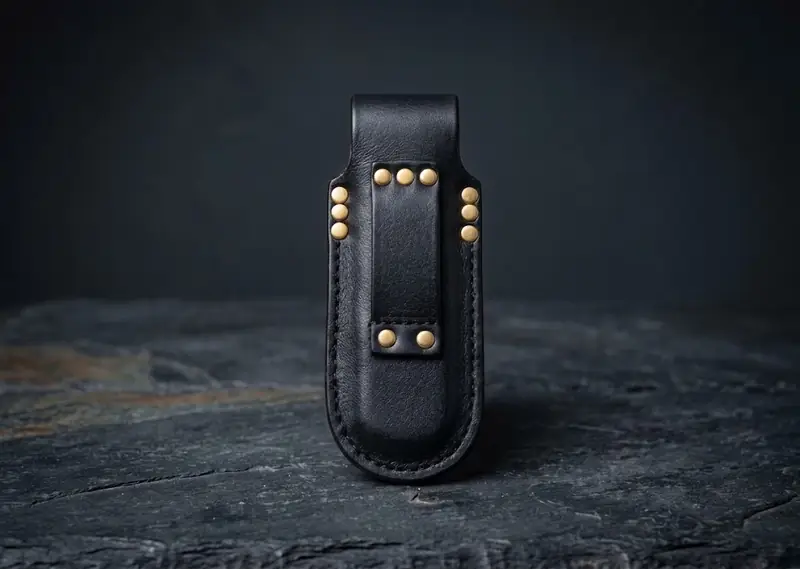
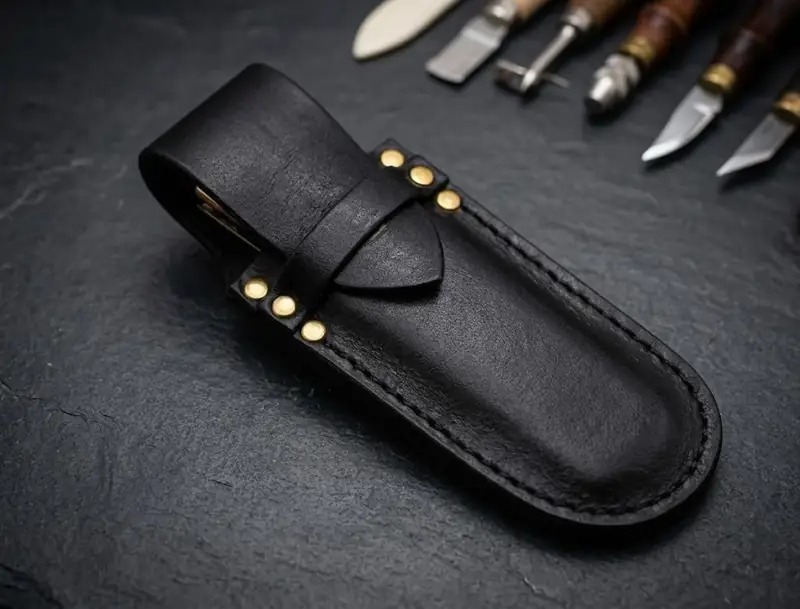
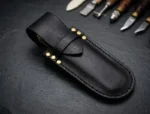
Fitted leather sheath included. Free US shipping, flat $49 worldwide. If you want the background reading first, our guide to what a balisong is is written by the same people who made this.




Reviews
There are no reviews yet.