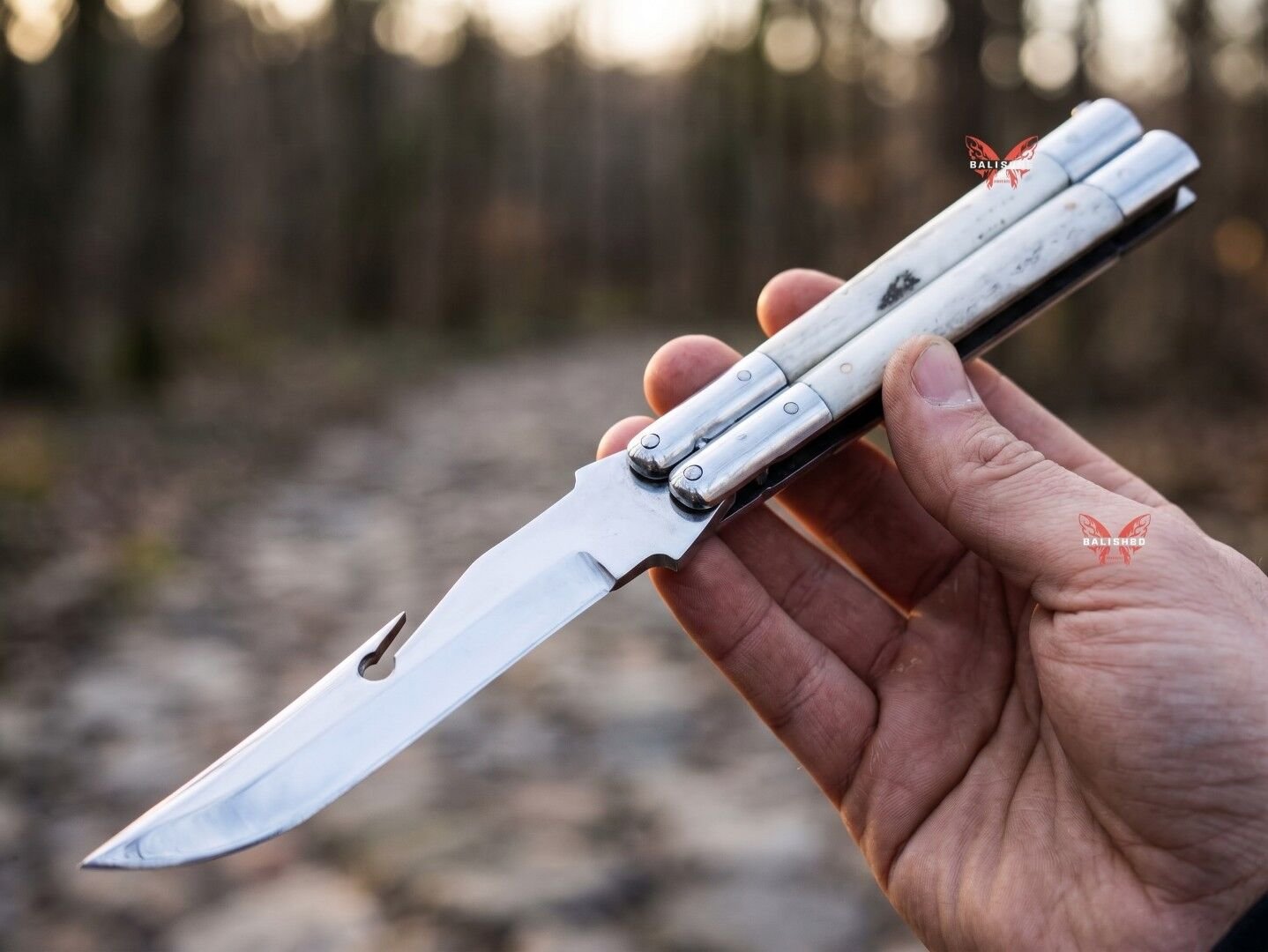
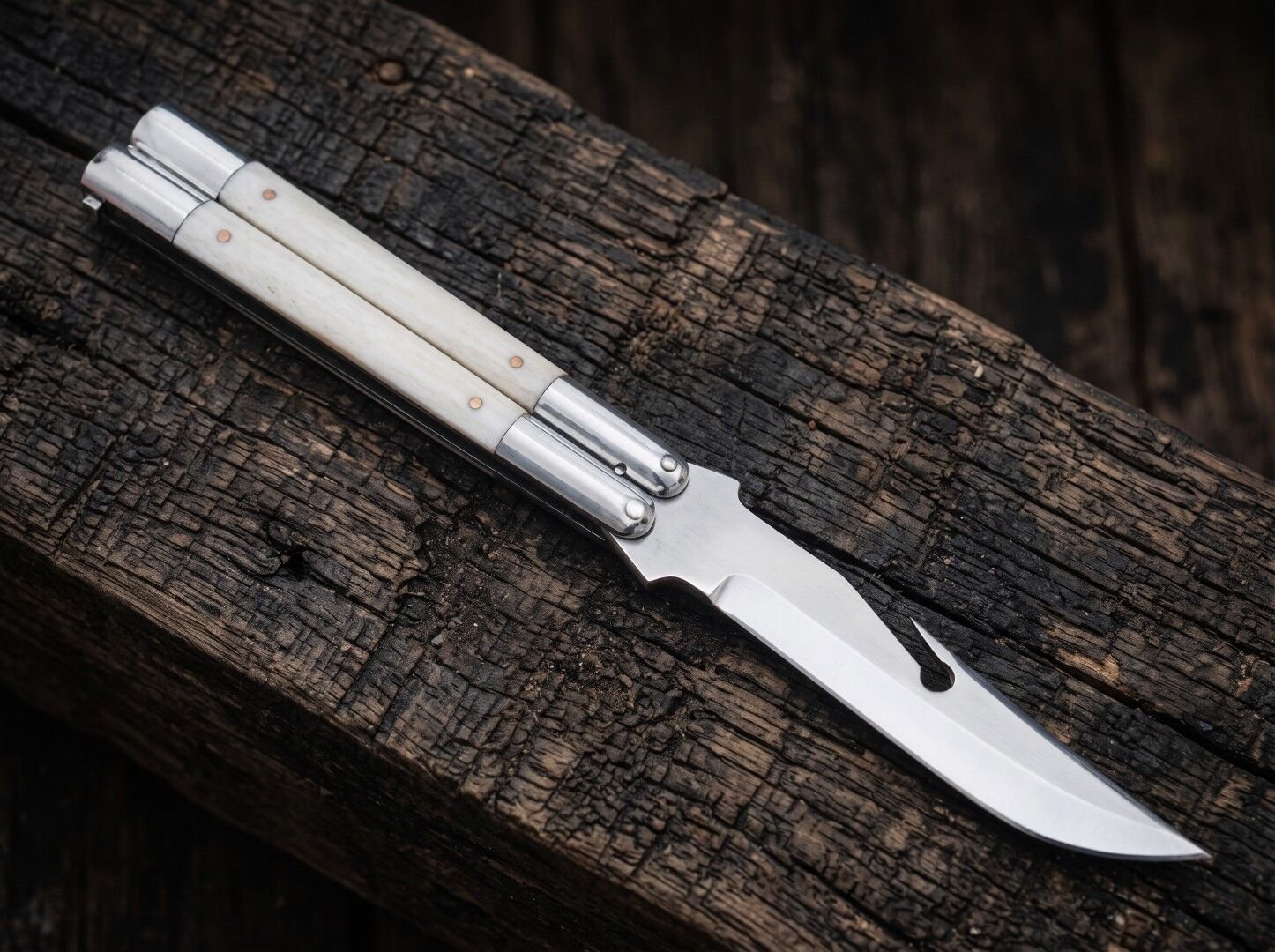
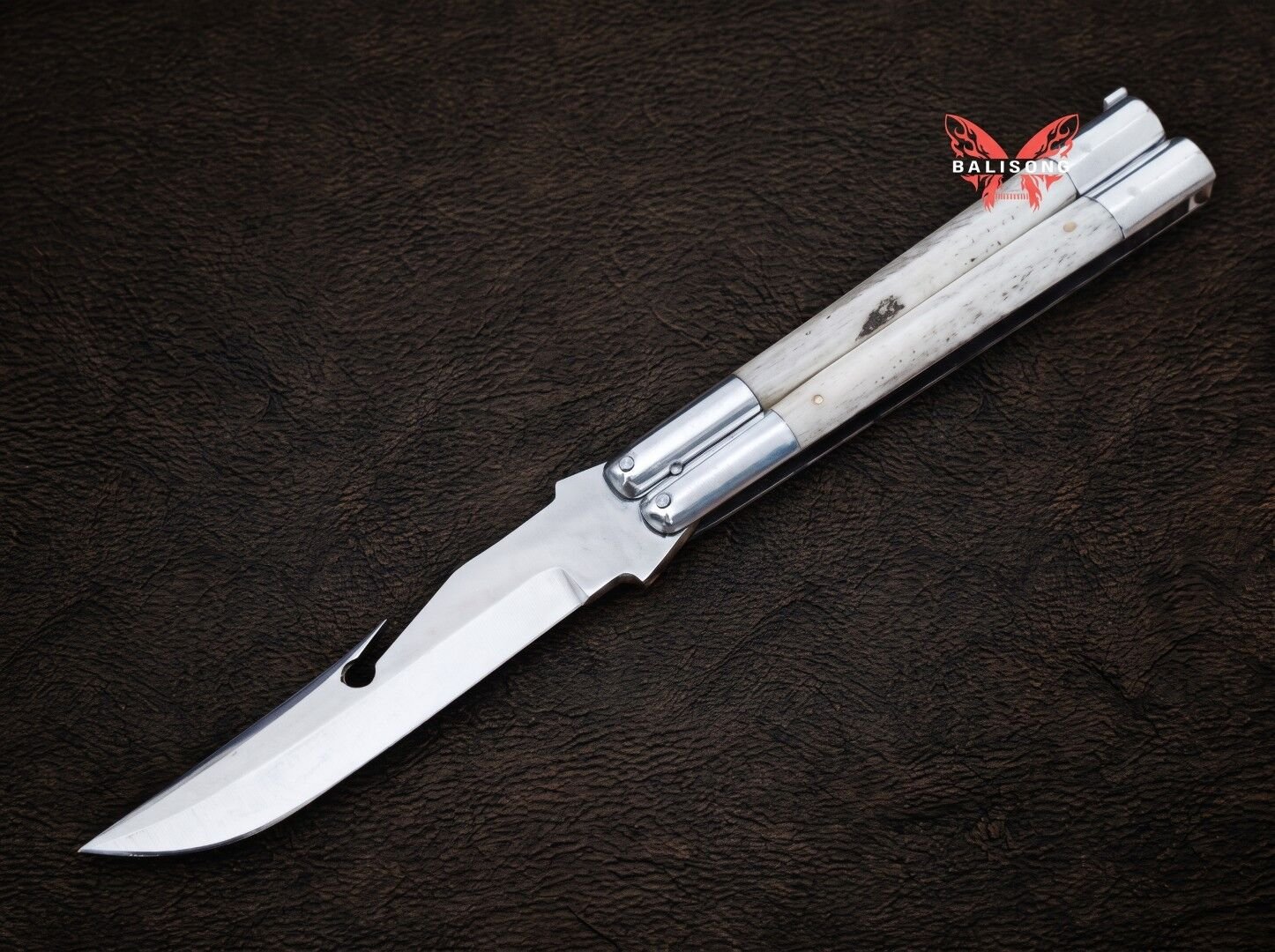
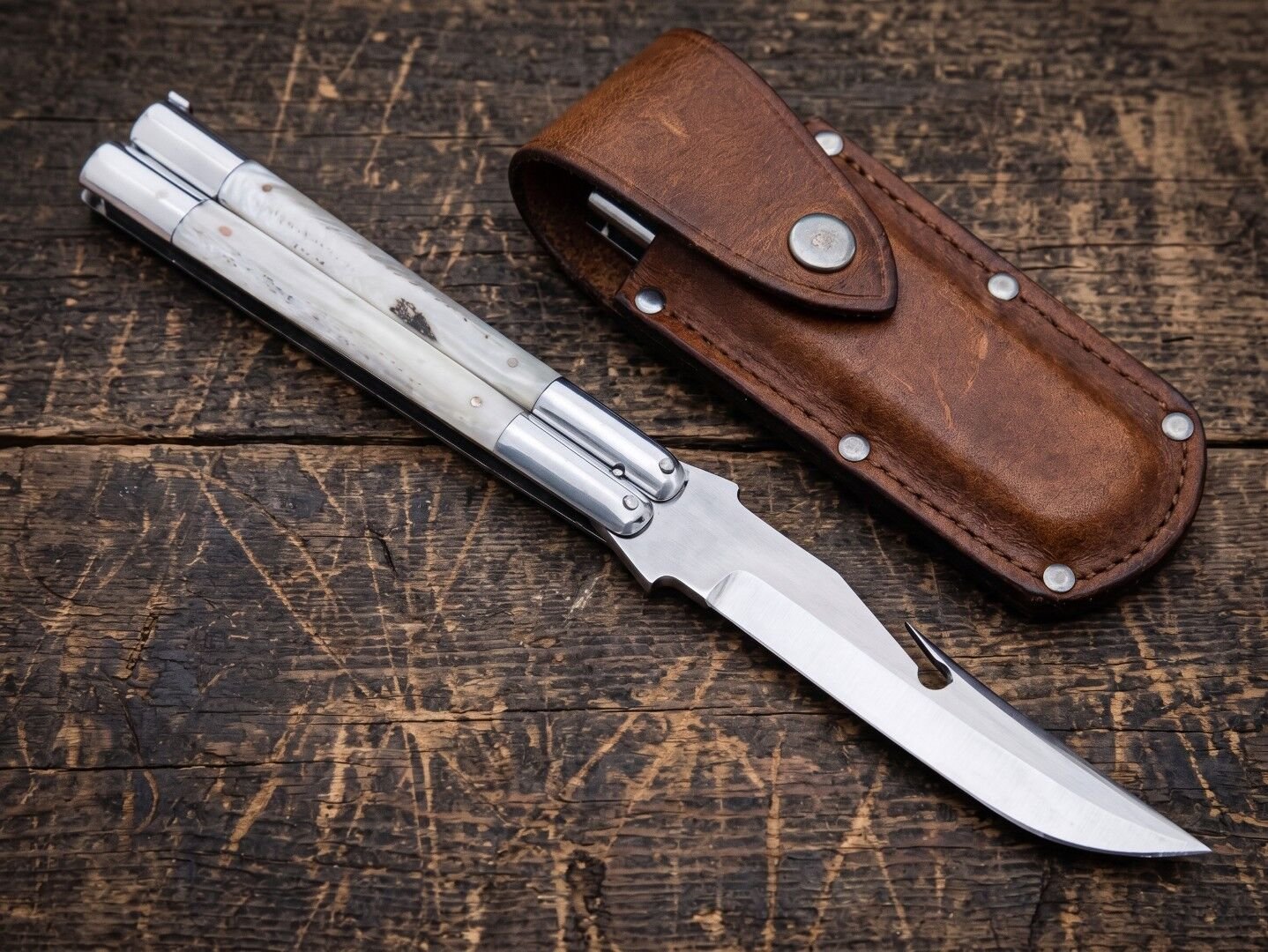
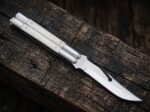
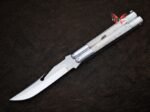
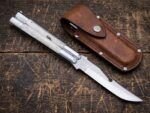
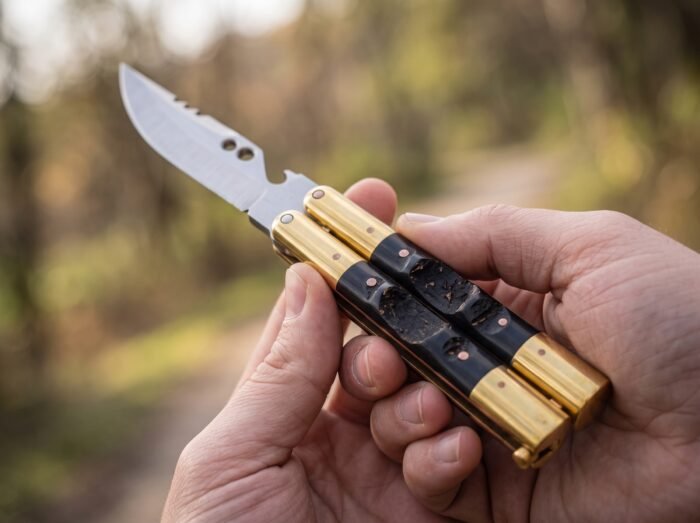
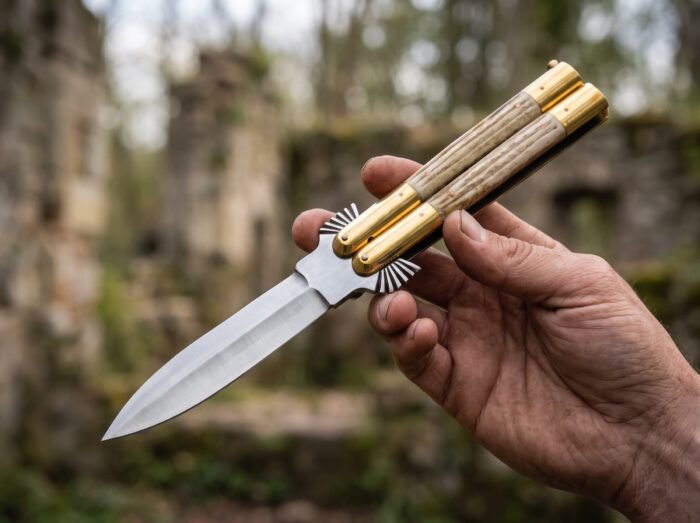
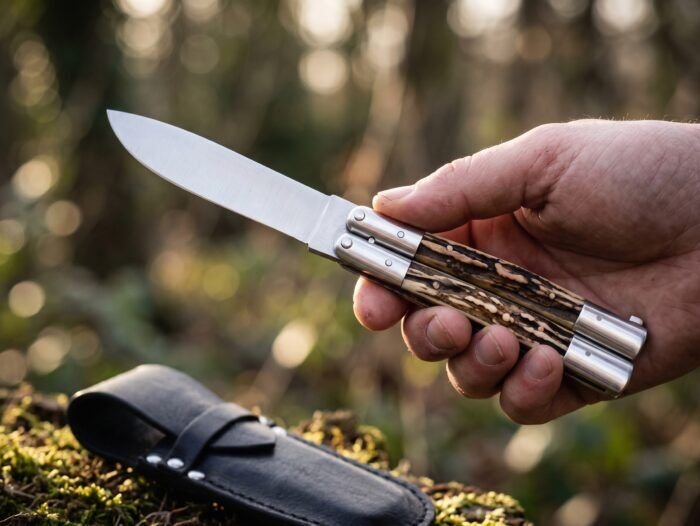
The BF-85 Moth is a 24cm balisong with a 12cm D2 blade, 180g, stainless bolsters with bone inserts. It is one of only two pale-handled knives we make, and a light handle behaves differently from a dark one in ways nobody warns you about.
A pale handle is a different object
Nearly everything in this range is dark: black kamagong, charcoal carabao horn, brown brass going browner. This one is cream and pale amber against a dark blade, and the reversal changes how the knife reads entirely.
It also changes how it wears, and here is the honest part. A pale handle shows things. Hand oil marks it faster, a dropped knife shows the contact point, and after two years it will look used in a way a black handle simply does not.
Whether that is a problem depends on you. Some owners want a knife that stays looking new. Those people should buy kamagong. Some want a knife that visibly becomes theirs, and bone does that faster and more legibly than any other material we work with.
How a bone balisong handle ages
| Time |
What happens |
| First month |
Nothing visible |
| Six months |
Slight warming in colour where your fingers sit |
| Two years |
An even amber tone across the whole insert |
| Five years and beyond |
Deeper amber, and it looks considerably better than it did new |
Nobody notices this happening and everybody notices it once it has. It is not dirt and it does not clean off, because it is the bone itself changing with light and handling, the same way piano keys and old cutlery handles do.
What you should clean off: anything oily, promptly, with a dry cloth. Bone is slightly porous and a spill left on it will mark differently from ordinary ageing.
Stainless bolsters, and why they suit this knife
Stainless stays the colour it is. On a dark-handled knife that can look static; here it is exactly right, because the bone is already doing all the changing and a brass bolster going brown at the same time would muddy the contrast this knife exists for.
The practical side: stainless is less dense than brass, so the 180g is spread slightly further along the handle rather than concentrated at the bolster. The knife turns a fraction more evenly and stops a fraction less abruptly. Small, real, and not worth choosing a knife over.
It also means there is nothing on this frame that corrodes. Blade, bolsters, pins and bone will all ignore a damp week.
D2 steel at 58-60 HRC on a butterfly knife
An air-hardening tool steel: about one and a half percent carbon and eleven to twelve percent chromium, which sits just under the threshold for calling a steel stainless. It holds an edge longer than anything else we sell and it is stubborn to sharpen, wanting diamond rather than ceramic.
We run it at 58-60 rather than higher, because a carbide-heavy steel taken to 62 chips when the knife lands on a tiled floor, and at 59 the edge rolls instead. Rolled comes back on a plate. Chipped is a regrind.
Practically: sharpen it twice a year, ignore it in between, and it will still be cutting in ten years.
The name
Pale wings against a dark body. For once the animal and the object actually line up, which after ninety-odd names in this series felt worth taking.
Ordering this D2 bone handle balisong
The unsharpened trainer is the same knife, chosen above Add to Cart. Same bone, same 180g, same balance, no edge, and the price is identical because grinding an edge is one operation in a long build.
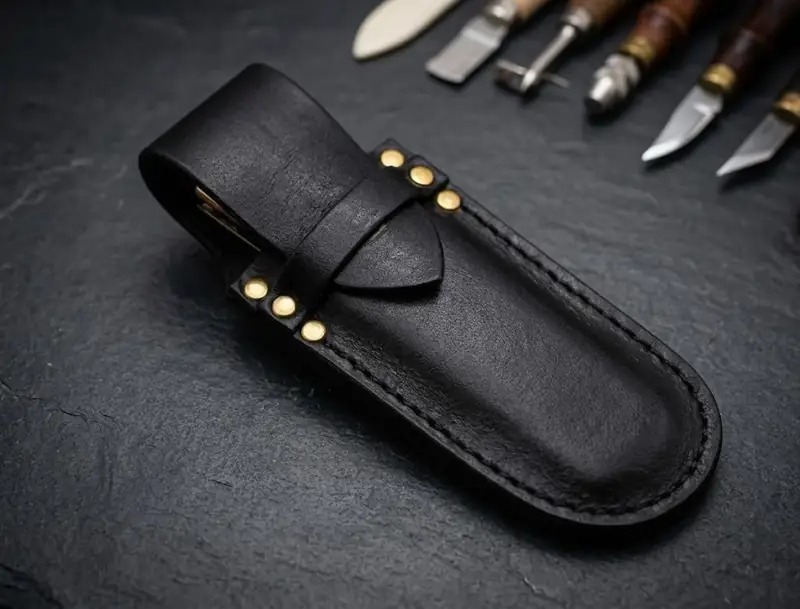
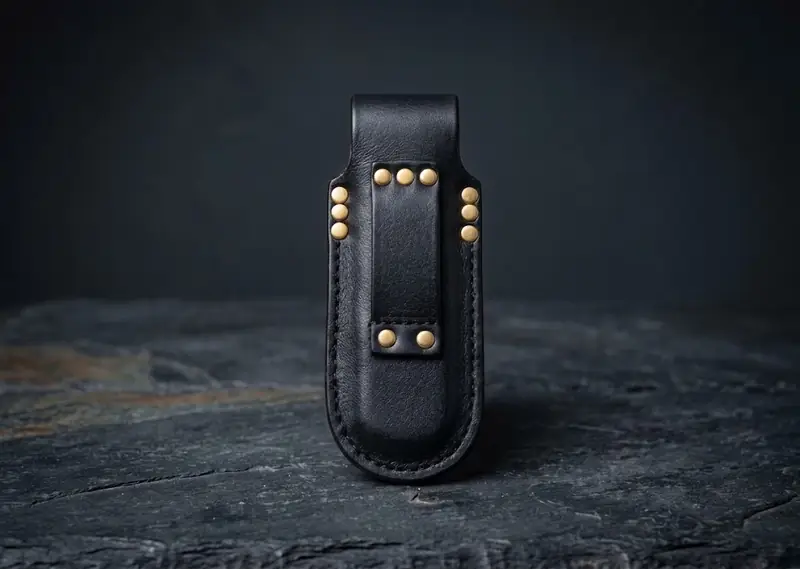
A fitted leather sheath comes with it. There is one caution particular to this knife: do not store a pale-handled knife in leather for long stretches, because dye transfer from the sheath will mark bone in a way it will never mark kamagong. Carry it in the sheath, keep it out of the sheath.
Free US shipping, flat $49 to anywhere else for the whole order.
The Moth carries D2 tool steel on a 24cm frame, with the stainless steel and bone handle doing most of the work for grip and balance. For a sense of how this size compares to the rest of the range, our balisong sizes guide lays out blade and handle length across the whole lineup. This model is part of our D2 tool steel collection, and the Mouse D2 balisong makes a good side by side comparison for anyone still deciding between the two.


Zachary Rivera –
I collect balisongs and this one is right up there with my favorites. Comes with a nice pouch which is a nice touch. Worth every penny.
Deborah Collins –
My wife couldn’t stop talking about this after I tried flipping it. Blade came shaving sharp straight out of the box. Worth every penny. Balisong Butterfly’s attention to detail is honestly unmatched.
Hunter Hernandez –
Genuinely very pleased with how this turned out. Bushings feel buttery smooth after just a bit of use. Love it. Love that this comes from real Filipino balisong tradition but still ships worldwide this quickly. Not my first order from Balisong Butterfly and it won’t be my last.