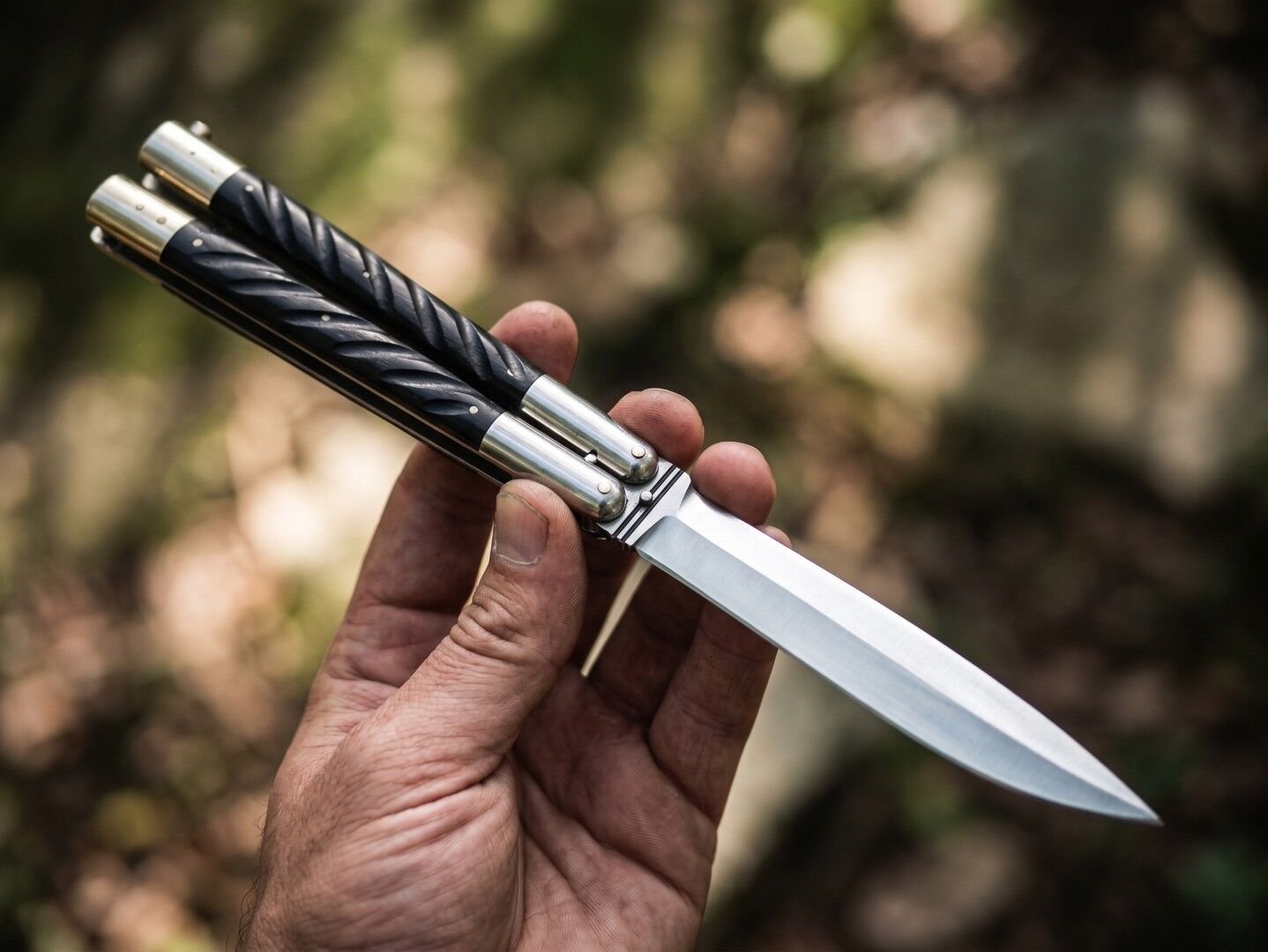
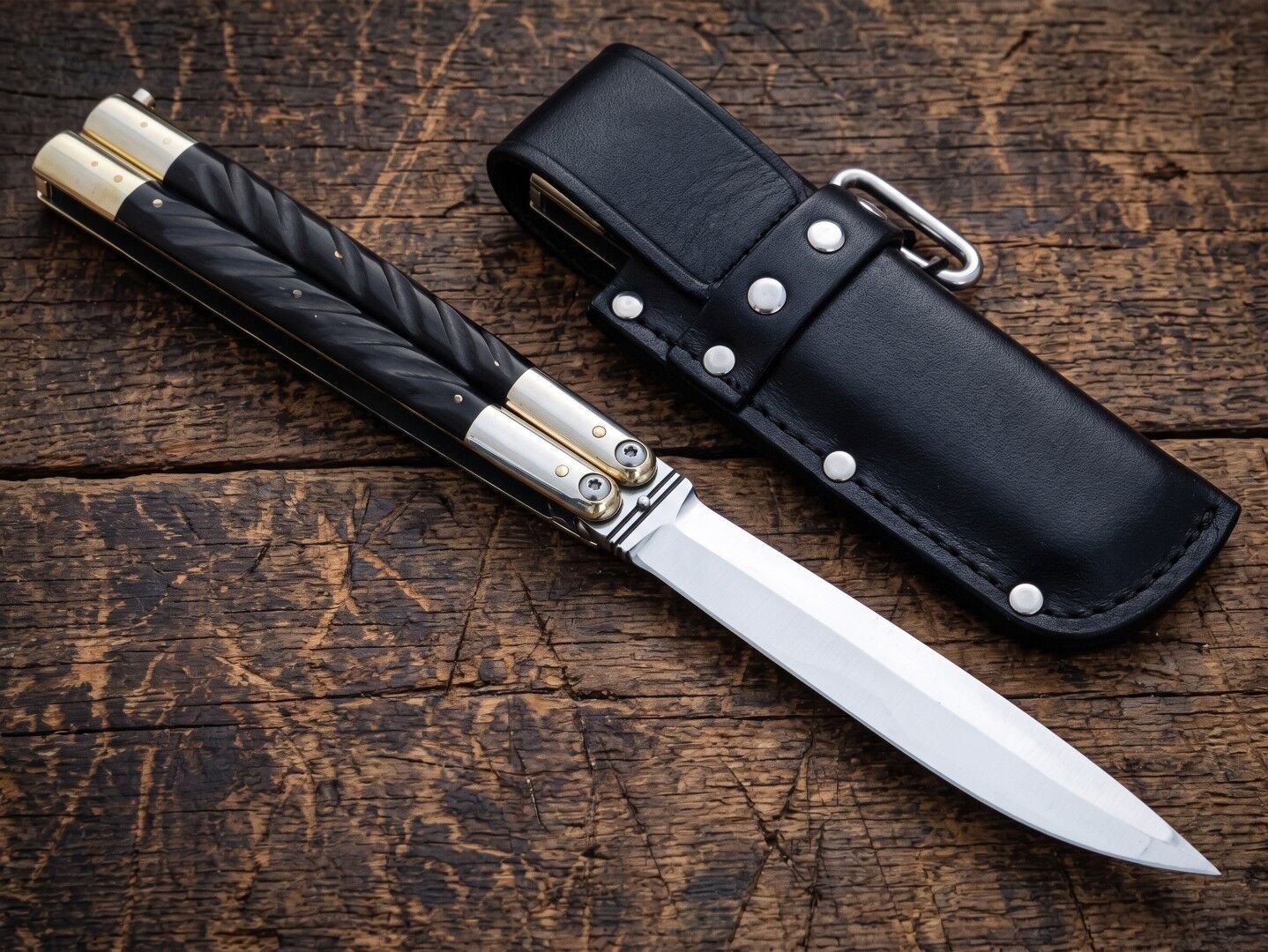
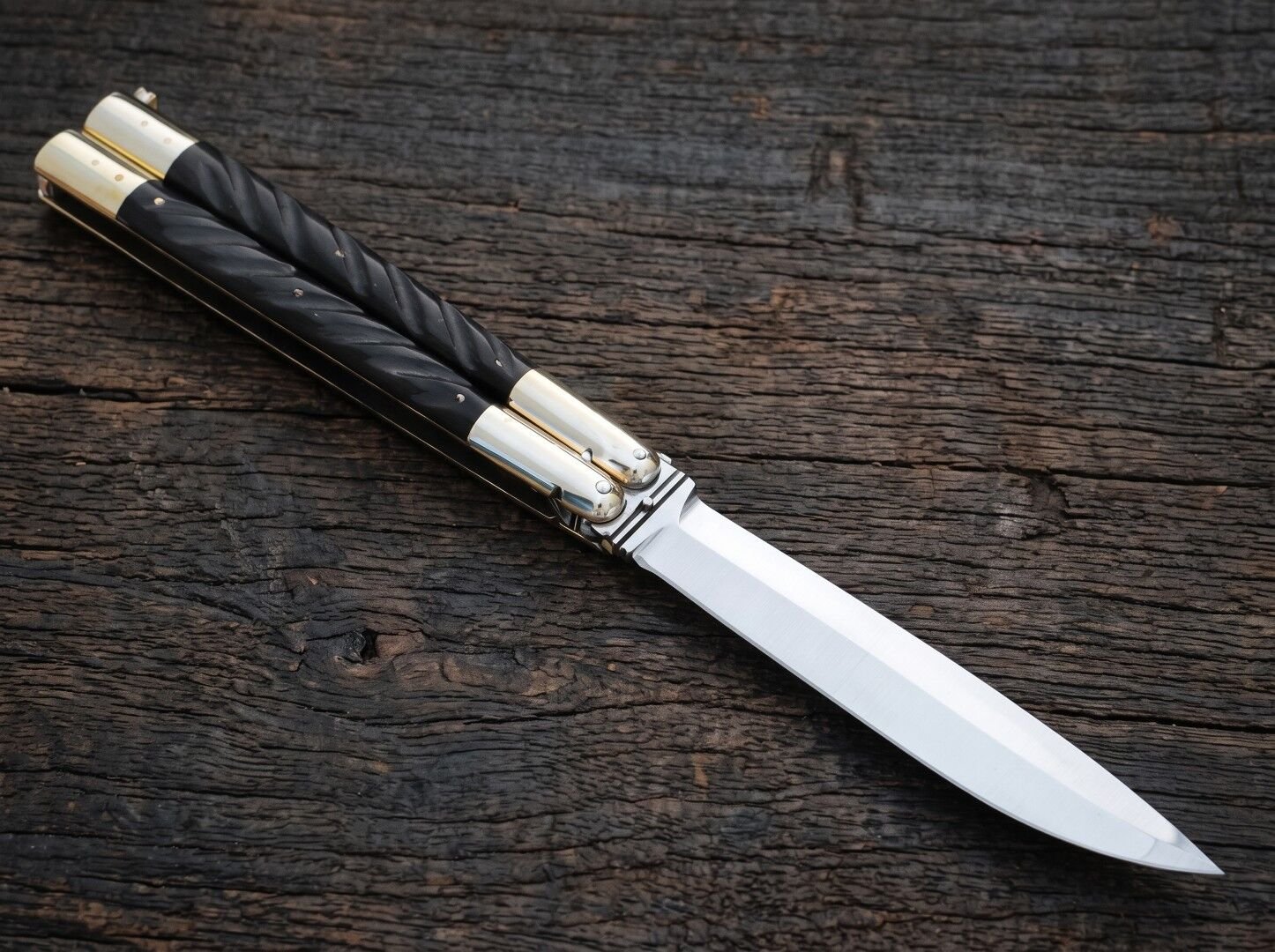
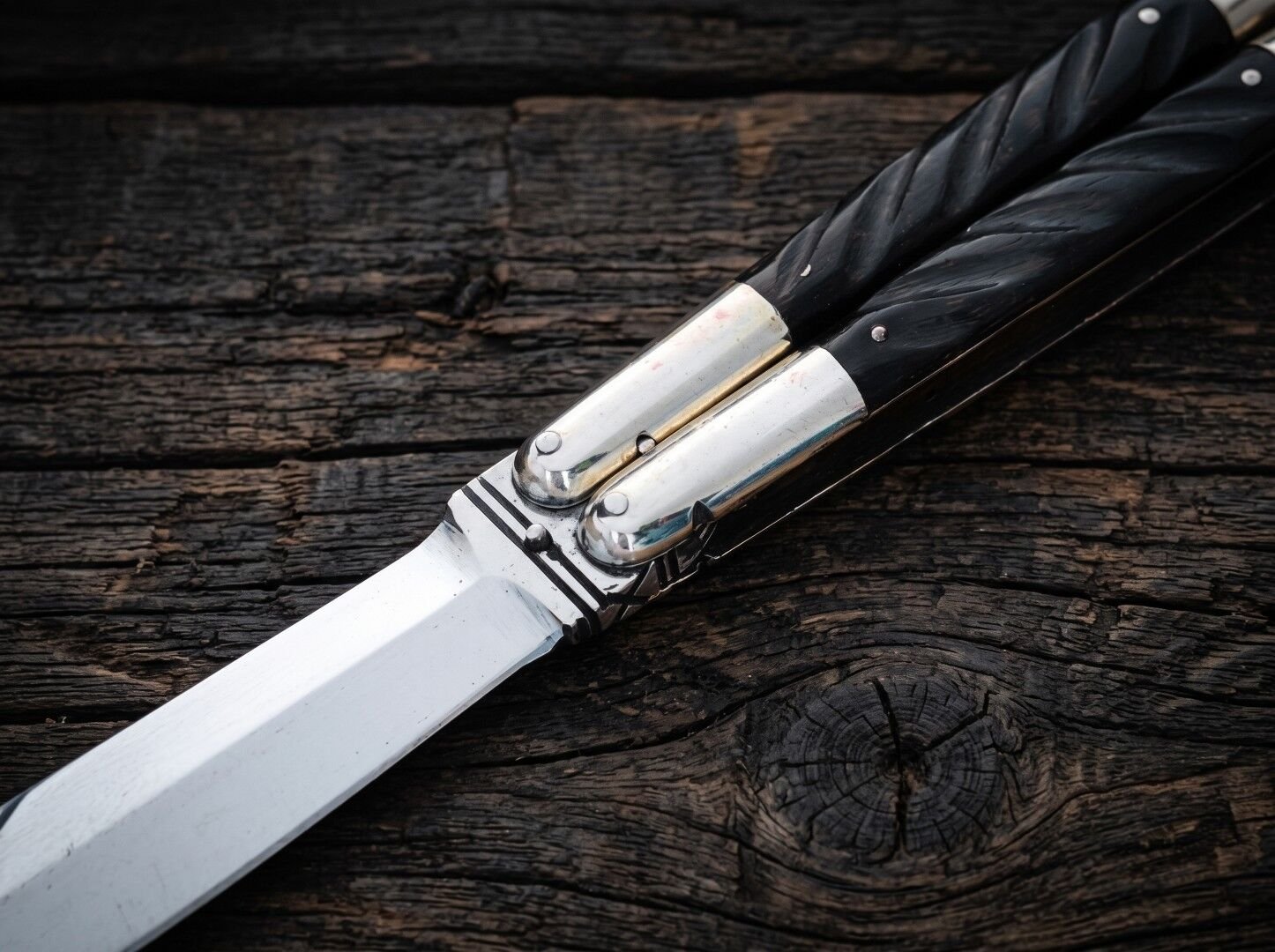
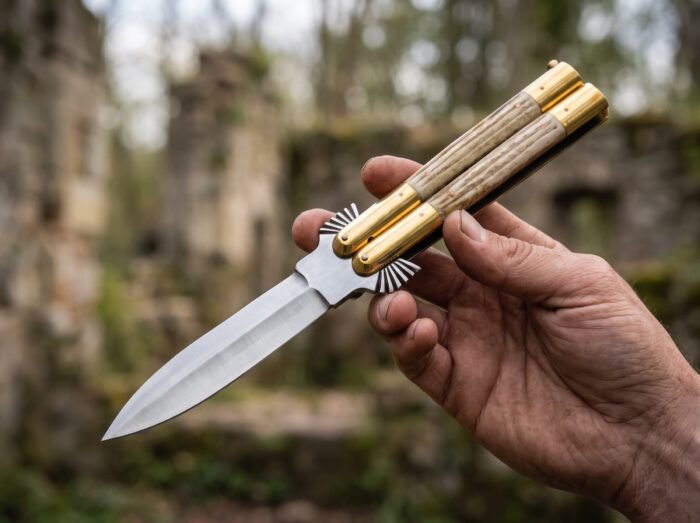
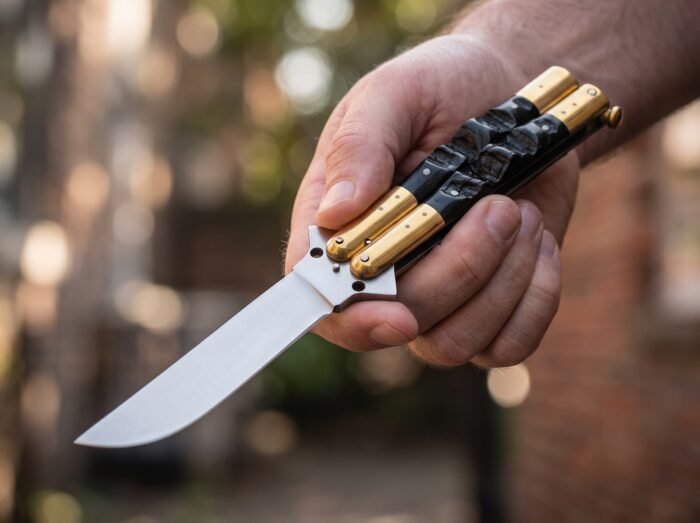
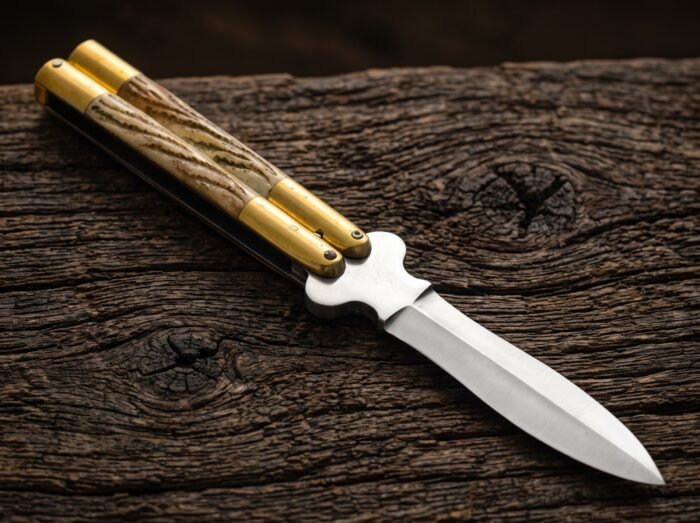
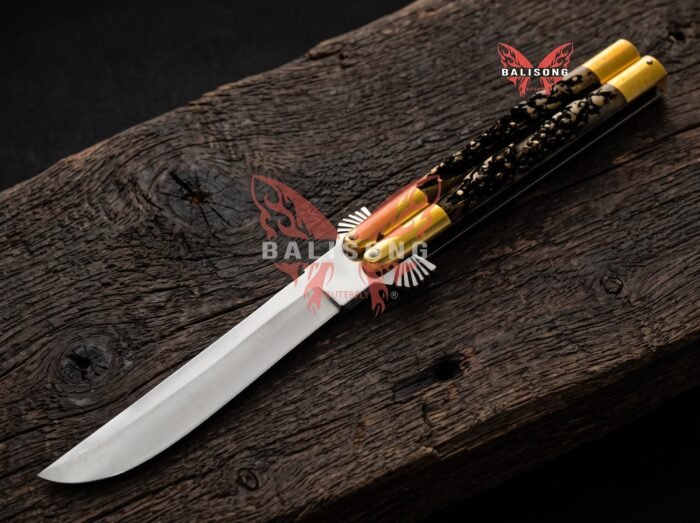
The BF-86 Mouse is a 29cm balisong with a 14cm D2 blade, 220g, brass and kamagong. That is the traditional full-size frame for less than most of our 24cm knives, and it deserves an explanation rather than a slogan.
The full-size knives, priced side by side
| Model |
Steel |
Handle |
| BF-86 Mouse |
D2 |
Brass and kamagong |
| BF-82 Monitor Lizard |
D2 |
Brass and kamagong |
| BF-78 Mole |
D2 |
Brass, carabao horn and bone |
All three are 29cm open, 14cm blade, 220g, same steel, same heat treat at 58-60 HRC, same pivots, same person checking them. The Mouse is forty-one dollars less than a knife with an identical spec sheet.
So what is different
Two things, and neither is the blade.
Run size. Setting up a run costs the same whether we make six knives or twenty-six. The Mouse was a longer run, so the setup cost divided further, and every knife in it came out cheaper. This explains more price differences on this site than any other single factor and nobody in the industry ever mentions it.
Handle time. Plain kamagong inserts on a plain contour. The Mole has two natural materials on one handle, which is two selection processes, two fitting operations and a higher reject rate. That is real cost and it is where the money goes.
What is not different: the steel, the hardening, the tolerances, the tang pin, the sheath, or how long it will last.
The awkward part
It is a knife with more hand work on the handle, and if that is what you want then it is worth the money and we are glad to sell it to you.
If what you want is a full-size traditional balisong in a tool steel that holds an edge for a year, buy this one and put the forty-one dollars somewhere else. We would rather write that than have you find out in six months and feel got at.
Twenty-nine centimetres is the original size
The Batangas smiths called it veinte y nueve and it was the standard long before the export market decided knives should fit in a pocket. A 14cm blade was a working blade, and a 29cm handle span gave enough leverage to control it.
In the hand it rotates slowly, because the arc is longer, and that slowness is a gift when you are learning. What it punishes is a weak grip, since 220g will find out whether you were actually holding on.
D2, briefly: what the steel does on a butterfly knife
An air-hardening tool steel: about one and a half percent carbon, eleven to twelve percent chromium. That chromium figure sits just below the threshold where a steel counts as stainless, which is why it is called semi-stainless and why the description is accurate rather than evasive.
It holds an edge longer than anything else we sell. It is also stubborn to sharpen, wanting a diamond plate rather than ceramic, because the carbides that give it wear resistance are harder than common ceramic abrasive. Sharpen it twice a year and forget about it in between, which is exactly what most owners want.
Kamagong as a balisong handle
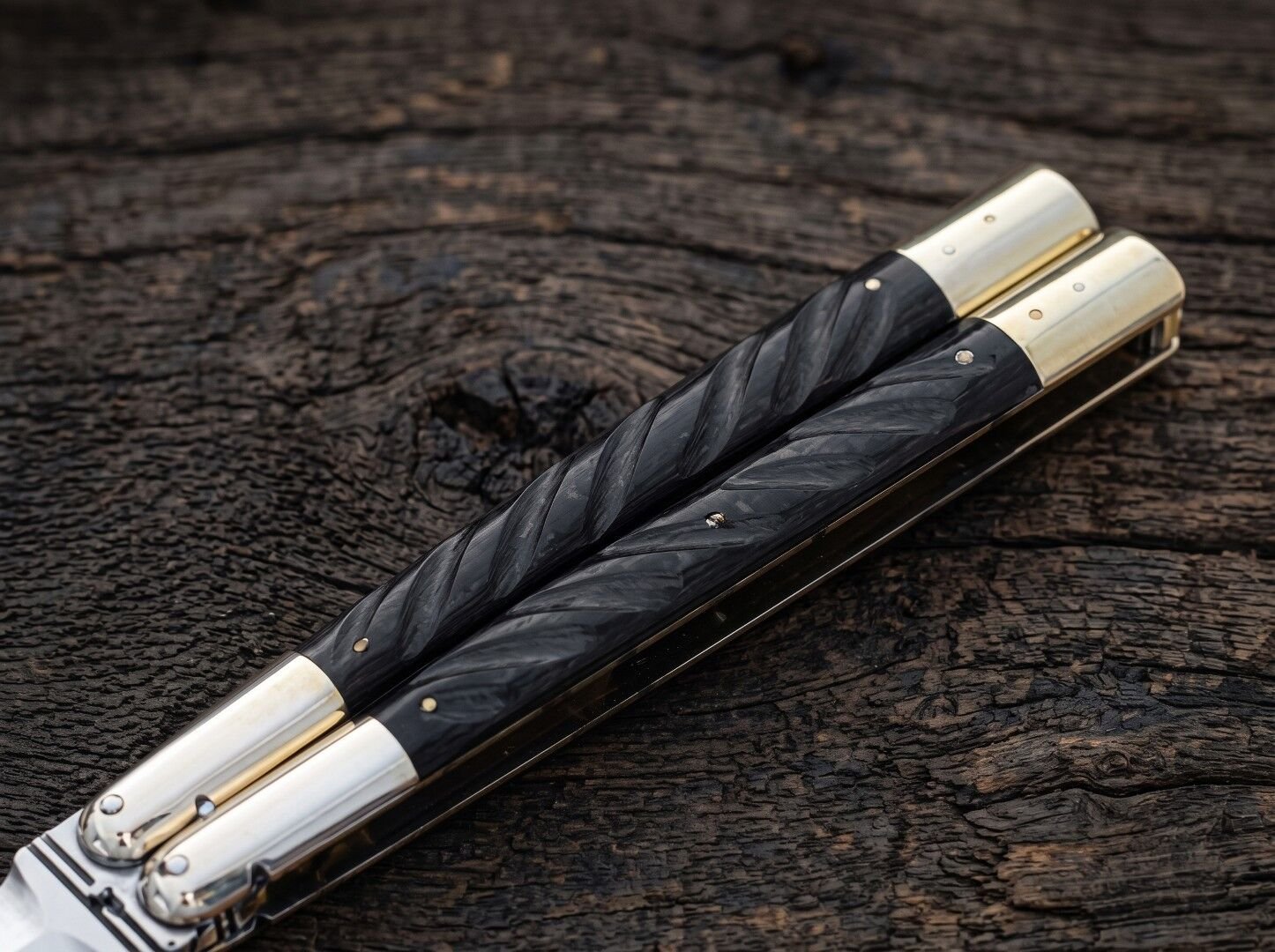
Philippine ebony. Dense enough to sink in water, close-grained enough that it needs no oil and no attention, and stable enough that it will not crack or shrink through a dry winter. Near black against polished brass, which is the whole look of this knife.
The brass will darken to brown over a year or two. That is brass being brass, and polishing it back only resets the clock.
Ordering this D2 balisong
The unsharpened trainer is the same knife, chosen above Add to Cart. On a 220g knife with a 14cm blade, that is the sensible way to start unless you already flip confidently.
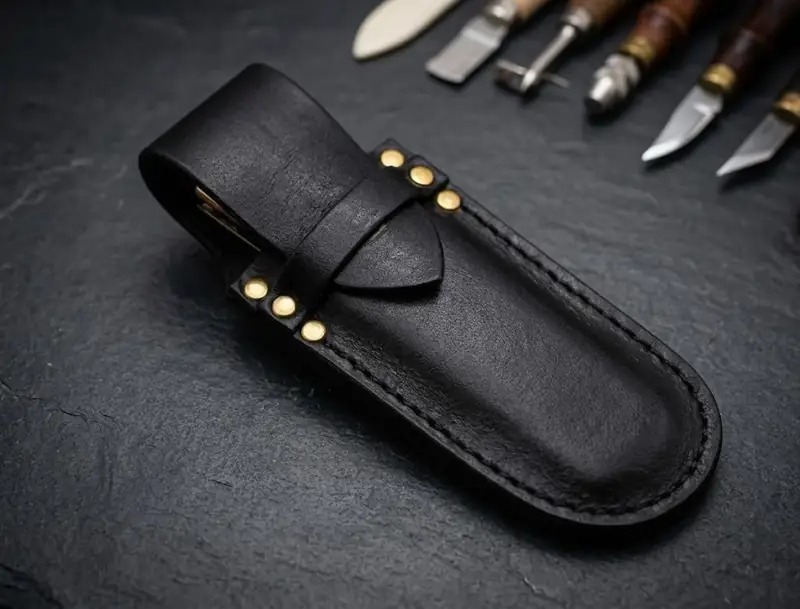
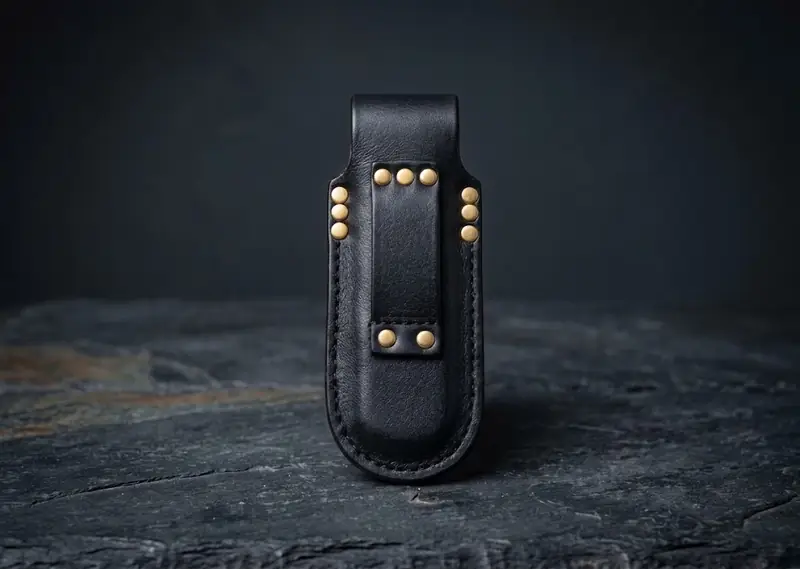
A fitted leather sheath comes with it, cut for the 29cm frame rather than the standard 24cm. Free US shipping, flat $49 to anywhere else for the entire order.
The Mouse is built around D2 tool steel and a brass and kamagong wood handle, finished at 29cm for a grip that suits everyday carry. For how this blade steel stacks up against the others we work with, our comparison of D2, Damascus and 440C blade steel sets D2, Damascus and 440C side by side. It sits inside our D2 tool steel collection, and if the Mule catches your eye too, the Mule D2 balisong shares the same build philosophy.





Patrick West –
Absolutely love this balisong. Made in the USA and shipped worldwide with no long wait on my end. Blade came shaving sharp straight out of the box. Highly recommend this one to any flipper.
Cynthia Rivera –
This looks even better in person than in the listing photos. Latch snaps shut clean every time. Made in the USA and shipped worldwide with no long wait on my end. This one’s a keeper for sure.
James Carter –
This is hands down one of the best balisongs I’ve bought online.
Joseph Mercado –
Got this as my own collection and it exceeded what I expected. This flips cleaner than knives twice the price. Can’t wait to see what else this seller has to offer.
Stephen Campbell –
Showed up right on time and looked even better than the photos. So worth it.
Daniel Gutierrez –
This one is seriously nice. No question about it. Pivots feel dialed in with zero blade play. Zero complaints from me on this purchase.