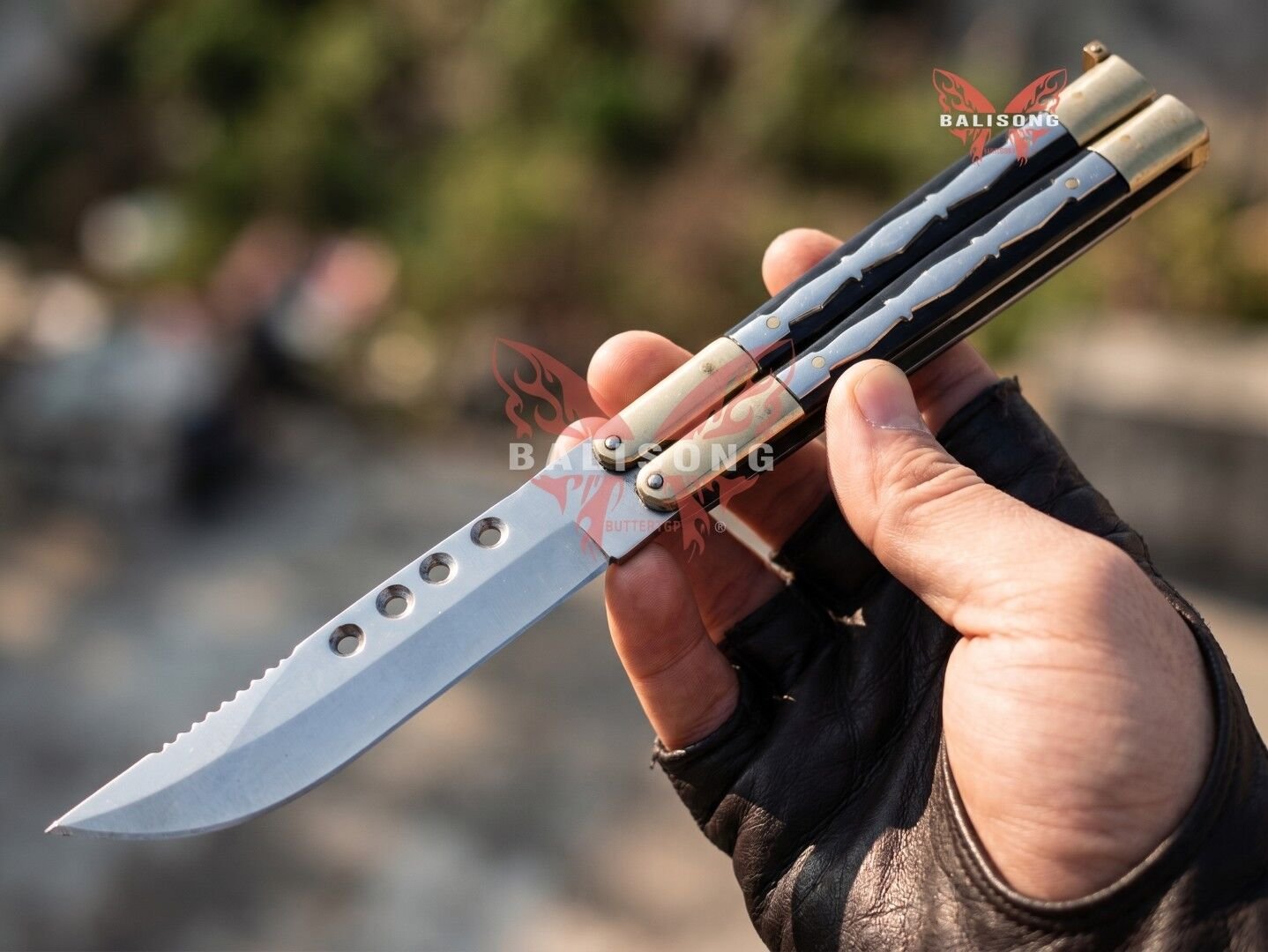
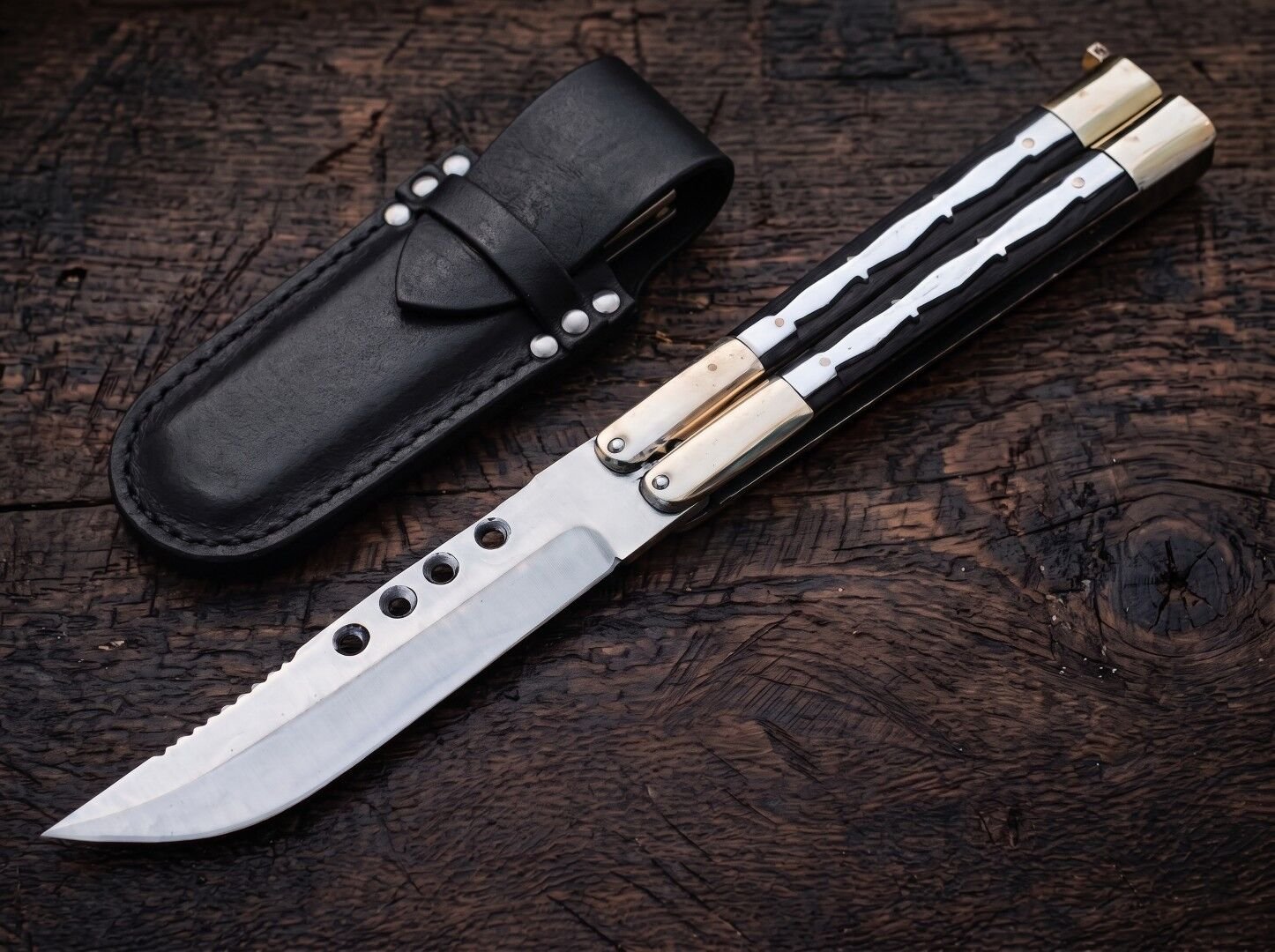
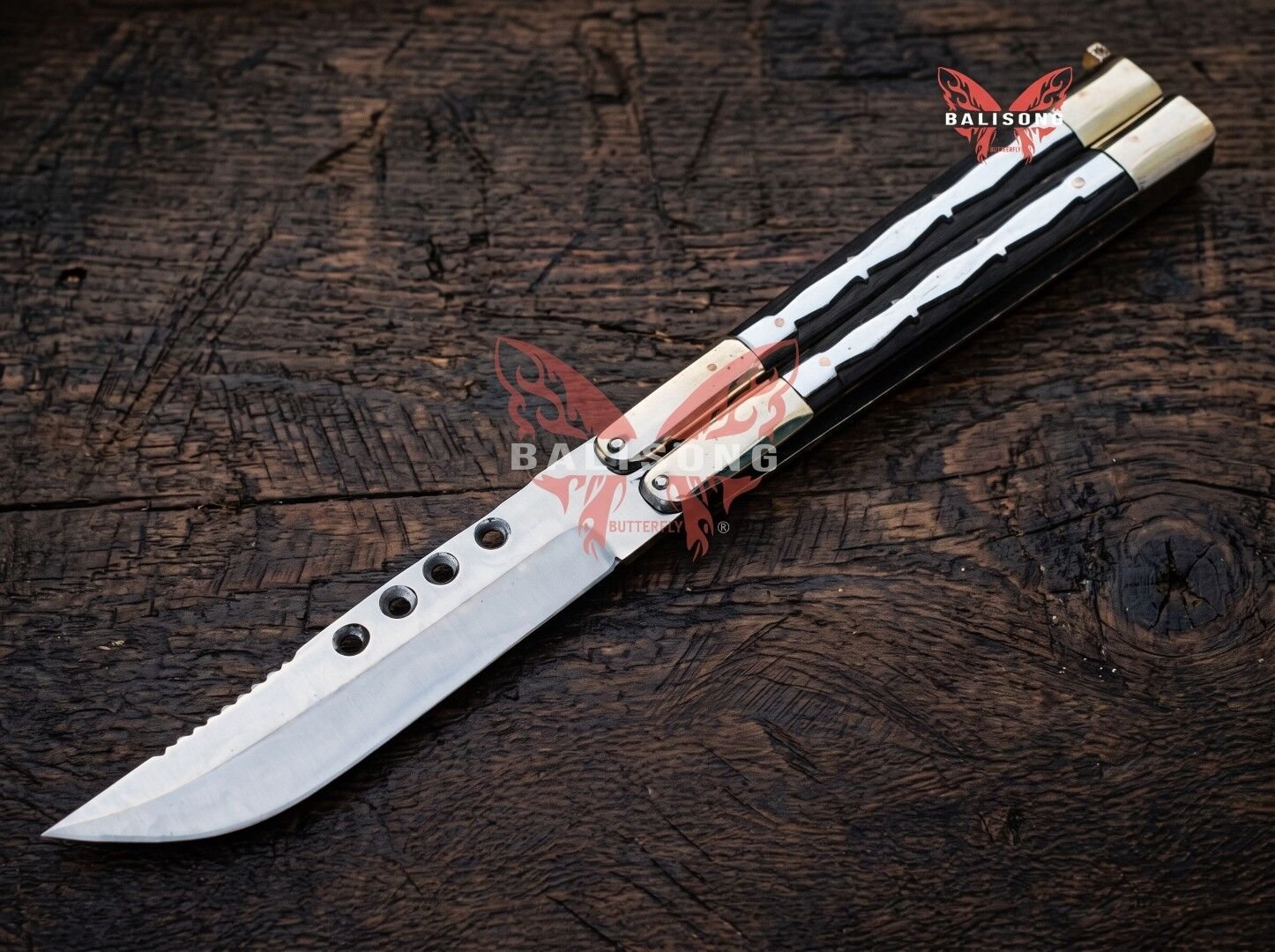
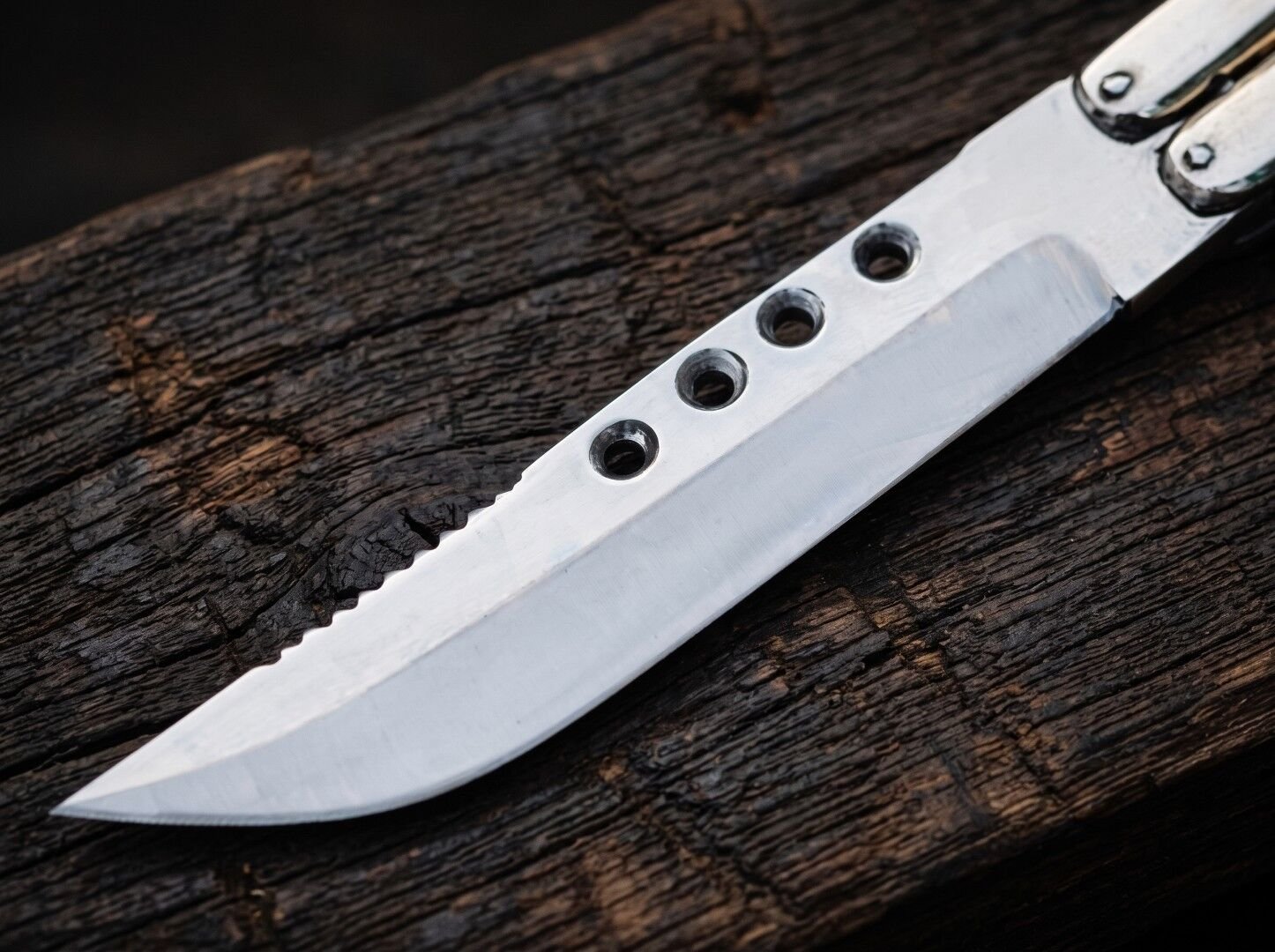
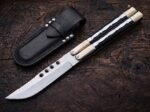
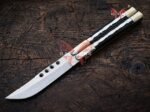
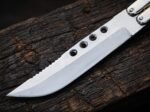
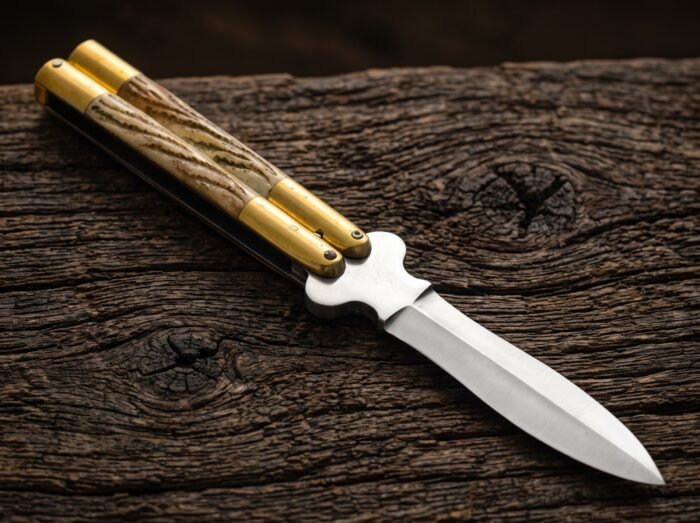
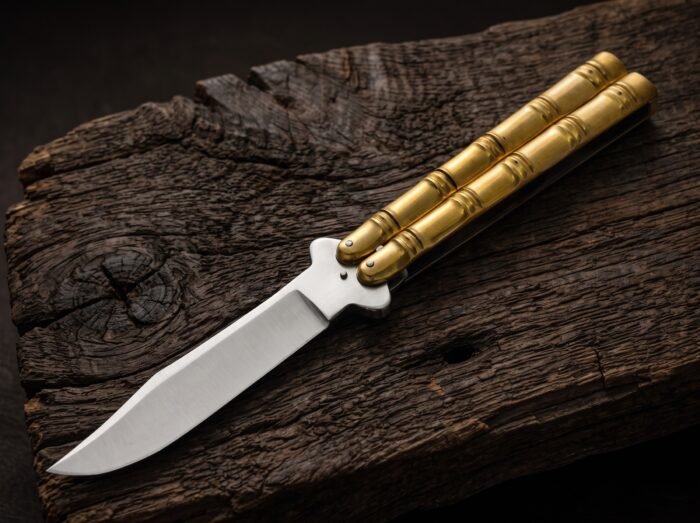
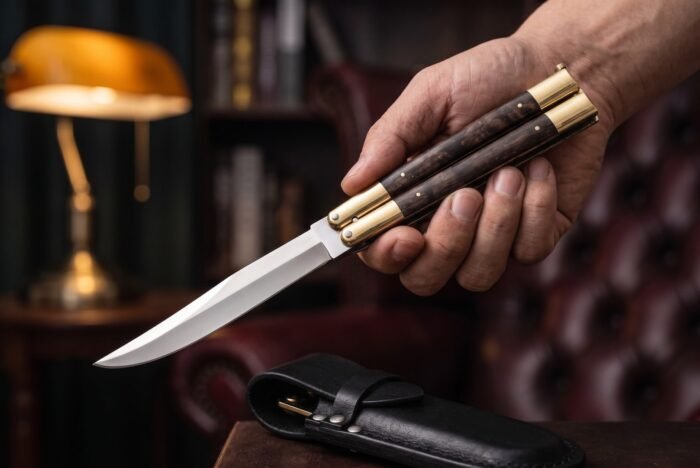
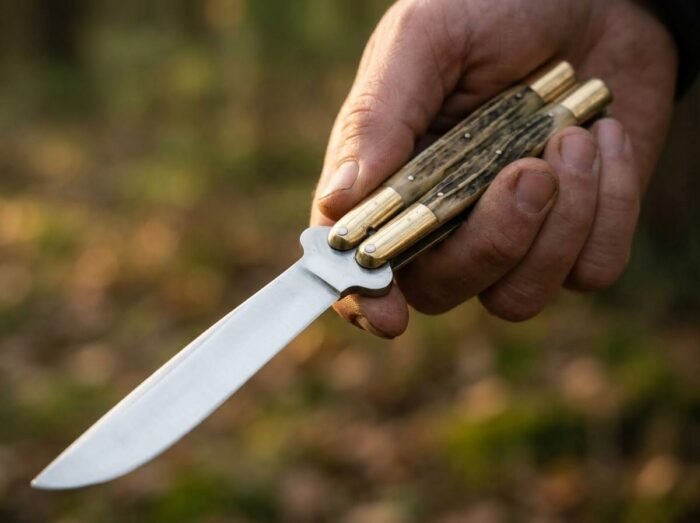
The BF-87 Mule is a 24cm balisong with a 12cm D2 blade at 190g. The handle carries brass, stainless and kamagong on one frame, which is three materials where most knives use two. The name is not an accident.
Why mix brass and stainless on the same handle
Because they do different jobs and there is no rule saying you have to pick one.
Brass is dense, warms in the hand almost immediately, and develops a brown patina that maps how you hold the knife. Stainless is lighter for its volume, stays exactly the colour it arrived, and shrugs off everything. On most knives you choose. Here you get both, and the weight lands at 190g, which is between our 180g brass knives and where an all-stainless build would sit.
| |
Brass |
Stainless |
Kamagong |
| Weight contribution |
Highest |
Moderate |
Low |
| Warms in the hand |
Fast |
Slow |
Instant |
| In five years |
Deep brown |
Unchanged |
Slightly darker, polished where held |
| Scratches |
Vanish into patina |
Show as bright lines |
Barely mark |
| Maintenance |
None needed |
None |
None |
The interesting consequence is that this knife ages unevenly on purpose. In two years the brass will be brown, the stainless will be bright, and the contrast between them will be sharper than it is today. Some people find that untidy. We think it is the best thing about it.
One hundred and ninety grams
An odd number and a useful one. Our 24cm knives mostly sit at 175g or 180g. Ten to fifteen grams sounds like nothing and is genuinely noticeable, because it comes off the handle rather than the blade and it changes how long a rotation takes.
What you get is a knife that carries through a rollover with a little more certainty than a 180g knife, without stepping up to the 250g class where a long session becomes a forearm workout. If you have flipped a 180g balisong and wished for slightly more, this is that knife.
The name, which for once is apt
A mule is a hybrid, it is unglamorous, and it is famously the most useful animal on the farm. Three materials, an odd weight, no obvious showpiece feature, and it will outwork most of what is on this page.
We are not going to pretend the animal series was carefully assigned. This one landed well by accident and we are taking the credit anyway.
D2 steel on a balisong, and who it suits
D2 is an air-hardening tool steel: roughly one and a half percent carbon and eleven to twelve percent chromium. Chromium at that level sits just below the stainless threshold, so it resists corrosion well without being immune, which is why the trade calls it semi-stainless.
It holds an edge longer than anything else we sell. In exchange it is stubborn to sharpen and wants a diamond plate, because the carbides that give it wear resistance are harder than the abrasive in a common ceramic stone.
The honest split: buy D2 if you want to sharpen a knife twice a year and otherwise leave it alone. Buy our high carbon knives if sharpening is something you actively enjoy. Neither is the premium option.
We run it at 58-60 HRC. Harder holds longer and chips when it meets a floor, and a balisong meets a floor.
Living with a kamagong balisong handle
Philippine ebony, dense, close-grained, near black. It needs no oil and no care, it will not crack or shrink, and it will take a soft polish where your hand sits. It is the one material on this handle with nothing to say for itself, which on a knife this busy is welcome.
Ordering this D2 balisong
Unsharpened trainer, selected above Add to Cart. Same three materials, same 190g, same balance, no edge, and the same price because grinding an edge is one operation in a long build.
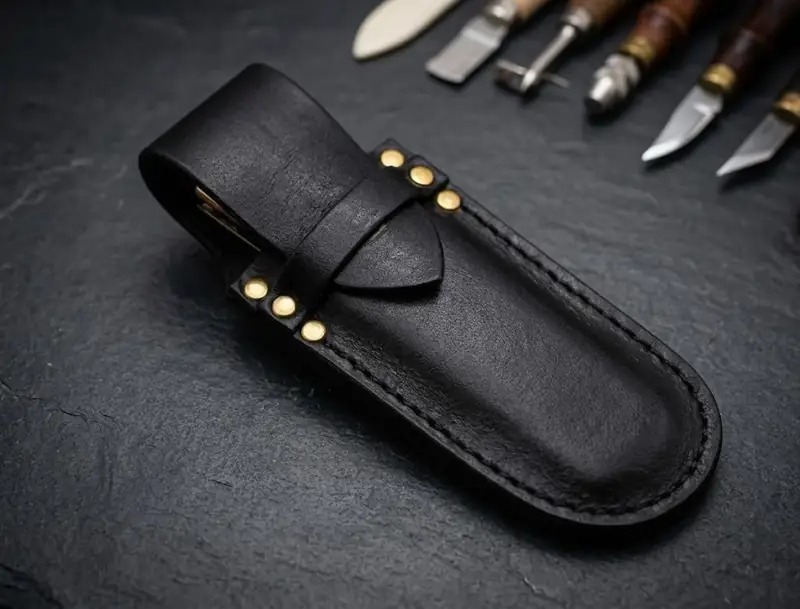
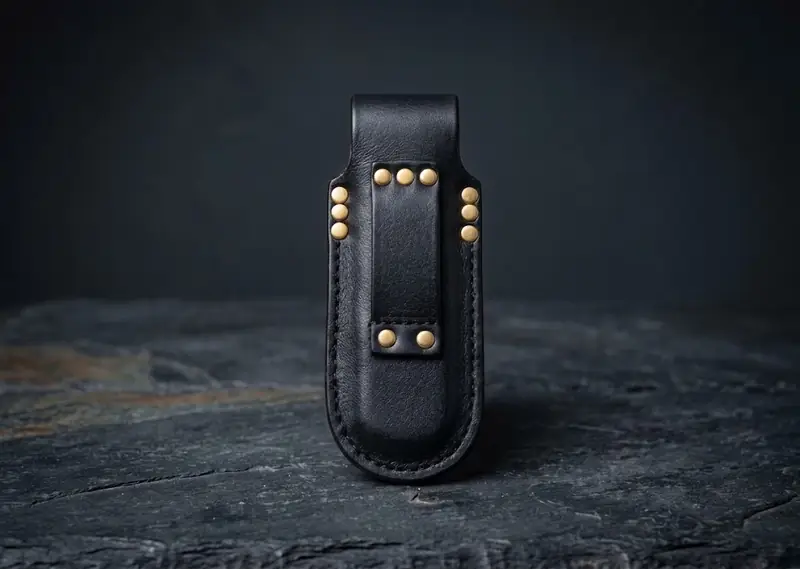
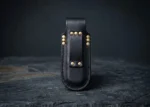
A fitted leather sheath is in the box. US shipping is free, everywhere else a flat $49 for the whole order regardless of size.
Mule pairs D2 tool steel with a brass, stainless and kamagong wood handle, and at 24cm it sits comfortably in the hand. Our breakdown of 440C, D2 and Damascus steel goes through how this steel compares with 440C and Damascus if you are weighing options before you buy. You can browse the rest of our D2 tool steel collection from here, and the Neanderthal D2 balisong is a close neighbour worth a look if you want a second option in hand.


John Wilson –
Incredible action right out of the box. Pivots feel dialed in with zero blade play. So worth it.
Kevin Fox –
Perfect knife. Perfect action. No complaints. Blade came shaving sharp straight out of the box. Respect to the Filipino craftsmanship behind this, all made and shipped from the USA. This is my new favorite in the collection.
Tyler Richardson –
Bought this on a whim and it turned out to be one of my favorite pickups this year. Balisong Butterfly is quickly becoming my go to shop for balisongs.
Carl Hill –
Does the job but I wasn’t blown away. Latch is functional but not the cleanest snap. Blade needed some sharpening once it arrived. Neutral on this one overall.
Kimberly Myers –
A bit disappointed with this one honestly. Handle scales had a rough seam on one side. Pivots felt loose right out of the box. On the fence about ordering here again.
Ryan Marsh –
This balisong completely won me over the moment I flipped it. Ordered from Balisong Butterfly before and the quality stays consistent every time.
Ahmed Nelson –
Knew this was a good one the second I felt the weight in hand. Comes with a nice pouch which is a nice touch. This flips cleaner than knives twice the price. Happy customer here, through and through.
Aaron Cruz –
Best butterfly knife I’ve ever owned. Hands down. Comes with a nice pouch which is a nice touch. I keep coming back to Balisong Butterfly because it’s always this good. Latch snaps shut clean every time. Shipping was fast and everything arrived well packaged.