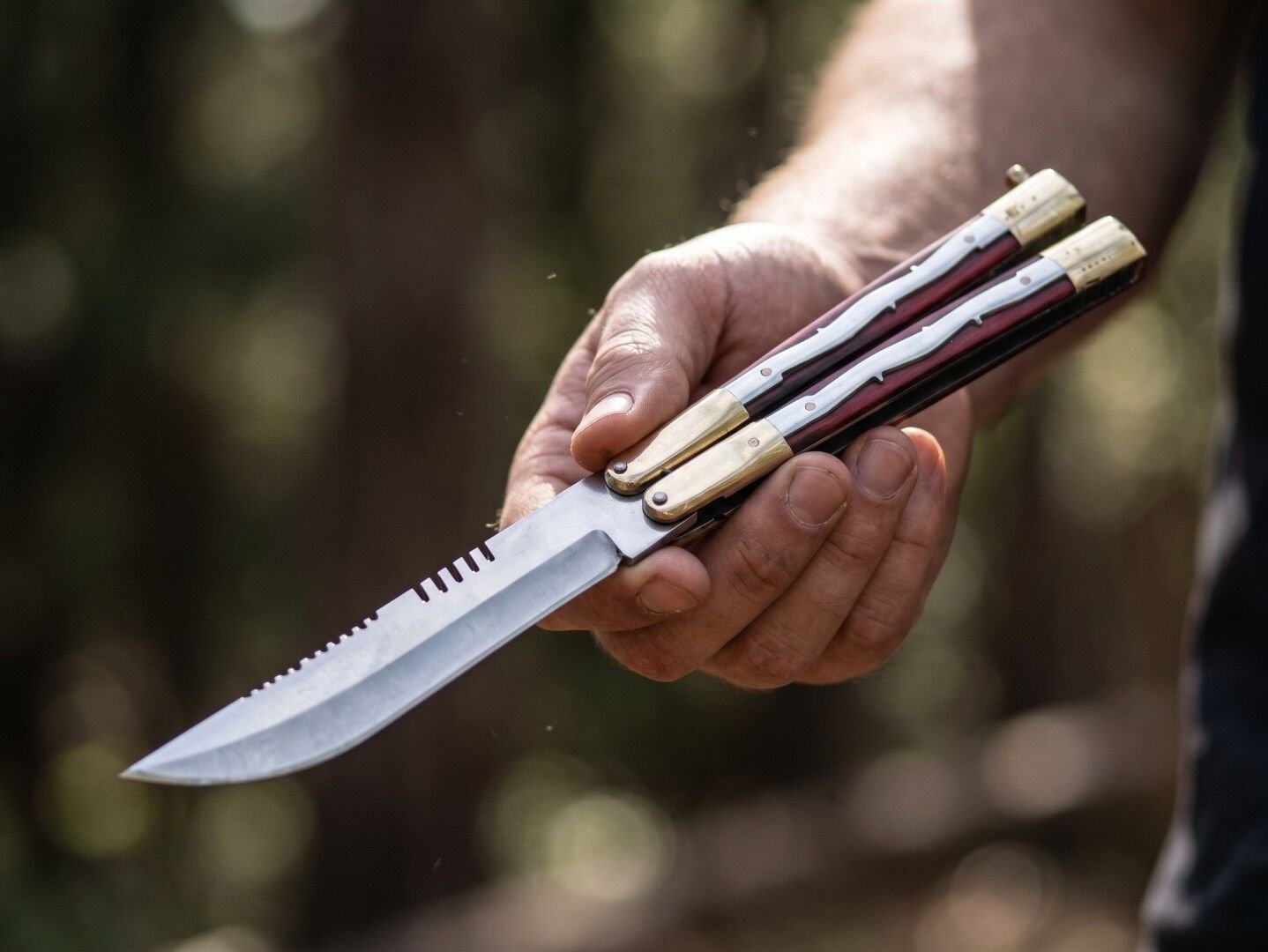
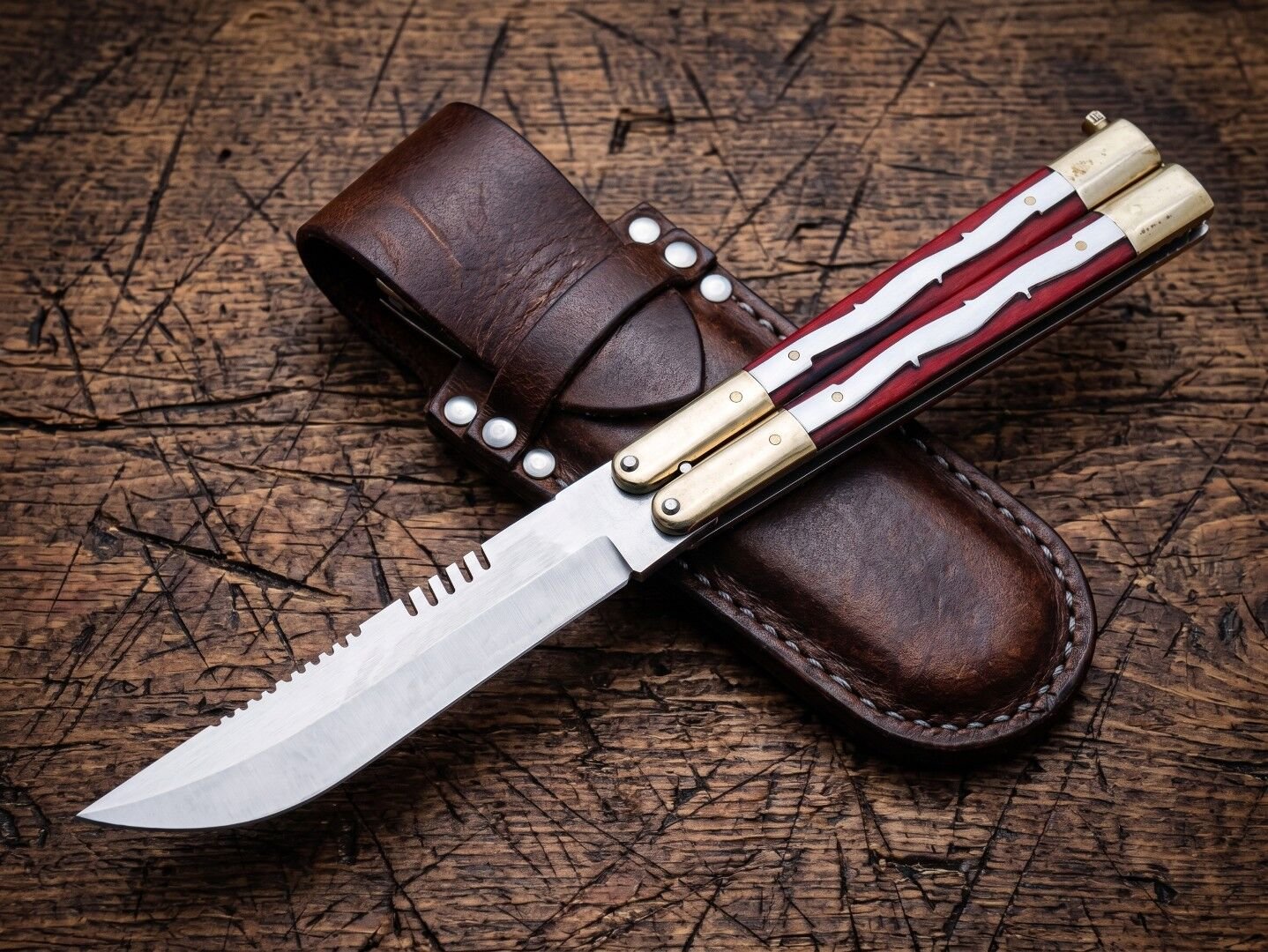
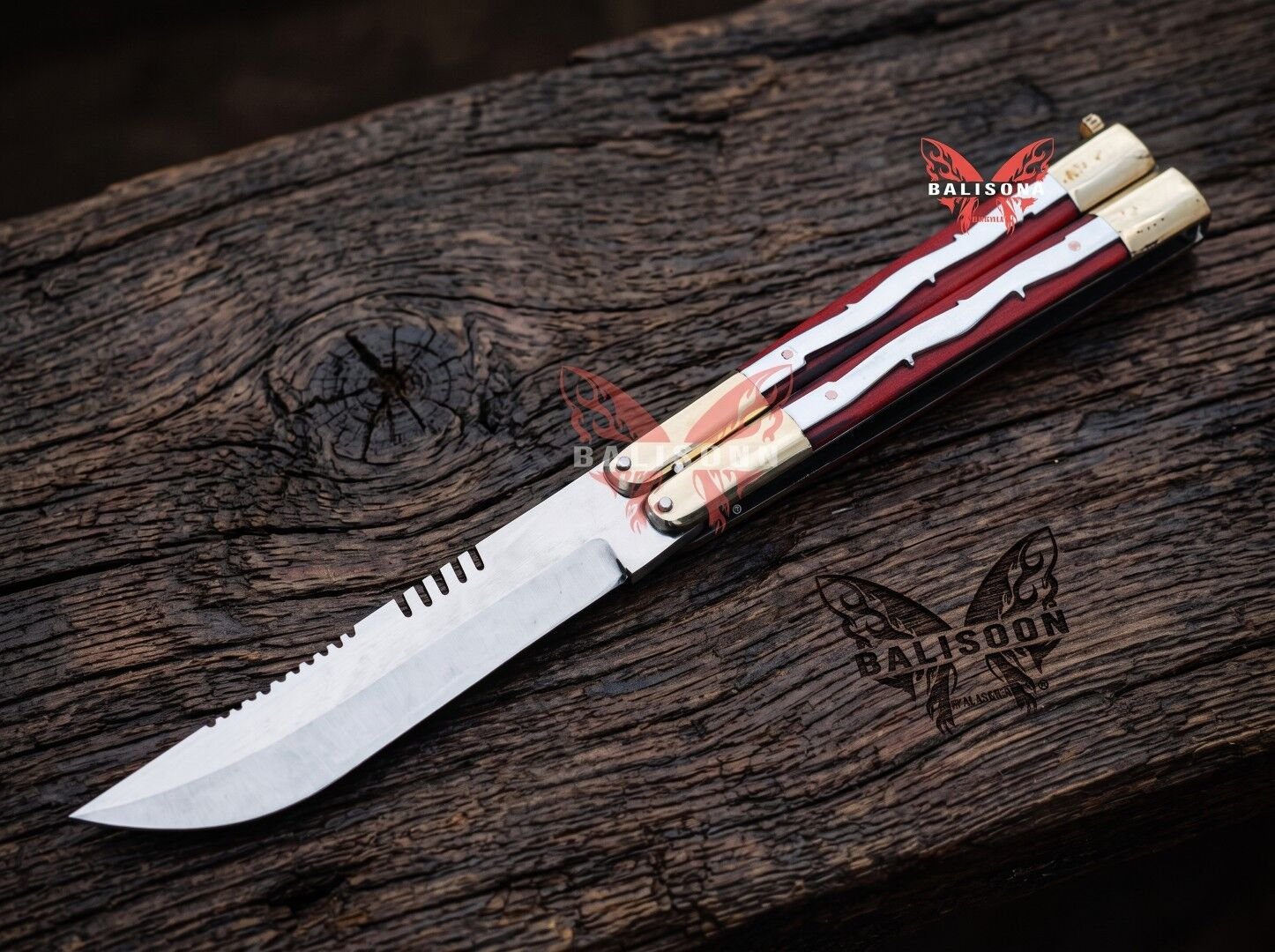
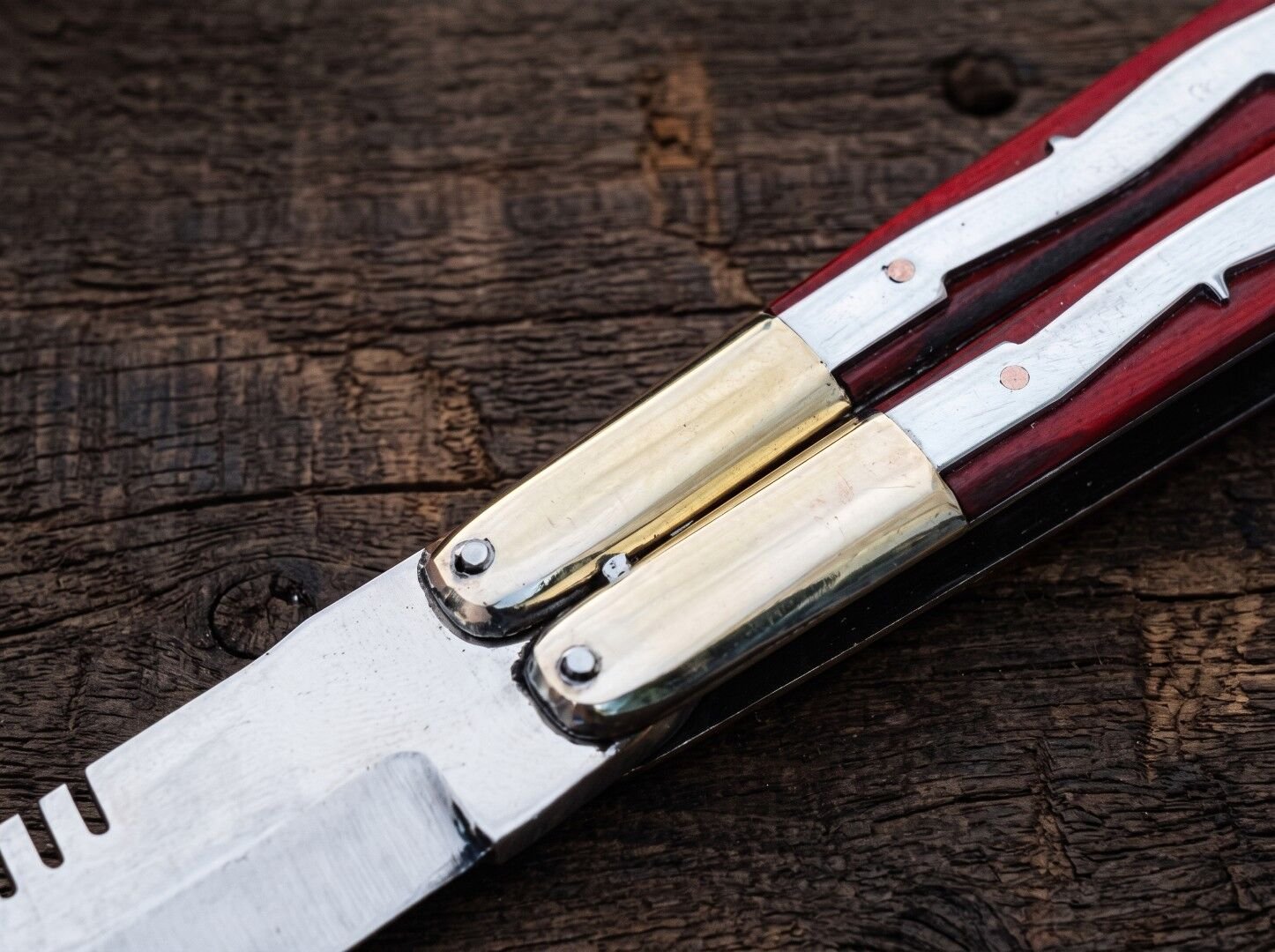
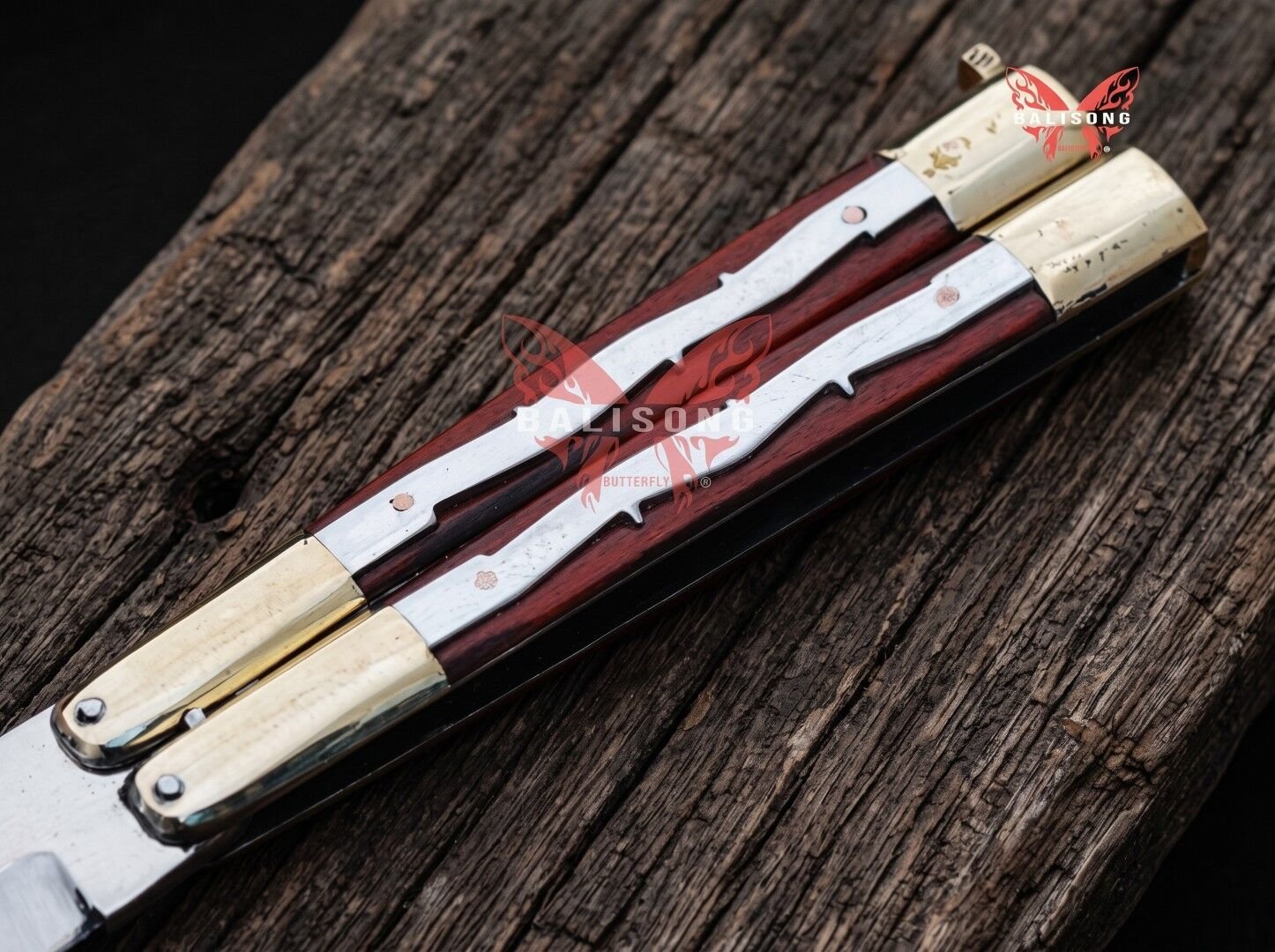
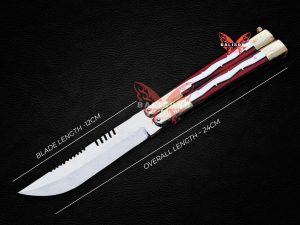
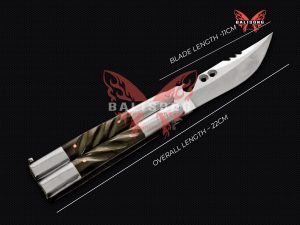
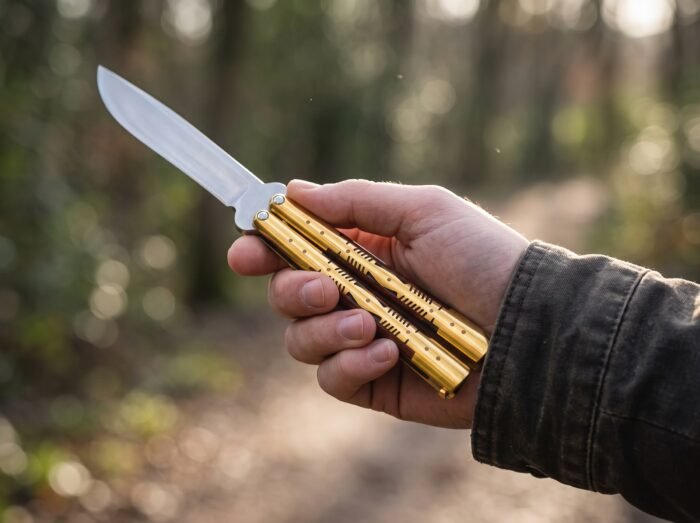
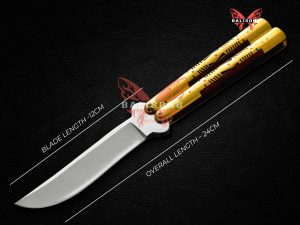
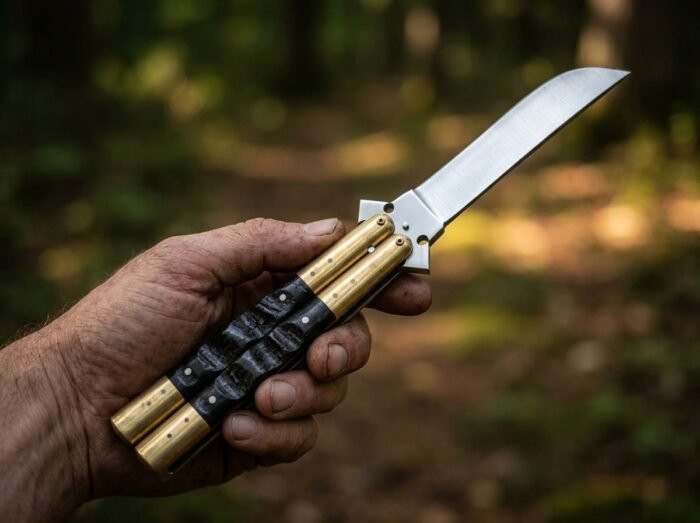
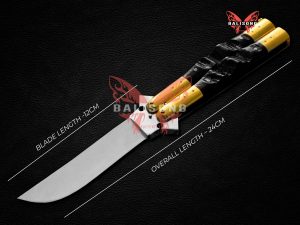
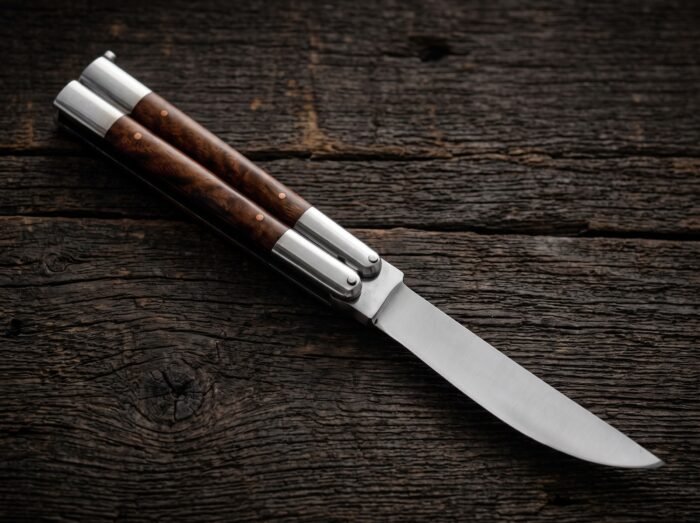
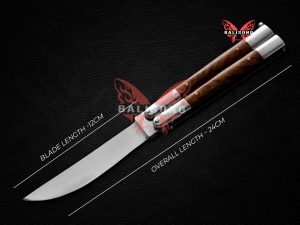
The BF-88 Neanderthal is a 24cm Filipino balisong with a 12cm D2 tool steel blade and a three-material handle: brass frame, stainless steel and micarta inserts, 180 grams. It is the most modern handle in this run, on the knife with the oldest name, and it suits anyone who wants a balisong that is genuinely indifferent to weather. Trainer version at the same price above Add to Cart.
The oldest name in the range, on the newest materials
We are aware of the joke. A knife named after a hominid that has been extinct for forty thousand years, wearing the most twentieth-century material in the workshop.
Micarta was invented as an electrical insulator. It is layers of fabric or paper soaked in phenolic resin and pressed under heat, and it has been keeping water out of things since well before anyone thought to put it on a knife. It has no interest in humidity, no seasonal maintenance, and no opinion about being left in a hot car.
Whether the name is honest is a fair question. A Neanderthal knife ought to be crude. This one is the opposite: three materials fitted into one handle, which is more work than a plain wooden insert, not less. We picked the name because it sounded like the knife feels in the hand, which is chunky and solid rather than refined. Not because we had a story about ancient toolmaking to sell you.
What micarta actually is on a balisong handle, and why makers like it
- It is a laminate, not a plastic. Fabric or paper layers in phenolic resin, compressed. That structure is why it feels closer to horn than to injection-moulded polymer.
- It grips better when wet. This is the property that made it a knife material. Micarta’s surface texture becomes slightly tackier as your hands sweat, which is exactly backwards from every polished material and exactly what you want.
- It is dimensionally dead. No swelling, no shrinking, no checking. The tolerances around the pivot stay where they were set.
- It does not stain or rot. Hand oil, sweat, rain, none of it matters.
- It wears rather than breaks. Over years it polishes smoother at the contact points instead of chipping the way bone can.
Three materials in one handle
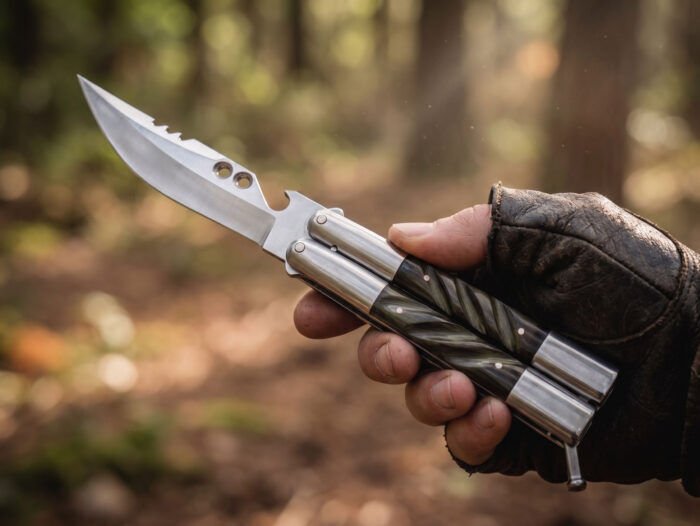
Brass frame, stainless steel, micarta. Each is doing a specific job rather than being there to look busy.
The brass carries the mass, which is what gets the handle through a rotation without your wrist doing the work. Stainless goes where the surface needs to be harder than brass. Micarta gives you the contact surface, because a handle of nothing but metal is cold, slippery when damp, and unpleasant twenty minutes into a session.
Fitting three materials into a handle takes more operations than fitting one, and that is where the difference goes. Not into the marketing.
The knife that does not care what the weather is doing
This is worth stating plainly because it is the practical argument for the whole build.
D2 is a high-carbon, high-chromium tool steel running near 60 HRC. The chromium resists corrosion well. Micarta is waterproof by design. Stainless is stainless. The brass will darken into a patina with handling, which is not corrosion and is not preventable on any brass knife.
Put that next to a high carbon blade with a natural handle, which is a knife you wipe dry after every session and keep out of a damp drawer. Both are good knives. Only one of them can be left alone for six months.
Sharpening a D2 butterfly knife, honestly
You will not do it often. When you do, it is a job.
D2 at this hardness effectively requires diamond abrasive. A ceramic rod will polish the edge without meaningfully removing steel, and you will spend twenty minutes convincing yourself you have improved something. Get a diamond plate, work at a consistent angle, and give it more time than you would give a softer steel.
The compensation is that the edge stays serviceable for several times as long as our high carbon blades manage. High carbon will out-sharpen this steel at its peak and comes back on any stone in minutes, which is a genuine advantage if you like sharpening. If you regard sharpening as an interruption, D2 is the correct choice and this is a good example of it.
Ordering this D2 micarta balisong
The trainer version is the same knife without an edge, at the same price, selected above Add to Cart. The price is identical because grinding an edge is a single operation in a build with many, and knocking money off for skipping it would be a gesture rather than an economy.
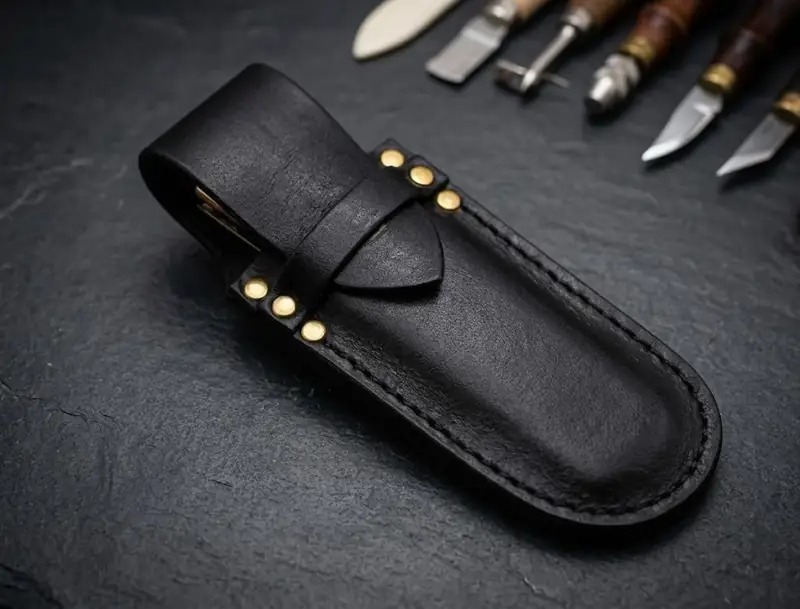
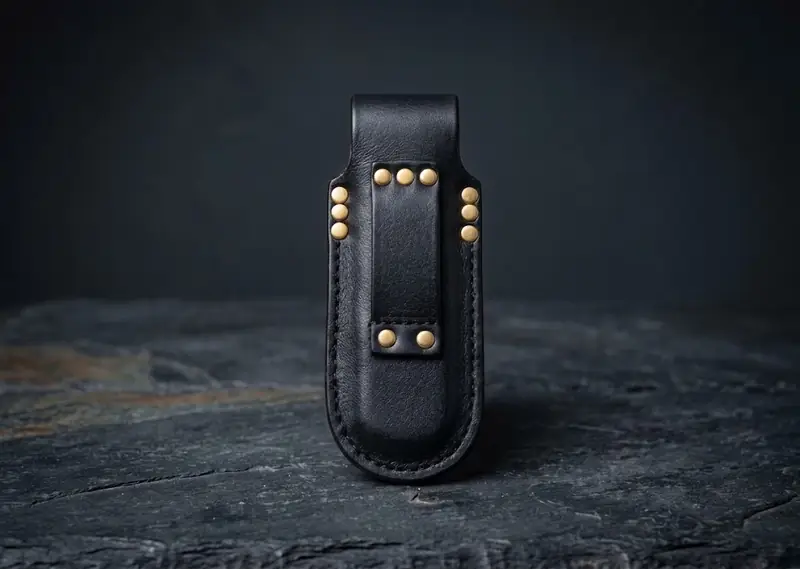
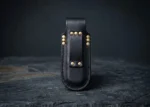
A fitted leather sheath comes with it, and it is the one component here that cares what the weather is doing. The micarta and the D2 will both ignore a wet afternoon. The leather will not, so let it dry out before the knife goes back in.
US shipping is free. Everywhere else, flat $49 regardless of order size. Check your local knife law before ordering.
the D2 is taken to 58-60 HRC, the same hardness we use across the whole shelf.
This 24cm Neanderthal balisong runs D2 tool steel against a brass, stainless steel and micarta handle, a combination built for regular flipping rather than a display case. If you want to compare handle materials across the shop before deciding, our guide to balisong handle materials covers what brass, horn and the different woods each bring to grip and upkeep. For more like it, our D2 tool steel collection has the full set, and the Mole D2 balisong is a natural next stop if this one is not quite the shape you want.





Benjamin Carter –
Does the job but I wasn’t blown away. Neutral on this one overall.
Marco Green –
This knife is fine. Just didn’t wow me. Might work fine for casual flipping.
Ahmed Jones –
This is exactly what I wanted and then some. Made in the USA and shipped worldwide with no long wait on my end. If you’re on the fence just get it. You won’t regret it.
Hiroshi Bishop –
Best butterfly knife I’ve ever owned. Hands down. This shop nailed it with this one.
Megan Bailey –
No regrets on this purchase at all. Exactly the kind of quality that keeps me coming back. Love that this comes from real Filipino balisong tradition but still ships worldwide this quickly.
Zachary Barrett –
Been eyeing this design for weeks and it did not disappoint. Bushings feel buttery smooth after just a bit of use. Would send this as a gift again in a heartbeat.
Roger Adams –
This punches way above its price point. Pivots feel dialed in with zero blade play. Definitely bookmarking this shop for future orders.
Betty Jones –
Ended up ordering a second one after how happy I was with the first. Pivots feel dialed in with zero blade play. Beyond happy with how this turned out.