
Blog
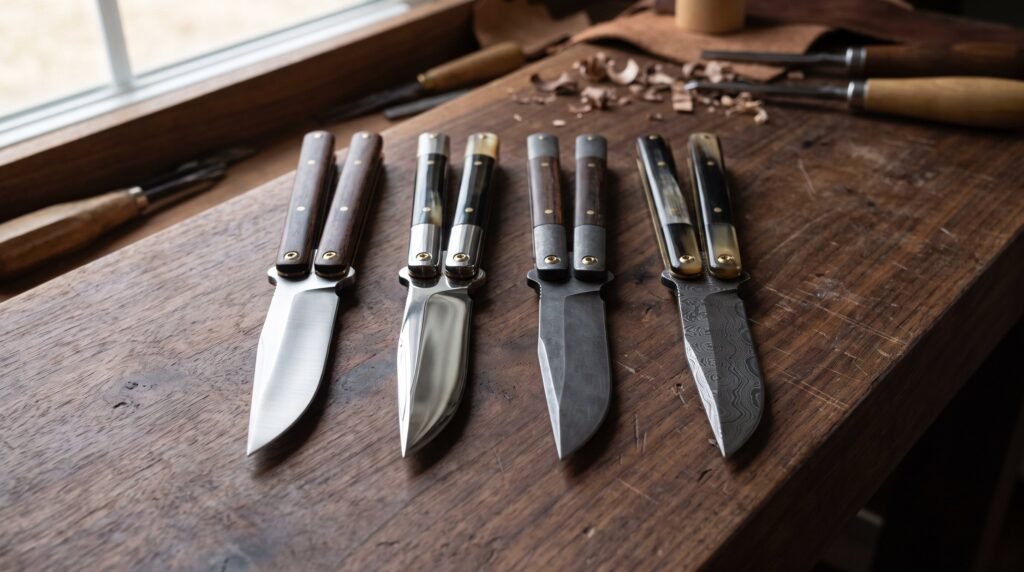
Ask ten balisong collectors which steel is best and you will get ten confident answers. The truth is simpler: each steel is best at something different, and the right choice depends on whether you flip daily, collect, or want a working blade. This guide compares every steel we forge in our workshop, 440c, VG10, high carbon, D2, and genuine Damascus, with an honest look at the trade-offs. A note on origin: our knives are hand forged in Austin, TX with select materials imported from the Philippines, and that includes a share of our Damascus billets.
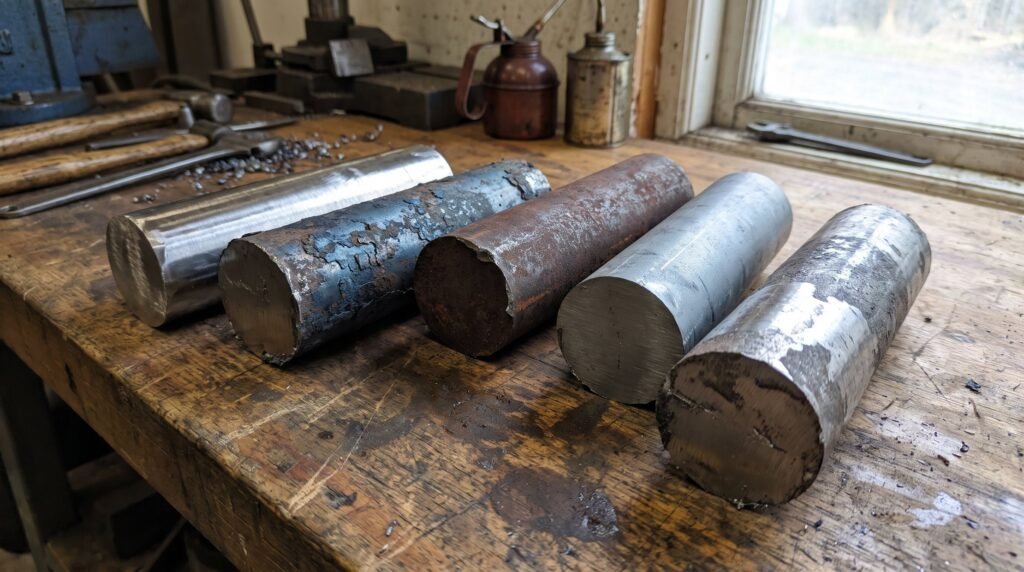
Balisong Steel Comparison Table
| Steel | Edge Retention | Rust Resistance | Ease of Sharpening | Toughness | Best For |
|---|---|---|---|---|---|
| 440c Stainless | Good | Excellent | Easy | Good | First balisong, humid climates, low maintenance |
| VG10 Super Steel | Excellent | Very good | Moderate | Good | Razor-sharp edge, premium daily carry |
| High Carbon | Very good | Low, needs oiling | Very easy | Excellent | Traditional feel, hard use, easy field sharpening |
| D2 Tool Steel | Excellent | Good (semi-stainless) | Harder | Very good | Working blades that stay sharp for months |
| Damascus (forged) | Very good | Moderate, light care | Moderate | Very good | Collectors, heirlooms, one-of-a-kind looks |
440c Stainless: The Reliable Starter
440c is the steel we recommend for a first authentic Filipino balisong. It resists rust even in humid climates, sharpens easily on any stone, and takes a bright mirror polish. It will not hold an edge quite as long as VG10 or D2, but for most owners that trade is worth the zero-stress maintenance. Browse our authentic Filipino balisong collection. Much of the classic BF line is 440c.
VG10: The Razor
VG10 is a Japanese “super steel” developed for chef knives, and it shows: it takes the keenest working edge of anything in our lineup and holds it well. It costs more and asks a little more patience on the stones, but if you want a balisong that shaves paper months after sharpening, VG10 is the pick.
High Carbon: The Traditional Choice
Before stainless steels existed, every Batangas balisong was high carbon, often forged from truck leaf springs and files. It is tough, takes a wicked edge in minutes on a basic stone, and develops a grey patina with age that many collectors love. The trade-off: it will rust if neglected. A drop of oil after use keeps it beautiful for decades. Our high carbon balisong collection is the largest we make, over a hundred models.
D2 Tool Steel: The Workhorse
D2 sits between carbon and stainless: enough chromium to resist rust in normal use, and hard enough to hold its edge through serious work. It is the steel of choice for our D2 traditional Filipino weapons line. The only cost is sharpening time. D2 is stubborn on the stone, which is exactly why it stays sharp so long.
Damascus: Real vs. Printed
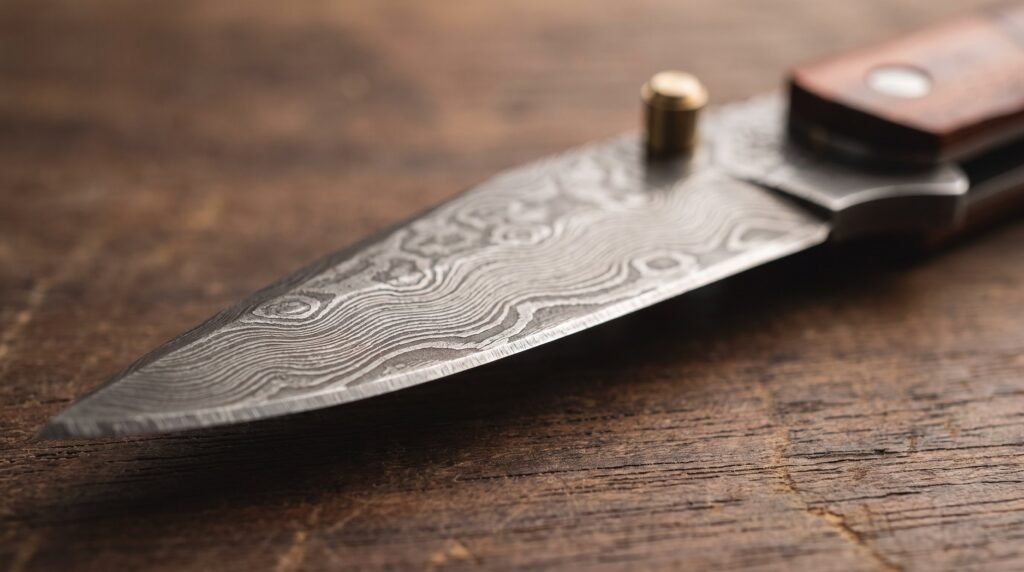
Here is what most shops will not tell you: the majority of cheap “Damascus” butterfly knives online are ordinary stainless with a laser-etched or acid-printed pattern on the surface. Sharpen one a few times and the pattern fades, because it was never in the steel. Genuine forged Damascus is made by folding and welding layers of steel; the pattern runs through the entire blade and reappears with every sharpening. Every knife in our real Damascus butterfly knife collection is forged this way. No two blades ever share the same pattern.
So Which Should You Choose?
First balisong or humid climate: 440c. Sharpest possible edge: VG10. Traditional Batangas character and easy sharpening: high carbon. A working blade that stays sharp for months: D2. A collector piece that is genuinely one of a kind: forged Damascus. And any of them can be made personal with custom engraving.
Quick Answers
What is the best steel for a balisong? There is no single best: 440c for low maintenance, VG10 for the sharpest edge, high carbon for tradition and toughness, D2 for edge retention, and forged Damascus for collectors.
Is D2 steel good for butterfly knives? Yes. D2 tool steel holds an edge longer than most stainless steels and resists rust in normal use, which is why it is a favorite for working balisongs.
How can I tell real Damascus from fake? Real forged Damascus keeps its pattern after sharpening because the layers run through the blade. Etched or printed “Damascus” fades where the surface is ground away.
Do high carbon balisongs rust? They can if neglected: a thin coat of oil after use prevents it. See our balisong care guide.
Related guides
Once you have picked a steel, you can compare all five side by side in our balisong knives collection.