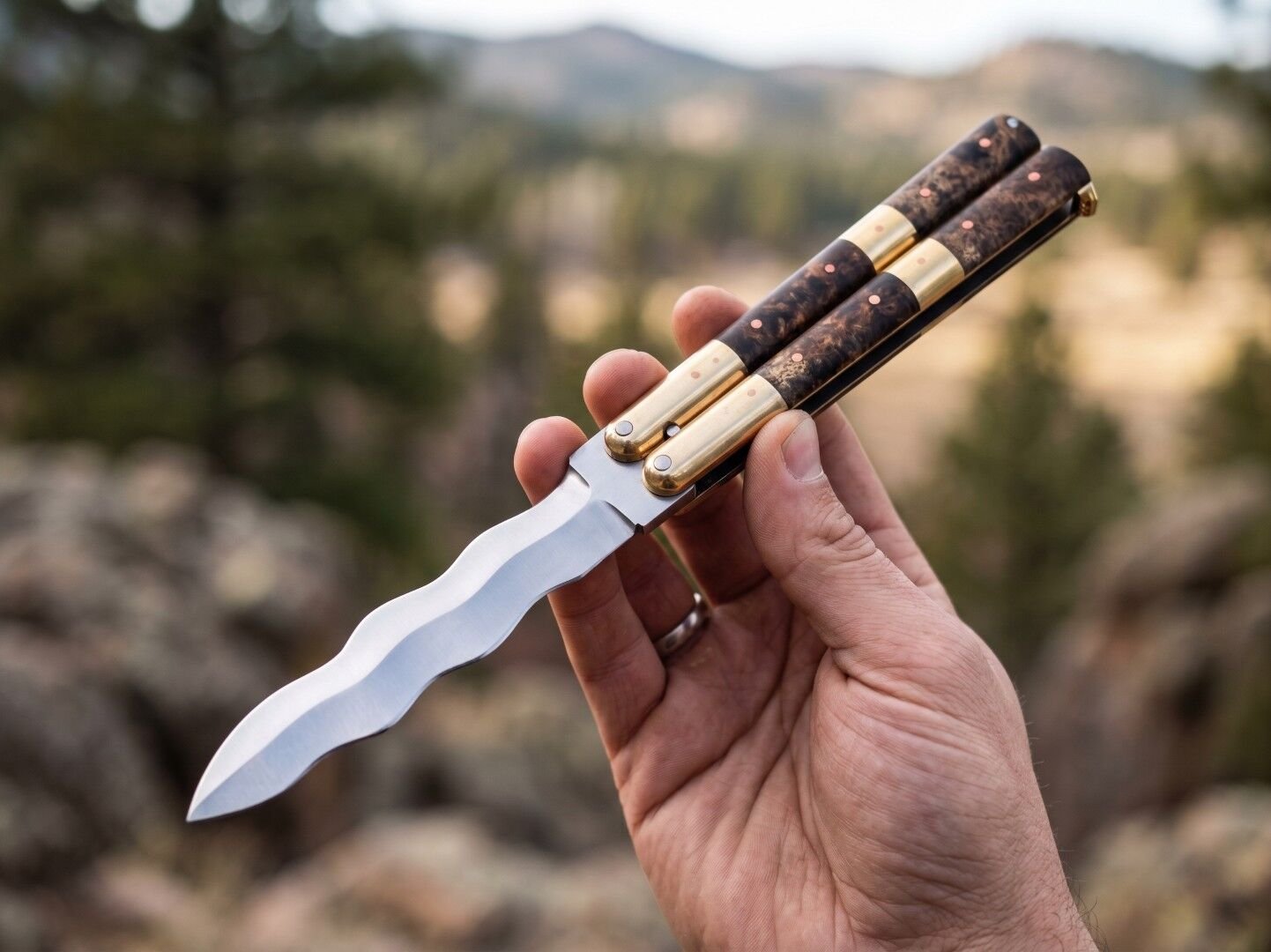
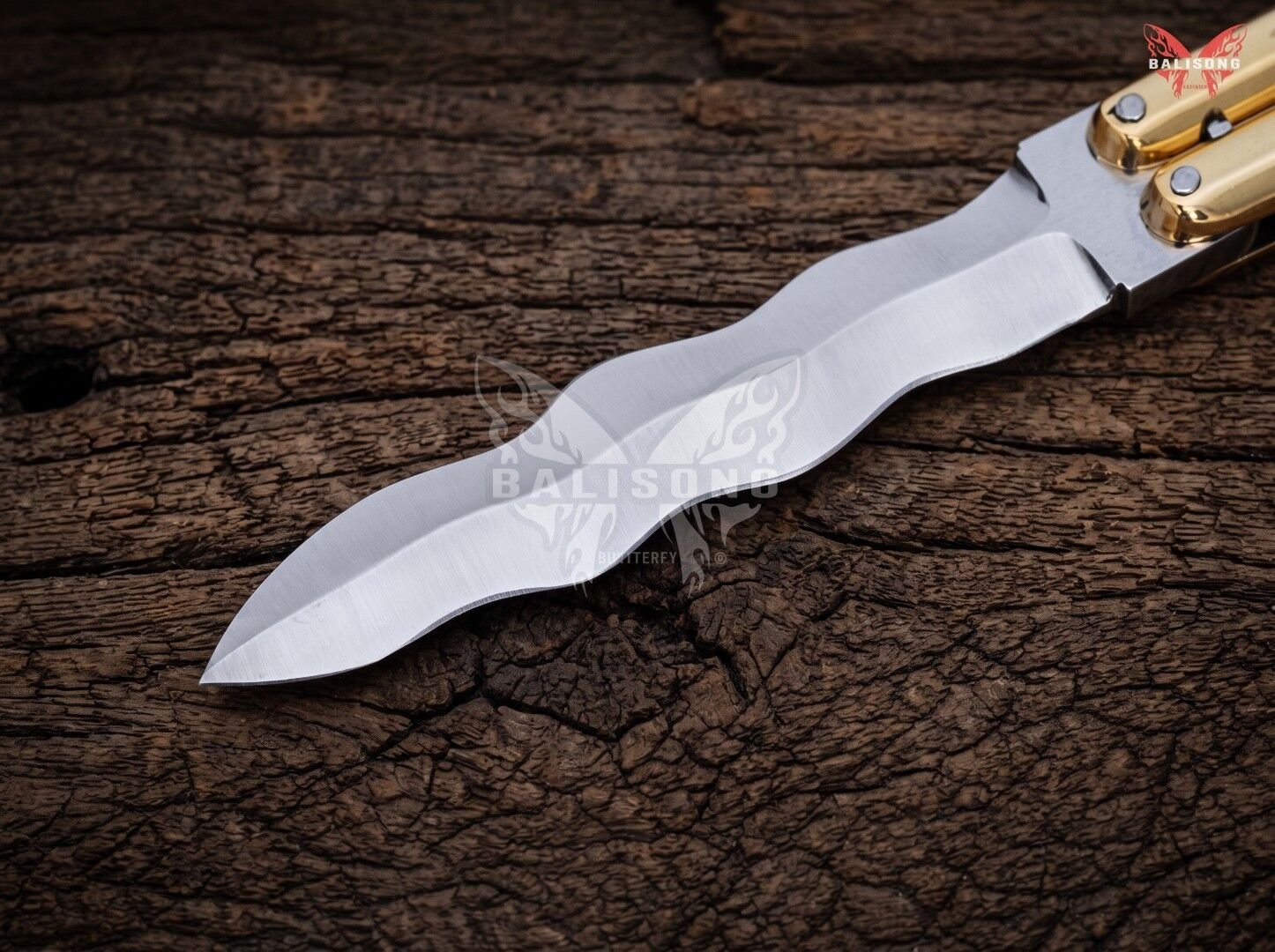
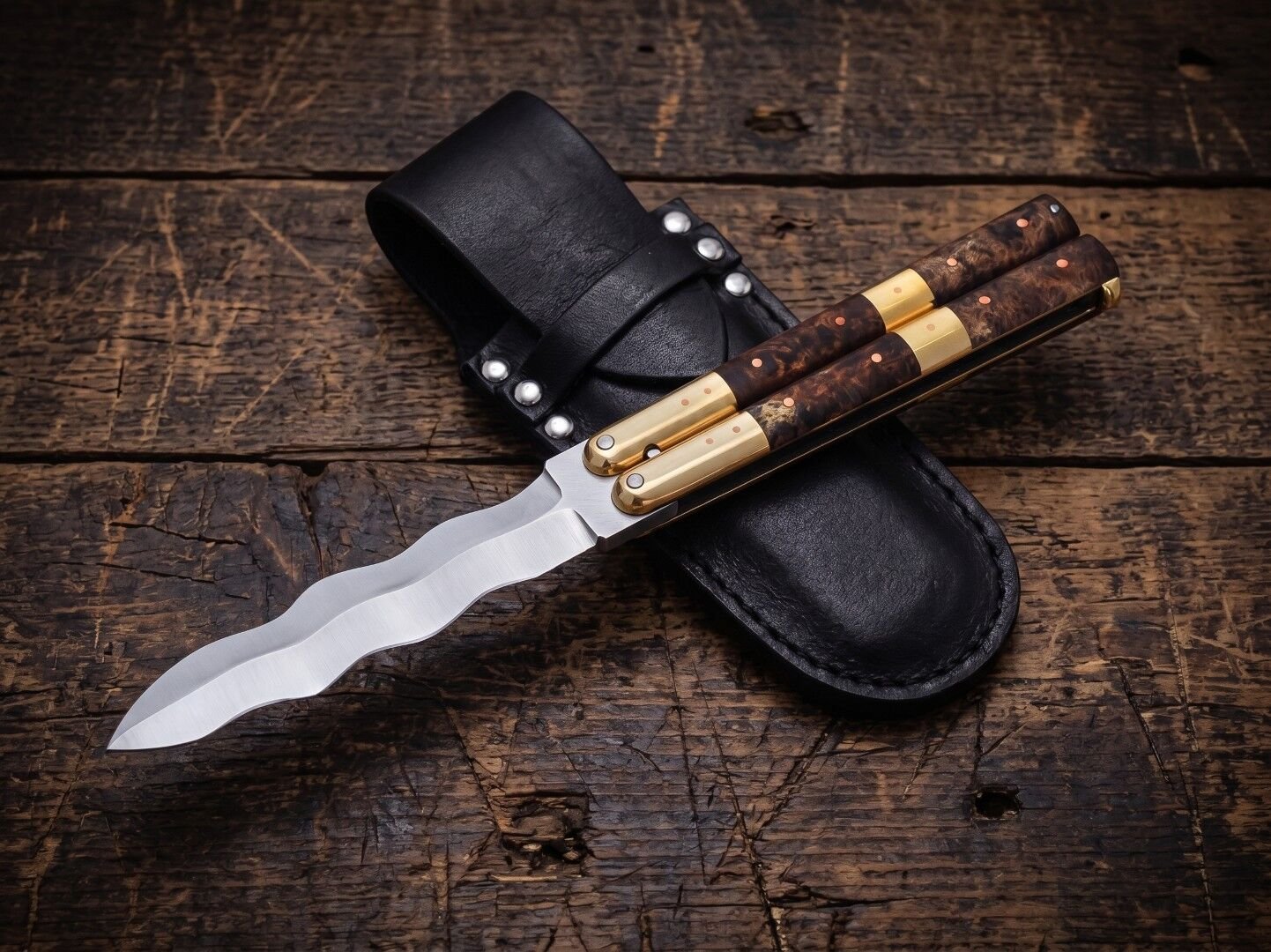
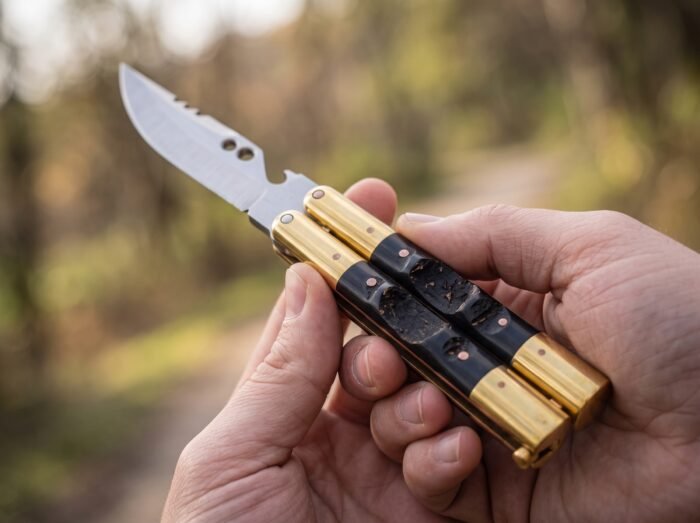
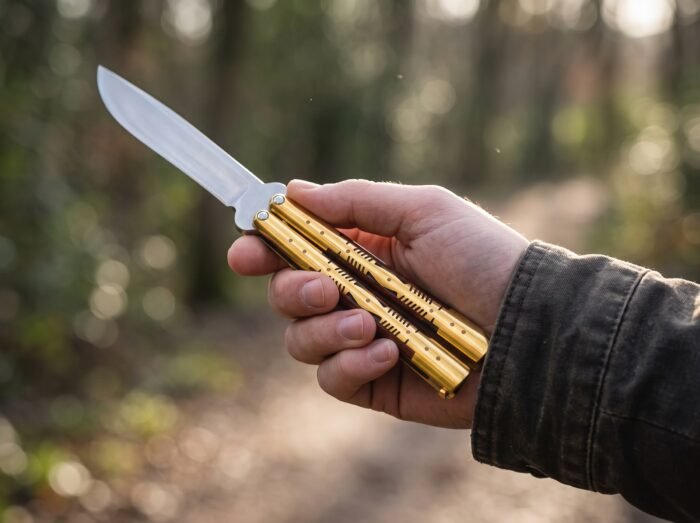
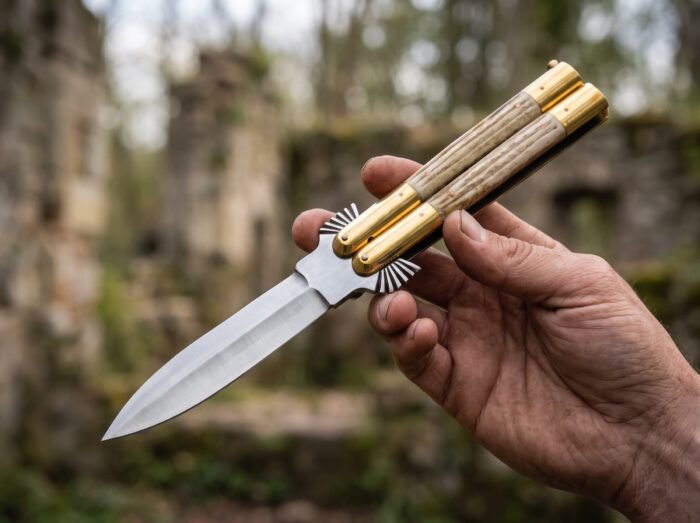
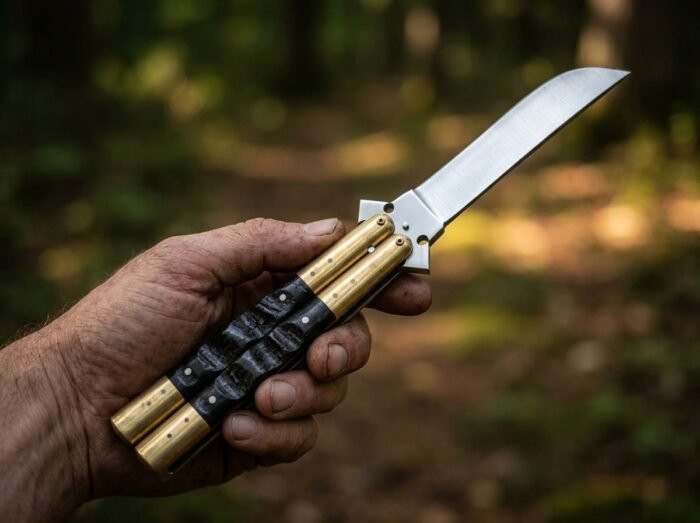
The BF-94 is the only knife in the Pandayan Traditional line with narra burl handles. Twenty-four centimetres open, a 12cm D2 blade, 200g. Everything else in this series is rose wood or kamagong, and the burl is why this one looks nothing like its siblings.
Burl is not a wood, it is a fault
That sounds like a criticism and it is not. A burl is a growth on a tree, a knot of tissue that forms where the tree was stressed, injured or infected. The grain inside it stops running in one direction and starts swirling around itself in every direction at once.
Which makes it useless as timber and extraordinary as a handle. The figure you see is the tree’s own confusion made visible, and it cannot be reproduced, printed or reliably repeated. Two blanks cut from the same burl fifty millimetres apart will look like different materials.
Narra specifically
Narra is the Philippine national tree, and it is a rich reddish brown that darkens with age and light. Against the near-black kamagong used across most of this range, a narra burl handle reads warmer and considerably redder, and it changes the whole temperature of the knife.
| |
Narra burl (this knife) |
Rose wood |
Kamagong |
| Colour |
Red brown, swirling figure |
Warm brown, straight grain |
Near black, faint streaking |
| Figure |
Chaotic. The whole point |
Regular, linear |
Almost none |
| Two knives alike? |
Never |
Broadly, yes |
Yes |
| Density |
Moderate |
High |
Very high |
| Ages by |
Deepening in red |
Darkening |
Barely changing |
Why burl costs more to work
Because grain that runs in every direction has no good direction to cut from. A cutter that behaves perfectly on straight grain will tear out a chunk of burl without warning, and the piece that tears is finished. Burl blanks also hide voids and bark inclusions that only appear once you are halfway through shaping.
The reject rate on a burl handle is higher than anything else we fit, and that waste is priced into the knives that survive it. It is not a premium for the name.
What to expect when it arrives
- Your knife will not match the photograph. It cannot, because we photographed one piece of burl and yours came from another.
- The two handles may not match each other closely. Same reason.
- Small dark flecks and tight swirls are burl. Voids that were filled and stabilised during finishing are normal practice on burl and not a defect.
- A crack running through, a loose insert, or a gap you can catch a fingernail in is our problem and we will fix it.
D2 steel and 200 grams on this butterfly knife
D2 is an air-hardening tool steel: about one and a half percent carbon and eleven to twelve percent chromium, which sits just under the stainless threshold. It holds an edge longer than anything else we sell and it wants a diamond plate when it finally needs sharpening, which will be about twice a year.
We run it at 58-60 HRC rather than higher, because a carbide-heavy steel taken further chips when the knife lands on a hard floor, and it will land on a hard floor.
Two hundred grams on a 24cm frame is the Pandayan standard: heavier than the animal series, deliberate through a rotation, and comfortable for a long session.
Care for a burl balisong handle, which is short
Wipe the blade if it gets wet. Keep the wood out of long direct sunlight, because narra fades faster than most timbers and the red is the reason you bought it. No oil required, though a light wipe once a year does no harm.
Ordering this D2 balisong
The unsharpened trainer is the same knife, chosen above Add to Cart. On a knife whose appeal is largely the handle, a fair number of people buy it blunt and never miss the edge.
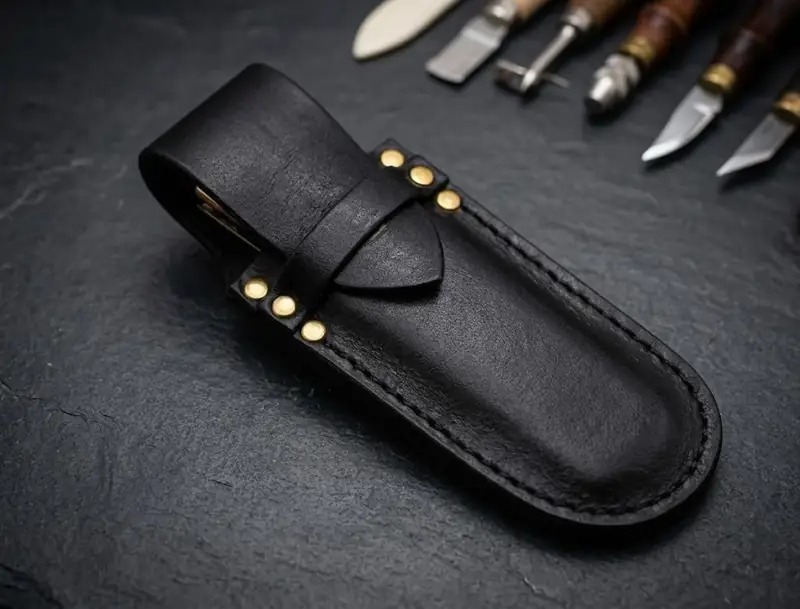
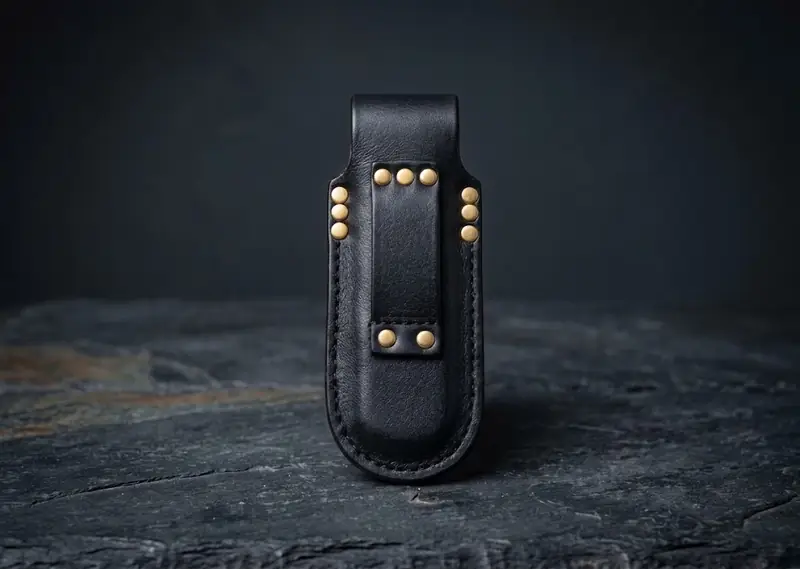
There is a fitted leather sheath with it. We do not charge for US delivery, and everything beyond that is $49 for the order rather than per knife.
Narra burl is the one handle in this series that will never repeat, and the three woods used across the Filipino Traditional line, narra, rosewood and kamagong, are compared properly in our handle materials guide. The Habagat sits in the D2 Tool Steel Butterfly category with the rest of the range. For the same comparison laid out on a single product page, the Dalisay carries a table setting narra against rosewood and kamagong directly.





Paolo Baker –
Was nervous ordering a balisong online but so glad I did. Weight is perfectly balanced for flipping. This is going straight into my daily rotation.
Nicole Young –
Got this as a birthday gift and it exceeded what I expected. Comes with a nice pouch which is a nice touch. This is exactly why I keep coming back to this shop.
Jeffrey Cruz –
Genuinely really impressed with how this turned out. This is my new favorite in the collection.
Megan Chavez –
First rate quality for the price point. Blade came shaving sharp straight out of the box. This flips cleaner than knives twice the price. Already thinking about what to order next from this company.
Frank Sanchez –
Was nervous ordering a balisong online but so glad I did. This flips cleaner than knives twice the price. Would send this as a gift again in a heartbeat.
Thomas Mitchell –
No regrets on this purchase at all. Not my first order from Balisong Butterfly and it won’t be my last.