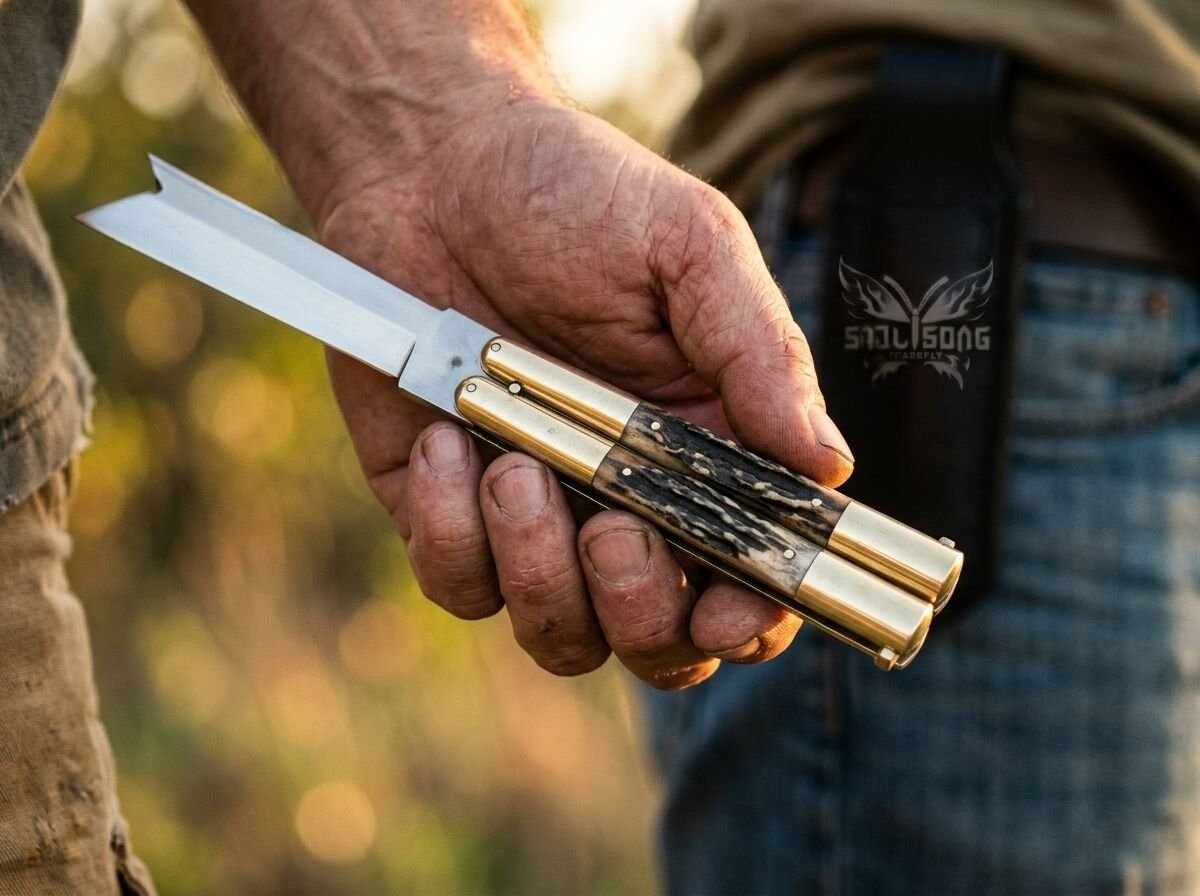
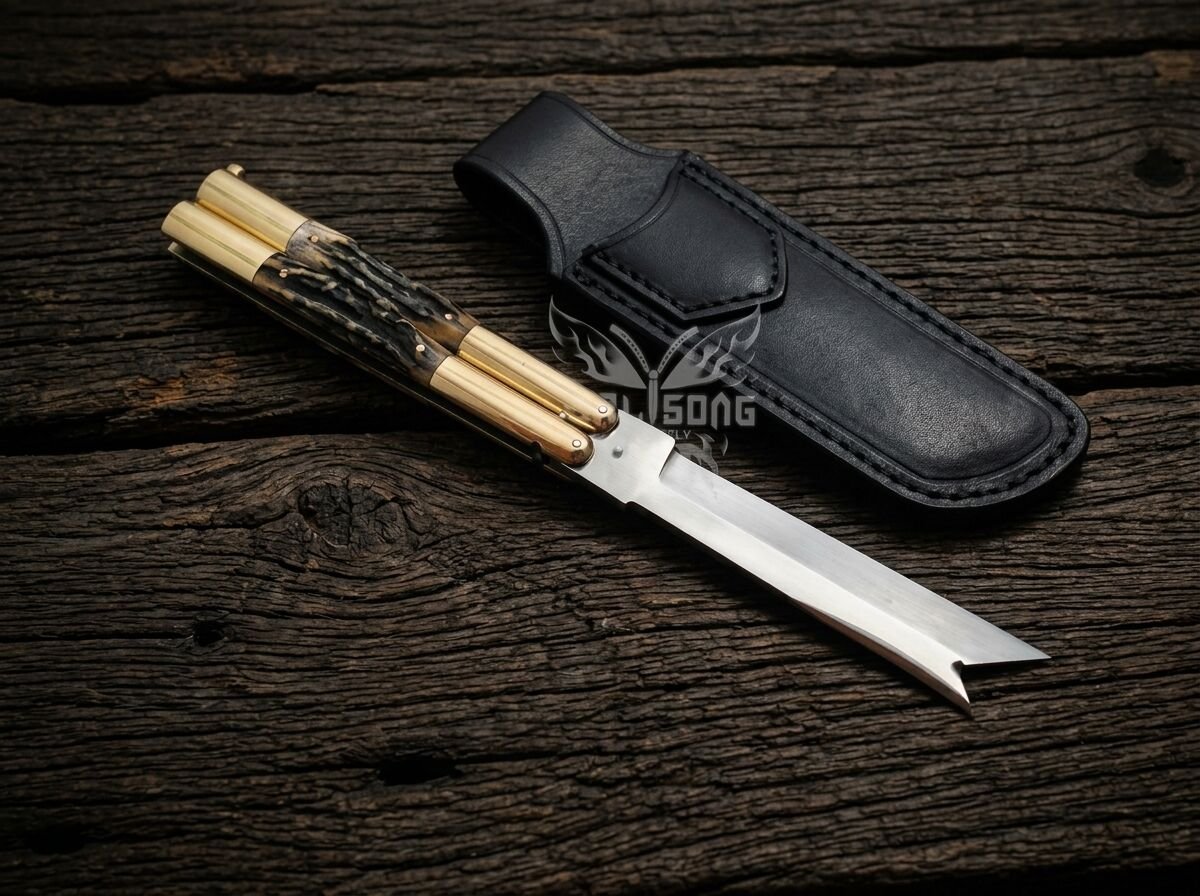
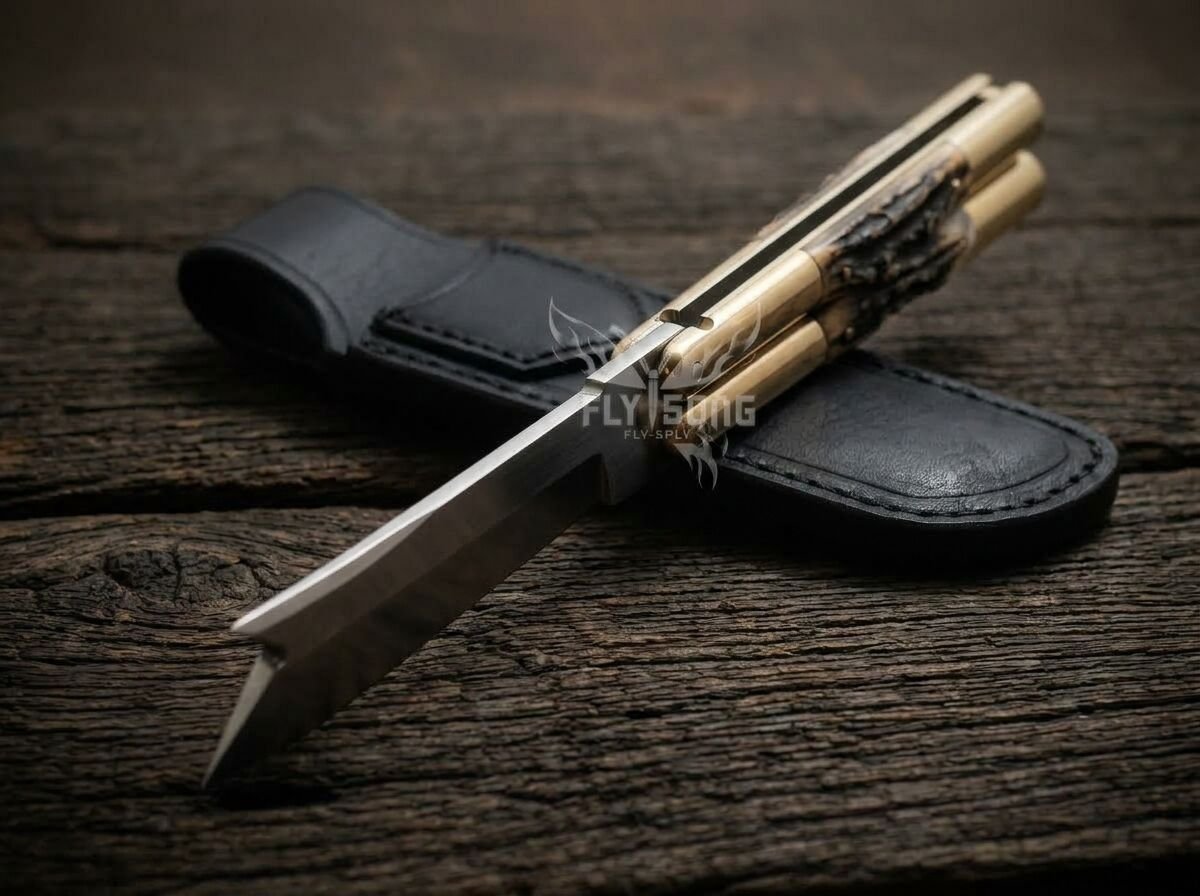
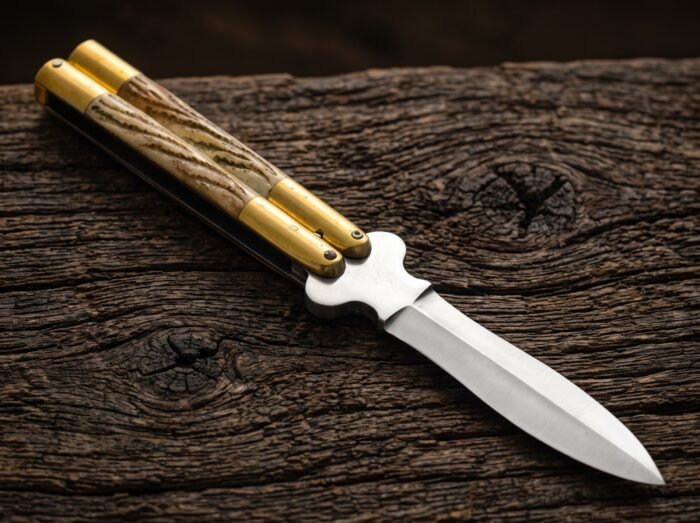
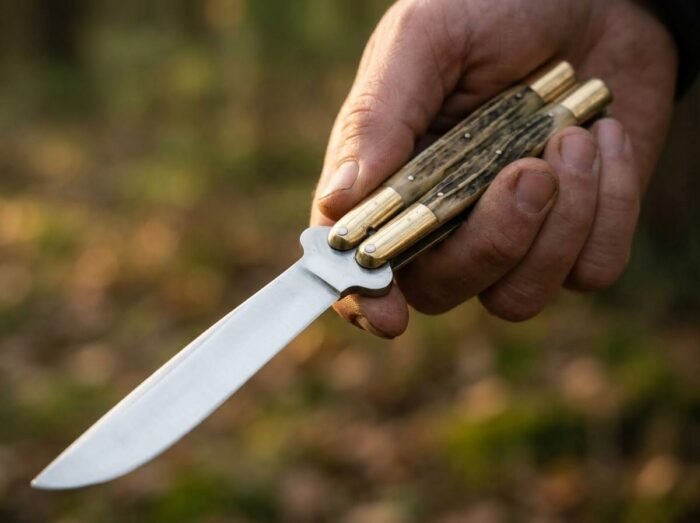
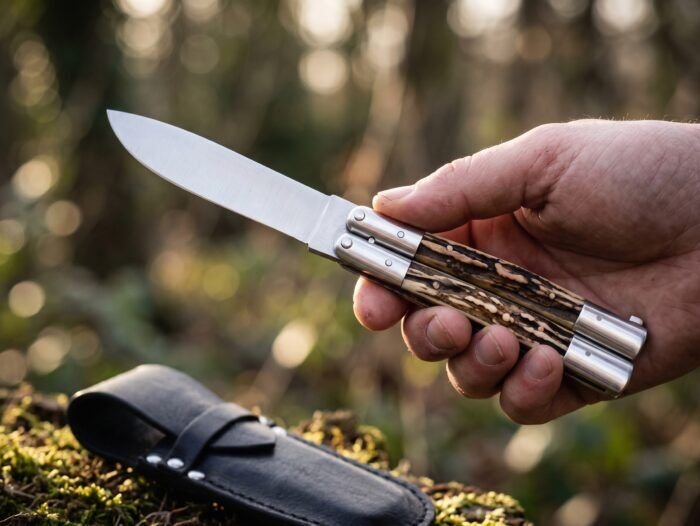
The BF-153 is a D2 blade with stag panels and brass bolsters, and the word “handmade” appears in its title. That word is used so loosely across this industry that it has almost stopped meaning anything, so here is precisely what it means on this bench.
What is done by machine
We are not going to pretend a blacksmith beats each blade out of a meteorite. Honest version:
- The steel is bought as stock. It is rolled in a mill, like everyone’s is.
- Rough blade shape is cut with power tools. Cutting a 14cm blank out by hand would add hours and improve nothing.
- Heat treatment uses a controlled furnace, because reaching 58-60 HRC reliably requires measured temperature, not judgement by eye.
- Initial grinding is done on a belt.
Anybody claiming otherwise at this price is not telling you the truth.
What is done by hand, and why it is the expensive part
- Fitting the blade to the channel. Every knife is filed to its own handles until the blade sits centred and closes clean. This cannot be batched. It is the single largest block of time in the build.
- Setting the pivots. Peened by hand, tested, adjusted, tested again until the handles fall under their own weight without side play.
- Final grinding and the edge. Taken to a finished edge by hand on stones.
- The handle panels. Cut, matched, shaped and finished individually, because stag is irregular and no two panels need the same amount of work.
- Final tuning. Somebody flips the finished knife before it goes in the box. If it is not right it goes back to the bench.
Why this matters to you and not just to us
Because the fitting is what decides whether a balisong is good. Steel choice is a spec line. Handle material is a preference. But a blade that sits off centre in the channel, or handles that do not close square, or a pivot with side play, will annoy you every single time you pick the knife up, and none of those things show in a photograph or on a spec sheet.
That is where the money goes on this knife. Not into exotic materials. Into somebody’s hours.
What it also means
Small variation. The grain on your stag will not match the photograph. The brass may sit a hair differently. If you want two identical objects, buy something moulded, and we mean that without sarcasm.
The specifications
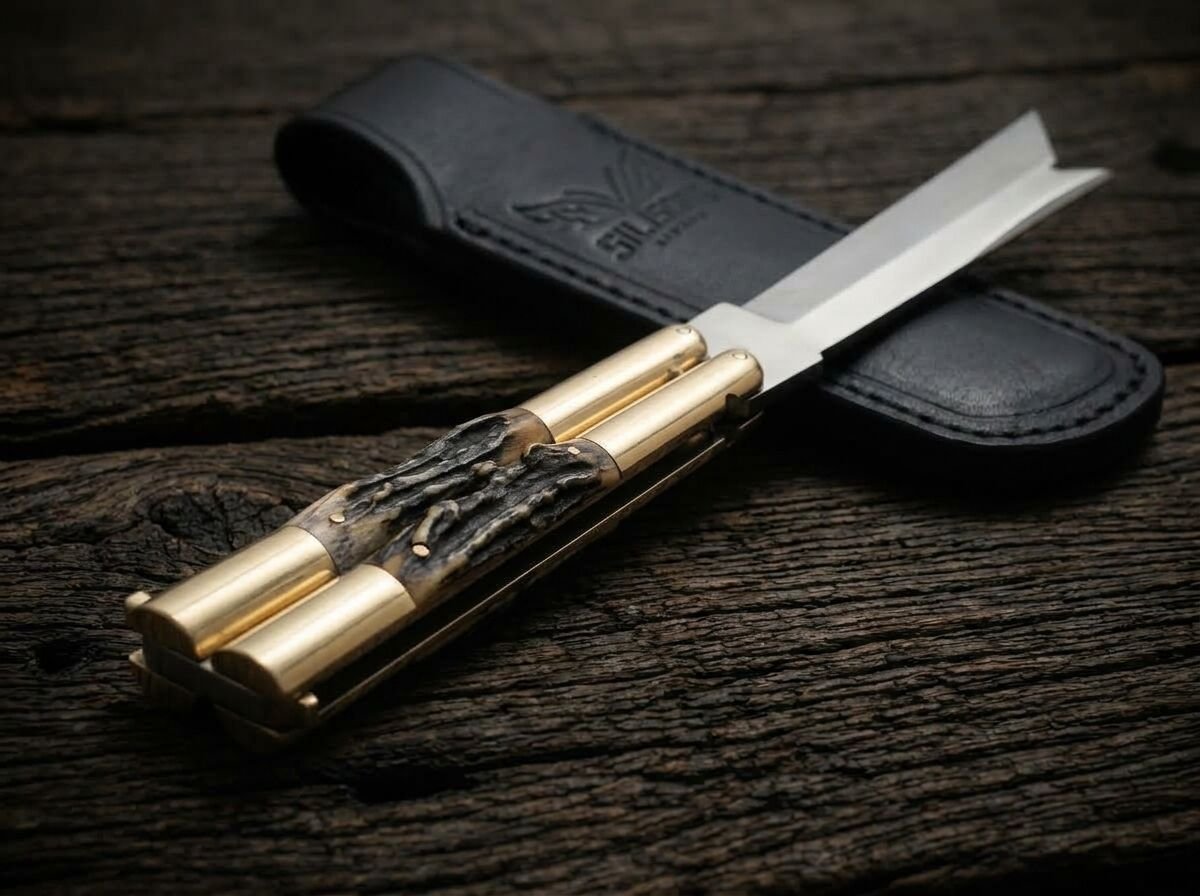
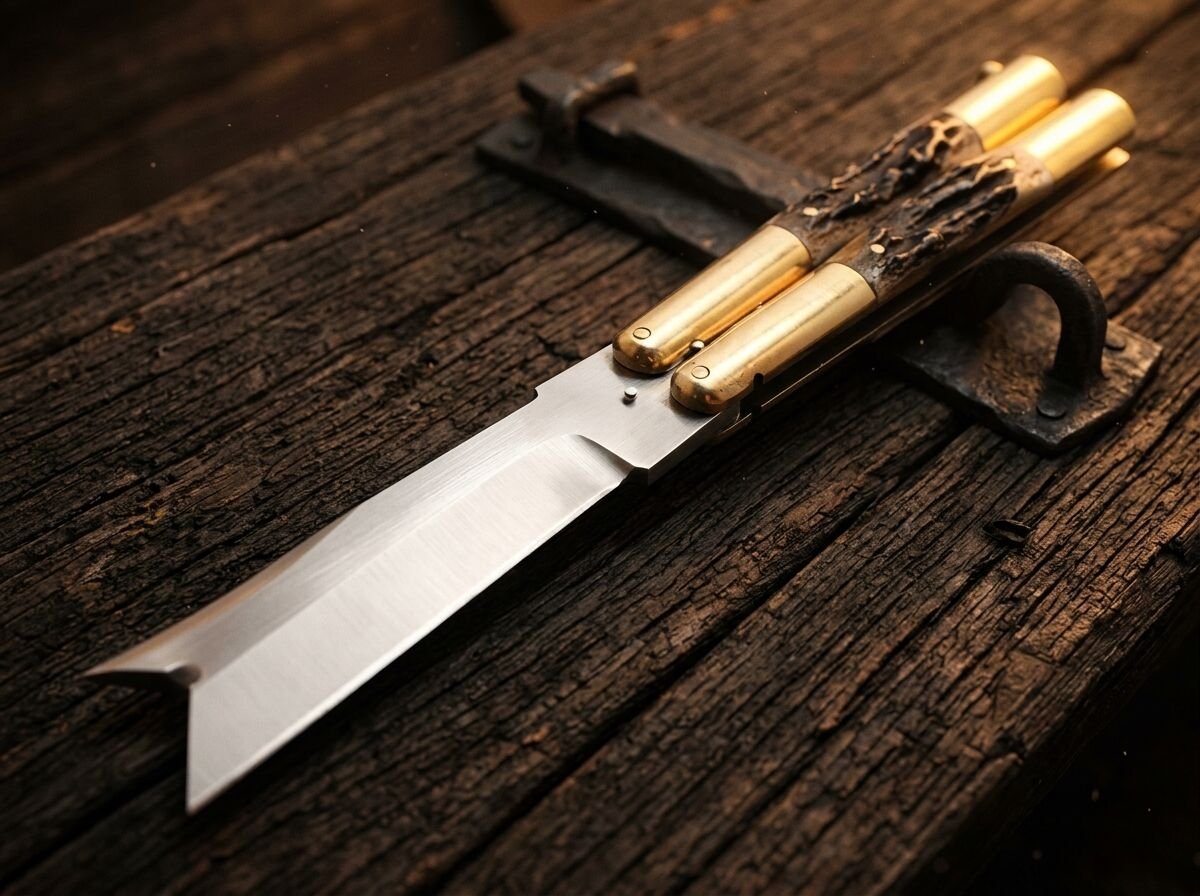
D2 tool steel at 58-60 HRC. High carbon, high chromium, long edge retention, sharpens on ordinary stones, resists rust without being stainless. Shed antler panels between brass bolsters, 29cm open, 205g.
Who this is for
Somebody who wants to know what they are paying for. You are buying labour, and now you know which labour.
Specifications for this D2 stag horn balisong
| Overall length |
29 cm (11.42 in) |
| Blade length |
14 cm (5.51 in) |
| Weight |
205 g (7.23 oz) |
| Blade |
D2 tool steel |
| Hardness |
58-60 HRC |
| Handle |
Stag with brass bolsters |
| Sheath |
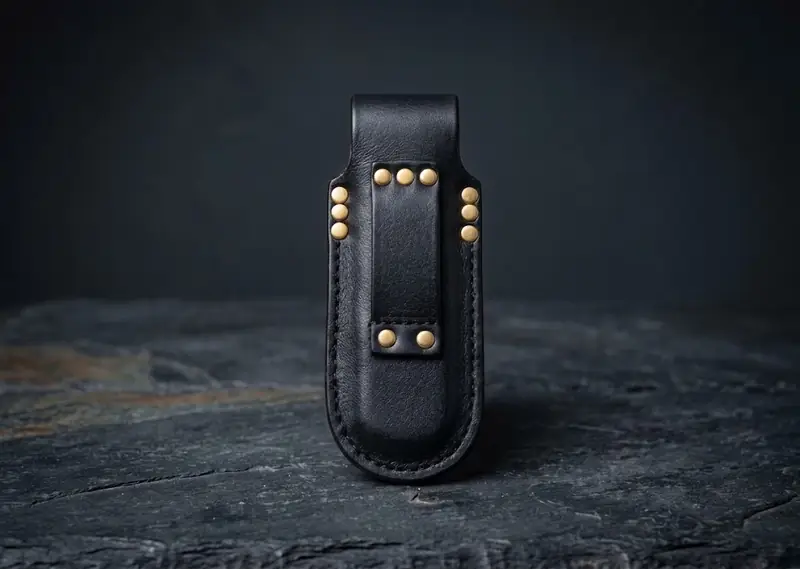
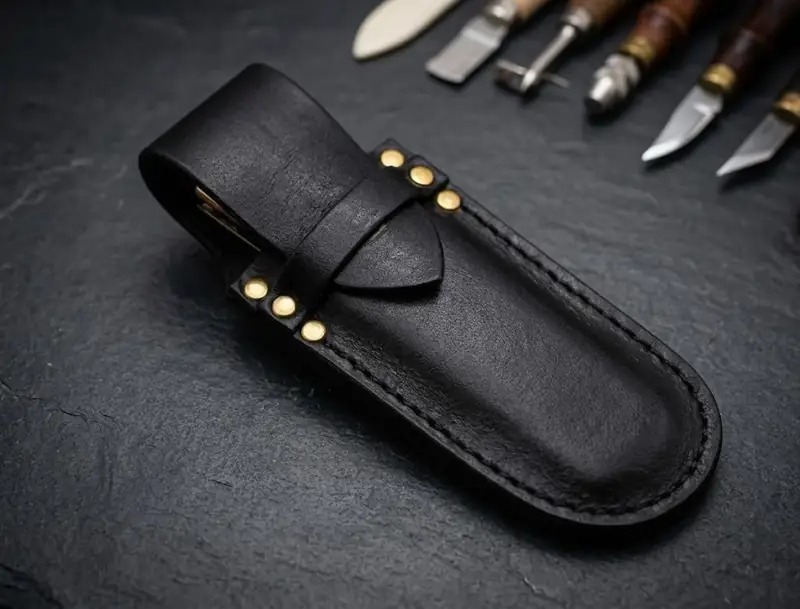
Fitted leather, included |
Included with this stag horn balisong
The knife itself, hand sharpened and hand tuned. A fitted leather sheath made for this frame. A gift box, included as standard.
And a trainer version if you choose it above Add to Cart, matched to this knife in size and weight but with no edge on it. Take it. Learning on a sharp knife is how people end up in the emergency room with a story.
Engraving, if you want it: $19 for initials or short text, $29 for a custom logo. Choose before you add to cart. Free shipping in the United States, flat $49 worldwide.
This page explains exactly which parts of the Datu are machined and which are finished by hand, and our guide on how a balisong is made goes further into that whole process on the workshop floor. It sits in our authentic Filipino balisong range. If you want the same stag and brass fitting with a wavy snake blade instead of a straight one, the Ahas is built on a closely related frame.




Reviews
There are no reviews yet.