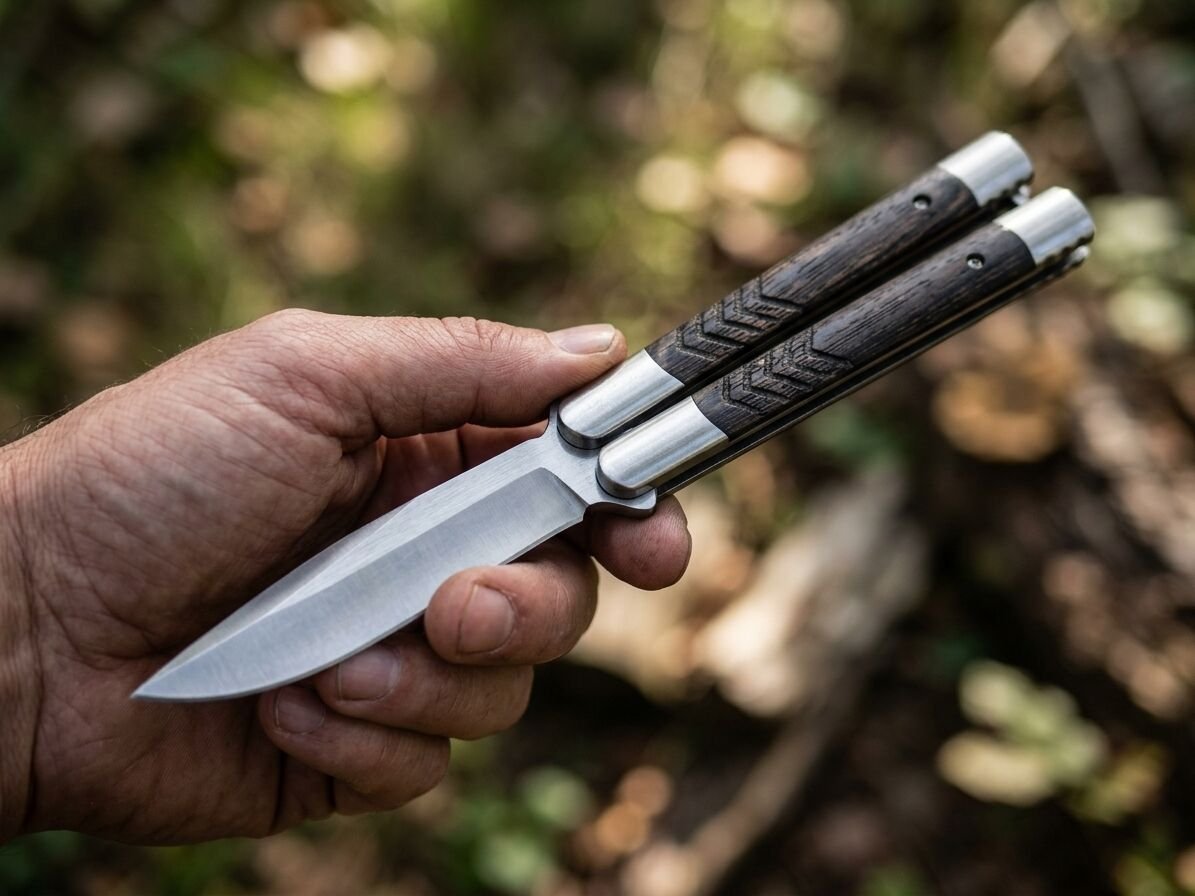
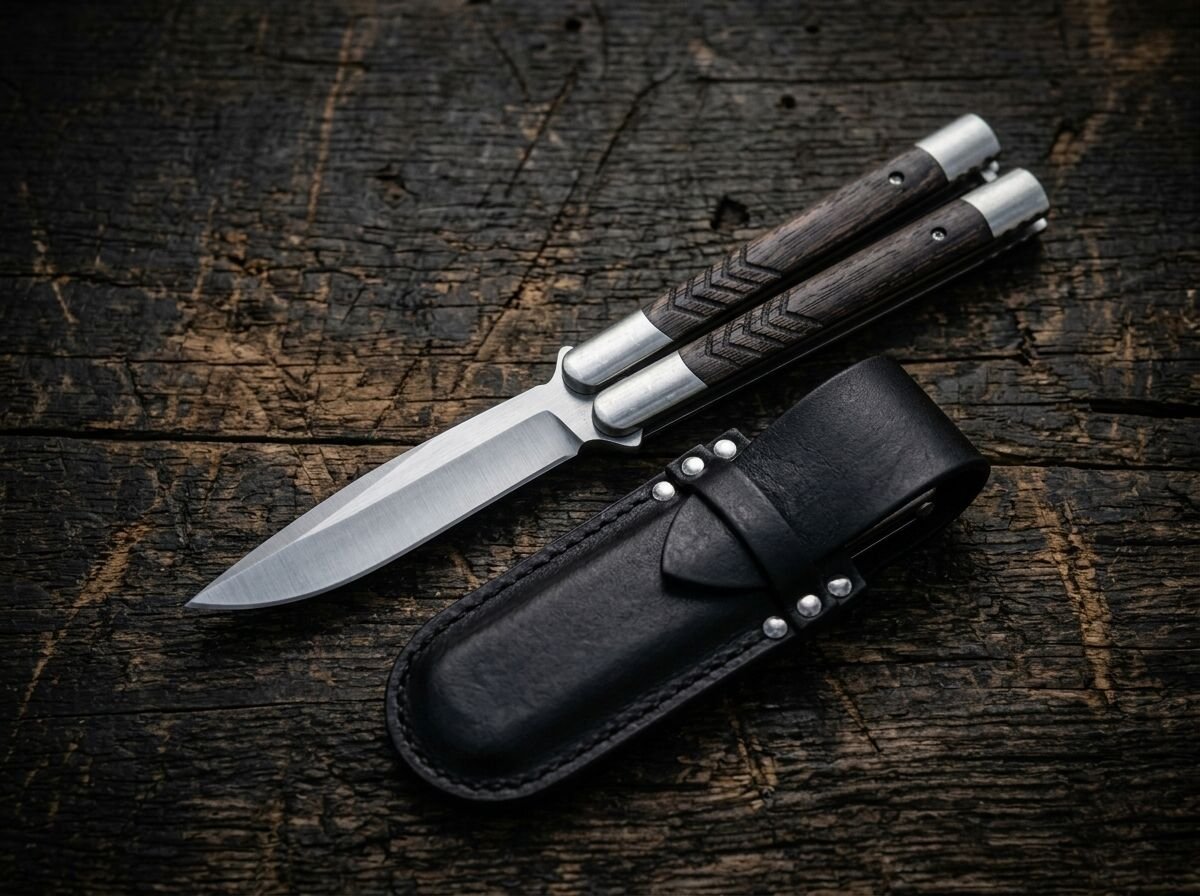
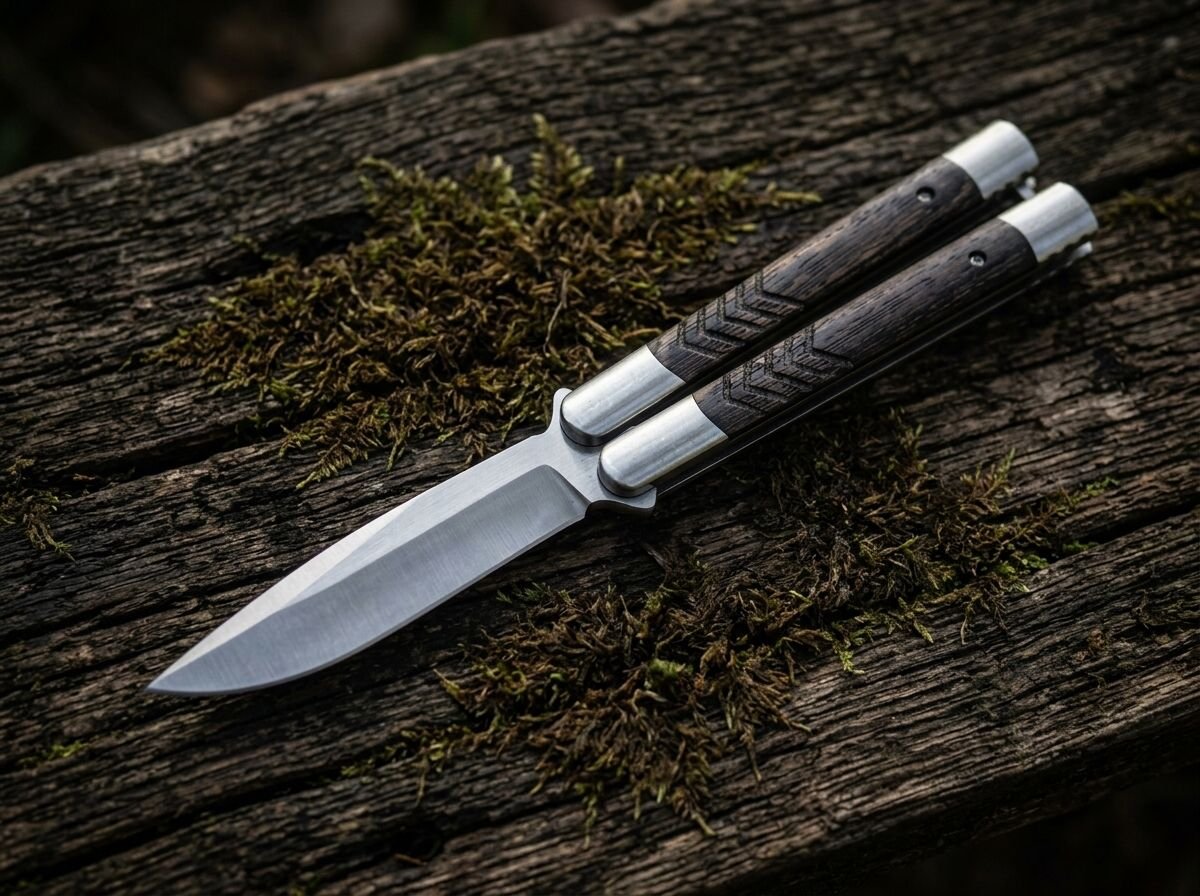
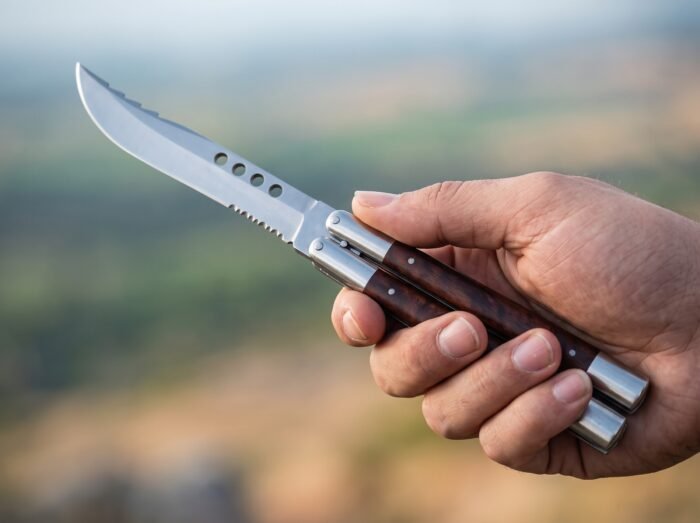
The BF-161 uses engraved wenge wood with steel bolsters. Nobody walks in asking for wenge. It is not a famous timber and it does not have rosewood’s reputation, which is a pity, because for a knife handle it is arguably better.
What wenge wood is on a balisong handle
A dense African hardwood, very dark brown, almost black, with pale streaks running through it. The grain is coarse and open, and it is that coarseness which makes it interesting here: the surface has a natural texture you can feel, which means grip, without anybody having to cut a pattern into it.
It is heavy, hard, and dimensionally stable, which is exactly the shortlist for a handle that has to hold a pivot in place for decades.
Why it is not more popular
Honest answer: it is difficult to work. Wenge splinters. The open grain wants to tear out when it is cut across, and the splinters it produces are notoriously unpleasant, sharp enough to embed and known for irritating skin.
Working it means slower cuts, sharper tools and more sanding stages than a closer grained wood needs. Most production shops simply use something easier. That is the entire reason you see rosewood everywhere and wenge rarely.
Engraved wenge
This handle is engraved, which on an open grained wood is harder than it sounds. The cut has to be deep enough to read clearly against a very dark background but shallow enough not to tear the grain, and dark wood swallows a shallow line completely.
The result reads as texture more than as pattern, which suits the material. Wenge is not a wood for delicate detail. It is a wood for something bold enough to be seen against near black.
Steel bolsters rather than brass
Steel keeps the knife cool in tone. Brass against near black wenge would give you a strong gold on black contrast, which is striking and warm. Steel gives grey on black, which is quieter and, next to a very dark handle, more restrained.
Steel also does not tarnish, so unlike a brass bolstered knife this one will look essentially the same in five years as it does today.
Care
Wenge is stable and undemanding. Wipe it dry if it gets wet. A trace of mineral oil once a year deepens the colour and fills the open grain slightly, which most owners prefer. Avoid silicone polishes, which sit on the surface and go cloudy in the grain. Keep it out of direct sun, which fades dark timbers.
The D2 blade
D2 tool steel at 58-60 HRC, 14cm on a 29cm frame. High carbon, high chromium. Long edge retention, sharpens on ordinary stones, resists rust well but is not stainless.
Who this is for
Somebody who wants a dark handle that is not horn and not the obvious choice. You are paying for a material most shops avoid because it fights back.
Specifications
| Overall length |
29 cm |
| Blade length |
14 cm |
| Blade |
D2 tool steel |
| Hardness |
58-60 HRC |
| Handle |
Engraved wenge wood with steel bolsters |
| Sheath |
Fitted leather, included |
Included with this wenge wood balisong
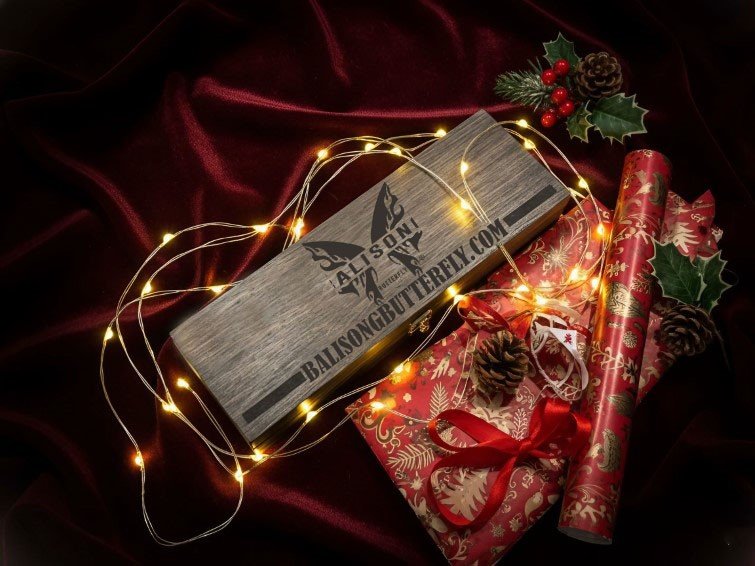
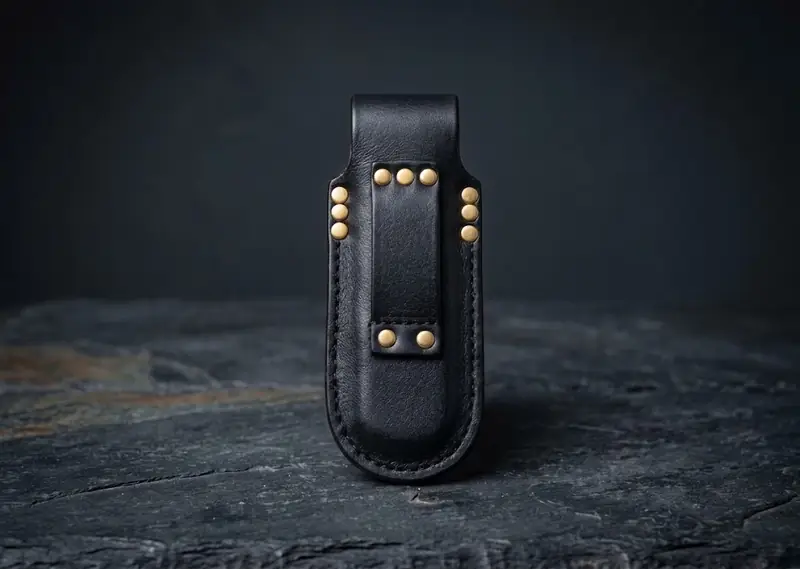
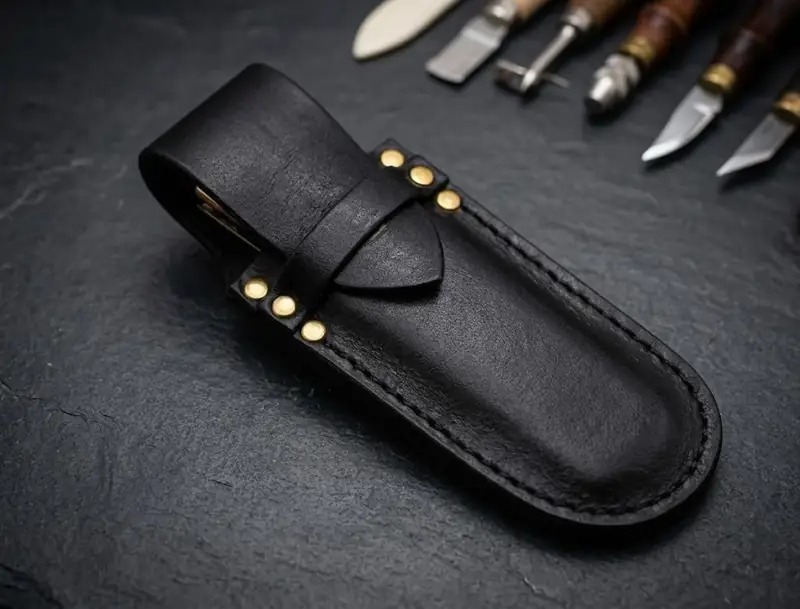
The knife itself, hand sharpened and hand tuned. A fitted leather sheath made for this frame. A gift box, included as standard.
And a trainer version if you choose it above Add to Cart, matched to this knife in size and weight but with no edge on it. Take it. Learning on a sharp knife is how people end up in the emergency room with a story.
Engraving, if you want it: $19 for initials or short text, $29 for a custom logo. Choose before you add to cart. Free shipping in the United States, flat $49 worldwide.
Wenge is one of the harder handle woods to work and one of the least common on a balisong, and our guide to balisong handle materials explains why most shops avoid it in favour of easier timbers. The Ukit belongs to our custom balisong knives collection. If you like the dark open grain of wenge on a curved blade instead of a straight one, the Ningning carries the same wood into a karambit balisong.
Buying for groomsmen? This balisong also comes as a matched set of 6, 15% less than buying six singly, and each one can carry its own engraved name.





Reviews
There are no reviews yet.