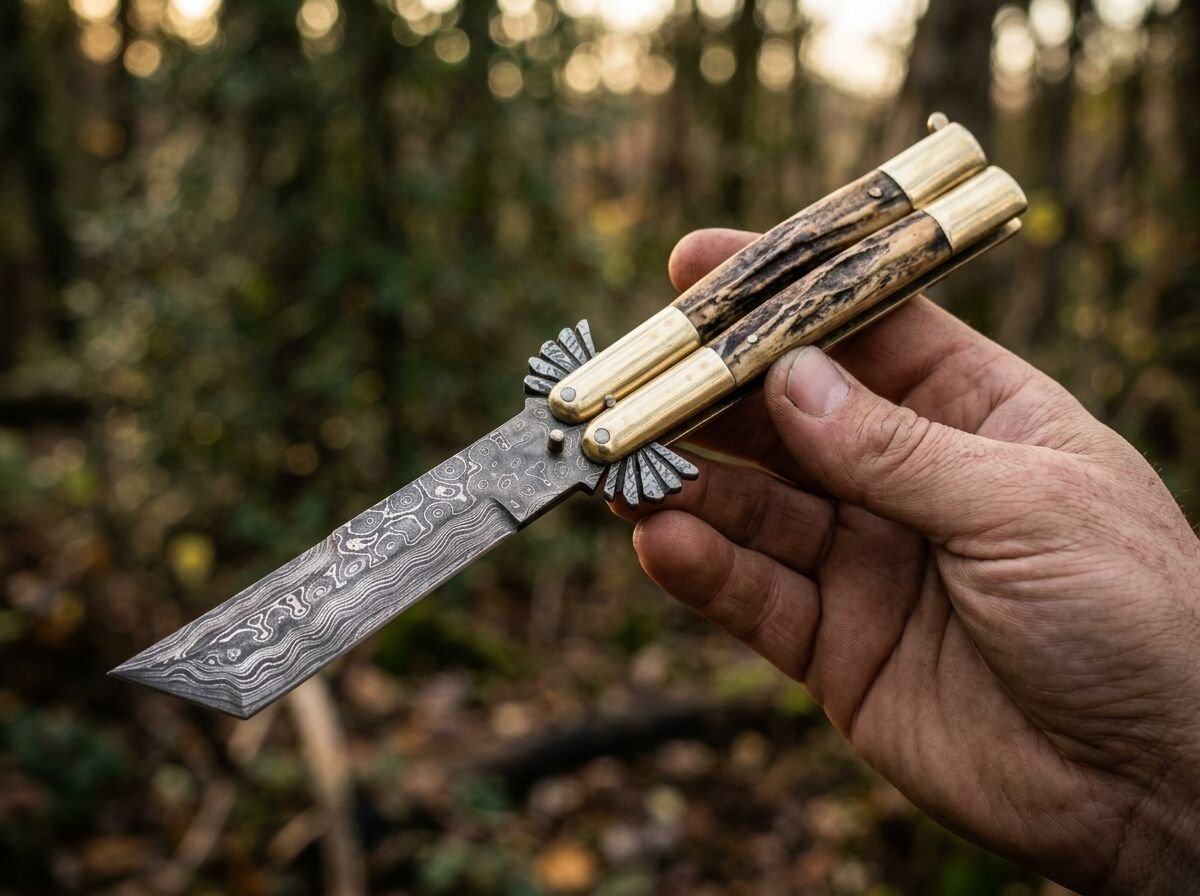
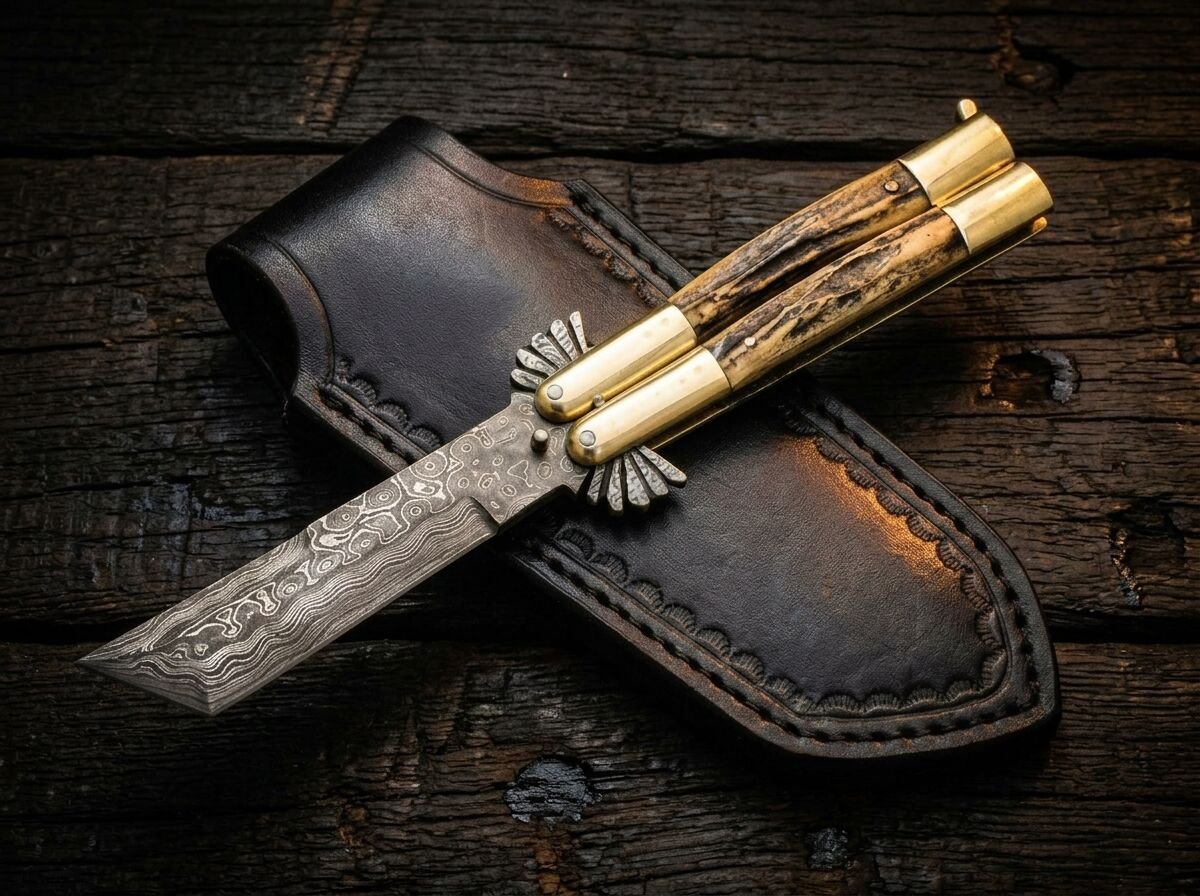
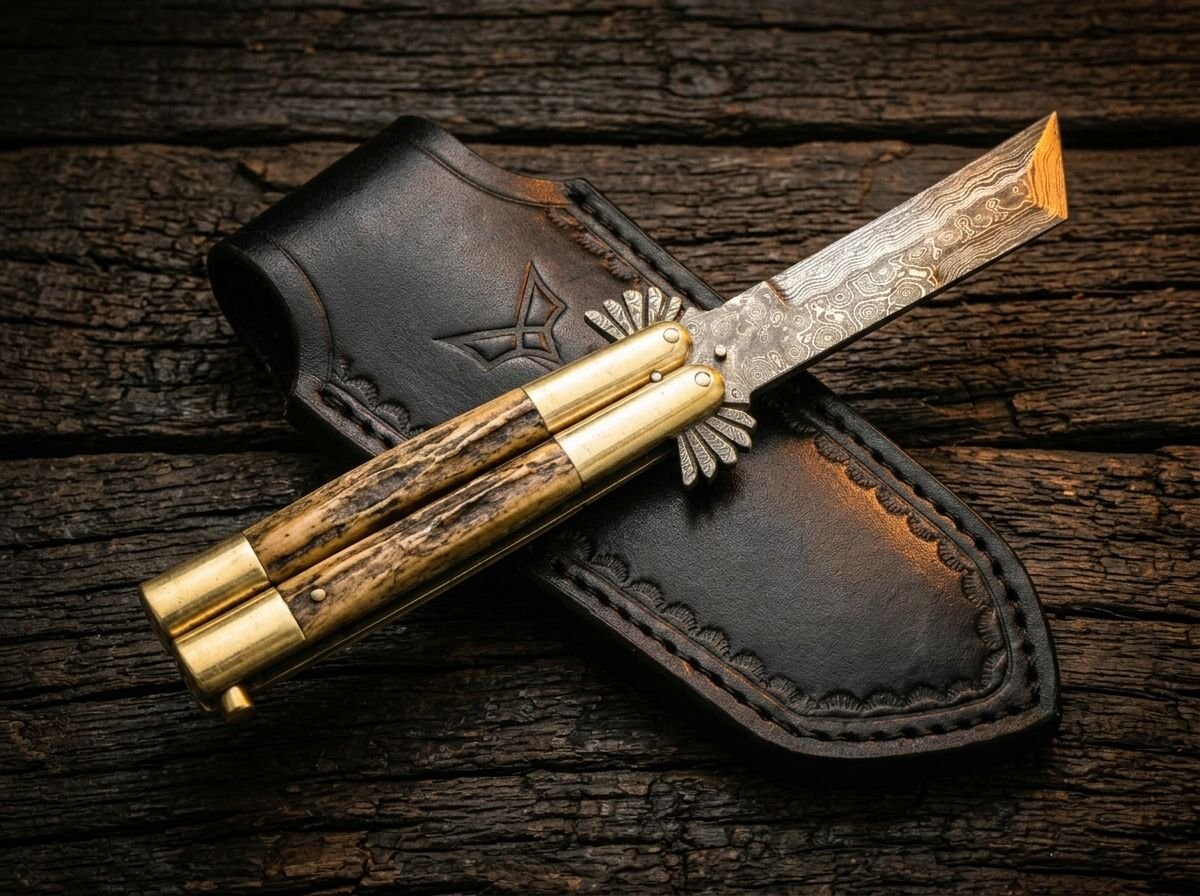
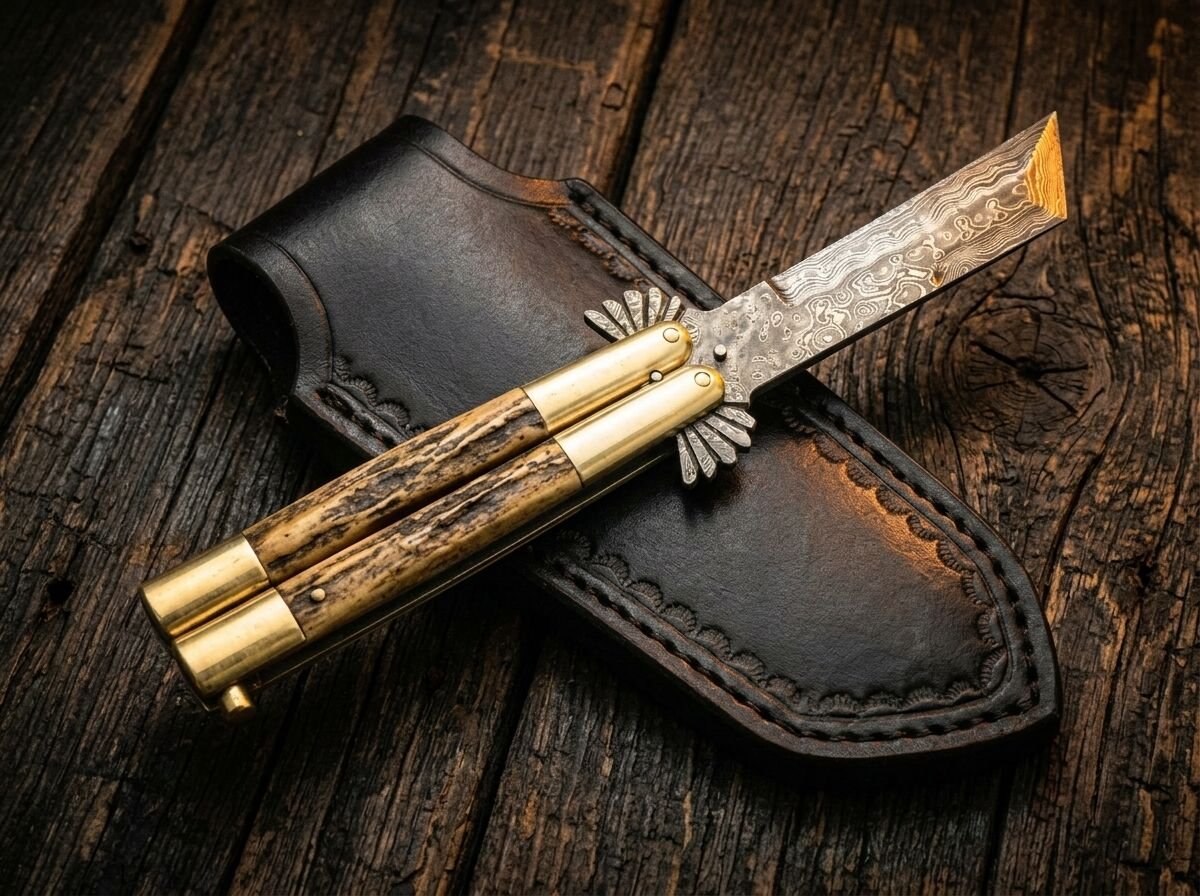
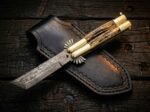
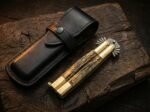
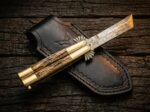
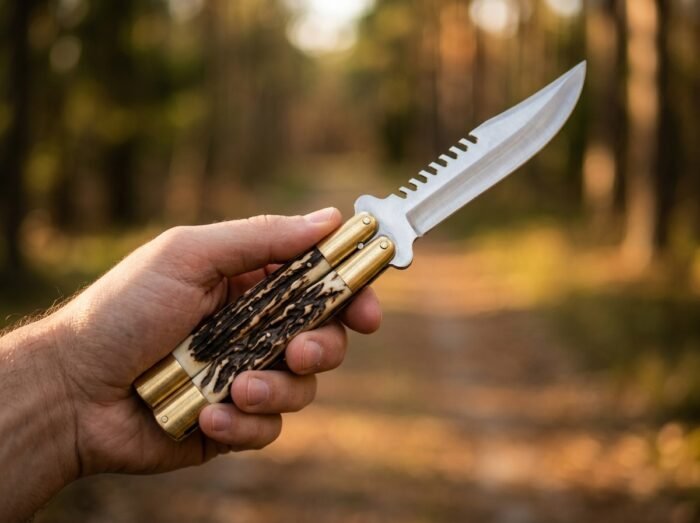
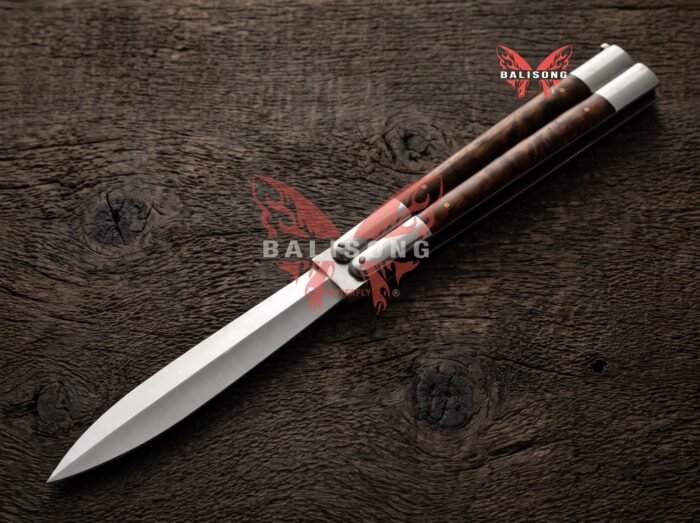
The BF-156 is a rain drop pattern Damascus tanto with stag panels and brass bolsters. Damascus patterns have names, the names describe how the billet was worked, and once you know what you are looking at you can never unsee it. So this page is a short course in reading them.
The pattern is a record of what was done to the steel
Damascus starts as a stack of two different steels, forge welded into one billet. Fold it and the layer count doubles. Fold again, doubles again. Grind that flat and you would get plain stripes, which is the baseline pattern and the least interesting one.
Everything beyond stripes comes from deforming the billet before the final grind, so the flat cut passes through the layers at angles instead of along them. What the smith does to the surface decides what the finished blade looks like.
The four you will actually meet
| Ladder |
Grooves cut across the billet, then flattened. Produces rungs running across the blade. |
| Twist |
The bar is heated and twisted along its length. Produces tight spirals and swirls. |
| Rain drop |
Round dimples punched into the surface, then flattened. The grind cuts concentric rings, like rain landing on water. |
| Feather |
The billet is split and folded back on itself. Produces a central spine with barbs. The hardest to do and the easiest to ruin. |
Rain drop specifically, since that is this knife
Dimples are driven into the flat of the billet with a rounded punch, deep enough to push the layers down without tearing them. The billet is then forged flat again. Where a dimple was, the layers now curve downward, and grinding the surface flat slices through those curves and exposes them as rings.
The difficulty is consistency. Dimples of uneven depth give rings of uneven size. Dimples too close together and the rings run into each other and the pattern turns to mush. Evenly spaced, evenly deep rain drop looks intentional. Anything else looks like a mistake, and there is no fixing it after the grind.
How to spot fake Damascus on a butterfly knife
There is a lot of it. Acid printed patterns, laser etched patterns, and chemically stencilled patterns all exist and all sit on the surface only.
- Look at the spine and the tang. A real pattern continues around every surface. A printed one usually stops at the flats.
- Look at the edge bevel. Grinding an edge cuts into the steel. On real Damascus the pattern carries into the bevel. On a printed blade the bevel is plain.
- Look at the depth. Real etching leaves a texture you can feel with a fingernail. Printed patterns are perfectly smooth.
Why it is a tanto
The tanto point is backed by much more steel than a fine point, so the tip survives being dropped or levered. Its short front edge sharpens separately from the main belly at its own angle, which people forget until it is visibly duller than the rest.
The rest
Hardened to 58-60 HRC. Shed antler panels between brass bolsters. Stag grips well, needs no maintenance, and no two panels match because no two deer do. You are paying for the forge work, which is the part that took a day and cannot be rushed.
Specifications for this Damascus tanto balisong
| Overall length |
29 cm (11.42 in) |
| Blade length |
14 cm (5.51 in) |
| Blade |
Rain drop Damascus steel, tanto point |
| Hardness |
58-60 HRC |
| Handle |
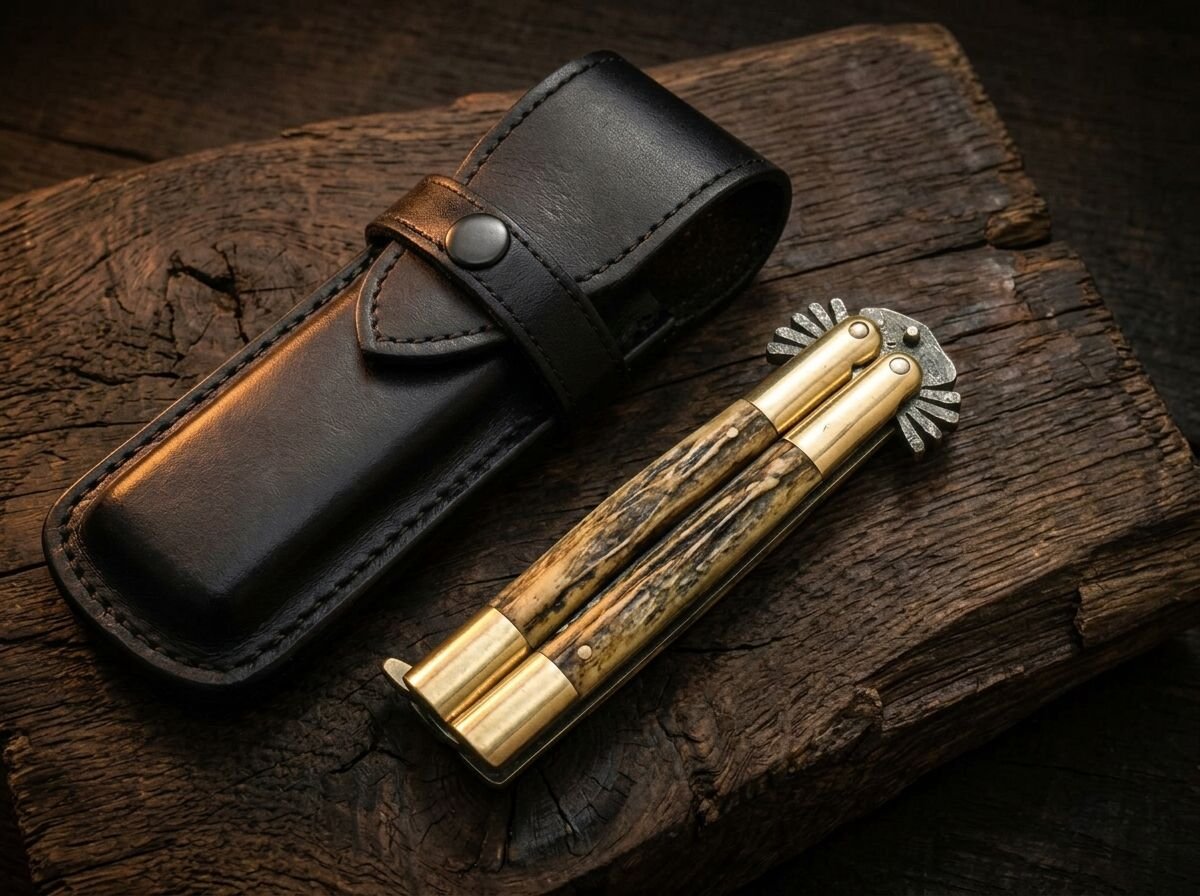
Stag with brass bolsters |
| Sheath |
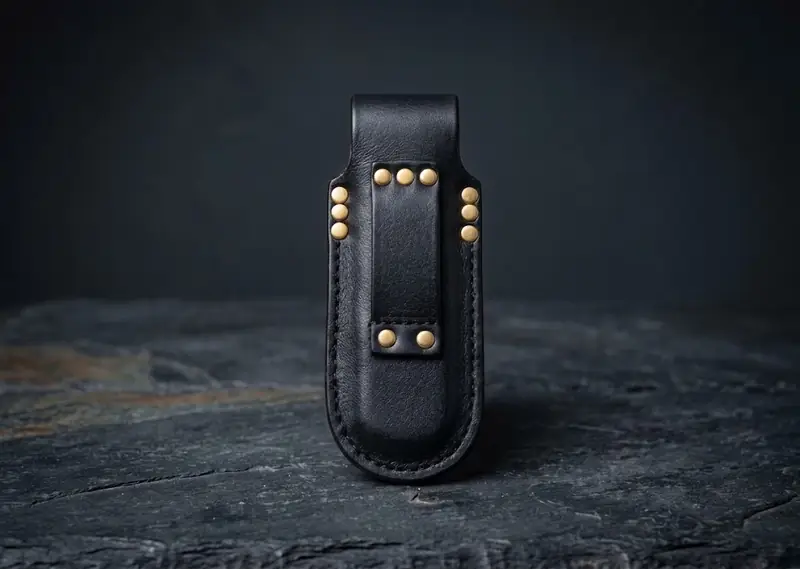
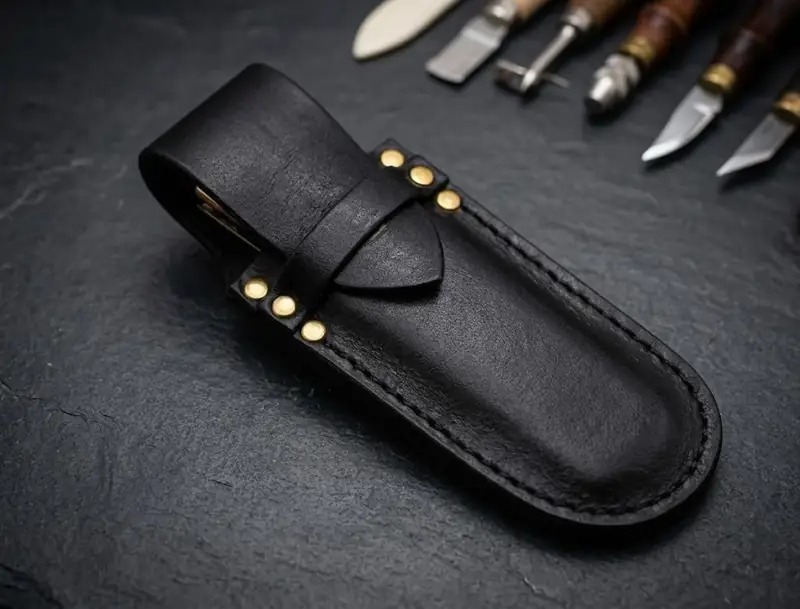
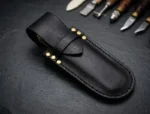
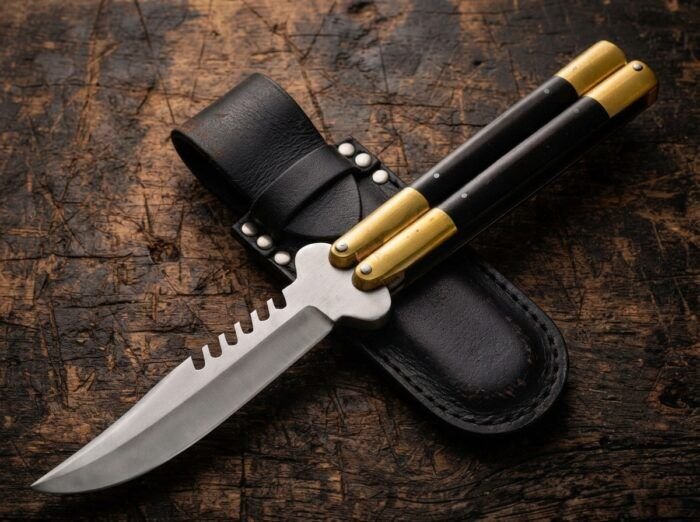
Fitted leather, included |
What ships with this Damascus balisong
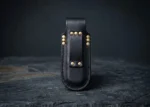
Every knife leaves here sharpened, tuned and flipped by somebody before it goes in the box, with a leather sheath cut to this frame and a gift box around the lot.
Pick Trainer above Add to Cart and you get this same knife unsharpened: same size, same weight, same price. It is the sensible way to learn anything new.
Optional engraving runs $19 for initials or short text and $29 for a custom logo, selected on this page before checkout. United States shipping is free. Elsewhere is a flat $49.
The rain drop pattern on the Lakas is one of several ways a Damascus billet can be worked, and our guide on how to spot fake Damascus explains the tells that separate real forge welded steel from a printed surface. It sits in our Damascus balisong collection. For another patterned steel piece built around black horn instead of stag, the Hatinggabi carries Damascus into the bolsters as well as the blade.



Paolo Rivera –
Was nervous ordering a balisong online but so glad I did. Fit and finish is way above what I expected at this price. Pivots feel dialed in with zero blade play. Beyond happy with how this turned out.
Laura Rivera –
Absolutely genuinely surprised by this balisong. Bushings feel buttery smooth after just a bit of use. Balisong Butterfly’s attention to detail is honestly unmatched. Would send this as a gift again in a heartbeat.
Derek Wood –
This looks even better in person than in the listing photos. Cool that these are made by actual Filipino craftsmen right here in the USA. Weight is perfectly balanced for flipping. Shipping was fast and everything arrived well packaged.
Samantha Evans –
This exceeded what I pictured in my head before ordering. This flips cleaner than knives twice the price. Already added a few more items from this store to my cart.