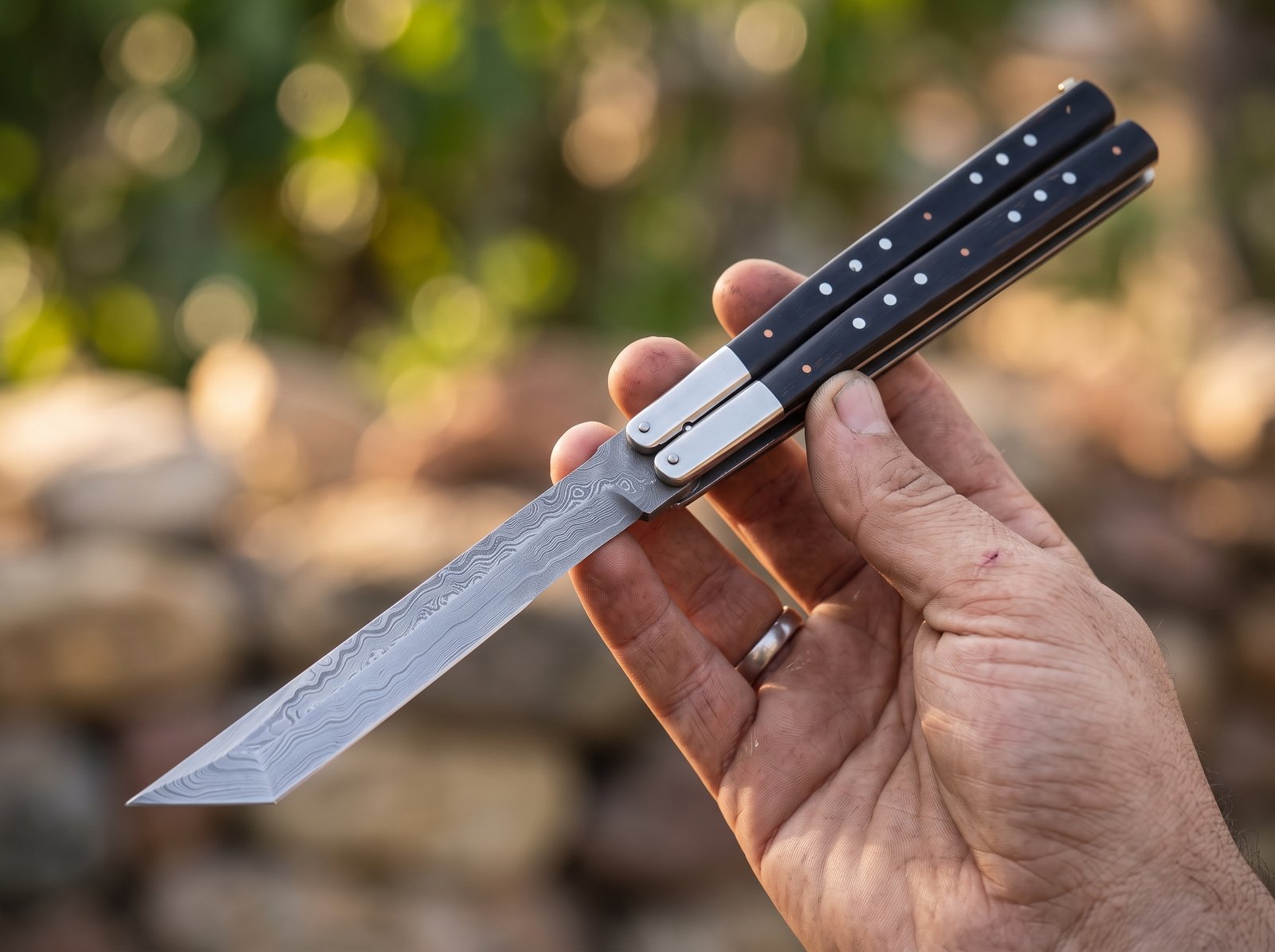
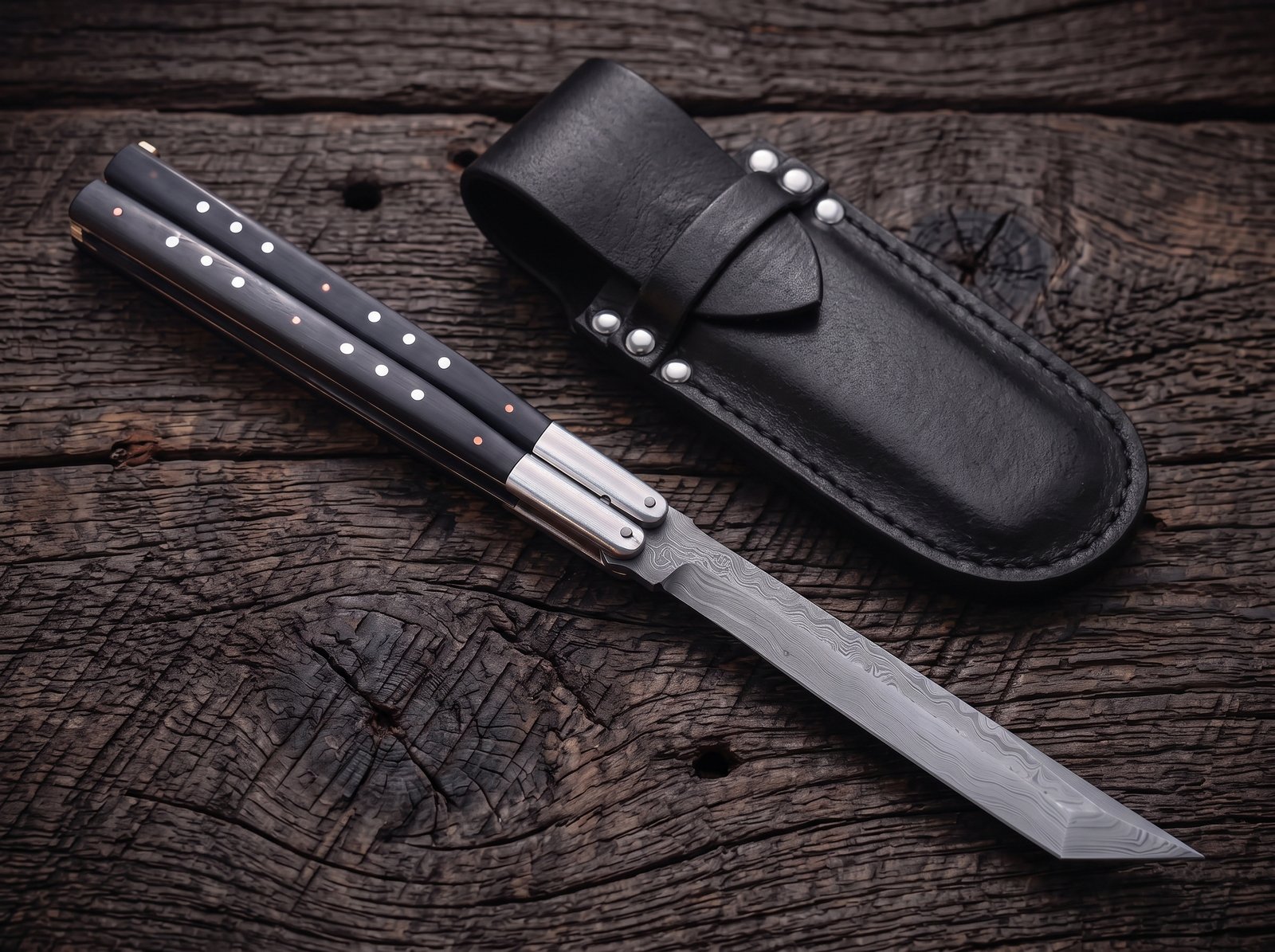
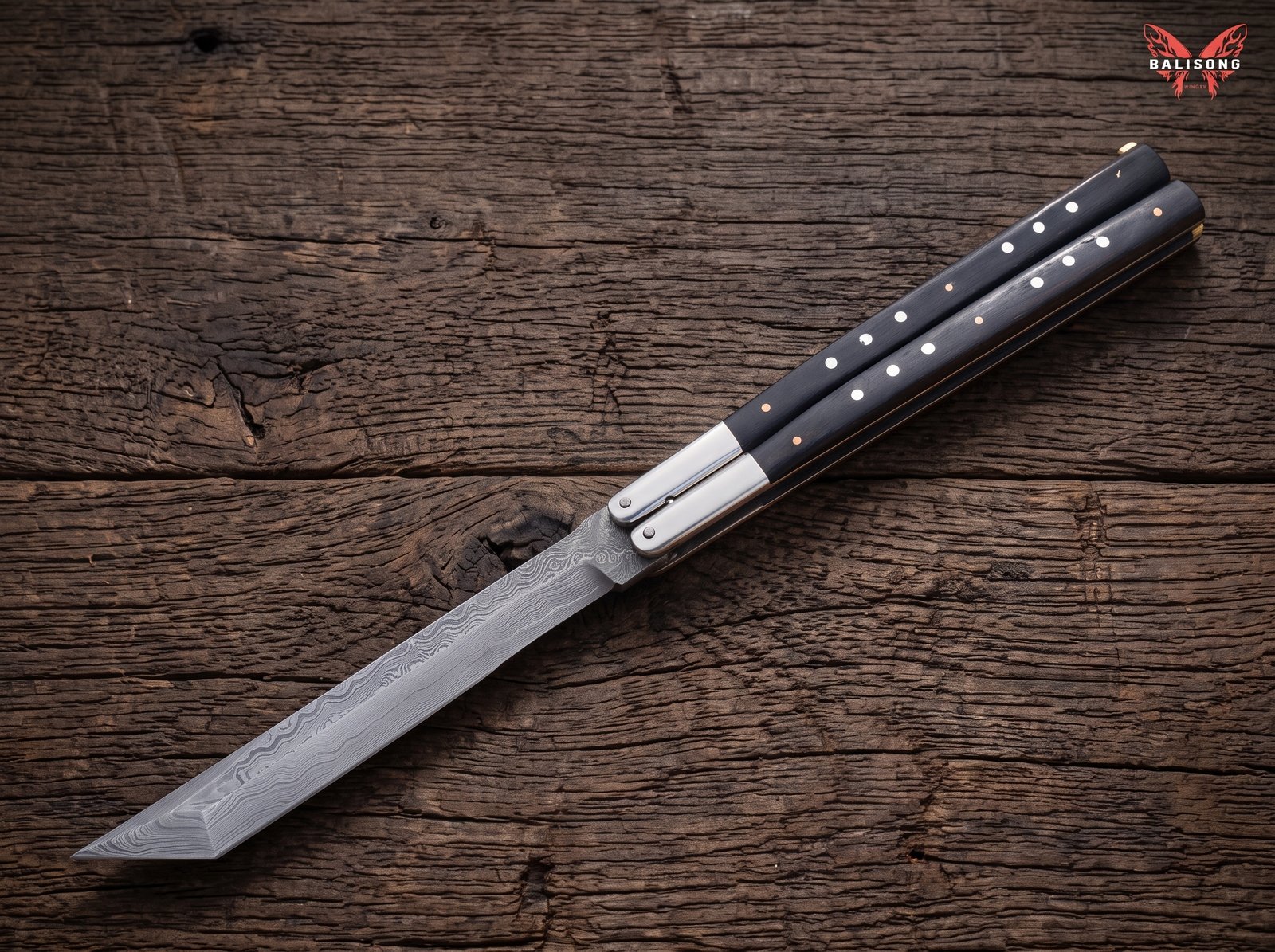
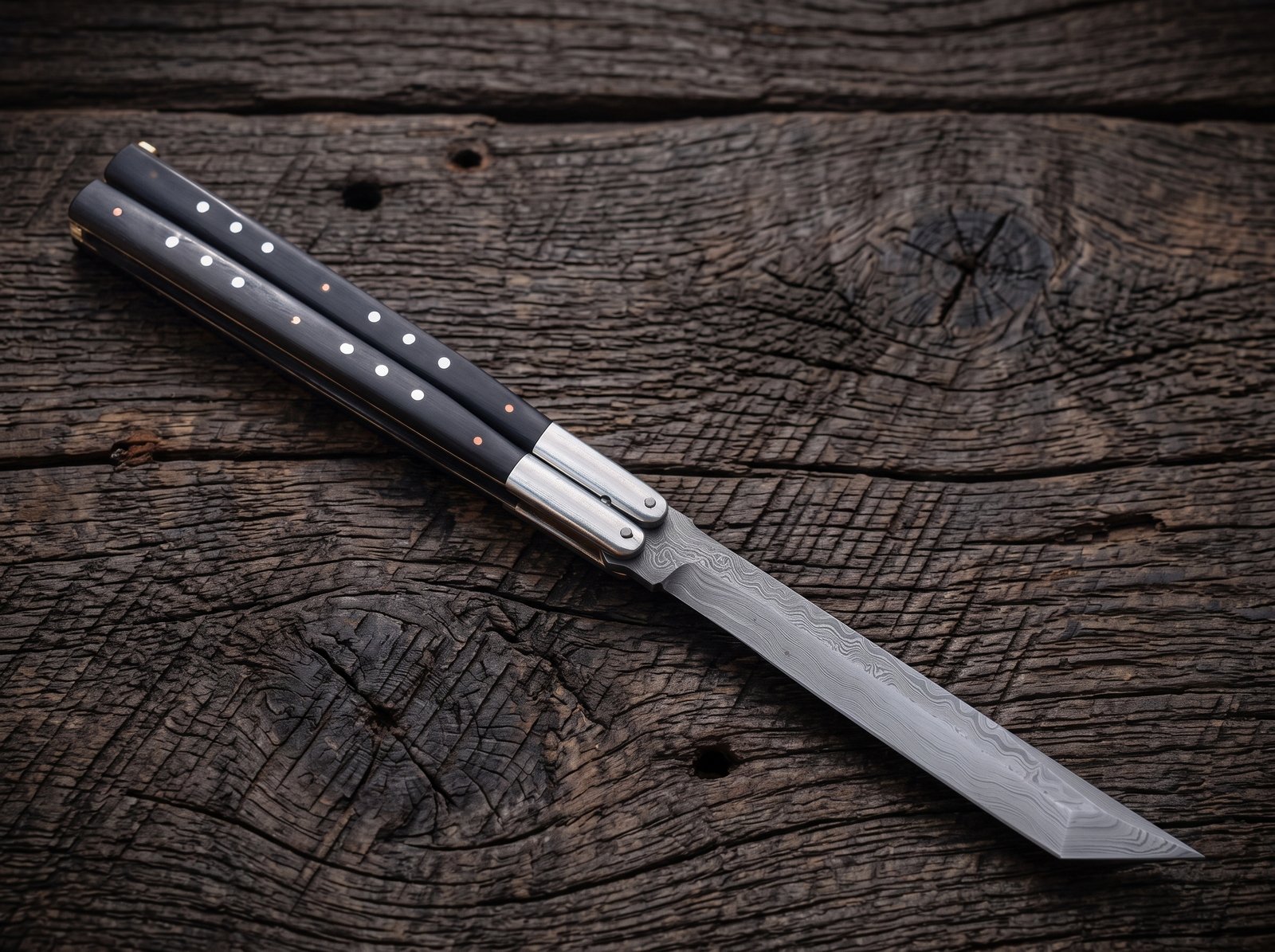
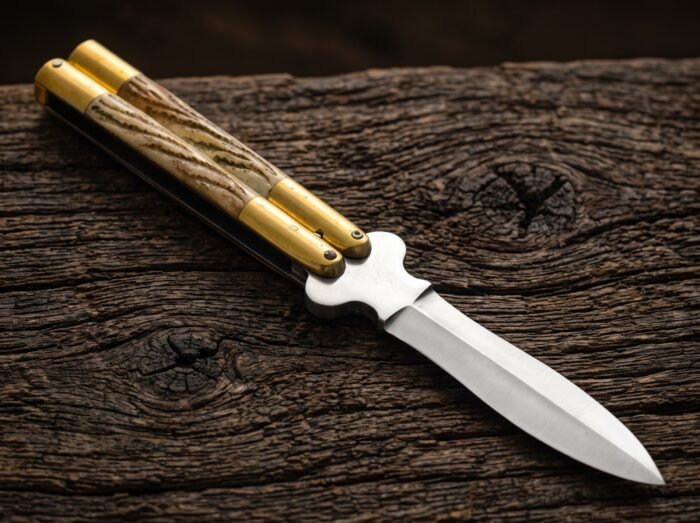
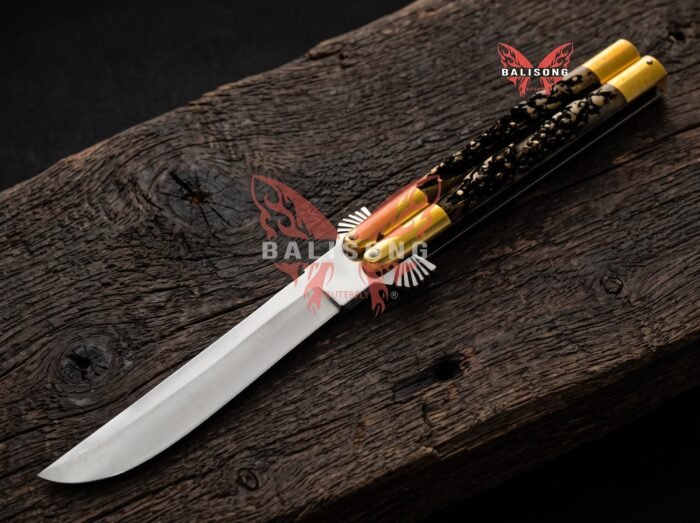
The BF-124 is a Philippine Visayan balisong with a Damascus blade: 29cm open, a 14cm blade, 220g, brass with black micarta. No two of these are alike, which everybody says. What nobody explains is how to actually look at a pattern-welded blade and tell whether it was done well.
What you are looking at
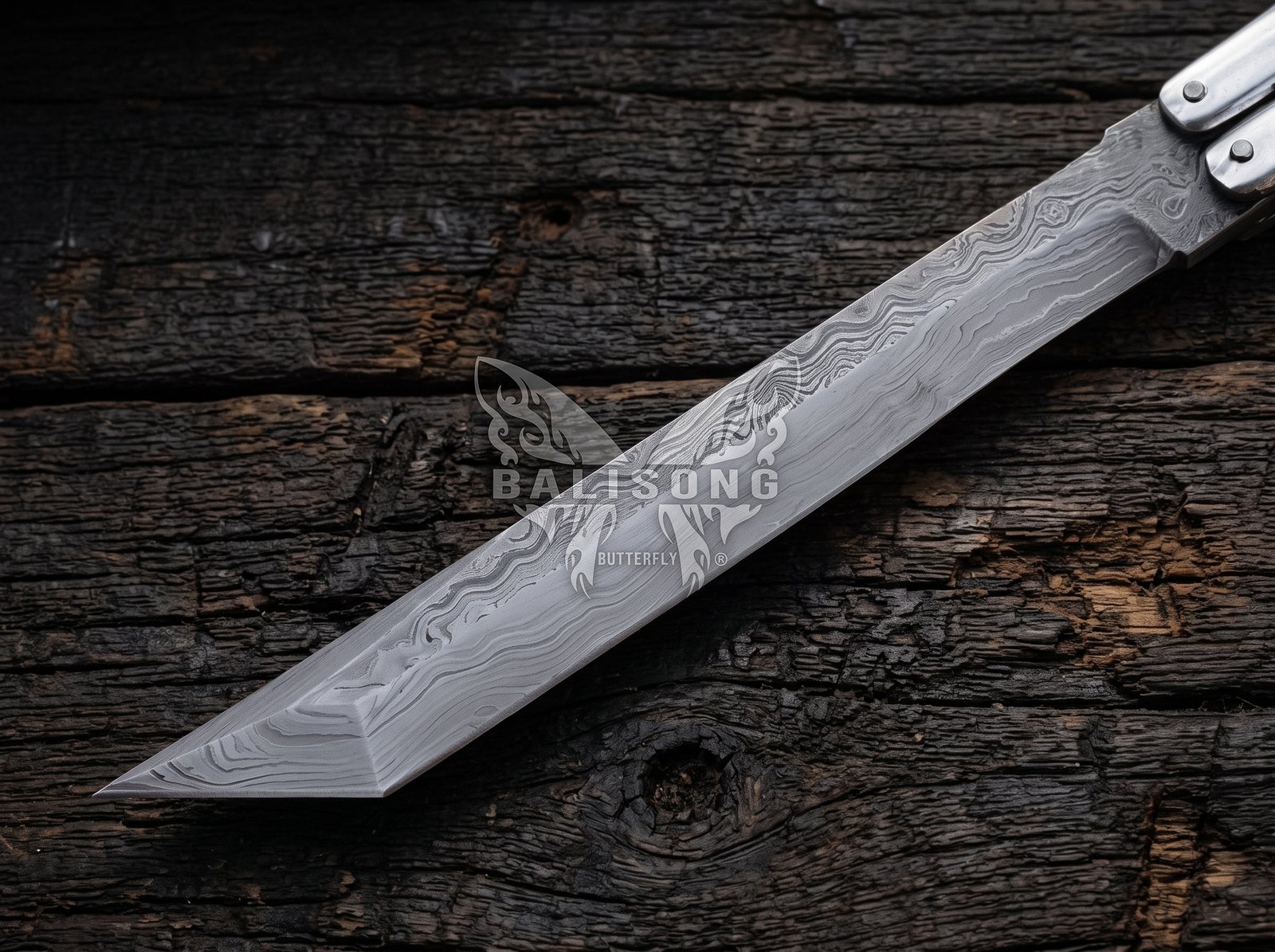
Pattern-welded Damascus is layers of steel forge-welded together, folded, drawn out, and folded again. Each fold doubles the layer count. The pattern you see is the boundary between those layers, made visible by acid etching, because the different steels in the mix resist the acid at different rates and one is left standing slightly proud of the other.
So the pattern is a cross-section of the blade’s own history. Where the smith worked the steel hard, the lines compress. Where the billet was drawn out, they stretch. It is a record of what happened on the anvil.
How to read one
| What to look for |
Good sign |
Bad sign |
| Line continuity |
Lines run unbroken across the blade |
Lines stop dead, or jump sideways |
| Layer spacing |
Consistent through the length |
Bunched in one area, sparse elsewhere |
| The edge itself |
Pattern runs right to the bevel |
Pattern vanishes near the edge |
| Dark spots or seams |
None |
Round dark voids. Cold shuts, a failed weld |
| Symmetry across the blade |
Broadly mirrored |
One side completely different from the other |
| Depth of the pattern |
You can feel a faint texture |
Perfectly smooth. Possibly printed rather than forged |
The fake Damascus problem, briefly
There is a great deal of chemically etched and laser printed “Damascus” on the market, and it is easy to spot once you know. Printed patterns are perfectly smooth, perfectly regular, and identical on every knife in a listing. Real pattern welding has a faint texture you can feel with a fingernail, and it is never twice the same.
The reliable tell is the listing itself. Anything under about forty dollars claiming Damascus is not Damascus. Forge welding is slow, skilled work and the material cost is the smallest part of it.
What the pattern does not tell you
How well it cuts. That comes from what the constituent steels are and how they were heat treated, and the pattern is silent on both. A beautifully patterned blade with a bad heat treat is a poor knife with a good photograph.
Ours is layers of high carbon steel, heat treated to 58-60 HRC. It takes a very keen edge and comes back on an ordinary stone in minutes. It will also spot if you leave it wet, because there is no chromium in the mix, so wipe the blade dry when you put it down.
The Visayan frame and micarta balisong handle
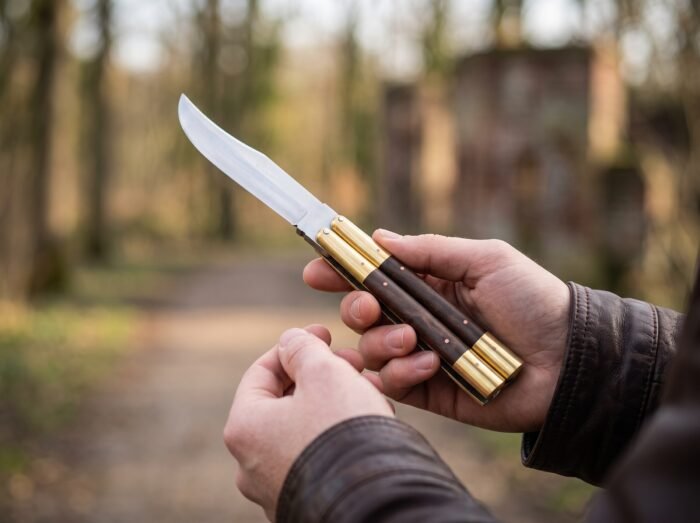
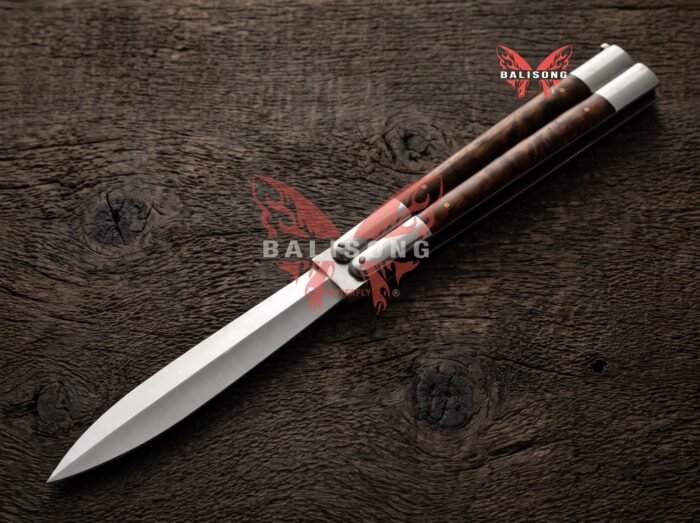
Twenty-nine centimetres open with a 14cm blade, the traditional full size. The rotation is slow and deliberate at 220g, which gives you time to correct a mistake and asks a firm grip in exchange.
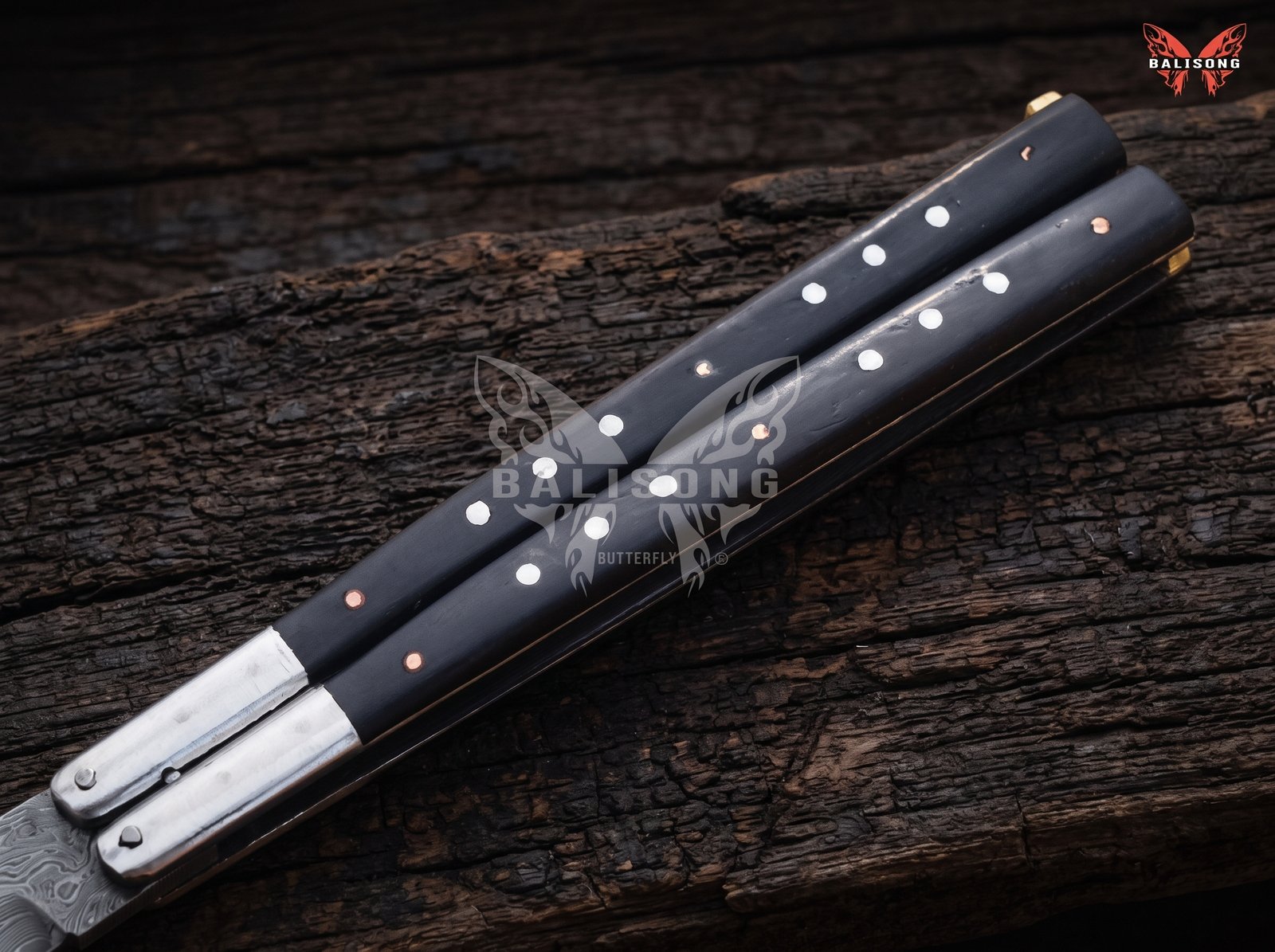
The handle is brass with black micarta: cloth or paper in cured resin, entirely stable, immune to moisture, and grippier than polished horn in a warm hand. It is the least traditional material on a very traditional knife, and it is there because it needs nothing from you while the blade does.
Living with a Damascus balisong blade
- Wipe it dry every time. This is high carbon steel in layers and it behaves like high carbon steel.
- A light oil once a month.
- Do not store it in the leather sheath.
- A patina will form and it will slightly soften the contrast of the pattern. That is normal and reversible.
Ordering this Damascus tanto balisong
Unsharpened trainer, chosen above Add to Cart. A fair number of people buy Damascus blunt, since the appeal here is largely what it looks like.
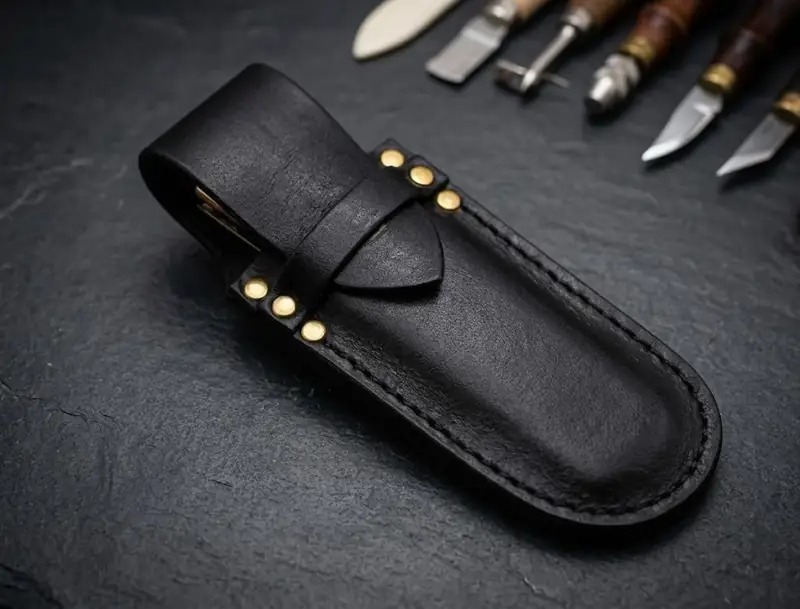
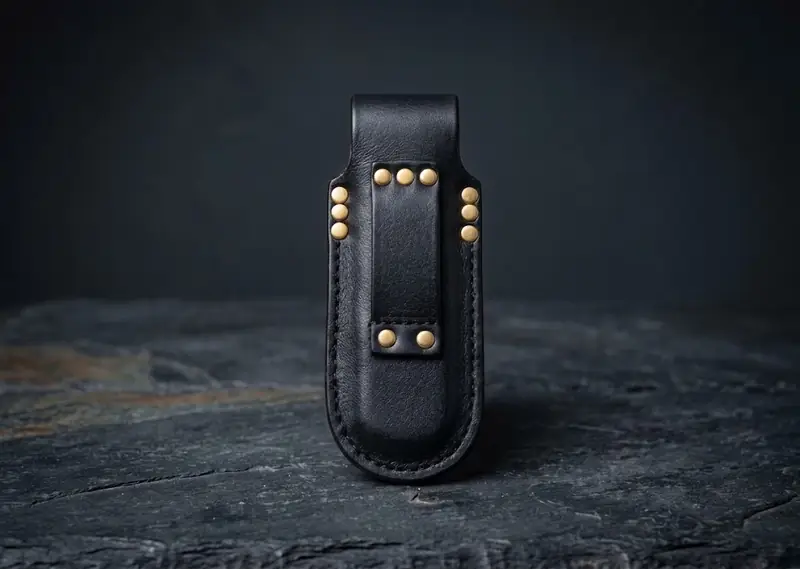
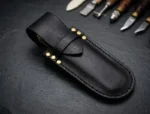
A fitted leather sheath comes with it, cut for the 29cm frame. US shipping is free, flat $49 to anywhere else for the entire order.
Telling a forged Damascus pattern from a printed one is a genuinely useful skill, and our guide to spotting fake Damascus walks through exactly what to look for. The Dagat sits in the Damascus steel knife category. It shares its 29cm frame and micarta handle with the Ilog, another Visayan build from the same series.




Emily Santos –
Perfect knife. Perfect action. No complaints. Bushings feel buttery smooth after just a bit of use. This is my new favorite in the collection.
Tyler Murphy –
Bought this on a whim and it turned out to be one of my favorite pickups in a long time.
Patricia Ross –
Got this for a birthday gift and now I want one for myself too. Handles have a great grip even during fast flips. Zero complaints from me on this purchase.