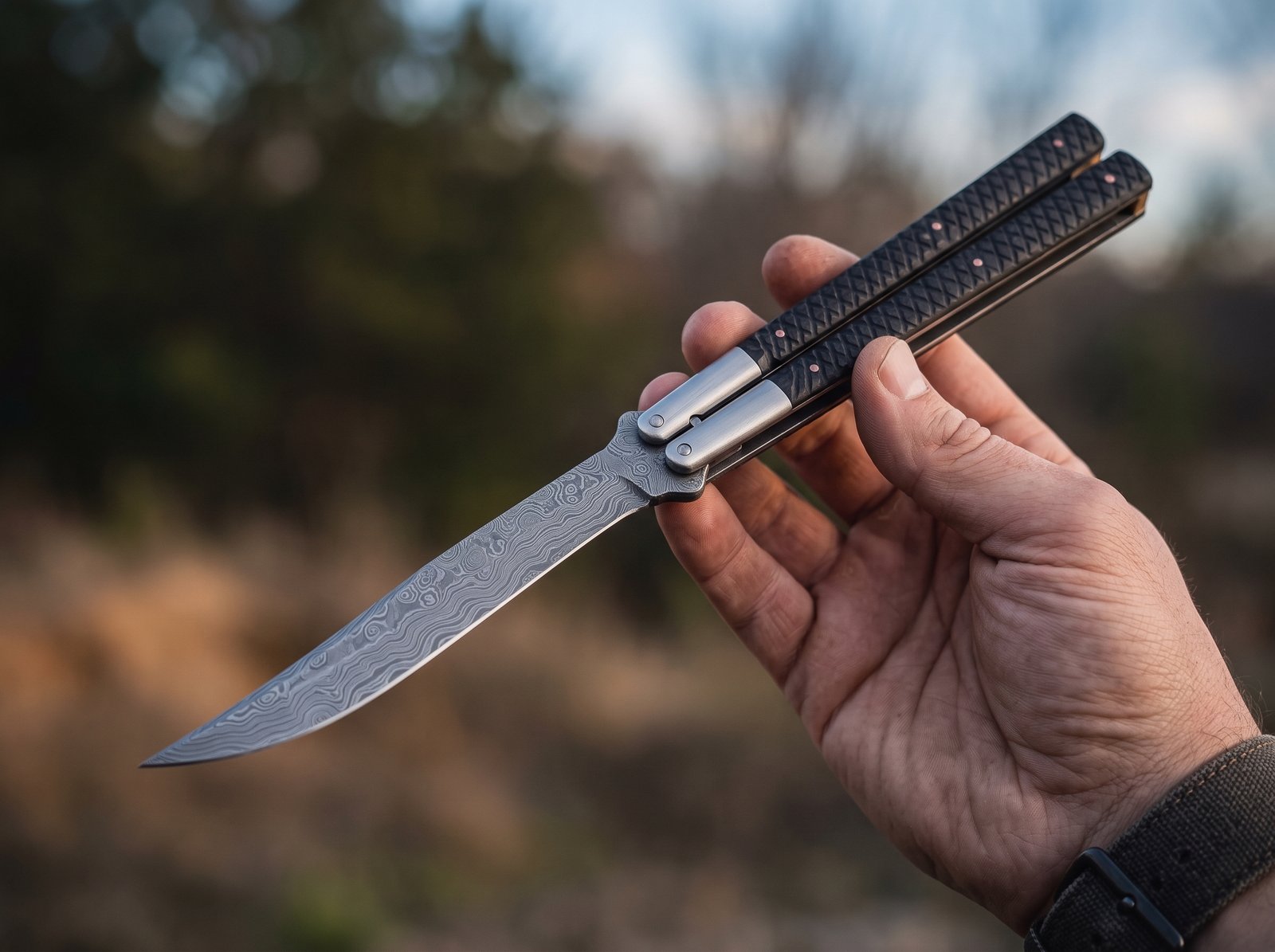
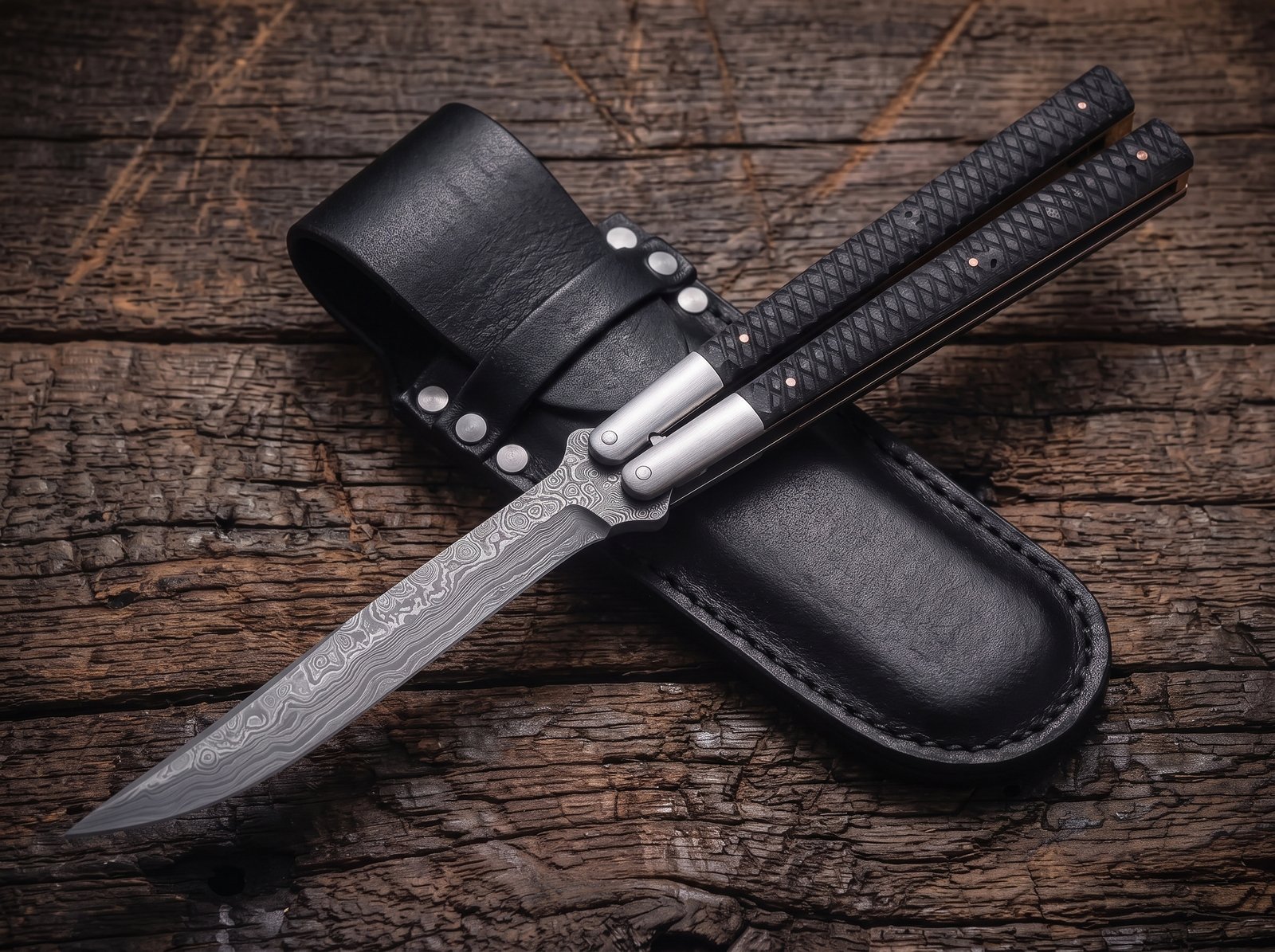
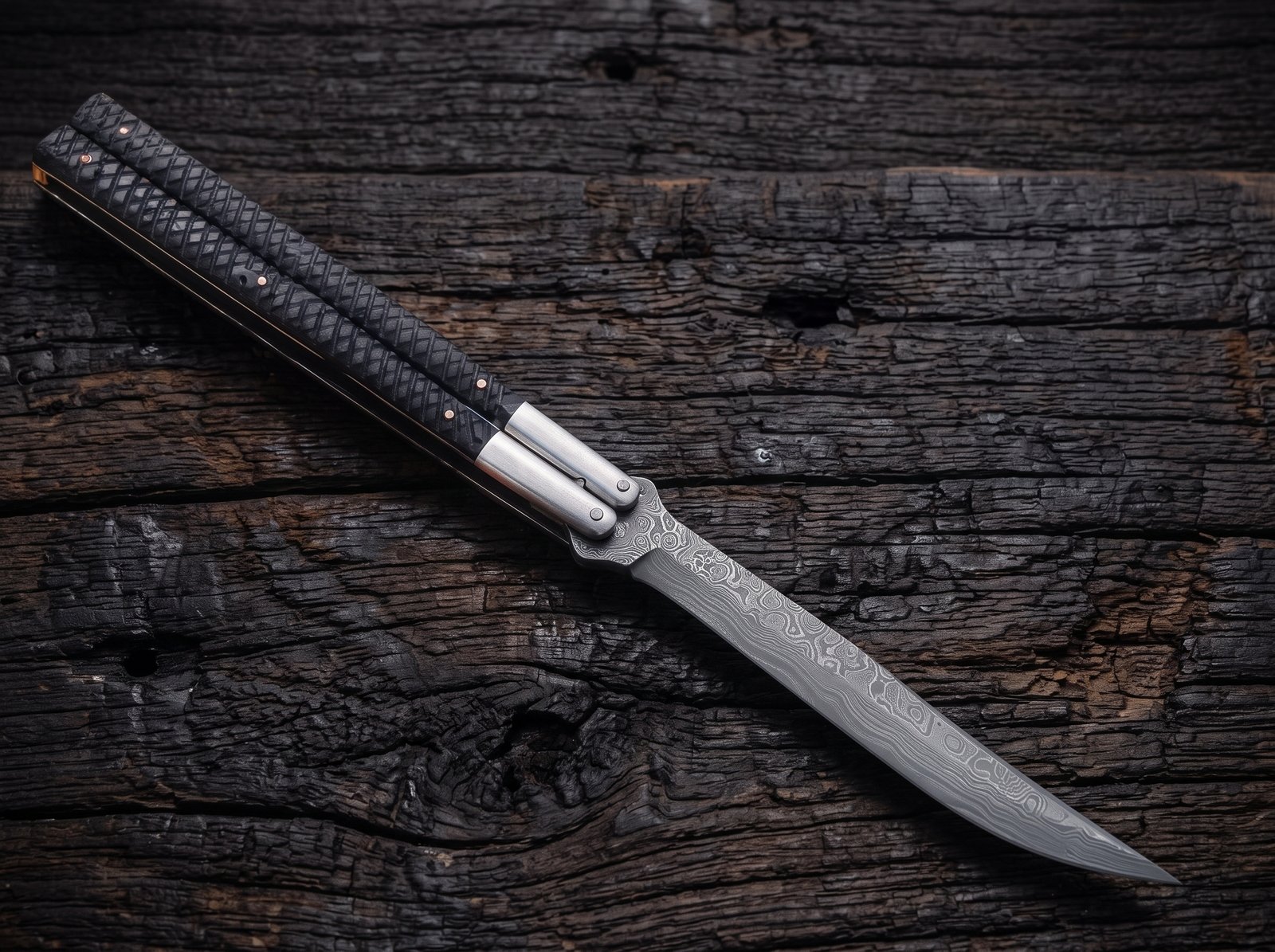
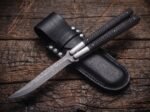
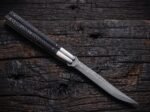
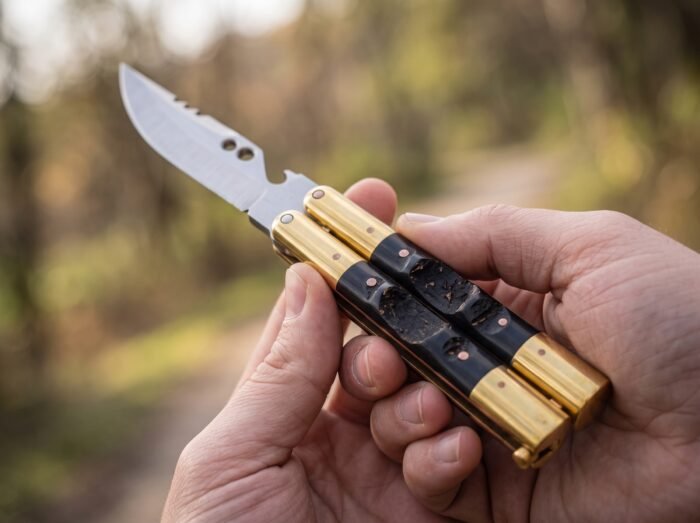
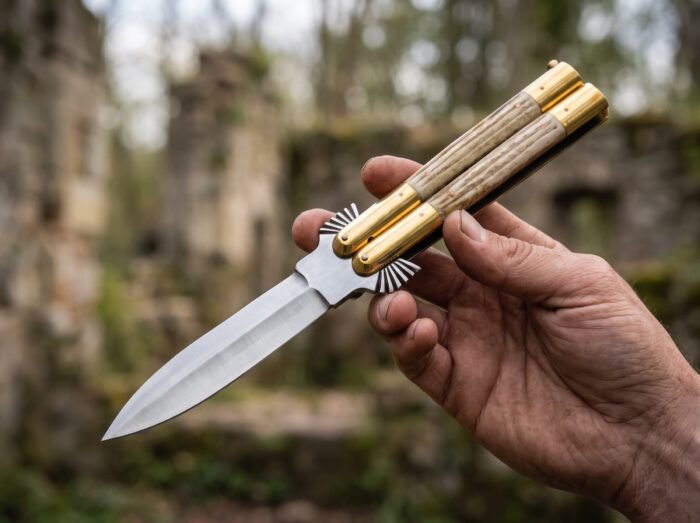
The BF-125 is a Philippine Visayan balisong with a Damascus blade: 29cm open, a 14cm blade, 220g, brass with black micarta. The pattern on this blade is not a finish and it is not permanent. It is an etch, and knowing how that works is the difference between a blade that looks good in ten years and one that does not.
The pattern is acid, not polish
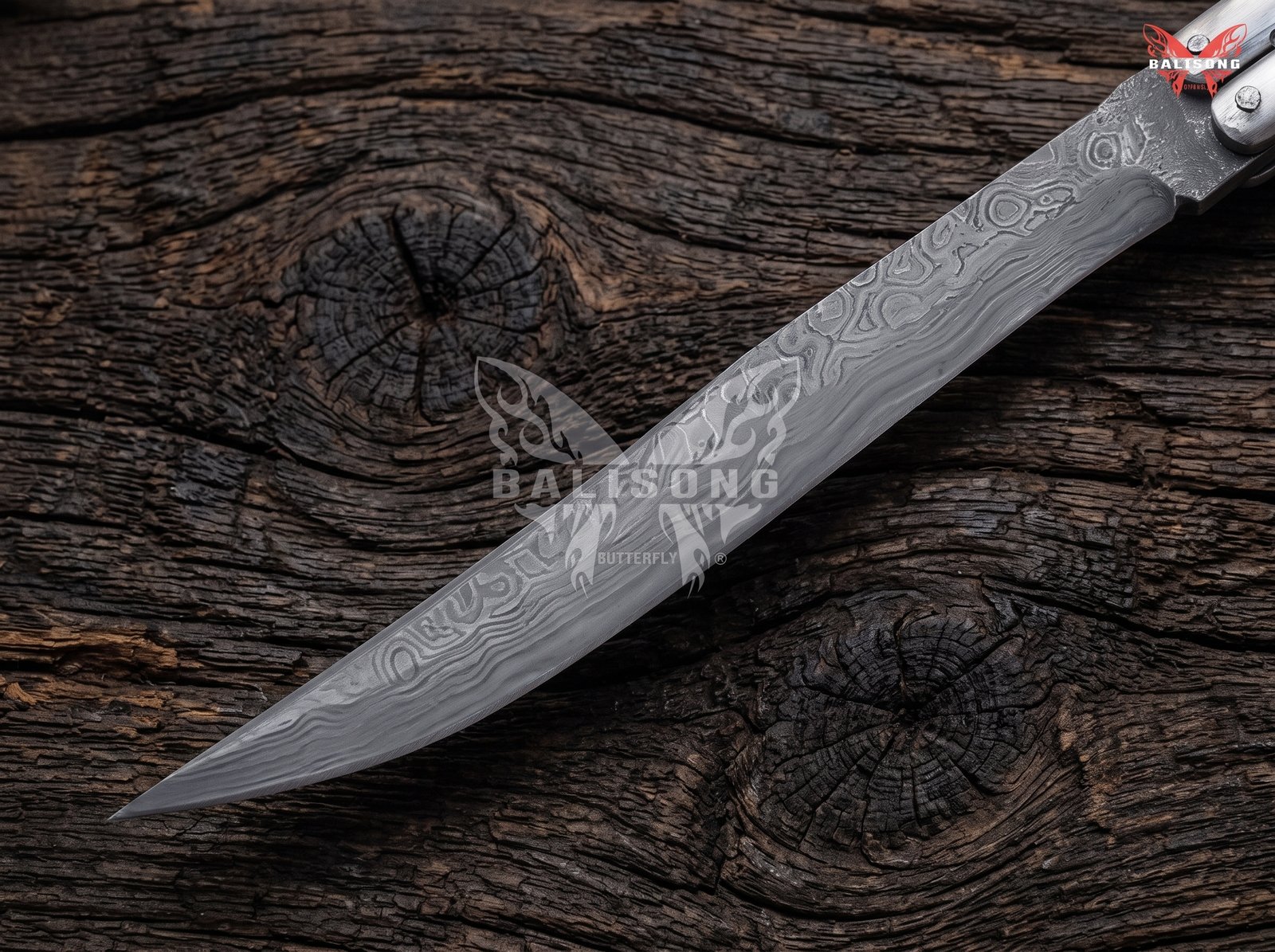
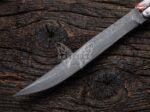
Pattern-welded steel is layers of different steels forge-welded together. Polished flat, the surface looks like plain steel and you can barely see anything at all. The pattern only appears when the blade is etched, because the steels in the mix resist acid at different rates and one is left standing very slightly proud of the other.
What you are actually seeing is a relief map a few microns deep, with the recessed steel darkened by oxide. Run a fingernail across it and you can feel it. That texture is the surest sign a Damascus blade is real rather than printed.
What makes it fade
| Cause |
Effect |
Reversible? |
| Normal handling over years |
Contrast softens gradually |
Yes |
| Polishing the blade |
Contrast disappears fast |
Yes, but do not do it |
| Aggressive metal polish or abrasive |
Pattern gone entirely |
Yes, with a re-etch |
| A heavy patina forming over it |
Pattern obscured under grey |
Yes |
| Rust pitting |
Steel is gone. So is the pattern there |
No |
| Sharpening |
Pattern retreats from the bevel. Entirely normal |
Not needed. This is just what a bevel is |
Only one row on that list is permanent, and it is the one caused by neglect rather than by use.
Re-etching, which is easier than it sounds
If the contrast has gone flat after some years, the pattern is still there in the steel and can be brought back. It is a straightforward job for anyone comfortable with a bit of care, and any competent knifemaker will do it for a small fee.
- Degrease the blade completely. Any fingerprint will etch as a fingerprint.
- Mask off the handle and everything that is not blade.
- Ferric chloride, diluted, is the usual etchant. Short immersion, checked frequently, rather than one long soak.
- Neutralise thoroughly, rinse, dry completely.
- Oil it at once, because you have just exposed fresh steel and this blade has no chromium in it.
If any of that sounds like a project you would rather not take on, do not. Send it to somebody who does it regularly. Etching is unforgiving of half measures and a rushed job looks worse than a faded pattern.
What we would actually recommend
Leave it. A Damascus blade that has been carried and used for five years has a softened pattern and a light patina, and it looks like a knife somebody owned rather than a knife somebody photographed. Most owners who re-etch do it once, conclude they preferred it before, and never do it again.
The steel under the Damascus balisong pattern
Layers of high carbon steel, heat treated to 58-60 HRC. It takes a very keen edge and comes back on an ordinary stone in minutes with no diamond plate involved. It also rusts if left wet, because there is no chromium anywhere in this blade. Wipe it dry when you put it down and oil it lightly once a month. That is the deal, and it is the same deal every carbon steel blade has offered for two thousand years.
The frame and the micarta balisong handle
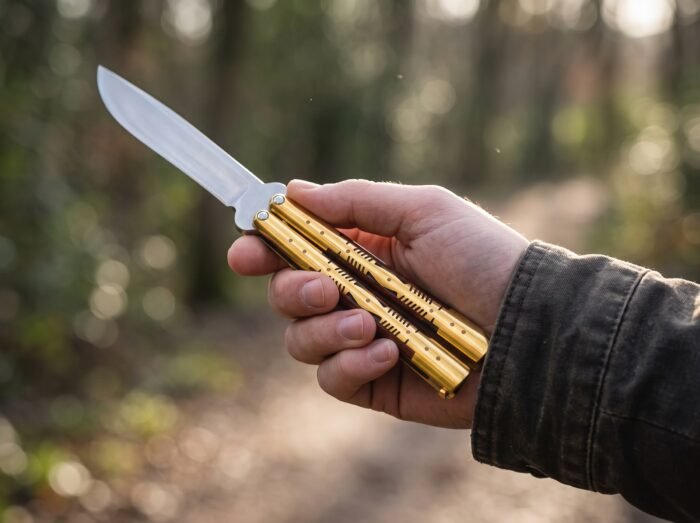
Twenty-nine centimetres open, the traditional Visayan and Batangas full size, at 220g. The rotation is slow and deliberate, which is forgiving while you learn and slower when you want to snap between moves.
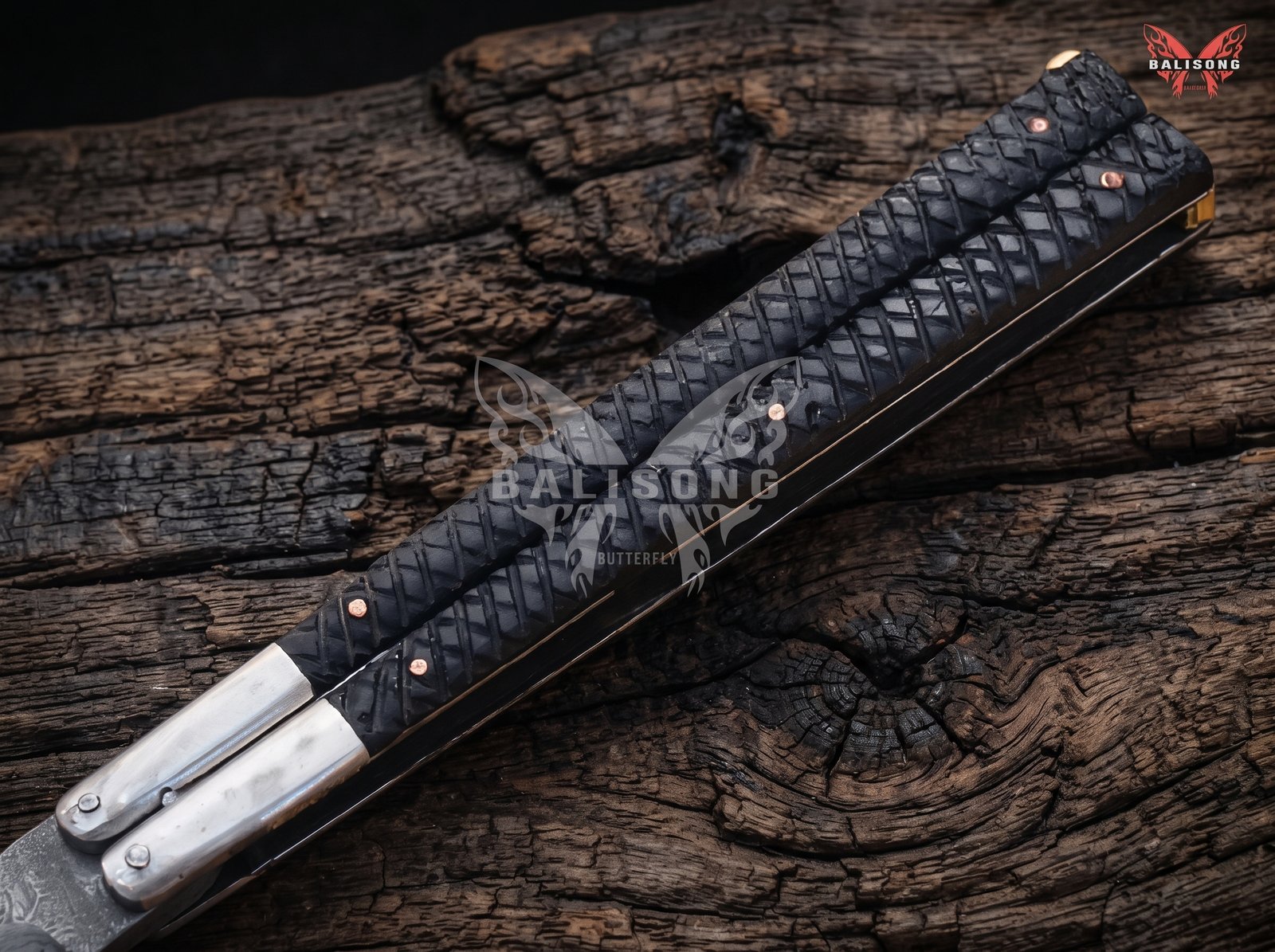
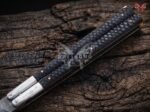
Black micarta on brass: cloth or paper in cured resin, dimensionally stable, immune to damp, and grippier than polished horn in a warm hand. On a knife with a blade that needs attention, a handle that needs none is a sensible pairing even if it is not a traditional one.
Ordering this Damascus balisong
Unsharpened trainer, chosen above Add to Cart. Everything on this page applies to it, since a blunt Damascus blade etches, patinas and rusts exactly like a sharp one.
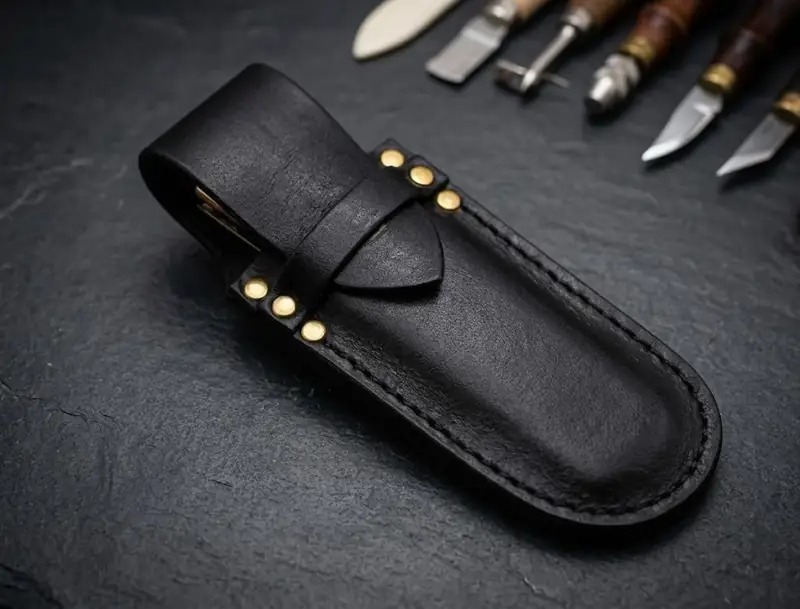
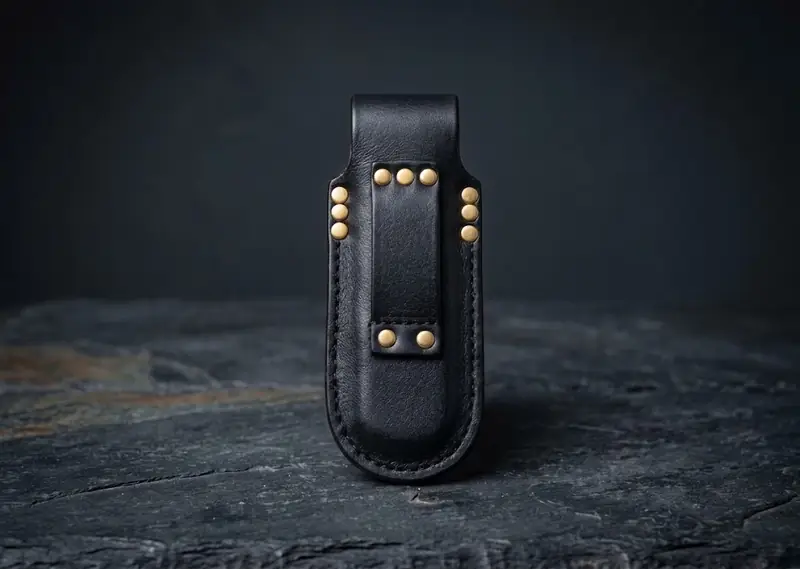
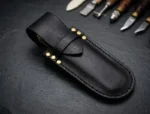
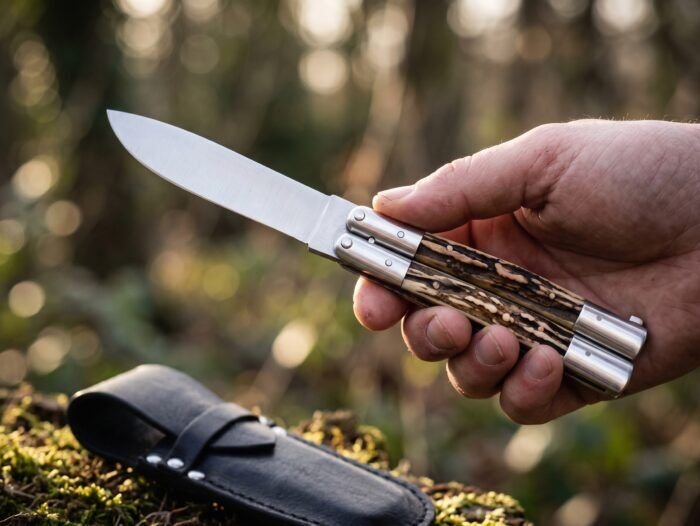
A fitted leather sheath is in the box, cut for the 29cm frame. Free US shipping, flat $49 to anywhere else for the whole order.
A faded Damascus pattern can be brought back with a careful re-etch, and the whole process, including when to leave it alone, is set out in our fake Damascus guide. The Ilog is listed under Balisong butterfly Damascus steel knife. Its black micarta handle and 29cm frame are shared with the Batis, another knife from the same Visayan run.


Reviews
There are no reviews yet.