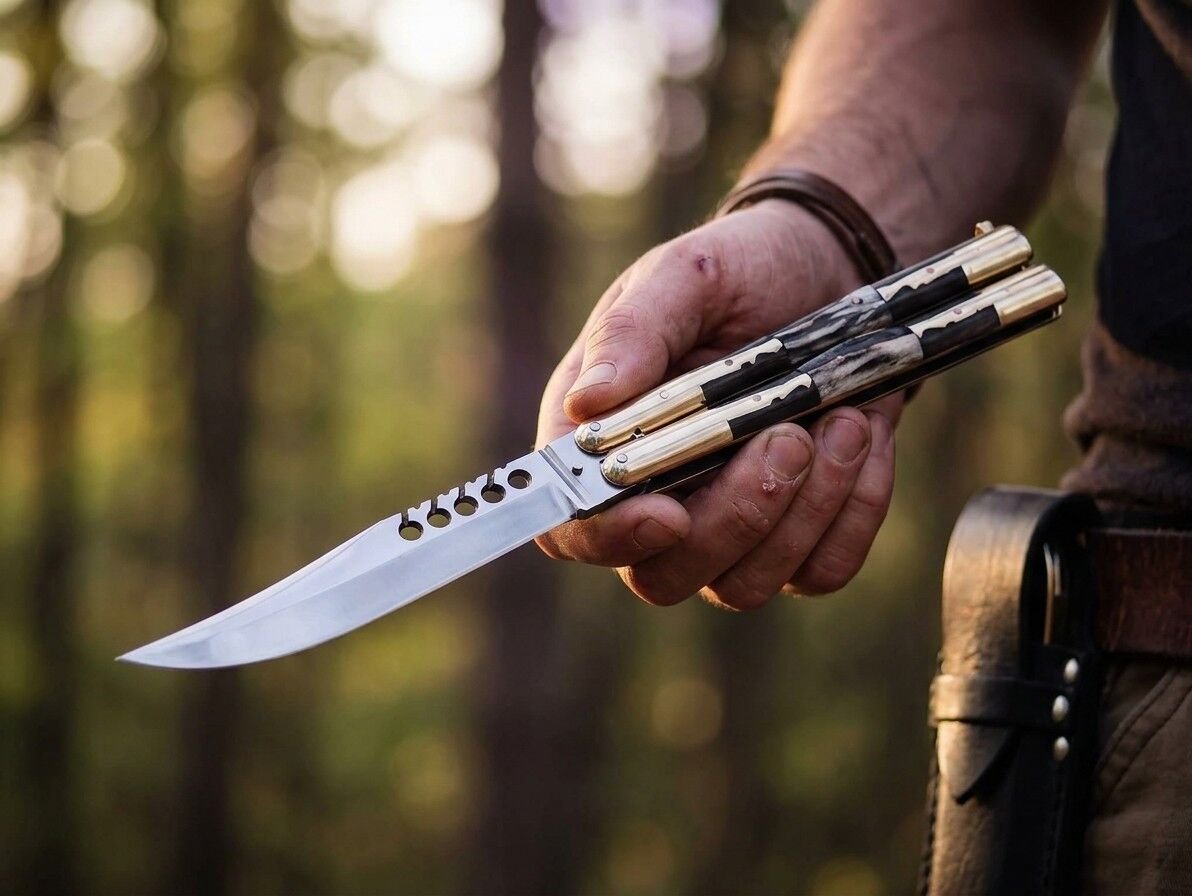
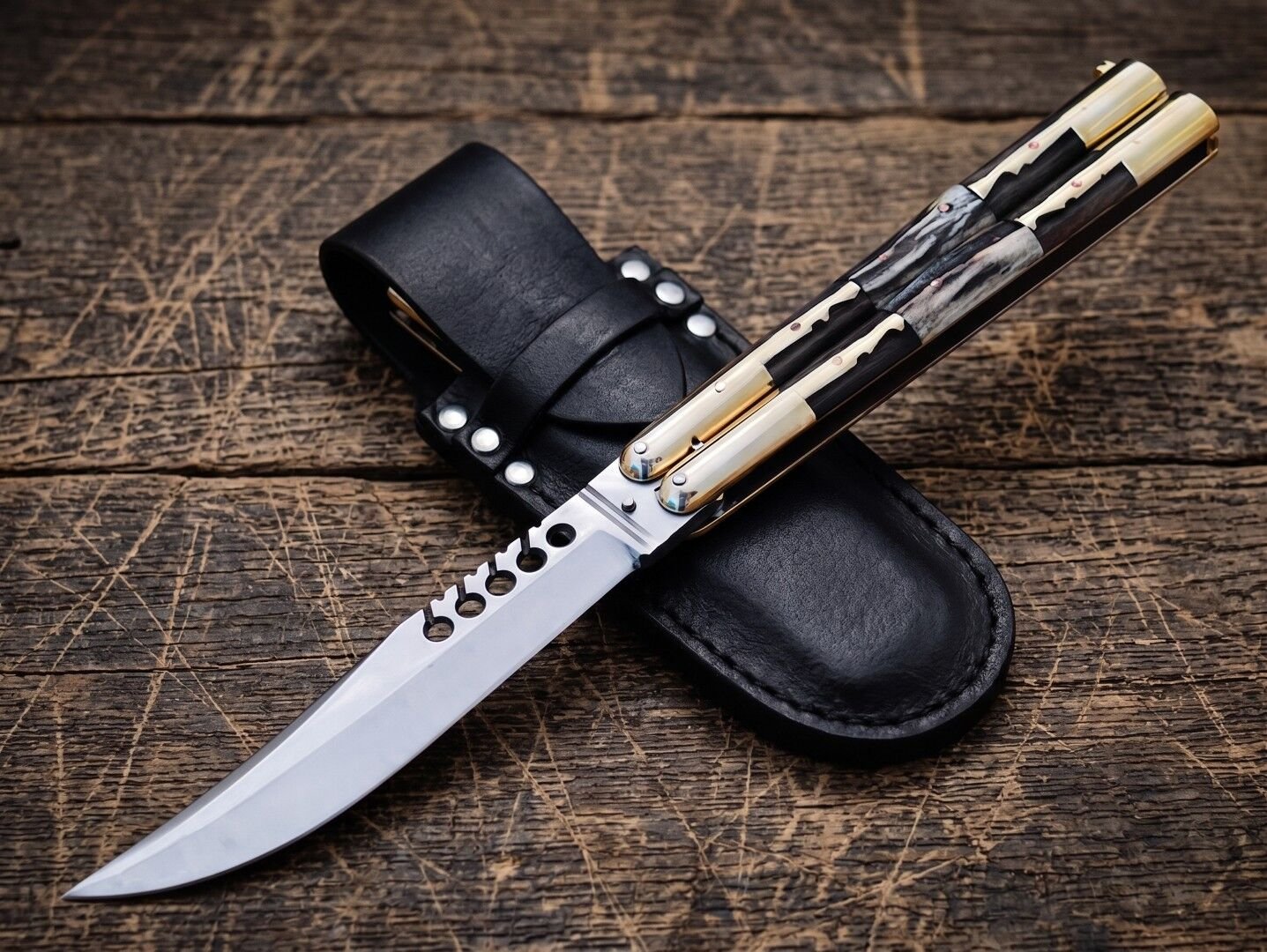
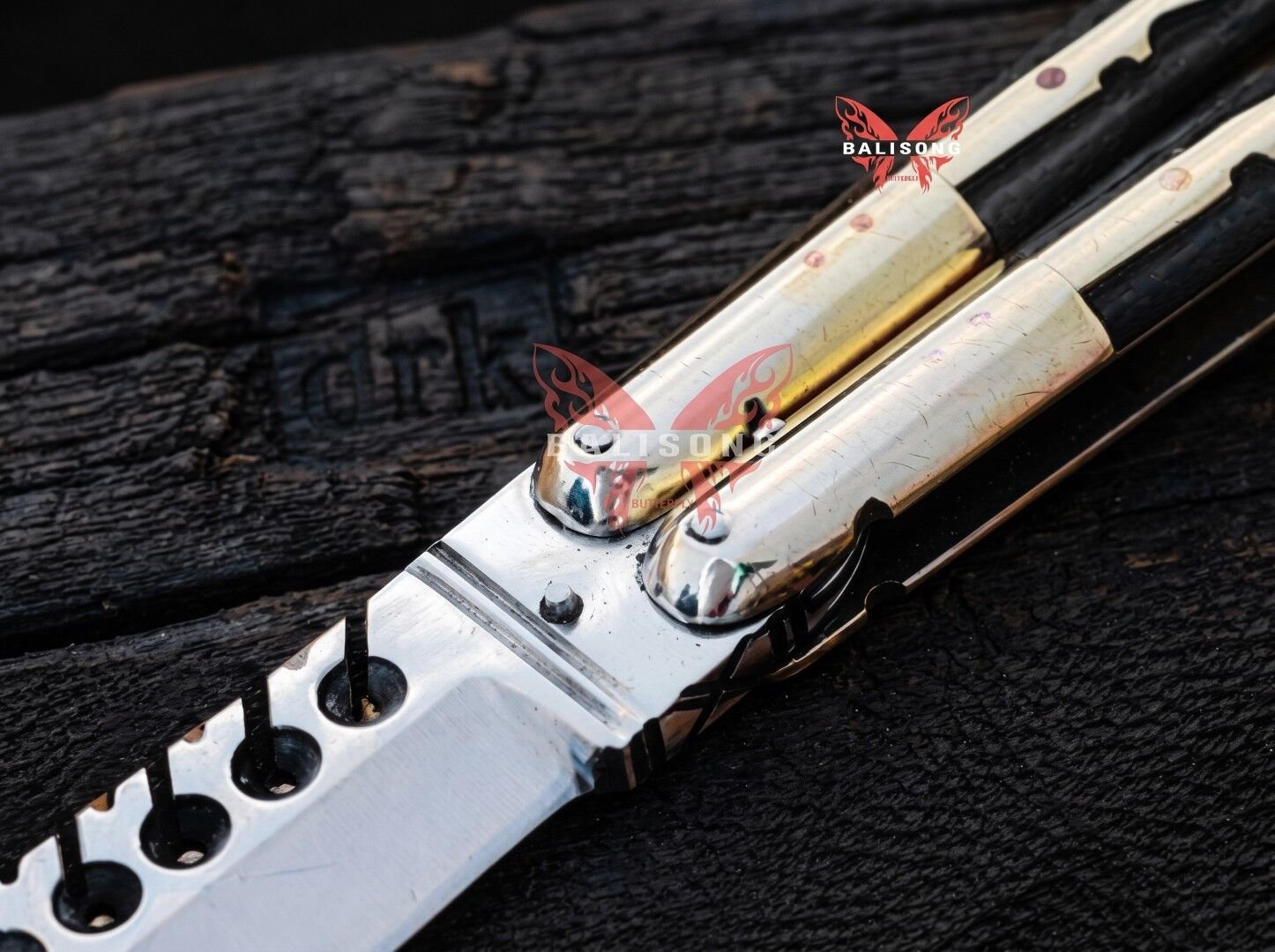
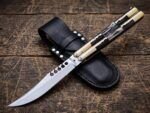
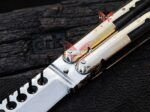
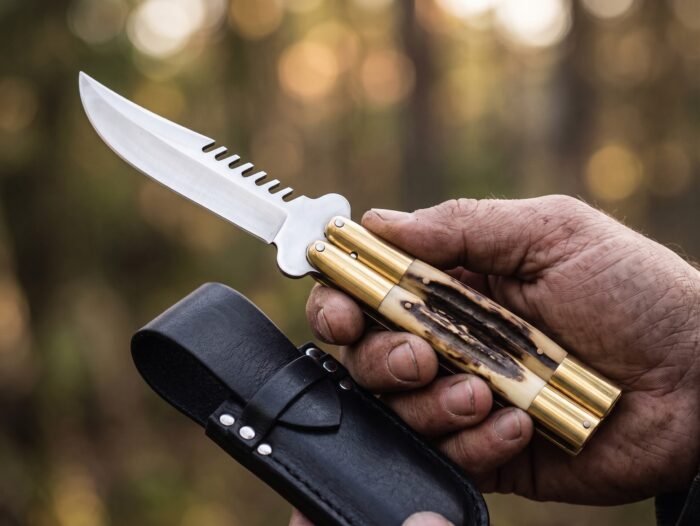
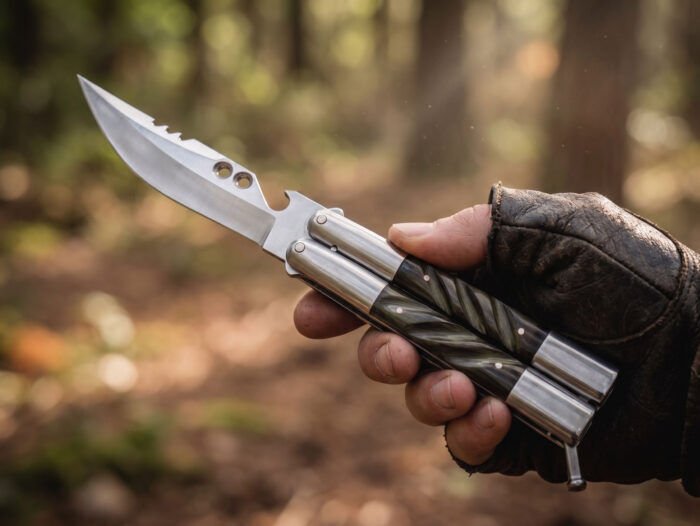
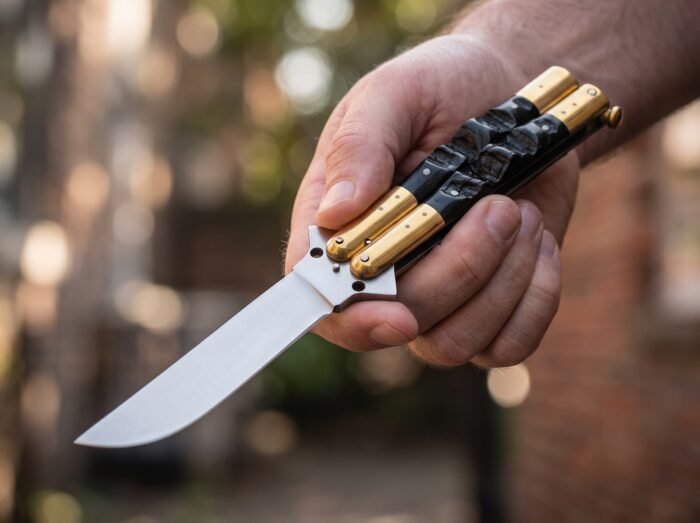
The BF-80 Mongoose is a full-size 29cm Filipino balisong with a 14cm D2 tool steel blade, brass handles inlaid with carabao horn and deer horn, weighing 220 grams. It is the knife in this range built from the material the whole category is named after, and it is for someone who wants the traditional dimension in a traditional material. Trainer version at the same price above Add to Cart.
Carabao horn, and where the word balisong comes from
The usual account traces balisong to baling sungay, “folding horn”, because the handles of the original Batangas knives were made from carabao horn. Not styled after horn. Actual horn, from the water buffalo that were already on every farm in Taal.
So a knife with carabao horn handles is not a decorative choice we made to look heritage-adjacent on a product page. It is the material the name refers to. Most of what gets sold as a “traditional” balisong today has handles of G10, aluminium or titanium, which are all fine materials and none of which are the thing the word describes.
This one has the horn. That is the entire reason it exists and it is why it sits at the top of the price range alongside our other 29cm knives.
Carabao horn and deer horn together
Both are used on this handle and they are not the same material doing the same job.
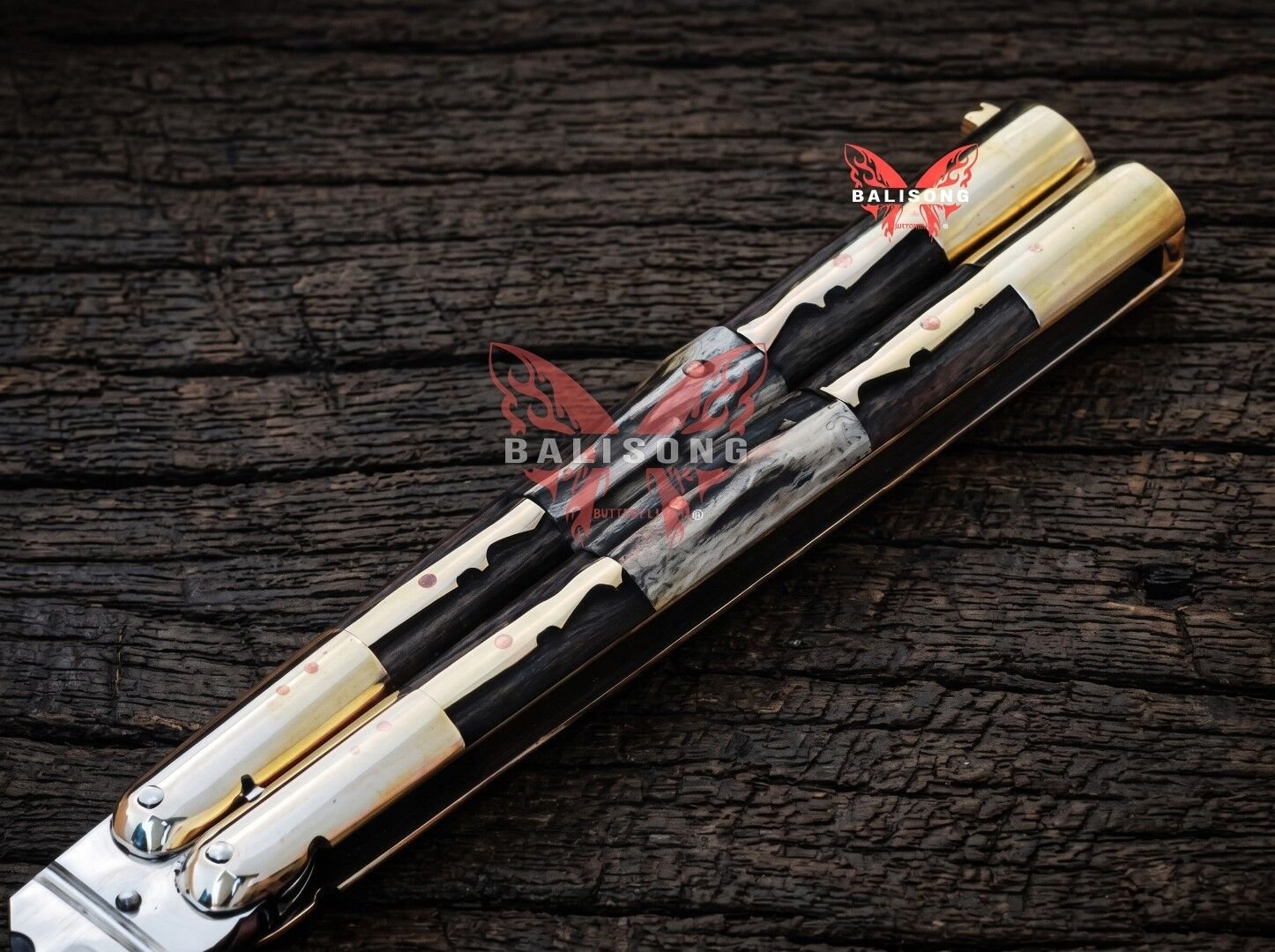
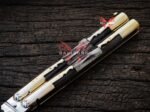
- Carabao horn is dark, sometimes near black, sometimes streaked translucent grey where the horn was thinner. It is keratin, so it is closer to fingernail than to bone: slightly flexible, warm almost immediately in the hand, and it takes a deep polish.
- Deer horn is antler, which is bone rather than keratin, and it behaves accordingly. Paler, harder, more textured, and it holds a grip better when your hands are damp.
- Together you get contrast in colour and in texture across one handle, plus a grip that is neither uniformly slick nor uniformly rough.
- Neither is uniform between knives. These come off animals, not out of a mould.
No two of these are the same, and we cannot fix that
This is the part that generates the most email, so here it is plainly. The photograph on this page is one Mongoose. Yours will not match it exactly.
Horn varies in colour, in figure, in how the light goes through the thin sections, and in how the dark and pale bands fall across a given piece. Two horns off two animals are as different as two pieces of wood off two trees, and we cut both from what we have rather than from what would be convenient.
If receiving something that differs from the photo would annoy you, buy one of our kamagong-handled knives instead. Wood varies too, but far less dramatically. We would rather redirect you now than process a return later.
Living with a carabao horn balisong handle
Horn is not difficult, it just is not inert.
Keep it out of prolonged direct sun and out of a hot car, because heat and long-term dryness are what make horn crack. Do not soak it. Do not leave it sitting in a sealed damp case for months. A wipe with a soft cloth is normally all it wants, and a very light oil once or twice a year on a knife that lives in a dry climate will keep it from drying out.
Handled normally it darkens and deepens over years and looks better for it. Left in a windowsill in July, it will eventually check. That is the deal with every natural material and it has been the deal since the early 1900s when Perfecto de Leon’s neighbours in Barangay Balisong were making these out of whatever the farm supplied.
The 29cm frame and 220 grams
Twenty-nine centimetres open is the traditional veinte y nueve measurement, and this knife is built to it rather than to the shorter 24cm frame that has become the industry default because it is cheaper to produce.
The consequences are real. Longer arc, slower and more deliberate rotation, and a great deal of carried momentum once the 220 grams is moving. Experienced flippers tend to love it. Beginners tend to find it unforgiving, because a long heavy knife gives you less time to rescue a movement that started wrong.
If you are new and you still want this one, buy the trainer. Same knife, same weight, same balance, same price, no edge ground on it.
Why D2 tool steel on this butterfly knife
D2 is a high-carbon, high-chromium tool steel run near 60 HRC. It holds an edge several times longer than the high carbon blades in this series and resists corrosion far better, which matters on a knife with natural handles you would rather not be oiling and drying constantly.
In return, D2 is stubborn to sharpen. Ceramic stones barely touch it. Get a diamond plate, accept that the session will take a while, and enjoy the fact that you will only be doing it once or twice a year.
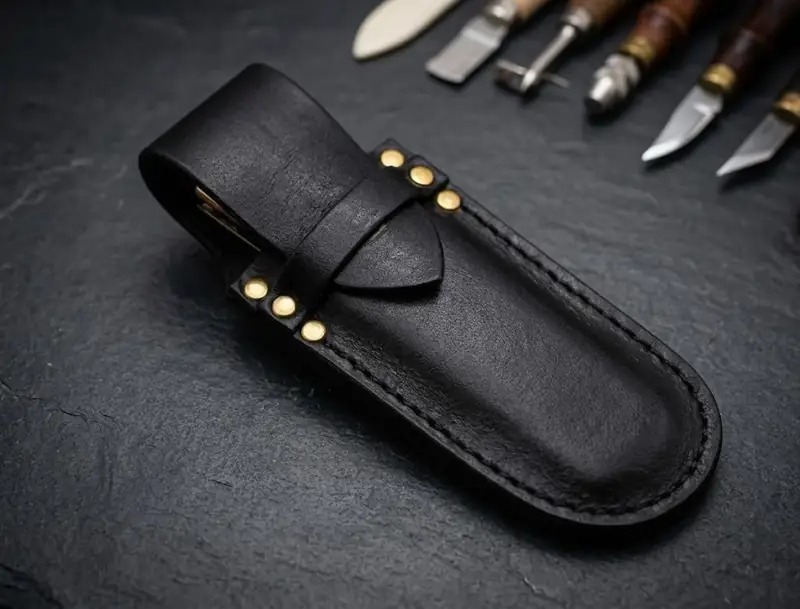
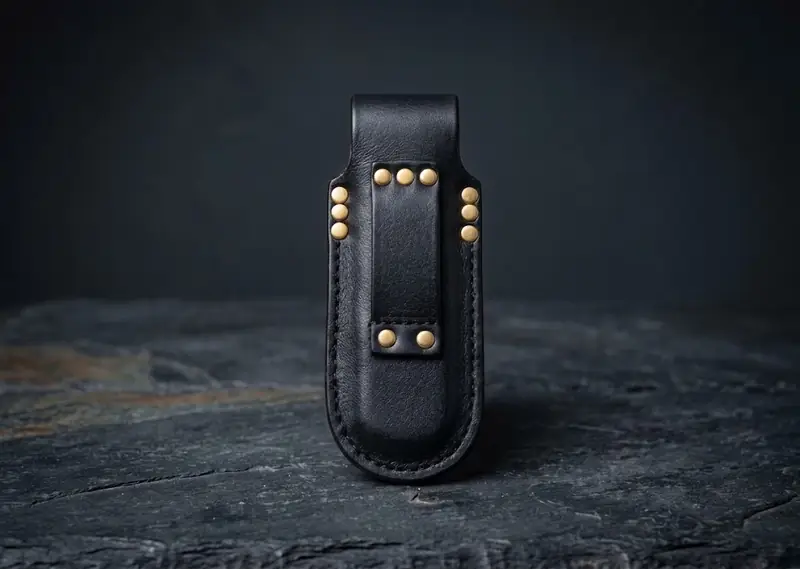
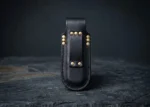
A fitted leather sheath comes with it. Horn and leather are both animal material and both would rather be dry, so keep the knife out of the sheath at home and let the sheath earn its keep only when the knife is travelling.
US shipping is free. International is a flat $49 for the whole order.
the D2 is taken to 58-60 HRC, the same hardness we use across the whole shelf.
This 29cm Mongoose balisong runs D2 tool steel against a brass, carabao and deer horn handle, a combination built for regular flipping rather than a display case. If you want to compare handle materials across the shop before deciding, our guide to balisong handle materials covers what brass, horn and the different woods each bring to grip and upkeep. For more like it, our D2 tool steel collection has the full set, and the Mongrel D2 balisong is a natural next stop if this one is not quite the shape you want.


Katherine Long –
Pretty impressed. Just a couple minor things I’d tweak. Latch works fine, just a bit stiff at first. Still very happy with it and would recommend.
Wayne Reyes –
This blade came razor sharp out of the box. Pivots feel dialed in with zero blade play. So worth it.
Mark Jackson –
This thing flips like a dream. Fit and finish is way above what I expected at this price. Beyond happy with how this turned out.
Brenda Mercado –
Got this as a wedding gift and it exceeded what I expected. Respect to the Filipino craftsmanship behind this, all made and shipped from the USA. No hesitation recommending this to anyone looking.
Omar Thomas –
Couldn’t ask for a better balisong honestly. Pivots feel dialed in with zero blade play. This is going straight into my daily rotation.