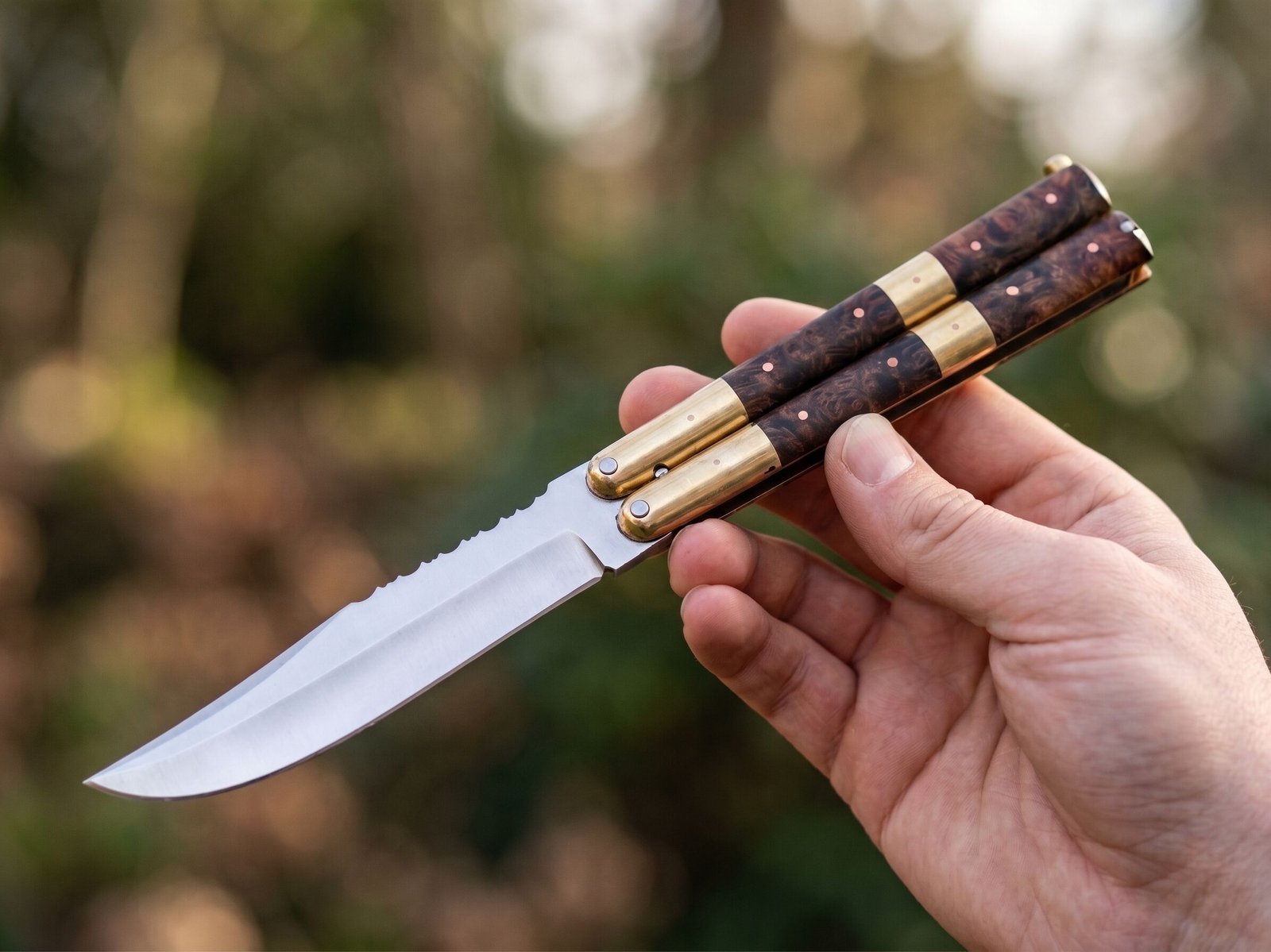
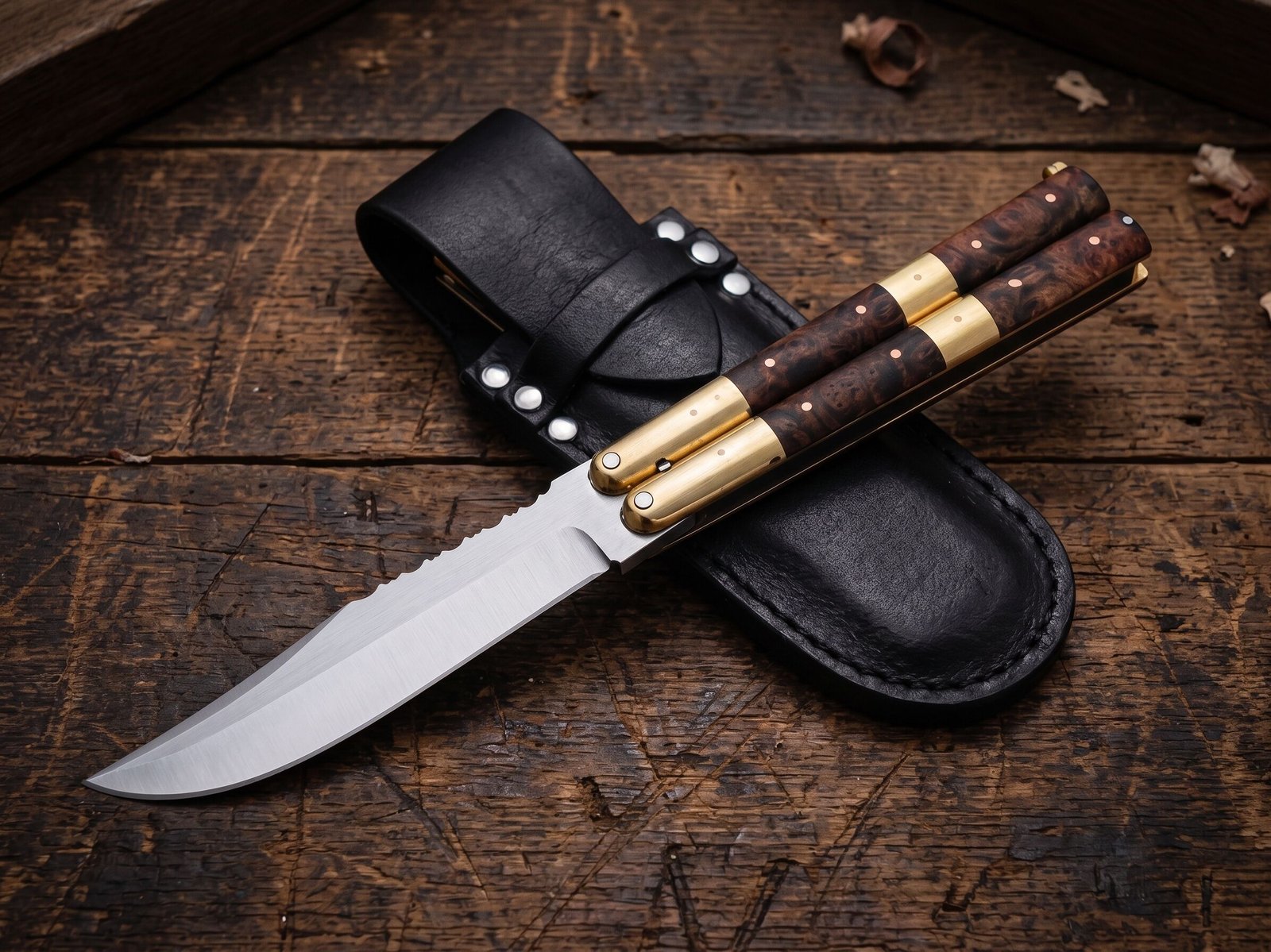
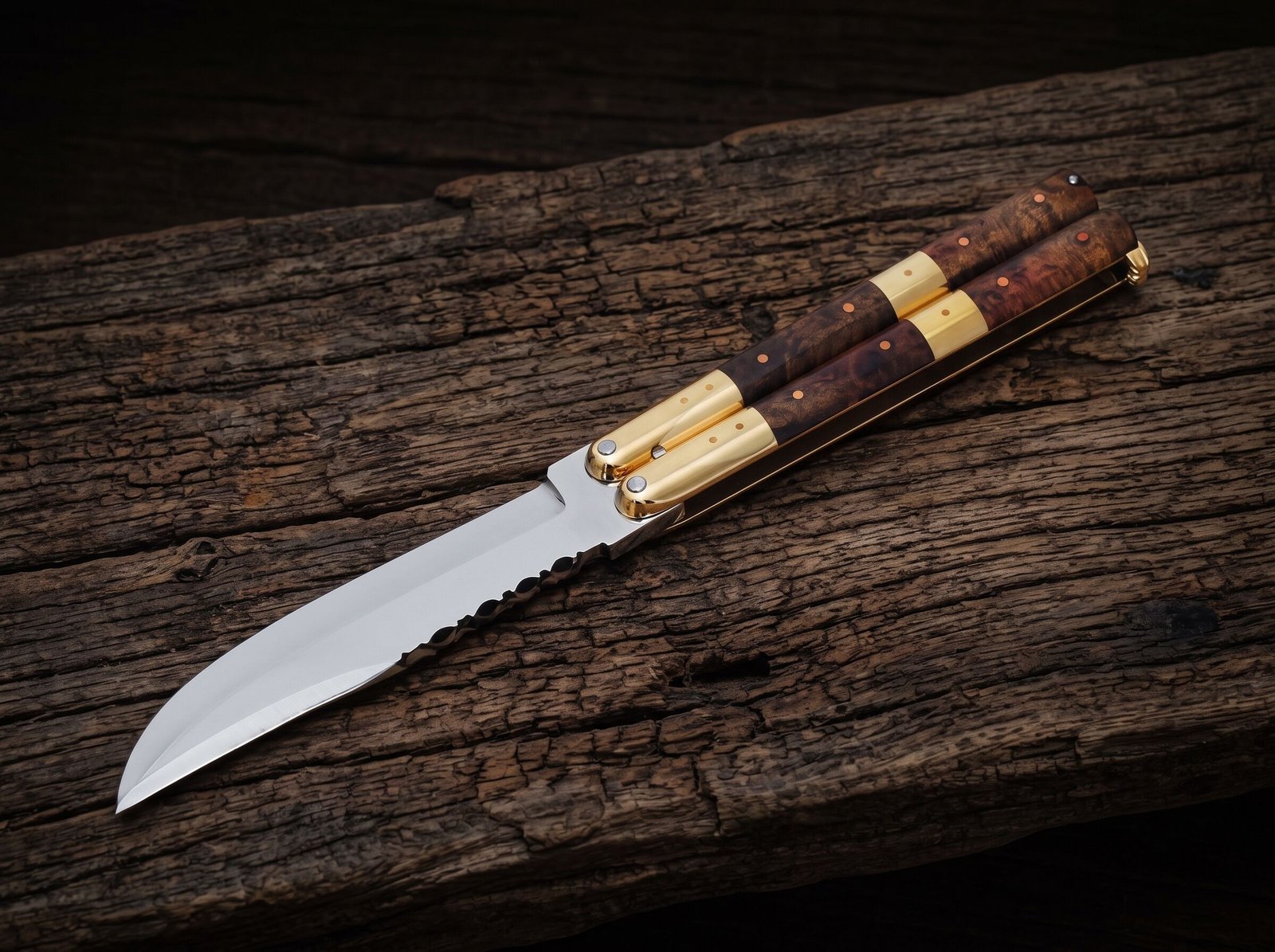
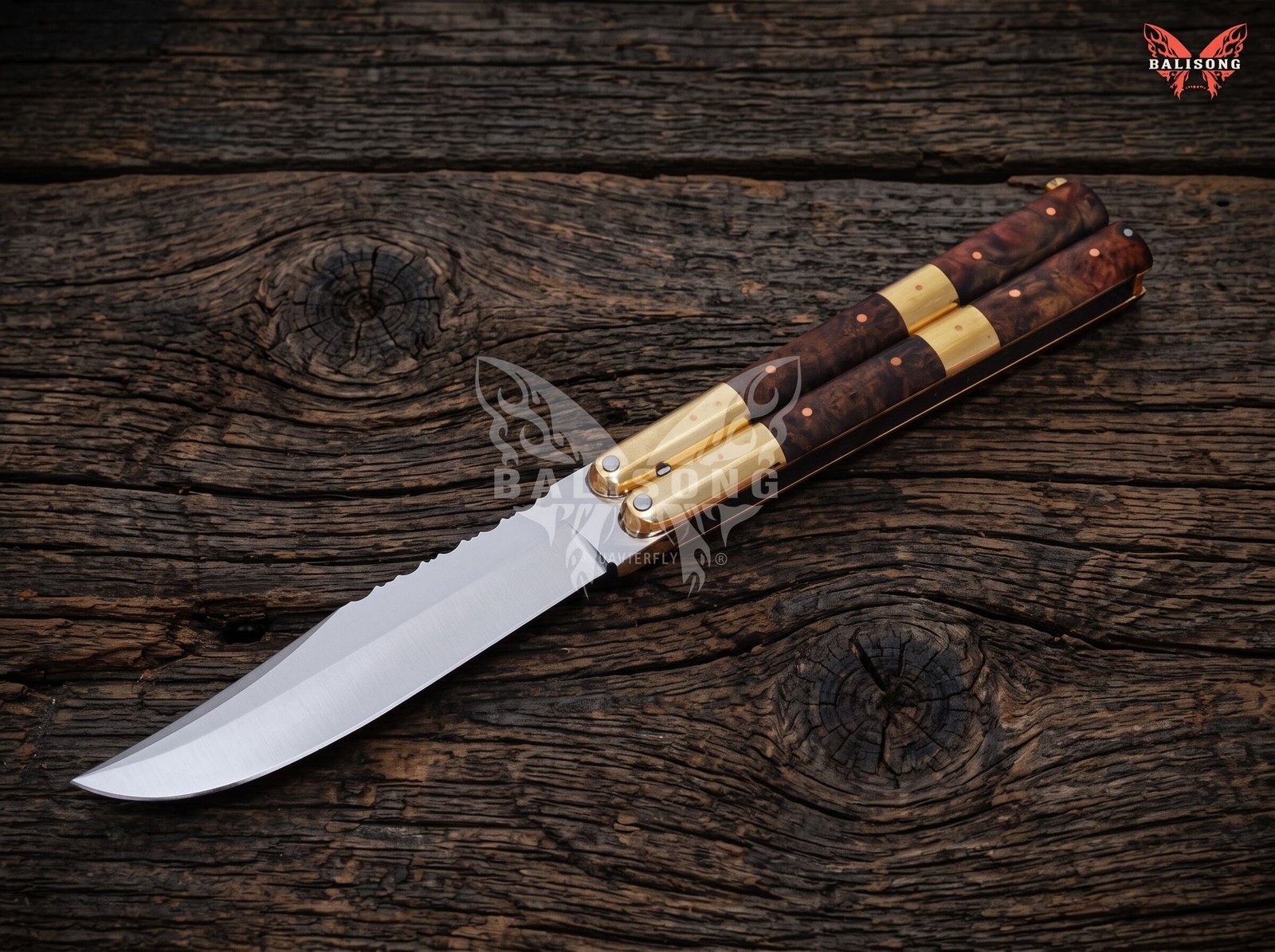
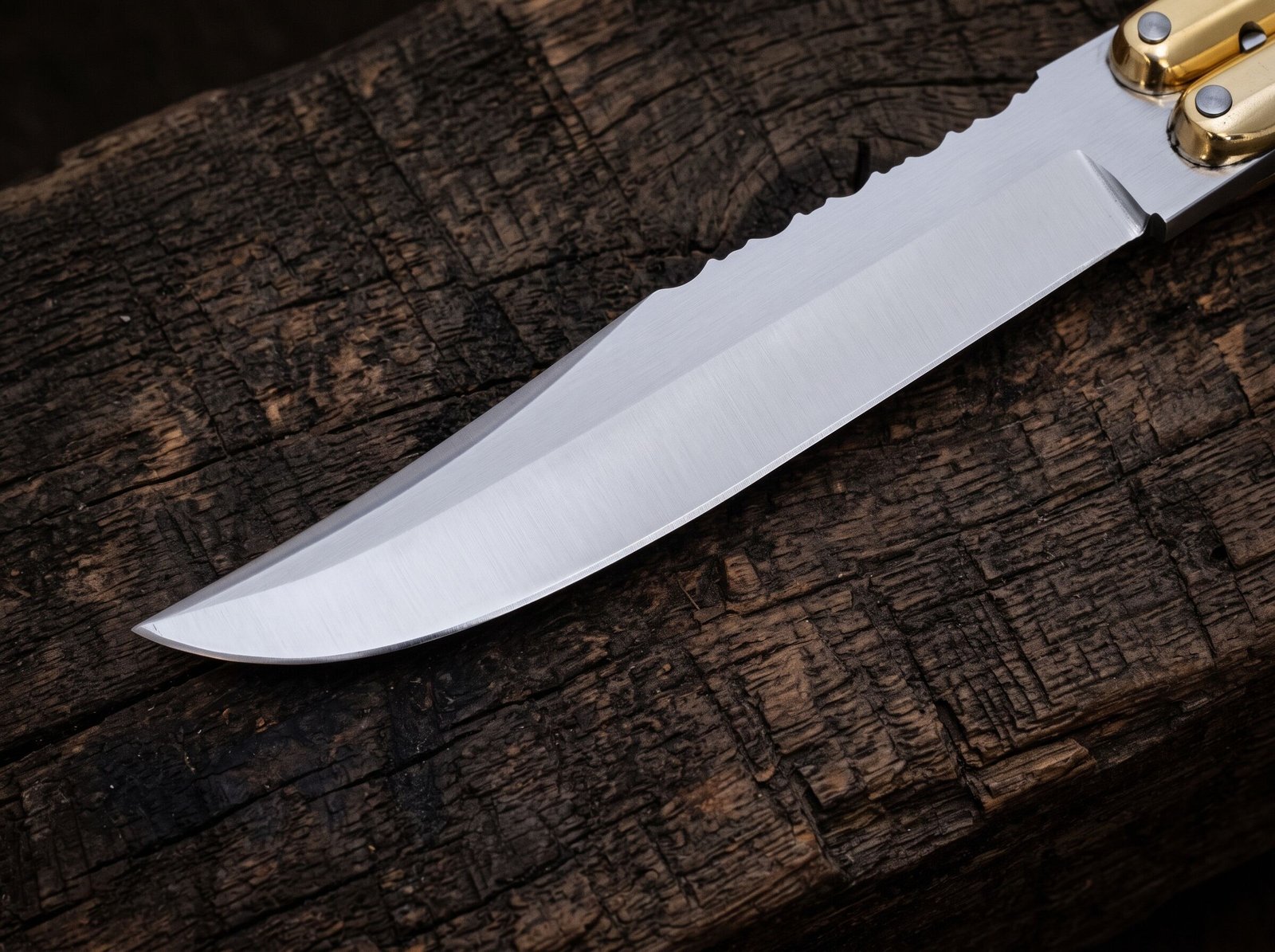
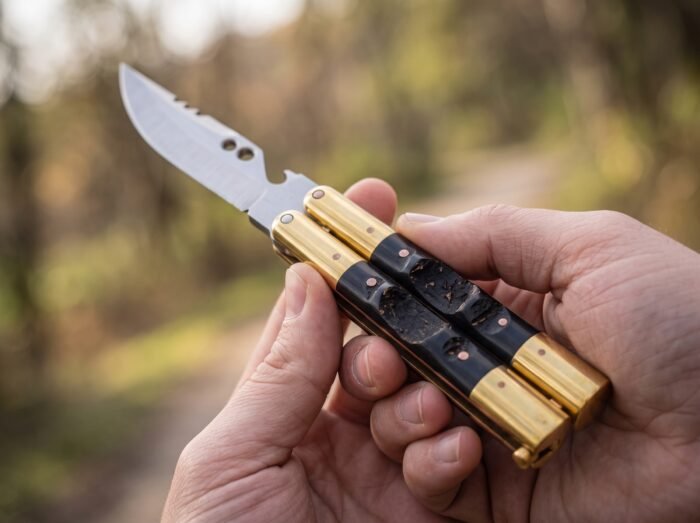
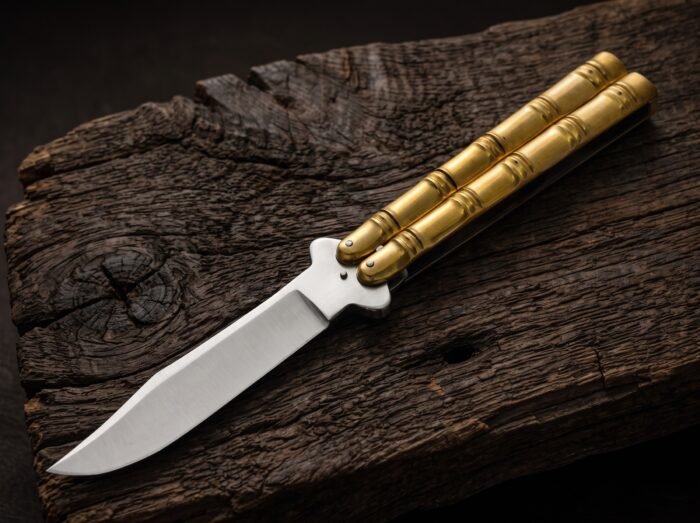
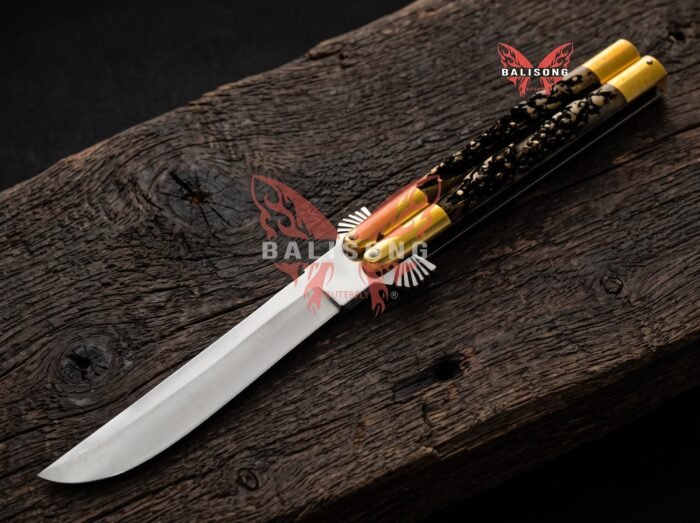
A hunting profile balisong: one sharpened edge, a belly that sweeps up into the point, D2 tool steel, narra burl and brass. 24cm open, 200g. This is the Pandayan Traditional you buy if you intend to cut things with it rather than photograph it on a slab of walnut.
What the belly is doing
That curved section between the straight of the edge and the tip is where nearly all the real cutting happens on anything soft. A curve draws through material as you pull, so the contact patch stays small and the pressure stays high. A straight edge has to press. A curved edge slices.
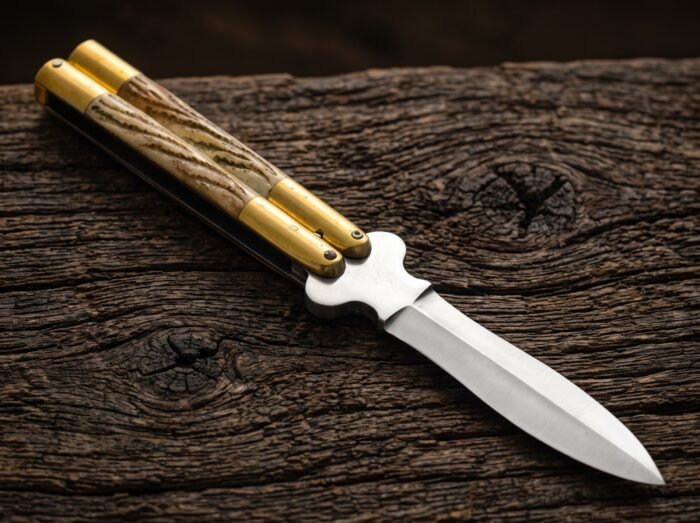
Rope, cardboard, cordage, a tomato at a campsite, small game if that is your world. All of it is a drawing cut, and all of it is easier on this blade than on the dagger next to it in the line.
What you give up is thrust. A hunting point sits lower and rounder than a dagger point, so it is not the shape for driving into anything hard. That is not a flaw, it is the shape choosing a job.
The three Pandayan blades, side by side
| Model |
Blade shape |
Happiest doing |
Weight |
| BF-95 |
Symmetrical dagger |
Looking correct under a light |
200g |
| BF-96 |
Hunting, single edge |
Drawing cuts, actual work |
200g |
| BF-98 |
Tanto |
Point strength, piercing |
200g |
All three are the same steel at the same 58-60 HRC, the same 24cm, the same 200g and the same brass and burl construction. Pick the blade shape you want and stop reading the price tags, because at this distance the price is not telling you which knife is better.
Brass, and letting it go dull
The bolsters are brass, and brass does one thing reliably: it stops looking like a trumpet. It dulls, then it goes slightly warm and brown where your fingers land most, and eventually it carries a map of how you hold the knife.
People email us about this as though something has gone wrong. Nothing has gone wrong. If you polish it back to a mirror every fortnight with an abrasive paste you are quietly sanding the bolsters, and after a few years of that you will have rounded off edges that were crisp when they left us. Wipe it, use it, leave it alone.
Brass is also doing structural work here. It is most of the reason a 24cm knife lands at 200g, and that mass sits out at the handles where it helps a rollover carry itself.
A single edge is the easier one to learn on
One live edge means one edge to keep track of, and while you are learning that genuinely matters. It does not mean this is a safe knife. It means it is a knife with half as many ways to open your knuckle.
You can still order it unsharpened. The trainer option is above Add to Cart, it costs, and it is the same blade with the bevels left blunt so the weight and balance you practise on are the weight and balance you keep. Learning on a lighter aluminium trainer and then moving to 200g of brass and steel is how people develop a flip that only works on one knife.
Where this narra burl balisong came from
Pandayan is the Filipino word for the smithy itself, and this line wears the name because there is nothing on these knives that did not come out of one. The pattern traces to Taal in Batangas, and to Barangay Balisong specifically. The name that stuck earliest was baling sungay, folding horn, from the carabao horn the handles were originally cut from.
Perfecto de Leon is the name attached to the pattern in the early 1900s. Beyond that, be suspicious of anyone giving you precise dates and heroic origin stories about this knife. Most of what circulates online is decoration.
Using this D2 balisong, and then looking after it
D2 holds an edge a long way past the point where most steel has given up, which is the argument for it on a working knife. Hardness is most of that story. At 58-60 HRC the edge resists being pushed out of shape by the sideways load that rolls a softer blade over on rope and cardboard. It is not stainless. Chromium content gets it close enough that people say semi stainless, and close enough is not the same as immune.
- Wipe the blade dry after anything wet, and after anything acidic straight away rather than eventually.
- Oil the pivots, not the wood.
- Sharpen it rarely and properly. D2 rewards patience and punishes a quick scrape on a cheap pull through.
- Store it dry. A sheath holding moisture against a blade is worse than no sheath.
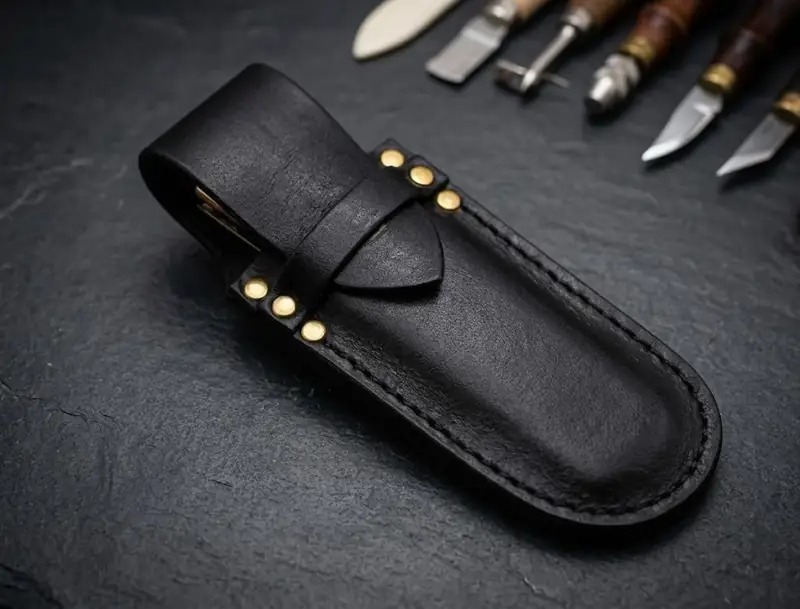
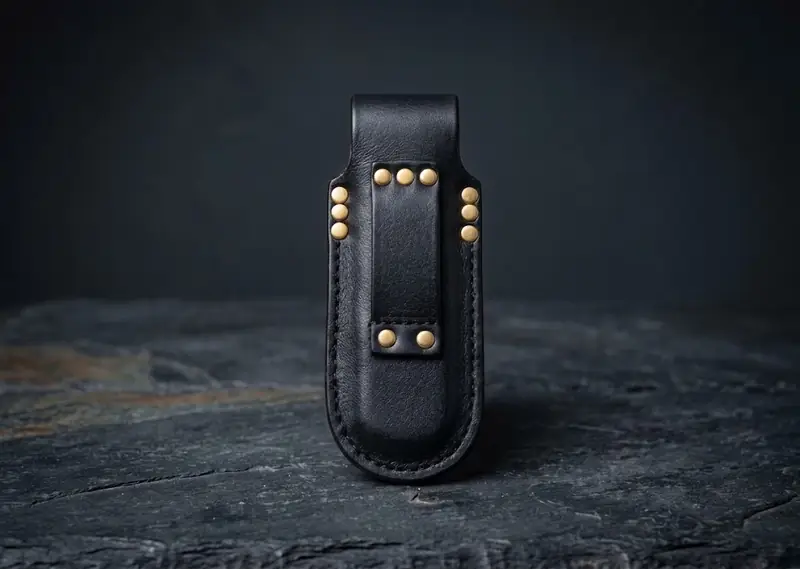
Our knife care guide goes further on pivot tension, which is the thing most owners get wrong. The rest of the line sits in the traditional Filipino collection. A fitted leather sheath comes with it. US shipping is free, worldwide is a flat $49 however full the box is.
If this is your first traditional pattern, the guide on starting a balisong collection is worth ten minutes before you order.




Grace Baker –
Been eyeing this design for months and it did not disappoint. You can tell real Filipino makers built this. Made in the USA and shipped fast too.
Rebecca Cook –
This has quickly become my favorite piece in the collection. Handles have a great grip even during fast flips. Love it.
Alejandro Ruiz –
Beautifully made quality for the price point. Bushings feel buttery smooth after just a bit of use. Love it.
Carol Green –
So happy I finally pulled the trigger on this one. Bushings feel buttery smooth after just a bit of use. Happy customer here, through and through.
Derek Garcia –
This blade came razor sharp right out of the box. Bushings feel buttery smooth after just a bit of use. Definitely bookmarking this store for future orders. Balisong Butterfly is quickly becoming my go to shop for balisongs.
Blake Marsh –
Best butterfly knife I’ve ever owned. Hands down. Weight is perfectly balanced for flipping. Telling everyone I know to check this store out.