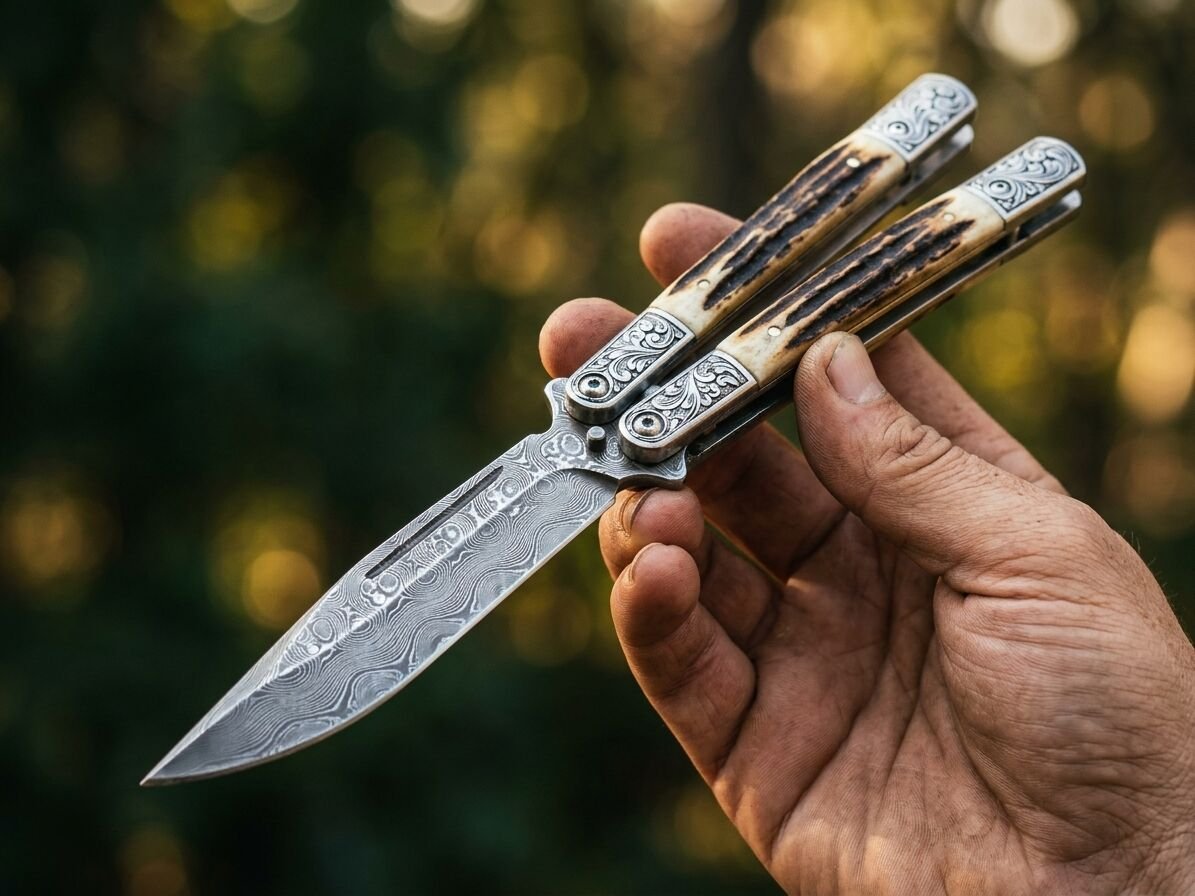
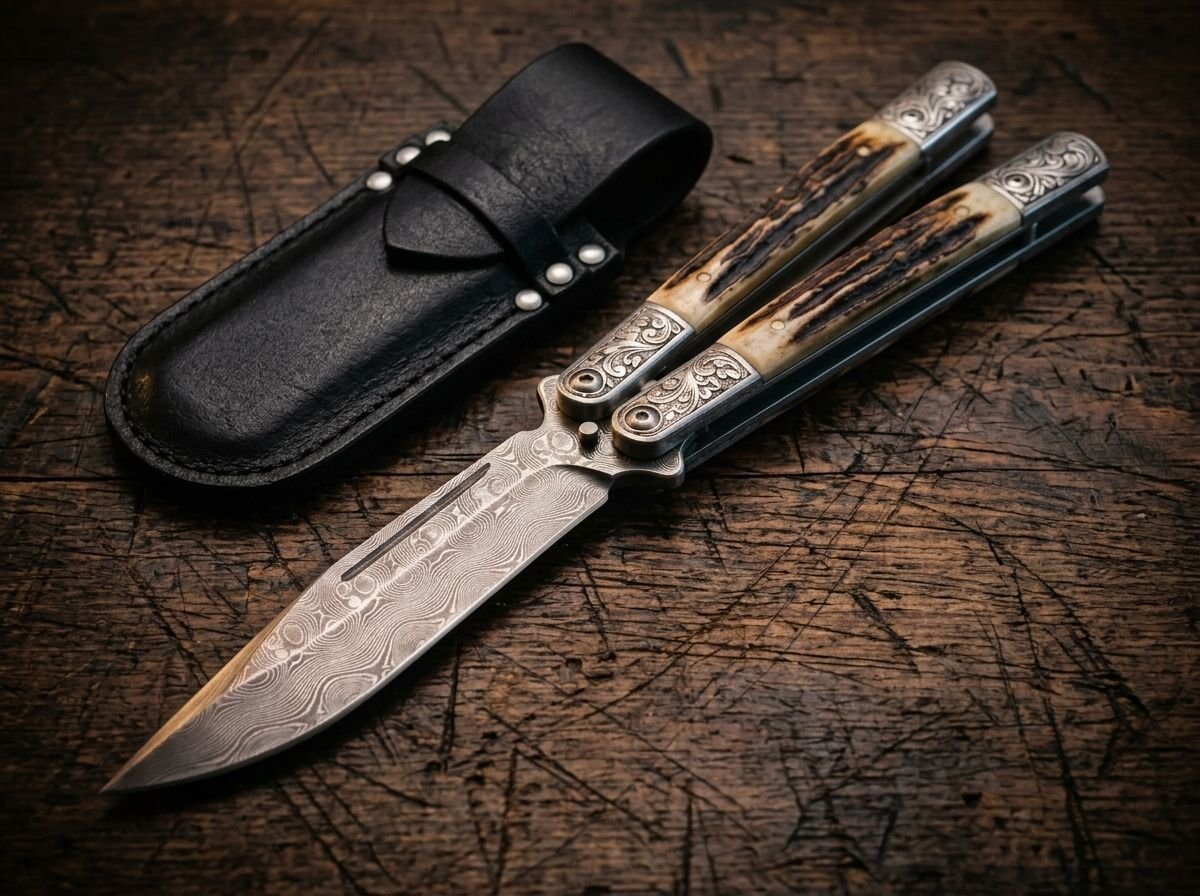
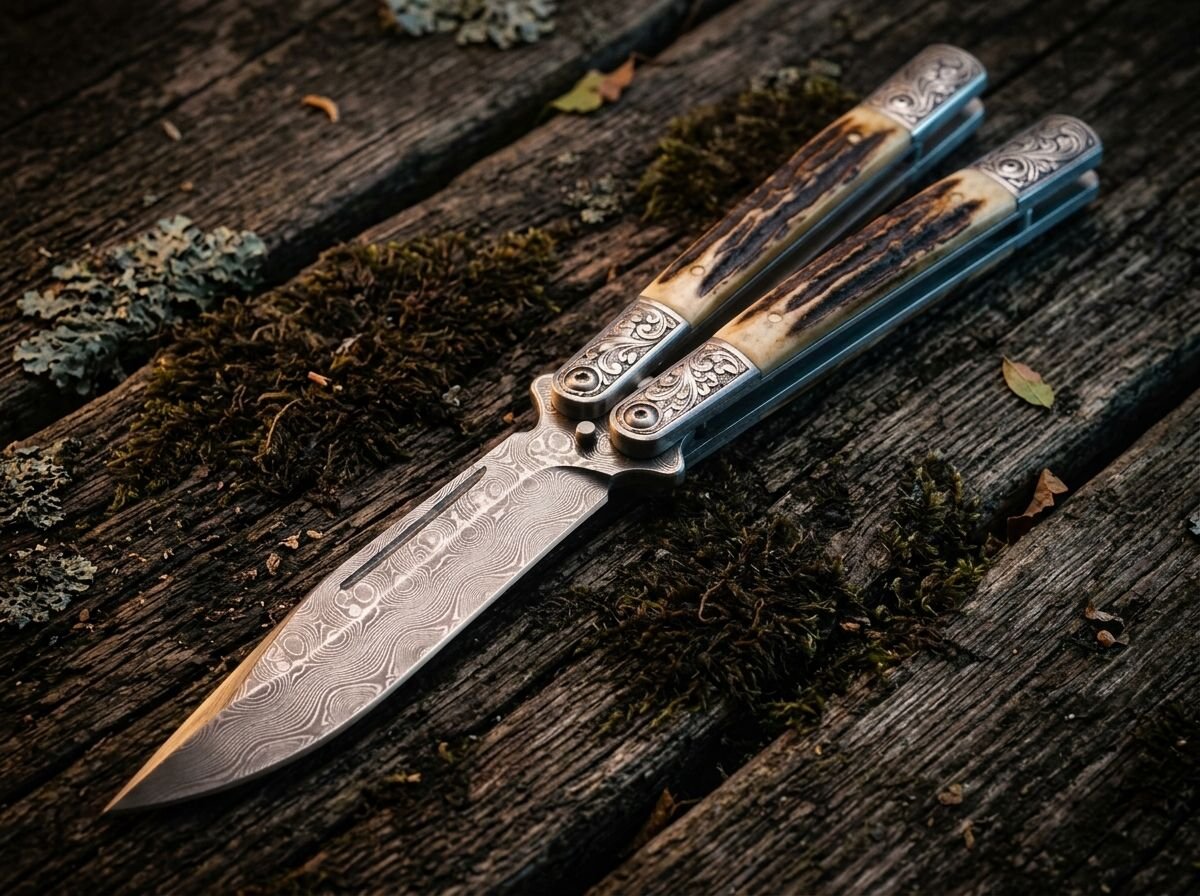
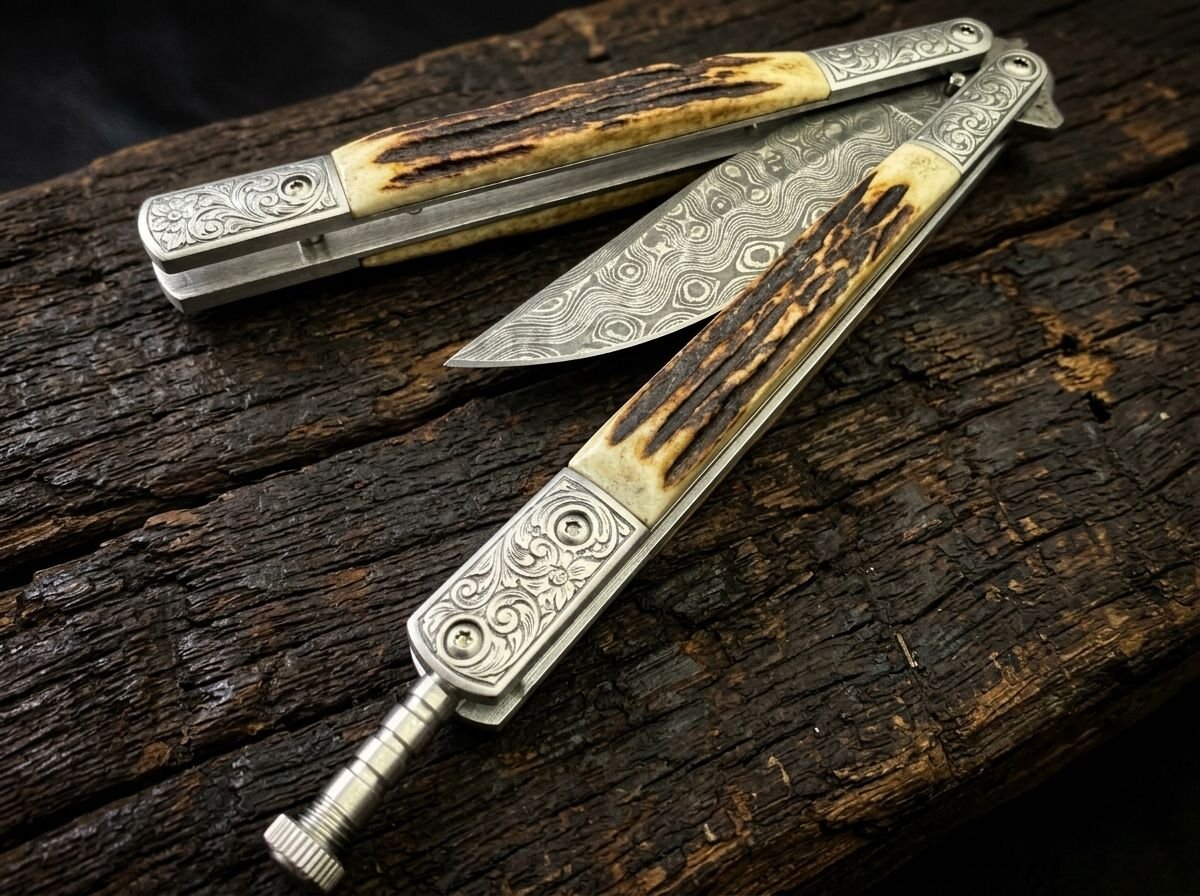
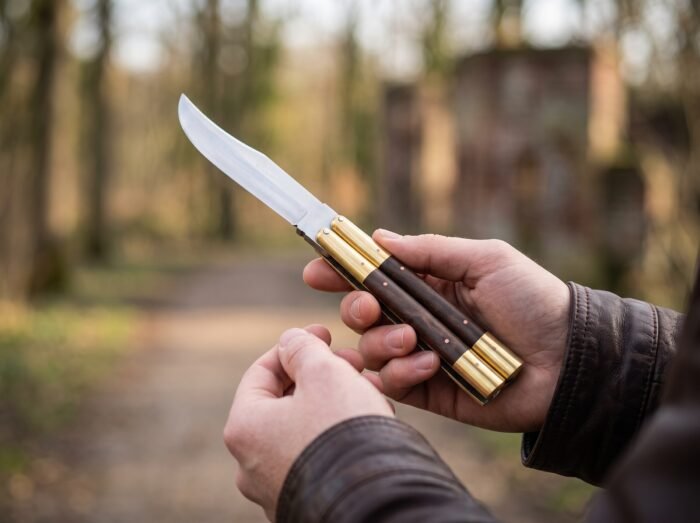
The BF-147 is a Damascus blade with stag panels and engraved steel bolsters. The word “engraved” appears on a great many knife listings and means very different things depending on who wrote it, so here is how to tell what you are actually looking at.
Three things sold as engraving
- Stamping. A hardened die is pressed into the metal. Fast, cheap, identical every time. The metal is displaced rather than removed, so the edges of the line bulge slightly.
- Laser marking. Burned into the surface. Extremely precise, very shallow, and uniformly grey rather than bright. It is a surface mark, not a cut.
- Hand engraving. Metal cut away with a graver, one line at a time, by somebody who can ruin the piece with a slip.
How to tell them apart
Look at the line under a light and tilt the piece.
A hand cut line has a bright, faceted floor, because a graver leaves a clean V shaped channel that reflects light. It flashes as you turn it. Stamped work does not flash, because the metal was pushed rather than cut and the surface inside the mark is the same dull texture as everything around it. Laser work is uniformly matte and never flashes at all.
Then look for consistency. Stamping is perfect and repeated. Hand engraving has minute variation in line weight, because a human hand is applying the pressure. If every element is identical to the thousandth of a millimetre, no hand was involved.
Why we cut steel rather than brass here
Brass is easier to engrave. Steel is harder, slower, and much less forgiving, and it holds the line better forever. On a knife that will be handled for decades, a cut in steel stays crisp long after a cut in soft brass has rounded off at the edges from wear and polishing.
Steel also keeps its colour. Brass mellows to gold brown over a year and the engraving warms with it. Steel stays grey, so the contrast against pale stag stays exactly as sharp as the day it shipped.
The Damascus blade on this butterfly knife
Layers of two steels forge welded, folded, drawn, ground and etched. The pattern goes through the blade rather than sitting on it, so sharpening cannot remove it. Hardened to 58-60 HRC, which is where it holds an edge properly and still sharpens on ordinary stones.
It performs like good tool steel. It does not outperform mono steel of the same hardness, and we would rather you knew that before buying than discover it in a forum argument afterwards.
Stag horn as a balisong handle
Naturally shed antler, collected after it drops. Grips well, warms fast, needs no maintenance, and every panel is different because every deer is different. Yours will not match the photograph exactly and that is the material working as intended.
Who this is for
Somebody who wants the metalwork to be real. The price sits mostly in two sets of hours: the forge welding and the graver.
Specifications
| Overall length |
29 cm (11.42 in) |
| Blade length |
14 cm (5.51 in) |
| Weight |
205 g (7.23 oz) |
| Blade |
Damascus steel |
| Hardness |
58-60 HRC |
| Handle |
Stag with engraved steel bolsters |
| Sheath |
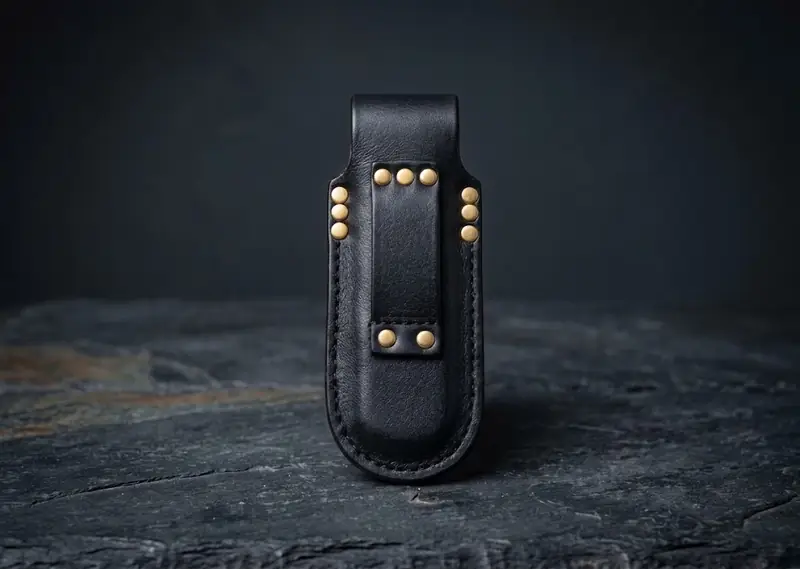
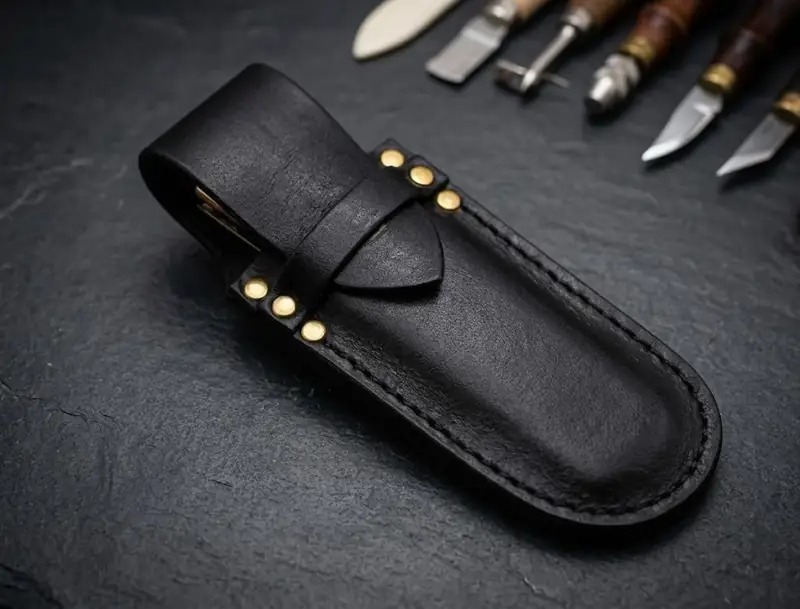
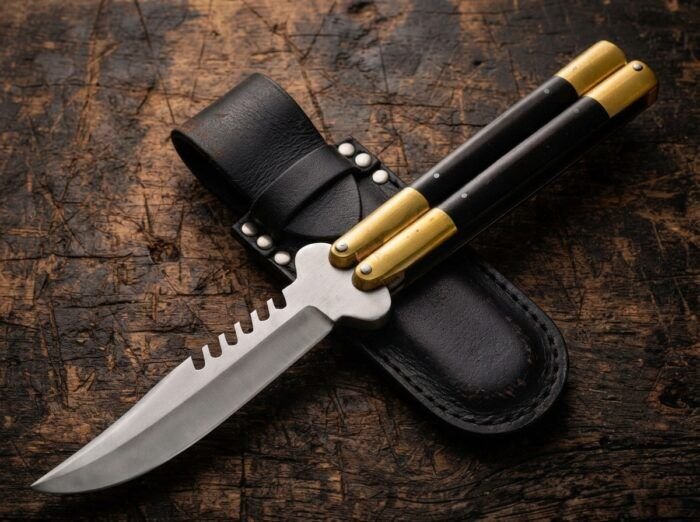
Fitted leather, included |
In the box with this Damascus balisong
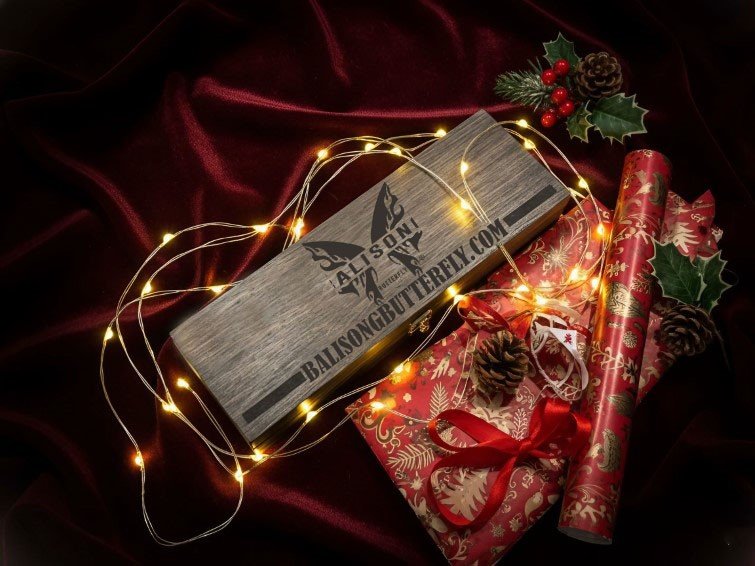
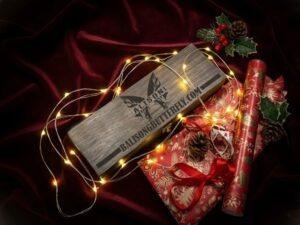
The knife, sharpened and tuned by hand before it left the bench. A fitted leather sheath, cut for this frame rather than bought by the dozen. A gift box, because a good number of these are bought for somebody else.
You can have this one unsharpened instead: same frame, same weight, no edge, and the same price either way. Choose it on this page.
Engraving is optional. Initials or short text $19, a custom logo $29, chosen before you add to cart. Shipping is free within the United States and a flat $49 everywhere else.
Telling hand engraving apart from stamping or laser marking comes down to how the line catches light, and the full explanation is in our handle and finish materials guide. The Ugat sits in the Damascus steel knife collection. Its steel bolsters and stag handle are shared with the Perlas, built the same way with mother of pearl in place of stag.




Jose Hill –
Perfect knife. Perfect action. No complaints. Fit and finish is way above what I expected at this price. Balisong Butterfly’s attention to detail is honestly unmatched. Already telling my flipper friends to check this out.
Sophia Kelly –
Can’t stop flipping this thing honestly. Bushings feel buttery smooth after just a bit of use. Already telling my flipper friends to check this out.
Carol Sanders –
Incredible action right out of the box. Comes with a nice pouch which is a nice touch. Already planning my next pickup from this shop.
Chloe Hall –
Not going to lie. This exceeded my expectations by a lot. This flips cleaner than knives twice the price. Blade came shaving sharp straight out of the box. Weight is perfectly balanced for flipping. Love it.
Larry Morgan –
This turned out to be way better than I thought it would be. Latch snaps shut clean every time. Can’t say enough good things about this purchase.