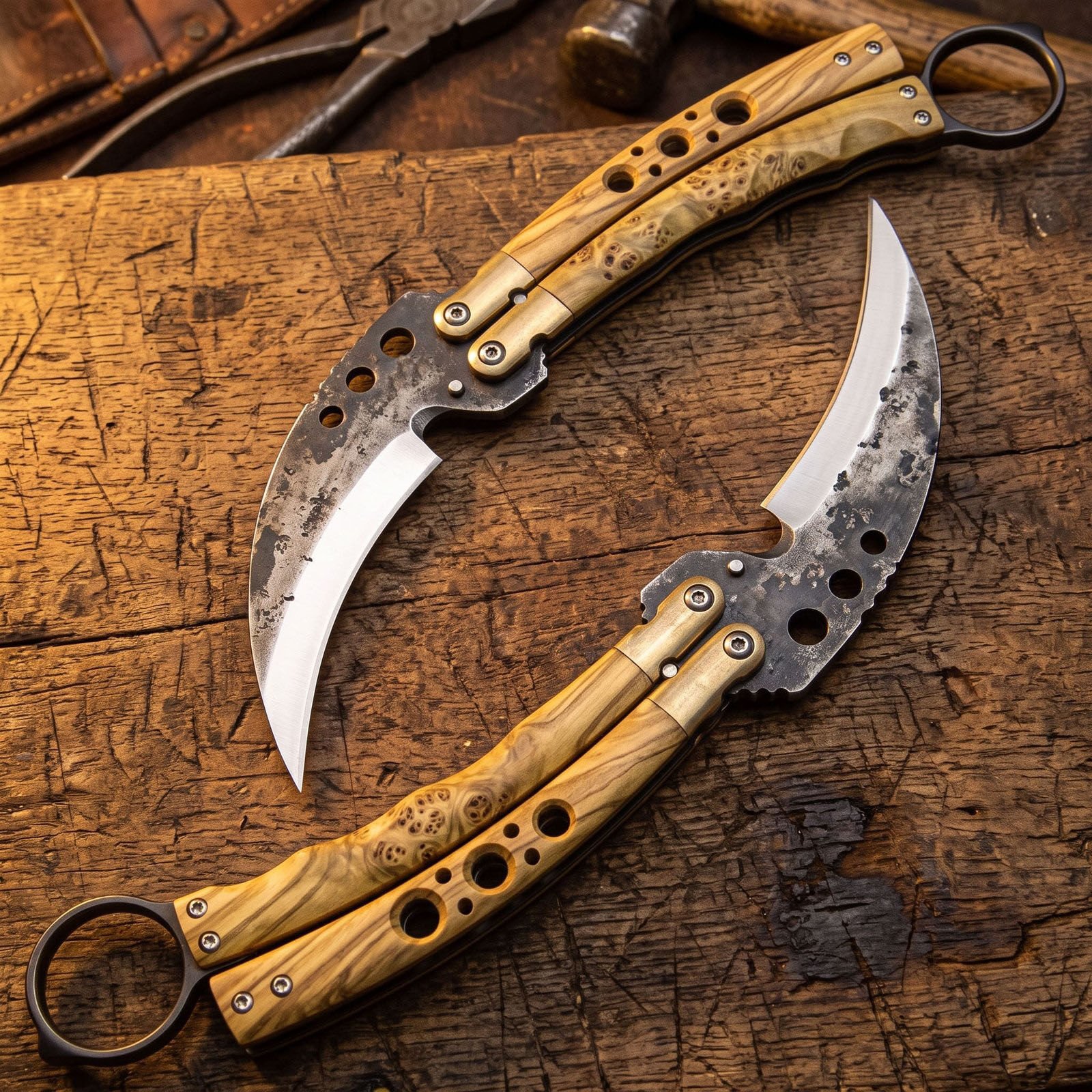
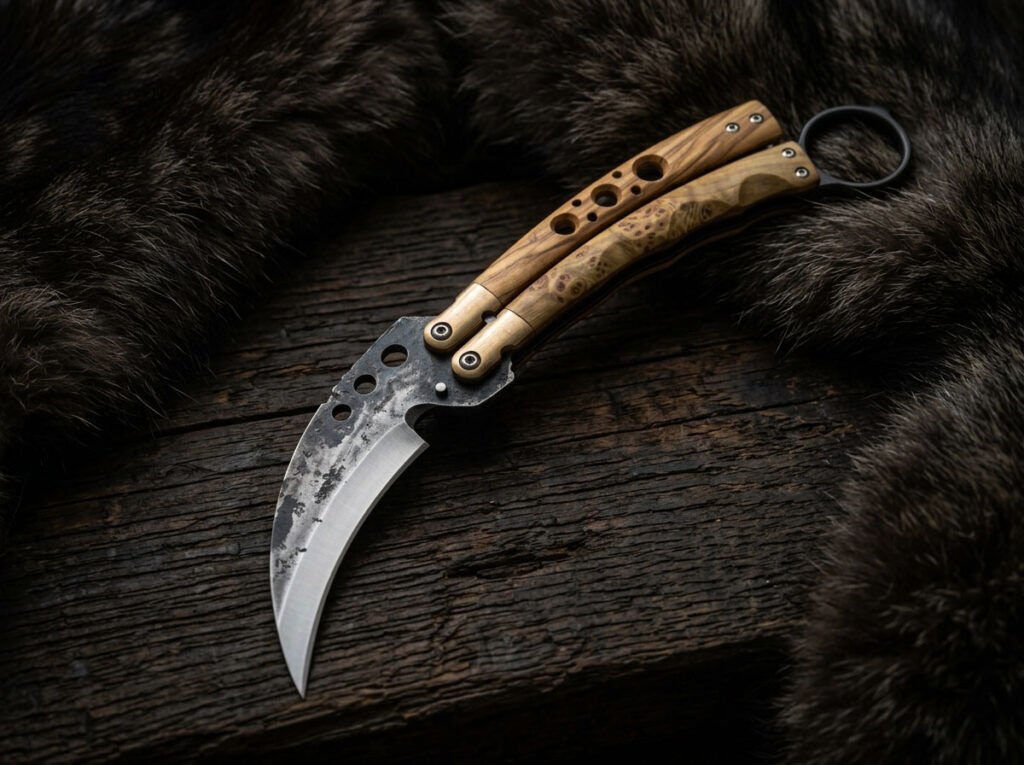
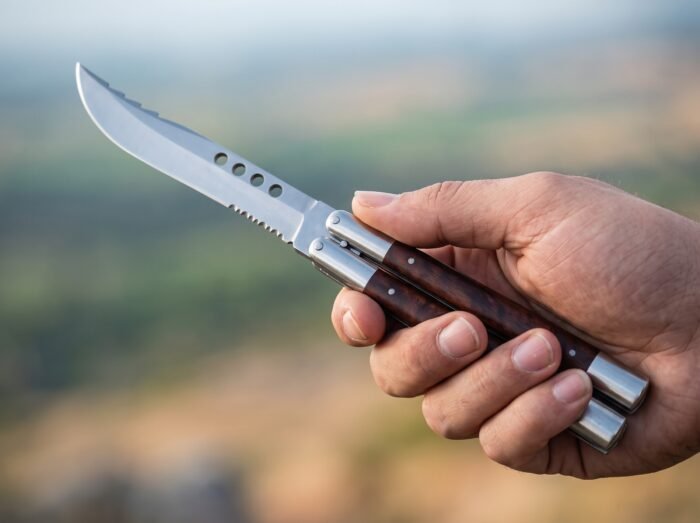
The BF-185 is a karambit balisong with stabilised olive burl panels and a hand forged blade left with its forge finish on. Olive burl is the most figured material in this group and the most misunderstood.
What makes olive different from every other wood here
Olive trees grow slowly, crookedly, and for a very long time. A trunk that took two centuries to reach the diameter a walnut manages in forty years ends up with growth rings packed tight and grain that changes direction constantly because the tree spent its life leaning around obstacles.
That produces the figure: sharp dark lines running through a pale gold background, curling rather than flowing, with the contrast between them far higher than in any other common handle wood.
Burl adds a second layer of chaos on top. A burl is a growth deformity, a knot of unorganised grain the tree produced in response to injury or infection, and the small dark eyes scattered through it are dormant buds that never grew out.
Why it has to be stabilised
Raw olive burl is a trap. Grain running in every direction means it moves in every direction, and olive carries a lot of natural oil that keeps moving around inside the wood for years after it is cut. Left untreated on a knife handle it will eventually cup, lift away from a pin, or crack straight through a figured section.
Stabilising forces acrylic resin through the wood under vacuum and cures it solid. The figure is unchanged, the wood stops moving, and it becomes indifferent to humidity, to being washed and to being carried in a pocket.
Ask anybody selling unstabilised olive burl on a knife what their plan is for year three. Note whether you get an answer.
Pale wood against a dark blade
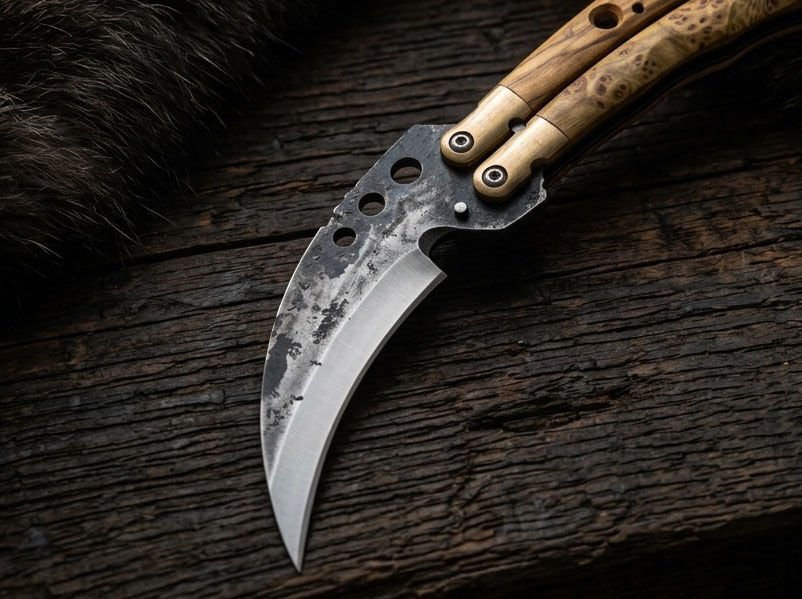
This is the reverse of most of the range. Usually the handle is the dark element and the blade is the bright one. Here the blade carries forge scale, blue black and matte, and the handle is the lightest material we work.
It changes how the knife reads in the hand. Your eye goes to the handle first and follows it out to the blade, rather than the other way round, and the effect is that the tool looks smaller and the object looks more like a piece than a weapon.
The bevel is ground back to bright steel, as it must be, so there is a thin bright line tracing the entire belly between the dark flat and the pale wood. That line is the best part of this knife.
Each one is different and we cannot fix that
Burl figure does not repeat. Not approximately, not at all. The panels on your knife will not match the photograph and will not match anyone else’s, and the two panels on the same knife will differ from each other because they were cut from a block whose grain changes every few millimetres.
We cut pairs from adjacent slices so they are related, which is the most any workshop can honestly promise. Anything sold as a matched burl pair either is not burl or has been printed.
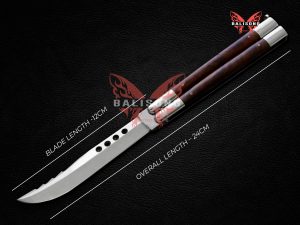
Specifications for this olive burl karambit balisong
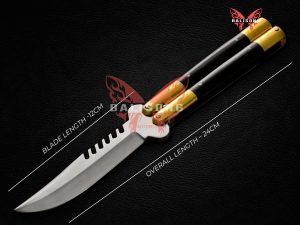
| Overall length |
24 cm |
| Blade length |
12 cm |
| Blade |
High carbon steel, forge finish with polished edge |
| Hardness |
58-60 HRC |
| Handle |
Stabilised olive burl wood, finger ring |
| Sheath |
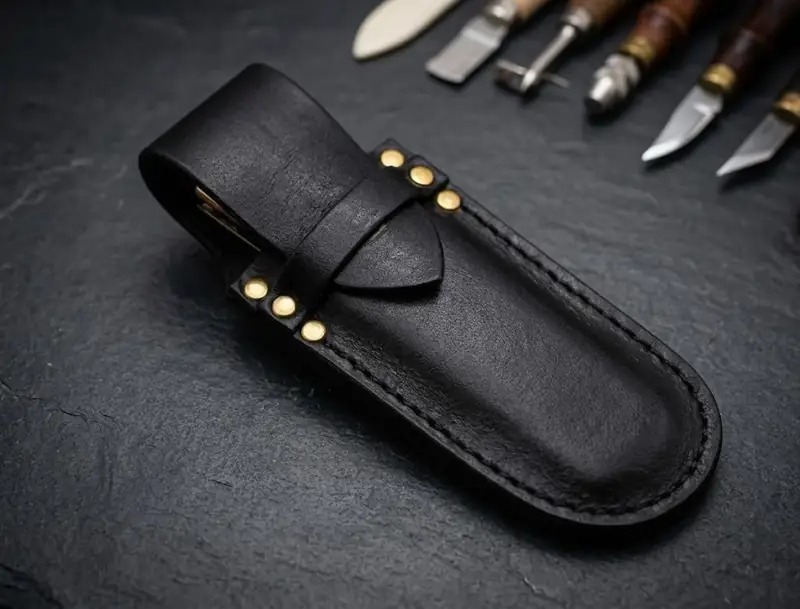
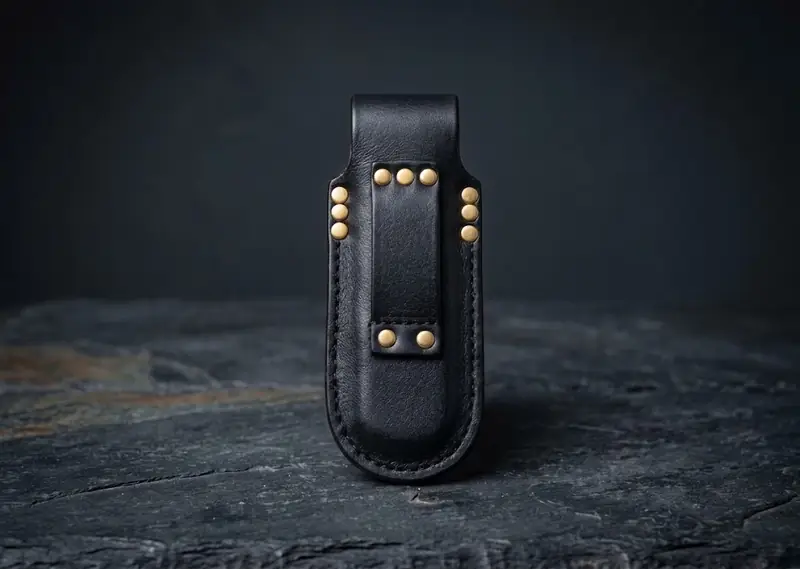
Fitted leather, included |
Ordering the BF-185
Sharpened, tuned and checked by hand, with a fitted leather sheath and a gift box. The wood needs nothing from you. The blade is high carbon, so wipe it dry.
Or take it as a trainer instead. Identical frame, identical weight, no cutting edge, and the price does not move.
Laser engraving is $29, chosen on this page. Free shipping inside the United States, flat $49 worldwide.
Stabilised burl wood is covered in our balisong handle materials guide, which explains why raw burl has to be resin stabilised before it can safely sit on a knife handle. The Olibo is part of our karambit balisong range. The Buhawi carries the same burl figure in walnut rather than olive, set against a Damascus chef blade instead of a forged one.




Reviews
There are no reviews yet.