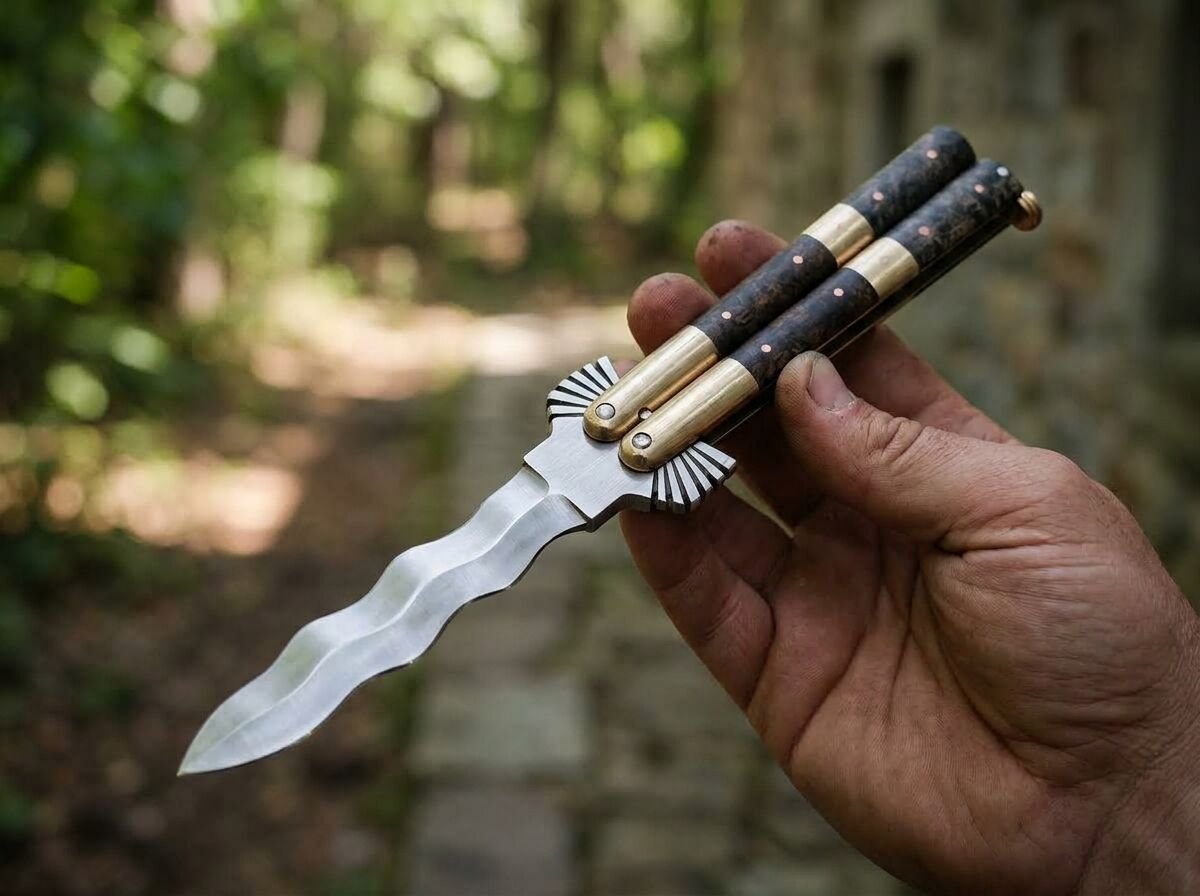
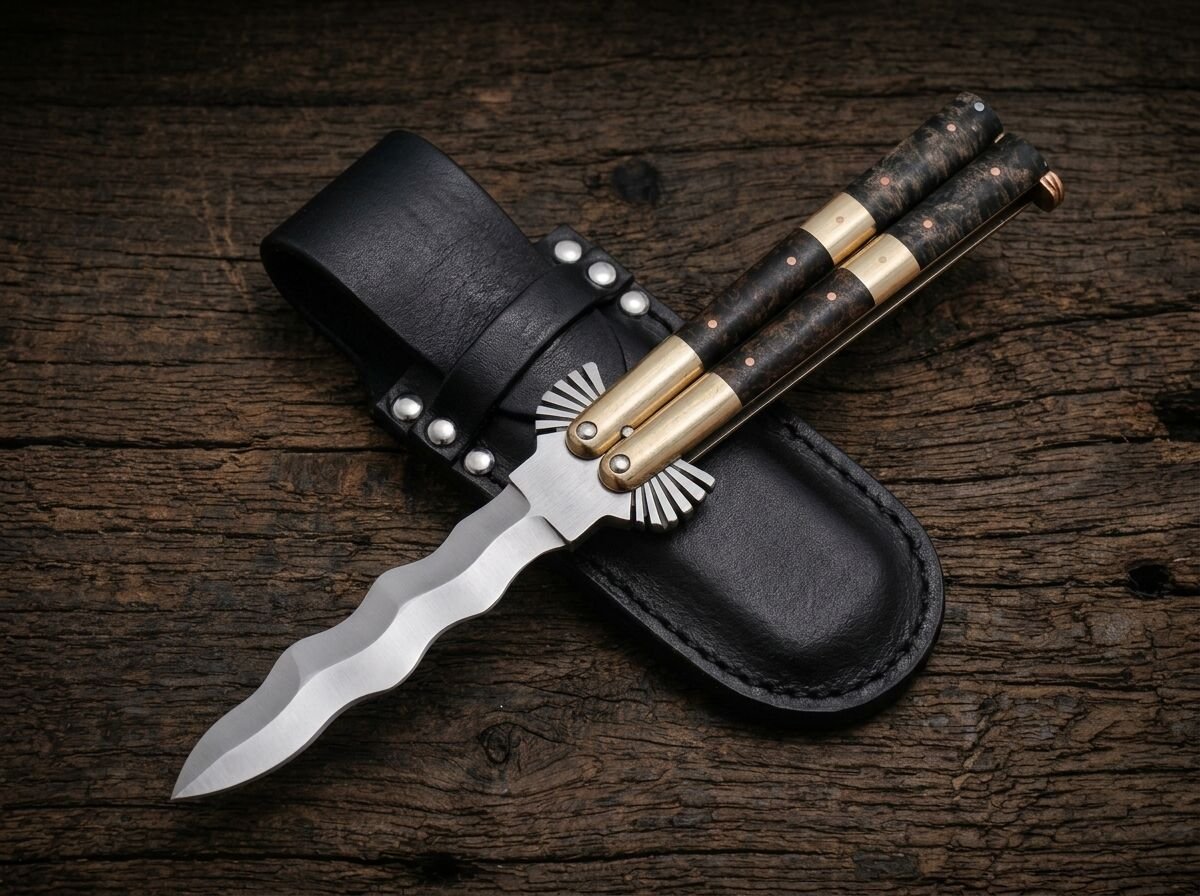
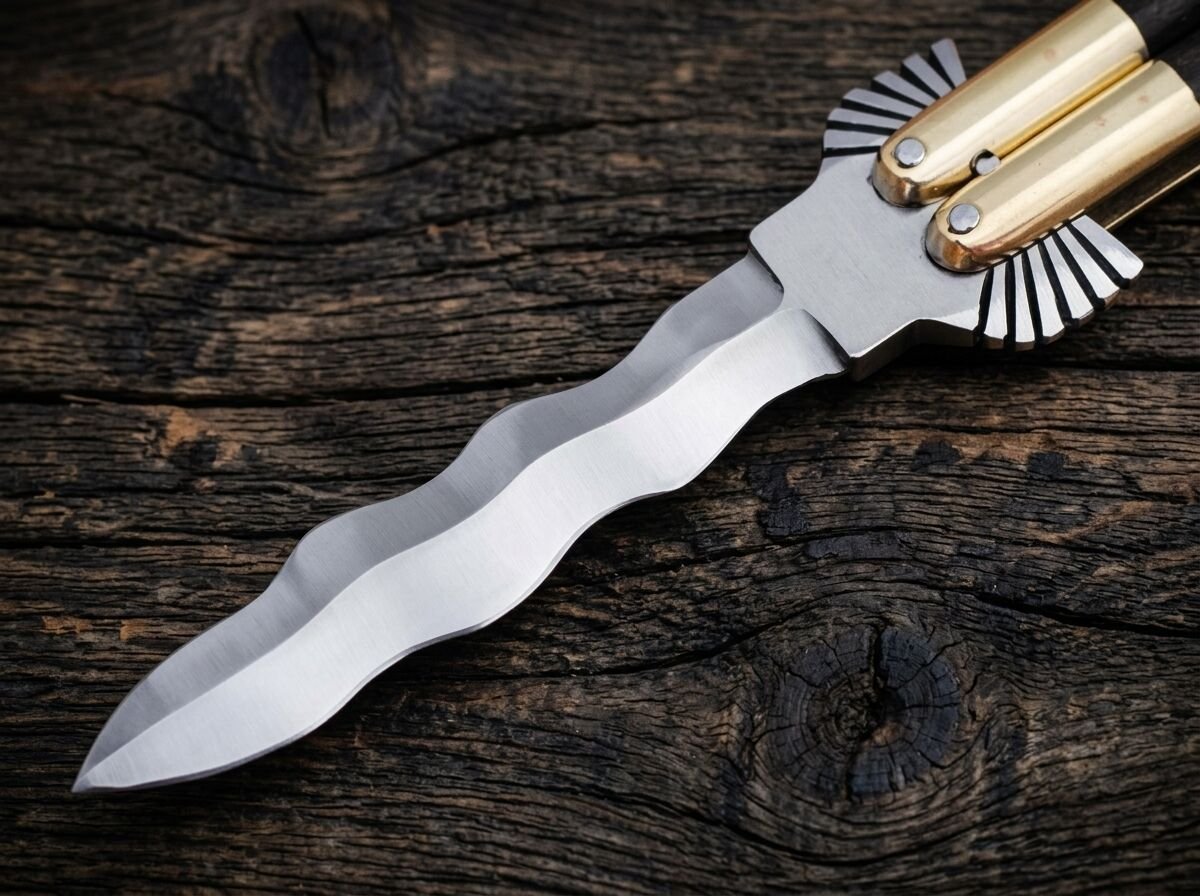
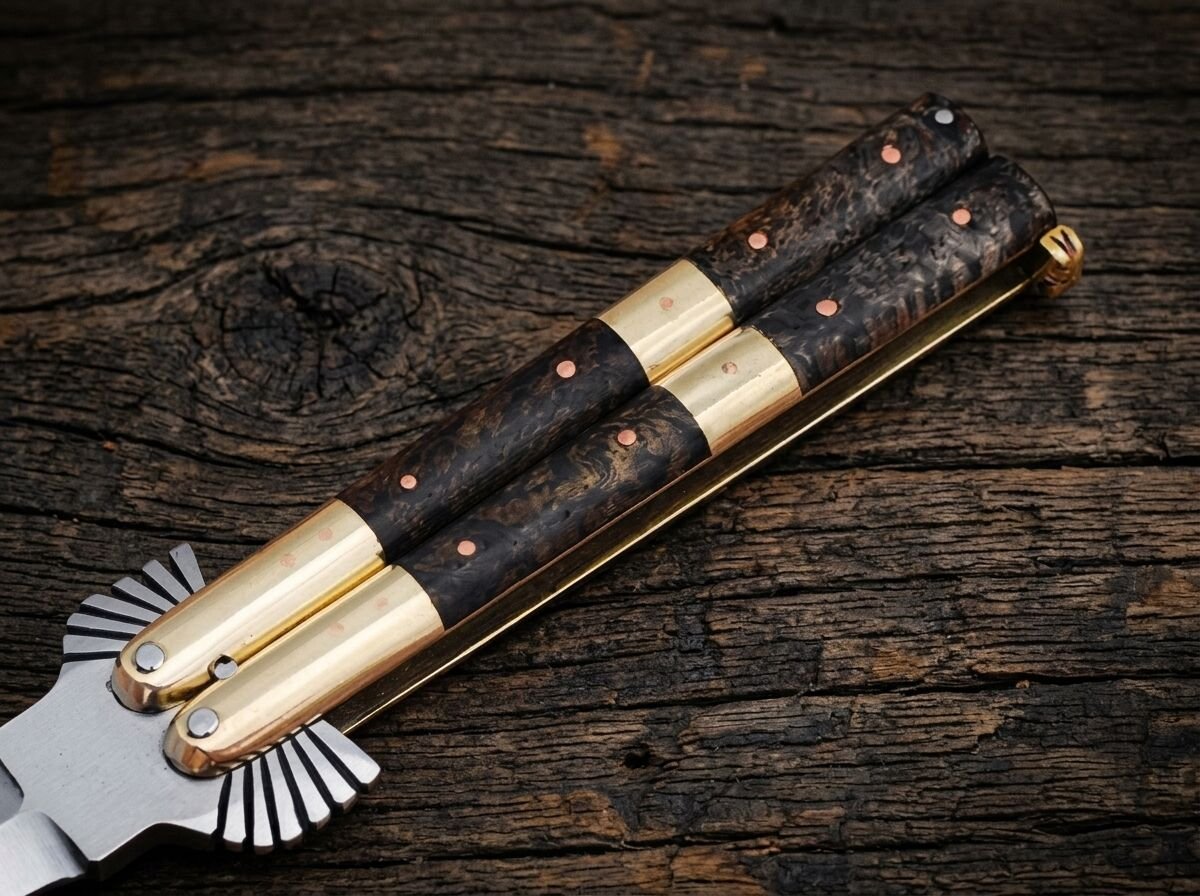
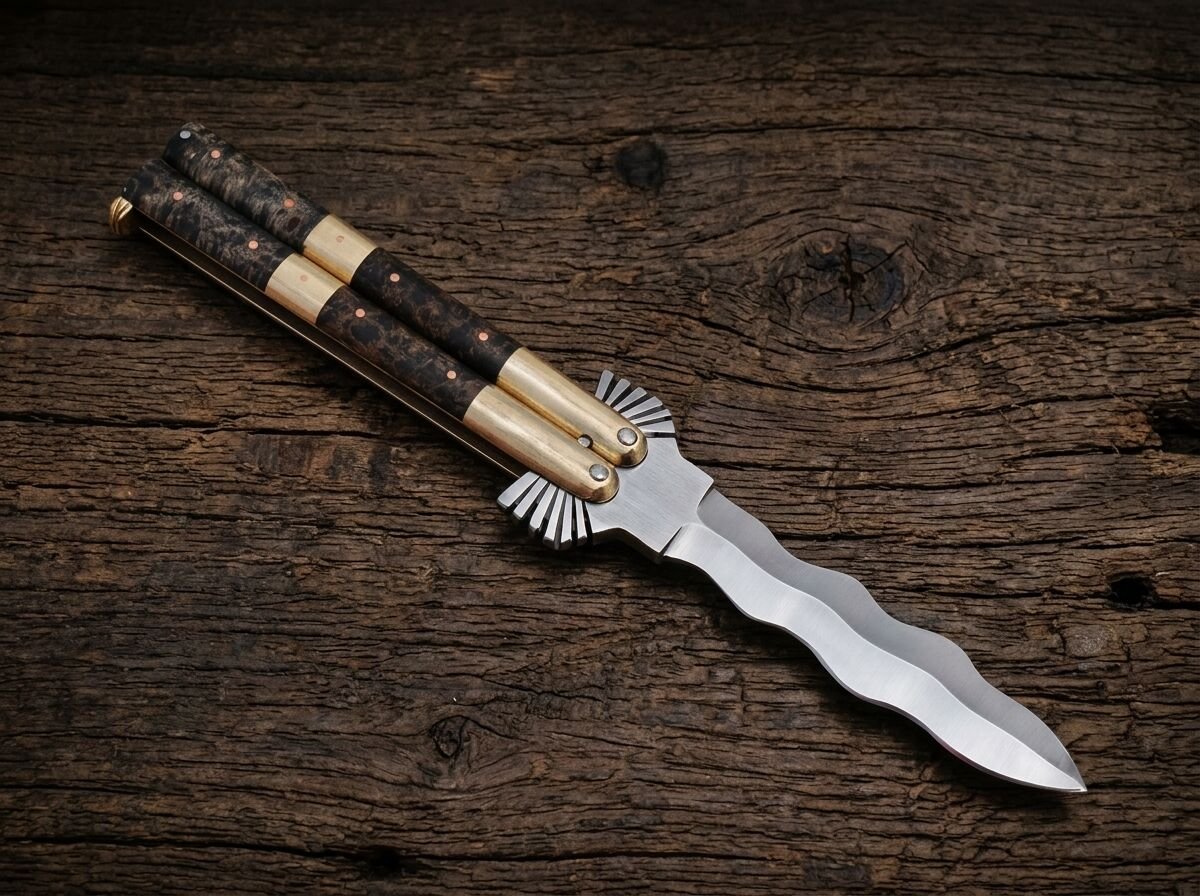
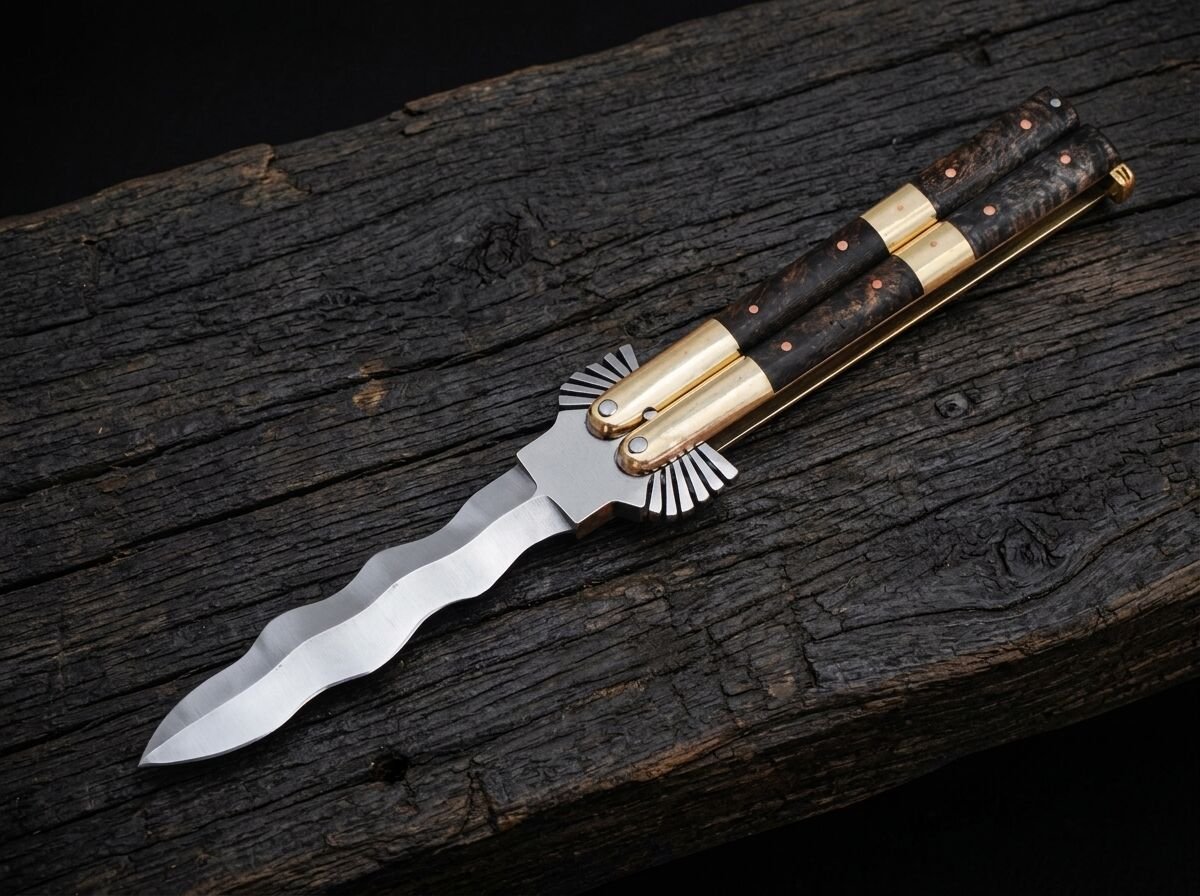
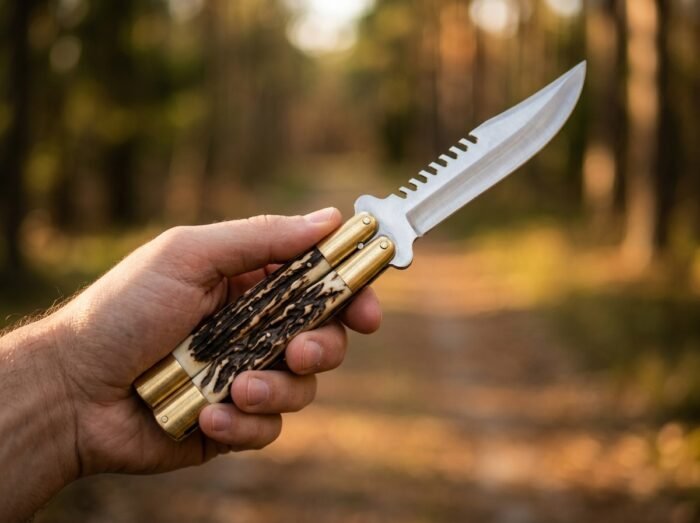
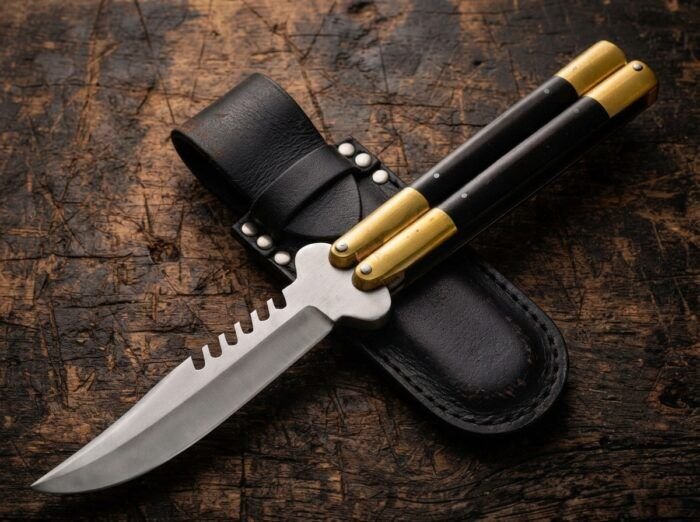
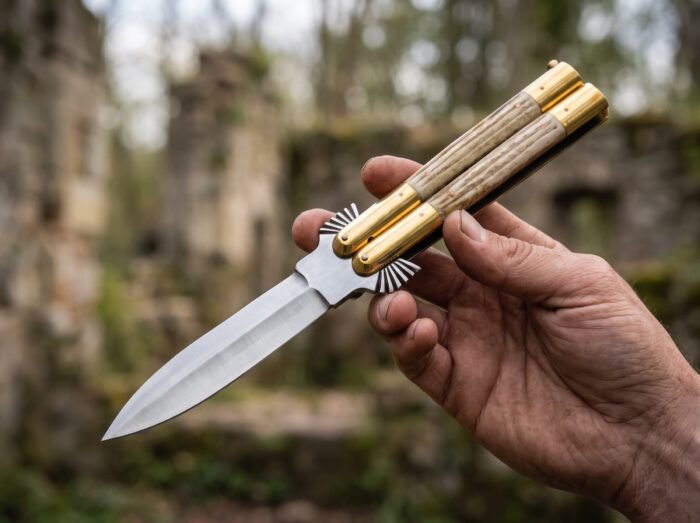
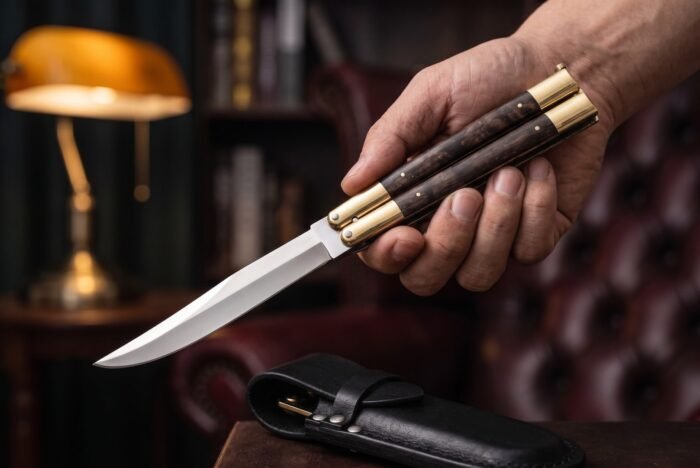
The name is in the blade line. A dagger profile with a spine that curves away like a snake caught mid strike, ground in D2 tool steel, on brass and rose wood handles. 24cm open, 220g. It is the least expensive of the Filipino Traditional knives on this page, and the one people pick up first at a table.
What the snake line of balisongs actually is
Take a symmetrical dagger and it is two straight tapers meeting at a point. Perfectly correct, slightly severe, and the same shape you have seen a thousand times.
Now let the spine relax. Give it a shallow S so that it drops away from the point, runs low through the middle, and lifts again toward the ricasso. The silhouette stops being a triangle and starts being a movement. That is the snake, and it is the entire reason this model exists.
We are going to be honest about what it does
It does not cut better. There is no secret cutting geometry hiding in that curve, and if you find a listing anywhere claiming a snake spine improves penetration or edge retention, you have found somebody writing copy about a knife they have never held. Edge retention comes out of the steel and the heat treat, which on this knife means D2 taken to 58-60 HRC. The spine gets no vote in it.
What the curve genuinely changes is small and worth having:
- It moves a little steel back from the point, so the balance shifts a fraction toward your hand compared with a straight dagger of the same length.
- It gives the eye somewhere to travel, which is why this knife photographs well and why it is the one people ask to hold.
- It makes the spine easier to find by feel in the dark, because the curve tells your thumb which way round the blade is sitting.
Three modest things. We are not going to inflate them into a performance argument.
Beauty is allowed to be the reason
There is a strain of knife writing that treats any decorative choice as a failure of seriousness, as though the only honourable knife is a grey slab optimised for cutting cardboard in a warehouse.
The Batangas smiths did not think that way. Filipino balisongs have carried decorative spines, engraved bolsters, inlaid handles and pierced tangs for as long as anyone has been making them, because these were things people wore and were seen with. A knife is allowed to be looked at.
So if the reason you want the BF-107 is that the line is lovely, that is a complete reason. You do not have to invent a tactical justification for it.
Specification: D2 dagger blade, rose wood handle
| Blade |
D2 tool steel, dagger profile with snake spine |
| Hardness |
58-60 HRC |
| Handle |
Brass with rose wood |
| Overall length |
24cm open |
| Blade length |
12cm |
| Weight |
220g |
Rose wood unstained, brass bolsters unlacquered. Both will change colour over the first year and neither needs you to do anything about it.
The price, since you will notice it
That will strike some people as backwards, because the fancier looking knife is the cheaper one.
It is not a statement about quality. Prices on handmade work follow bench hours and blank yield, and those do not always line up with how ornate something looks. We would rather leave the oddity in plain sight than shuffle the numbers so they tell a tidier story.
Two edges, so read this bit
Dagger means both sides are sharpened. While you are learning, that doubles the number of edges pointed at your hand, and no amount of confidence changes the arithmetic.
The unsharpened trainer is, the option is above Add to Cart, and it is this knife with the bevels left blunt so the weight and balance are unchanged. Learn on that. Our trainer guide goes into it further.
Also check your local rules on double edged blades before ordering the sharpened version, because a lot of jurisdictions treat daggers differently from knives in general.
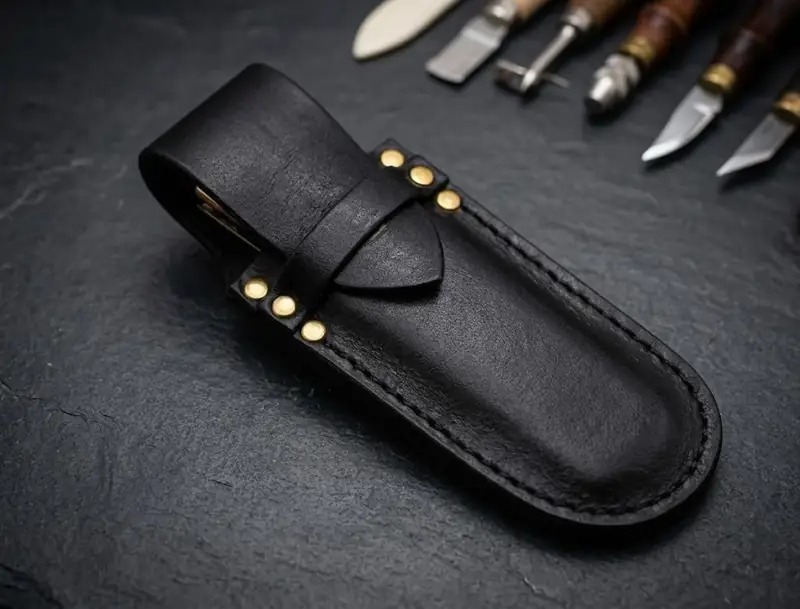
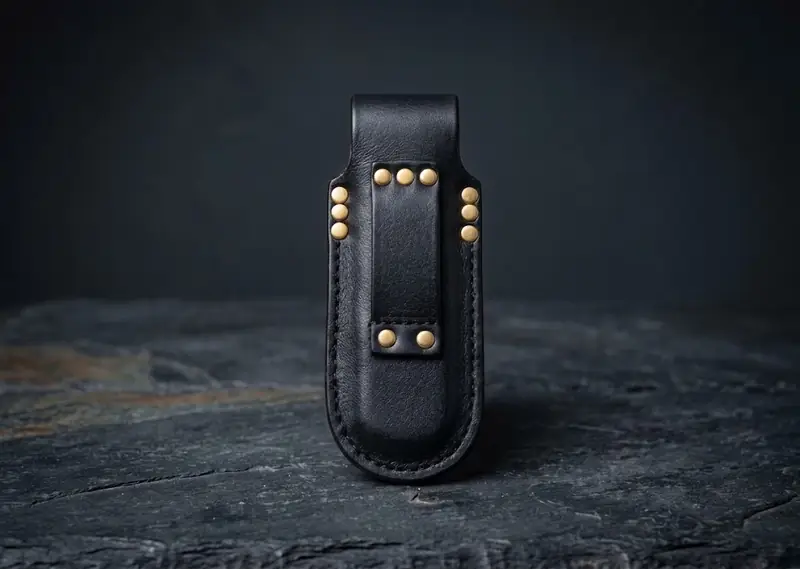
Every knife goes out in a fitted leather sheath. Shipping is free inside the US and a flat $49 anywhere else. Its near twin the BF-108 is the same price if you want to compare the two blade lines side by side.
The rest of the traditional patterns sit in the authentic Filipino balisong collection.





Zachary Roberts –
Bought this on a whim and it turned out to be one of my favorite pickups this year. Couldn’t be happier with this.
Gary Flores –
This is exactly what I wanted and then some. Fit and finish is way above what I expected at this price. Weight is perfectly balanced for flipping. Can’t recommend this enough.
Nicholas Rivera –
This one is well made. Just a couple small things kept it from 5 stars. Action is good though it needed a little tightening on the pivots. Would buy from this shop again.
Kimberly King –
Best butterfly knife I’ve owned so far. Bushings feel buttery smooth after just a bit of use. Shipping was fast and everything arrived well packaged.
Karen Hughes –
Bought this on a whim and it turned out to be one of my favorite pickups this year. Blade came shaving sharp straight out of the box. Beyond happy with how this turned out.
Mark Anthony Ortiz –
Perfect knife. Perfect action. No complaints. Weight is perfectly balanced for flipping. Exactly the kind of quality that keeps me coming back.
Emma Perez –
Perfect knife. Perfect action. No complaints. Highly recommend this one to any flipper. This is why Balisong Butterfly is my go to for anything balisong related.
Victoria Myers –
My buddy couldn’t stop talking about this after I tried flipping it.
Antonio Cole –
My brother was speechless when he tried flipping this. Blade came shaving sharp straight out of the box. Love that it’s rooted in real Filipino balisong tradition but made and shipped from the US. This is the kind of purchase that makes online shopping worth it.
James Vance –
Knew this was a good one the second I felt the weight in hand. This is my new favorite in the collection.
Jack Mendoza –
This looks even better in person than in the listing photos. Handles have a great grip even during fast flips. Will definitely order again for another one.
Mark Davis –
So happy I finally pulled the trigger on this one. Action is smooth right out of the box, no break in needed. Zero complaints from me on this purchase.
Ronald Murphy –
Set my expectations low going in and this blew right past them. Latch snaps shut clean every time. Bushings feel buttery smooth after just a bit of use. Blade came shaving sharp straight out of the box. Can’t recommend this enough.