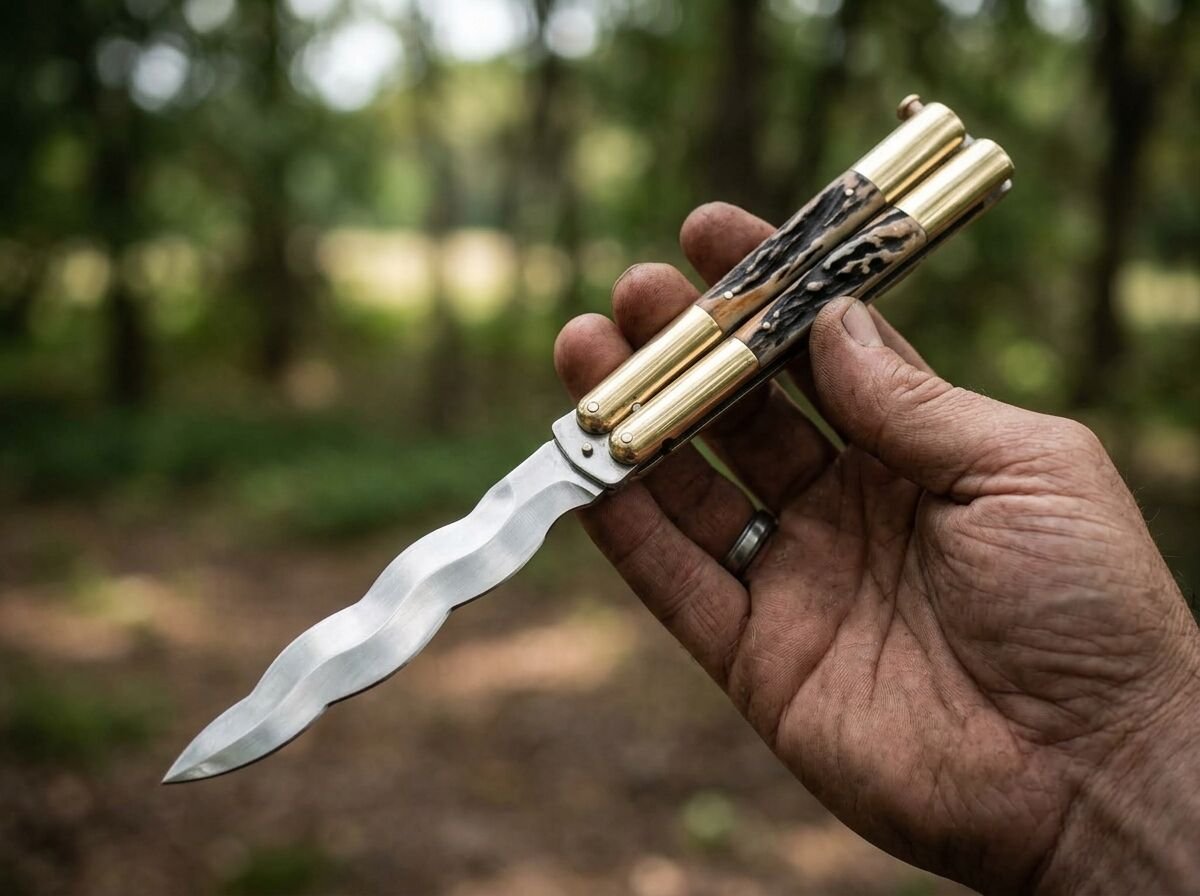
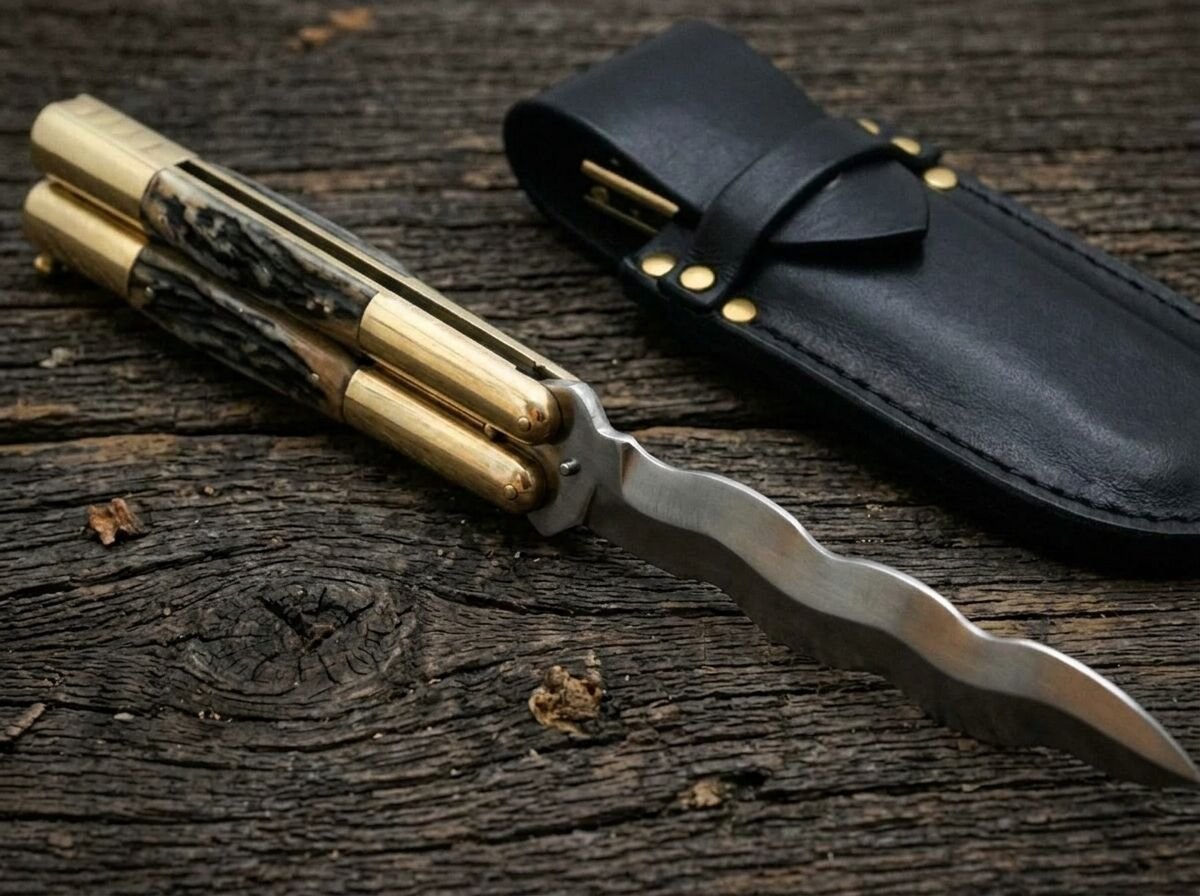
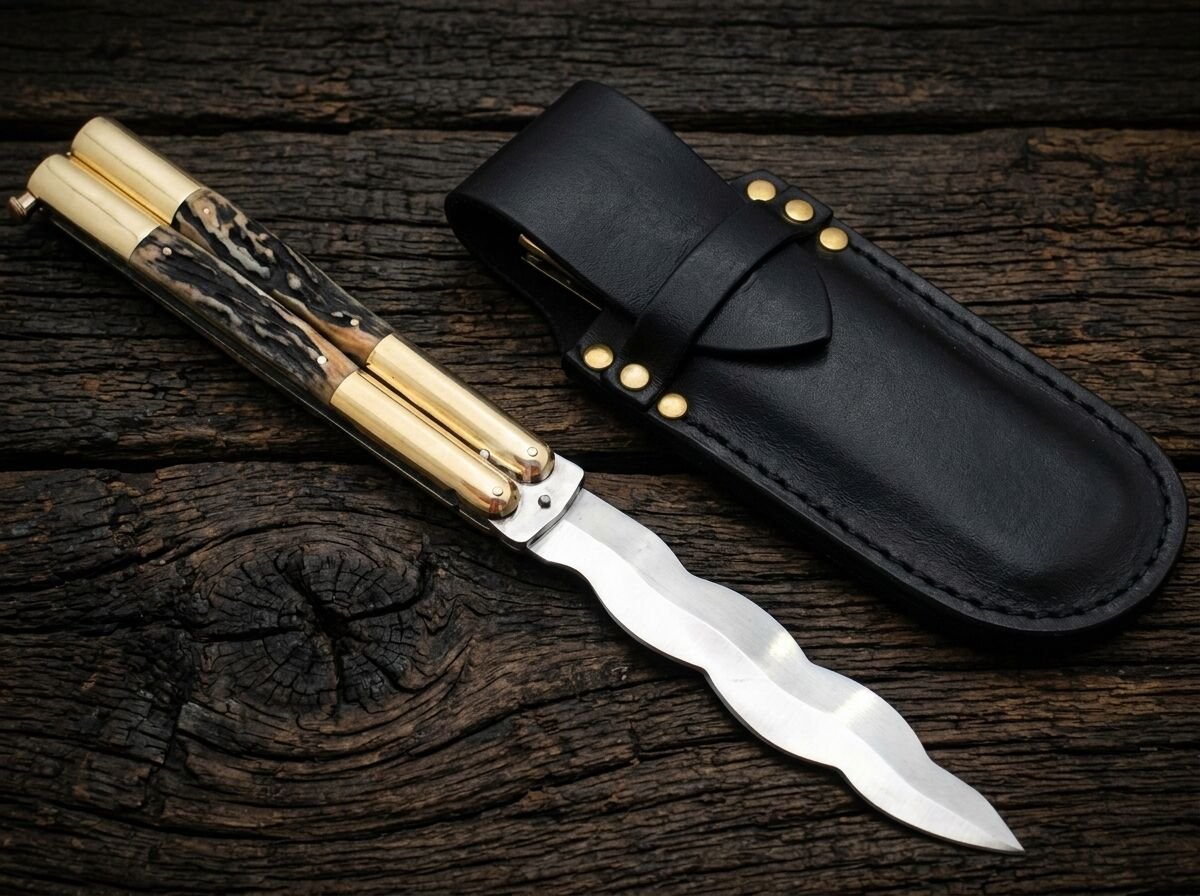
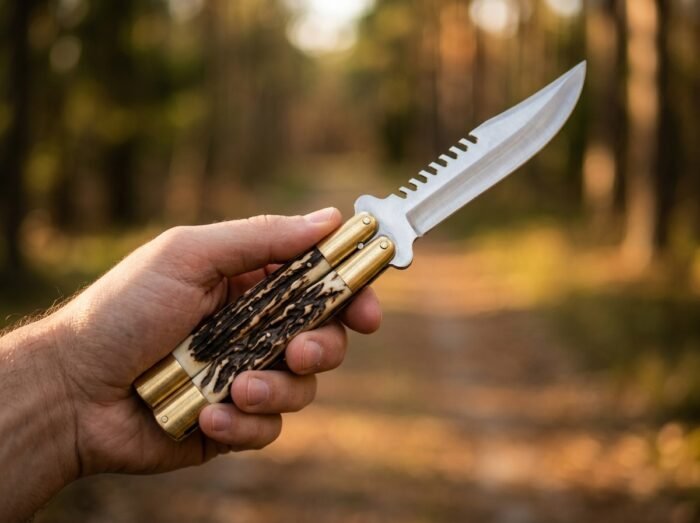
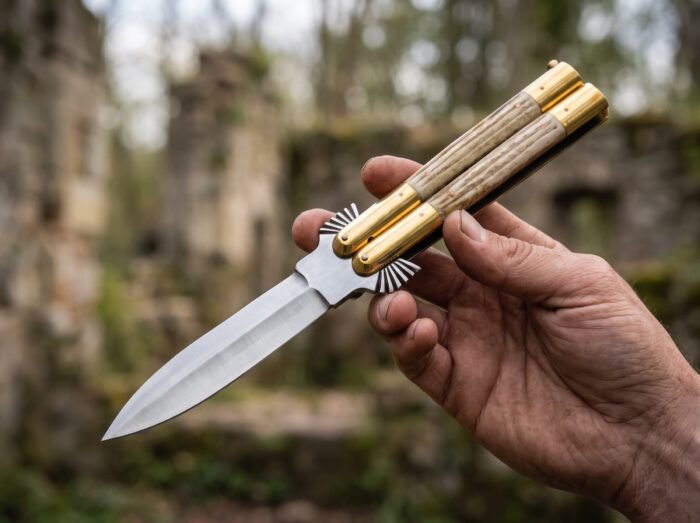
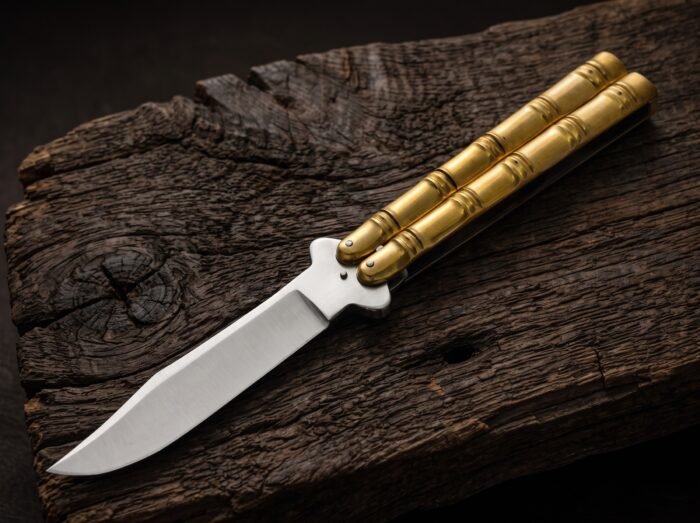
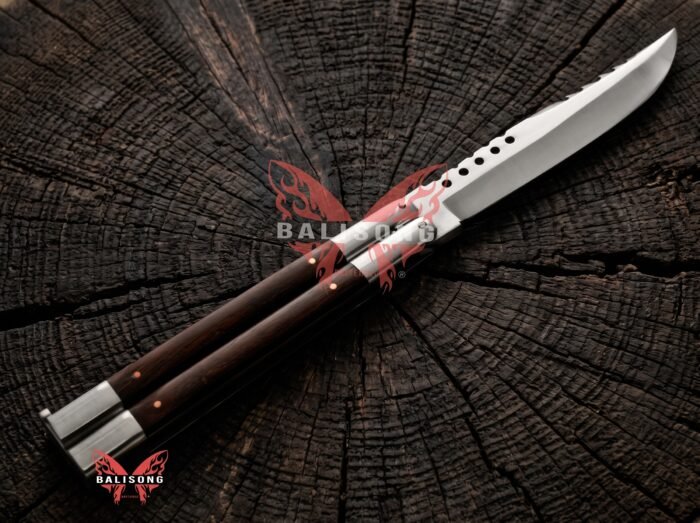
The BF-152 is a D2 double edge with stag panels and brass bolsters. Both sides cut. If you already own single edge balisongs, this page is about what actually changes in your practice, because it is more than people expect and less than they fear.
The move set shrinks
A single edge balisong has a spine, and a surprising number of standard moves quietly rely on it. Anything where the blade passes across your palm, anything where a finger rides the flat, anything where you catch the knife mid-rotation by anything other than a handle.
On a double edge, all of those come off the list. Not because they are difficult, because they are impossible without contact. It does not matter how good you are.
What is left is still most of the vocabulary: rollovers, aerials, twirls, fanning, anything driven from the handles. That is the large majority of what anybody actually does.
Your grip has to be exact
On a single edge you can be approximate. Catch the wrong handle, and the worst case is the spine touching your hand. On a double edge, approximate is how people get cut.
The practical effect is that a double edge makes you a more precise flipper, because it will not tolerate anything else. Several people have told us their single edge work improved after a few months with one of these, which we believe, because the knife removes the option of being sloppy.
How to actually learn on it
- Trainer first, every time. It ships free with this knife. Same frame, same weight, no edges.
- Learn the move until it is boring. Not until you can do it. Until you can do it while thinking about something else.
- Then move to the live blade slowly, and stop the moment your hands get tired. Fatigue is what causes the accident, not difficulty.
- Never learn something new on the sharp one. There is no version of this that ends well.
Sharpening two edges evenly
Twice the work, and symmetry matters. If one side ends up at a shallower angle the blade develops a bias you can feel. Count strokes, match them side for side, and check both edges under a light for a bright reflective line before you stop. A bright line means dull.
D2 at 58-60 HRC on a butterfly knife
Long edge retention, which matters double here because you are maintaining two edges. Sharpens on ordinary stones. High chromium so it resists rust, but it is not stainless and it will spot if you put it away wet.
Stag and brass as a balisong handle
Shed antler between brass bolsters. Stag grips well when hands are damp, which on a double edge is a safety feature rather than a comfort feature. No maintenance required. The brass mellows from gold to brown over the first year.
Who this is for
An experienced flipper who wants to be sharper, in both senses. It is not a beginner purchase and we would talk you out of it if it were your first.
Specifications for this D2 double edge balisong
| Overall length |
29 cm (11.42 in) |
| Blade length |
14 cm (5.51 in) |
| Weight |
205 g (7.23 oz) |
| Blade |
D2 tool steel, double edge |
| Hardness |
58-60 HRC |
| Handle |
Stag with brass bolsters |
| Sheath |
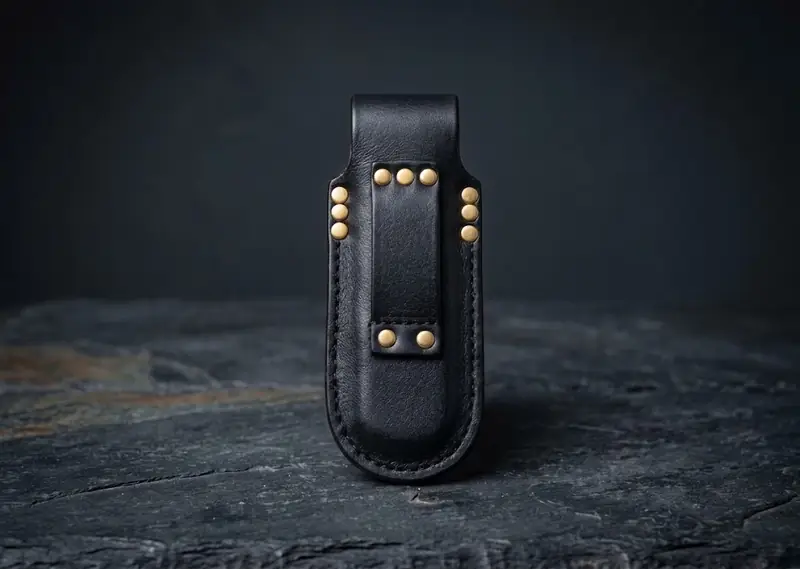
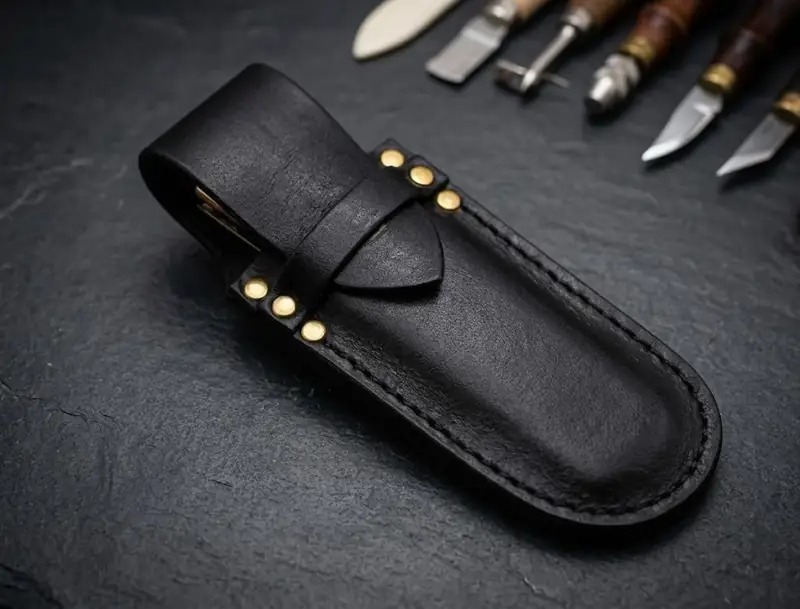
Fitted leather, included |
What ships with it
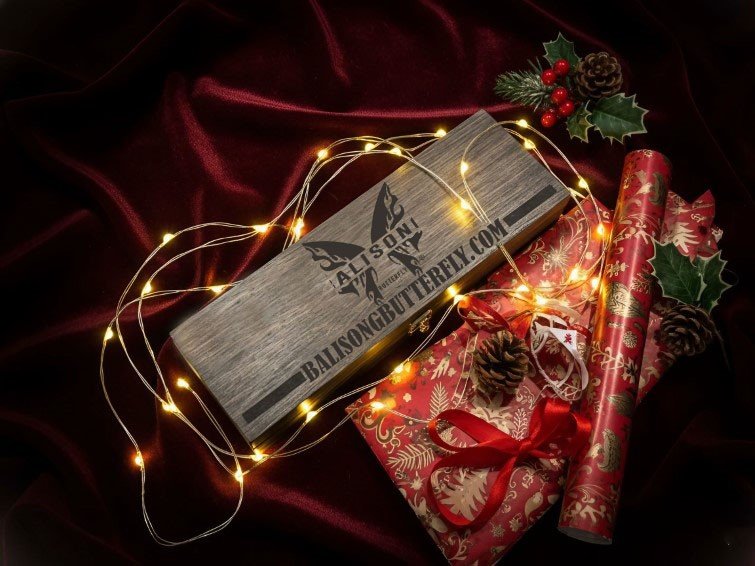
Every knife leaves here sharpened, tuned and flipped by somebody before it goes in the box, with a leather sheath cut to this frame and a gift box around the lot.
Pick Trainer above Add to Cart and you get this same knife unsharpened: same size, same weight, same price. It is the sensible way to learn anything new.
Optional engraving runs $19 for initials or short text and $29 for a custom logo, selected on this page before checkout. United States shipping is free. Elsewhere is a flat $49.
A double edge changes which moves are safe to do, and our guide comparing double edge and single edge balisongs goes through exactly what disappears from your move set and why. The Sulo is part of our custom balisong knives collection, each one fitted by hand to its own handles. For the same double edge blade in a handle that grips better when your palms are damp, the Laya pairs D2 with micarta resin instead of stag.





Sophia Reed –
Feels way more premium than the price suggests. Action is smooth right out of the box. No break in needed. This shop clearly takes pride in their work.
Megan Miller –
Five stars isn’t even enough honestly. Cool that these are made by actual Filipino craftsmen right here in the USA. Blade came shaving sharp straight out of the box. So worth it.
Carlos Foster –
Was nervous ordering a balisong online but so glad I did. Weight is perfectly balanced for flipping. Highly recommend this one to any flipper.
Blake Bailey –
Was nervous ordering a balisong online but so glad I did. Weight is perfectly balanced for flipping. Blade came shaving sharp straight out of the box. Fit and finish is way above what I expected at this price. 10/10 would buy again.
Kenneth West –
Best butterfly knife I’ve owned so far. Fit and finish is way above what I expected at this price. Beyond happy with how this turned out.
Lisa Baker –
Excellent quality for the price point. Action is smooth right out of the box, no break in needed. Beyond happy with how this turned out.
Angela Robinson –
Got this for my own collection and now I want one for myself too. Action is smooth right out of the box, no break in needed. 10/10 would buy again.