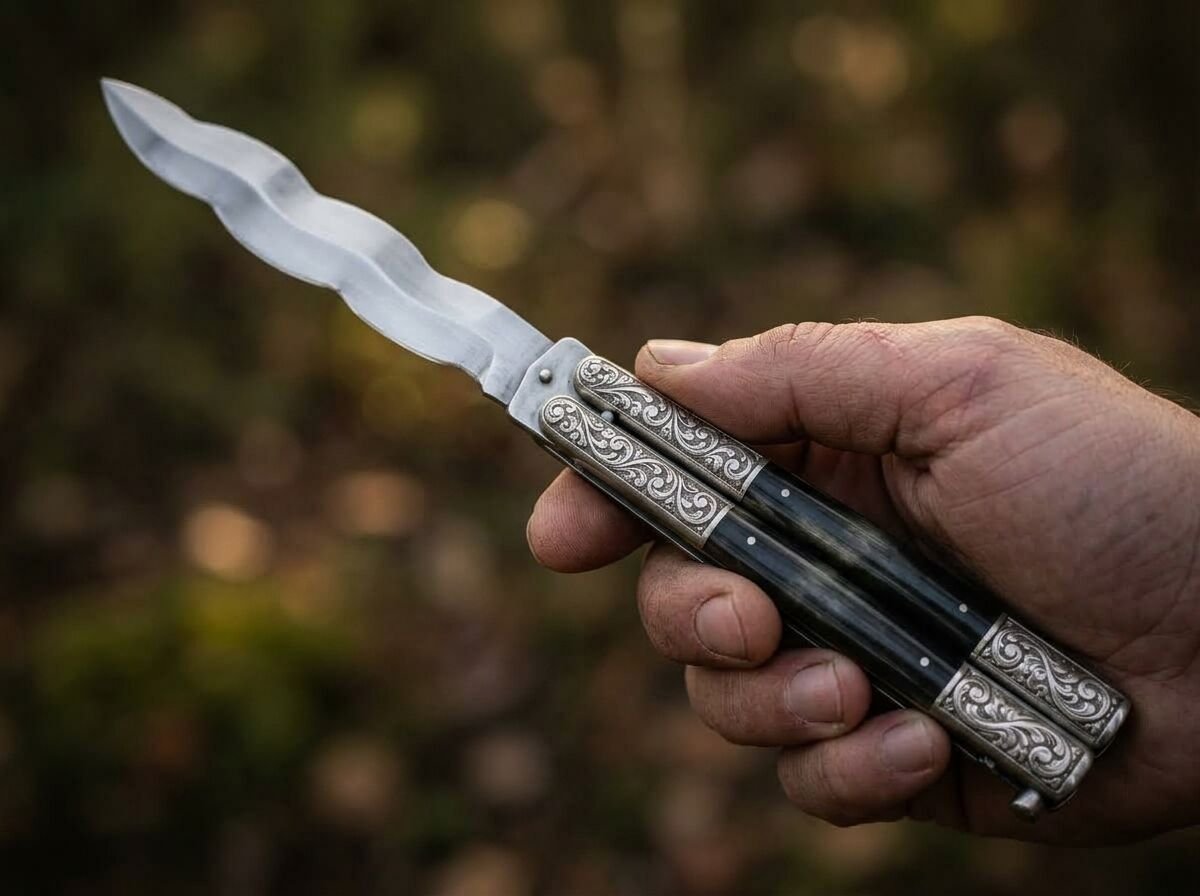
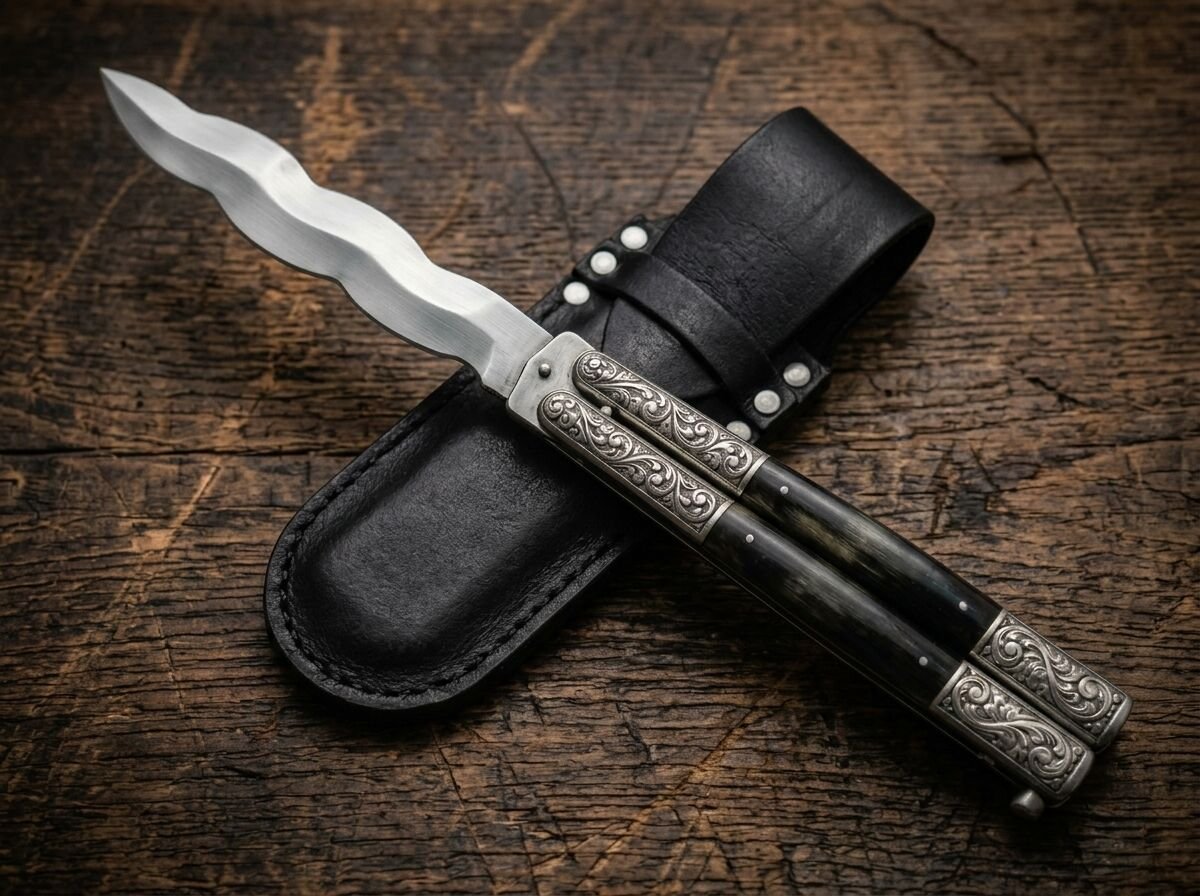
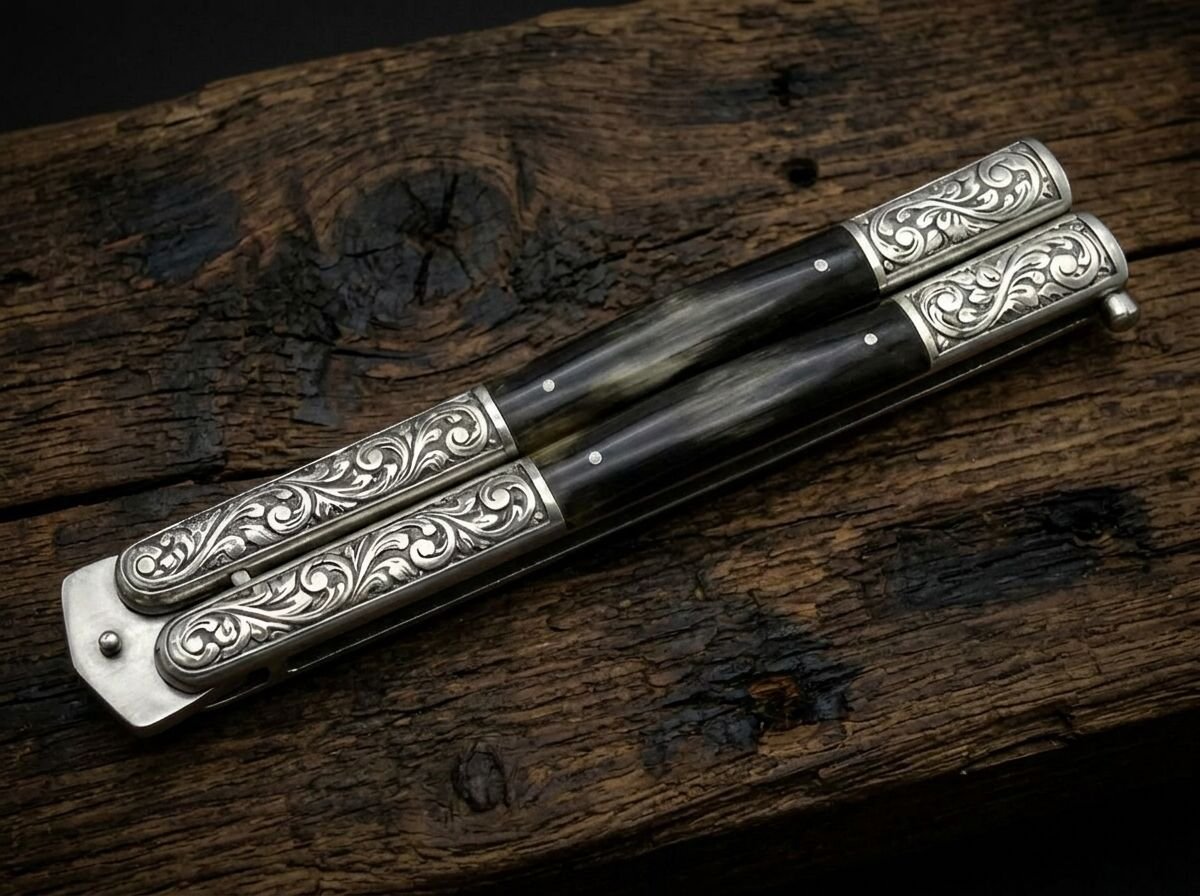
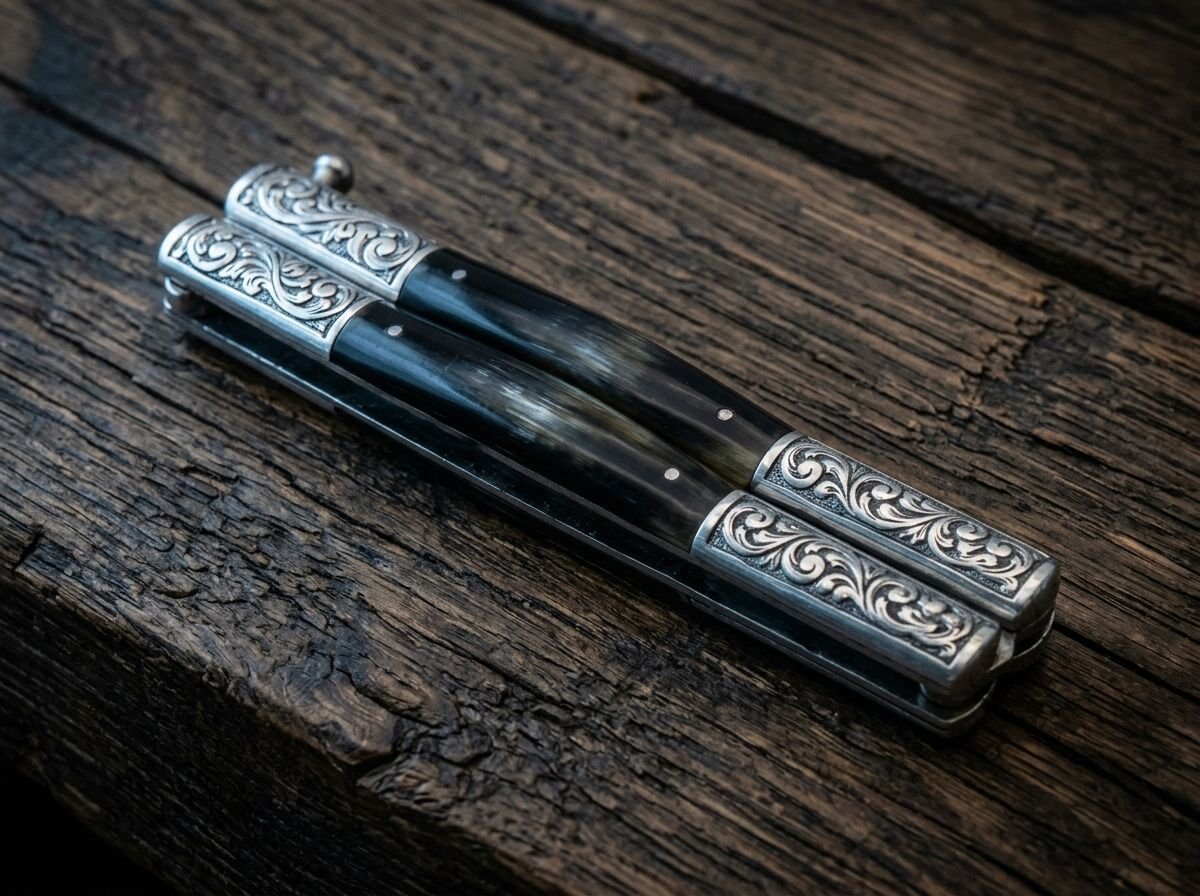
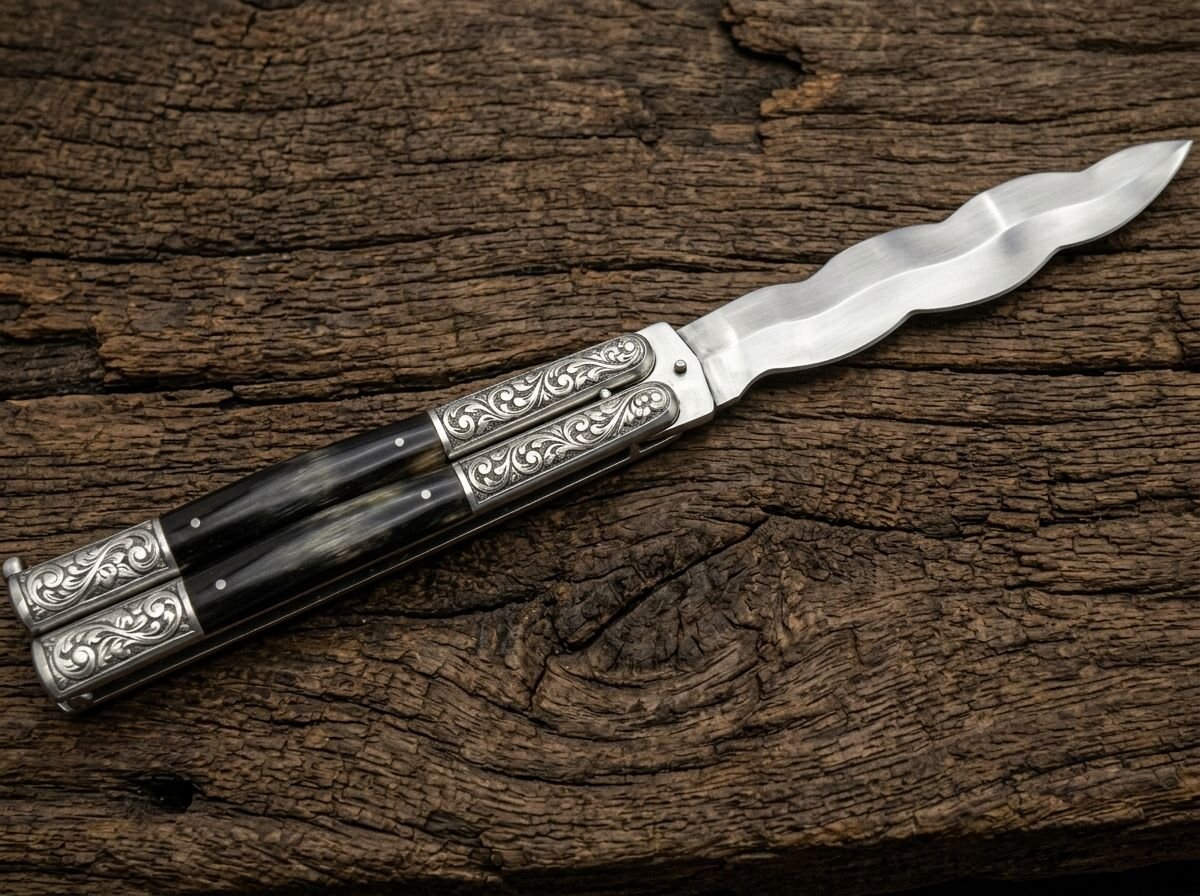
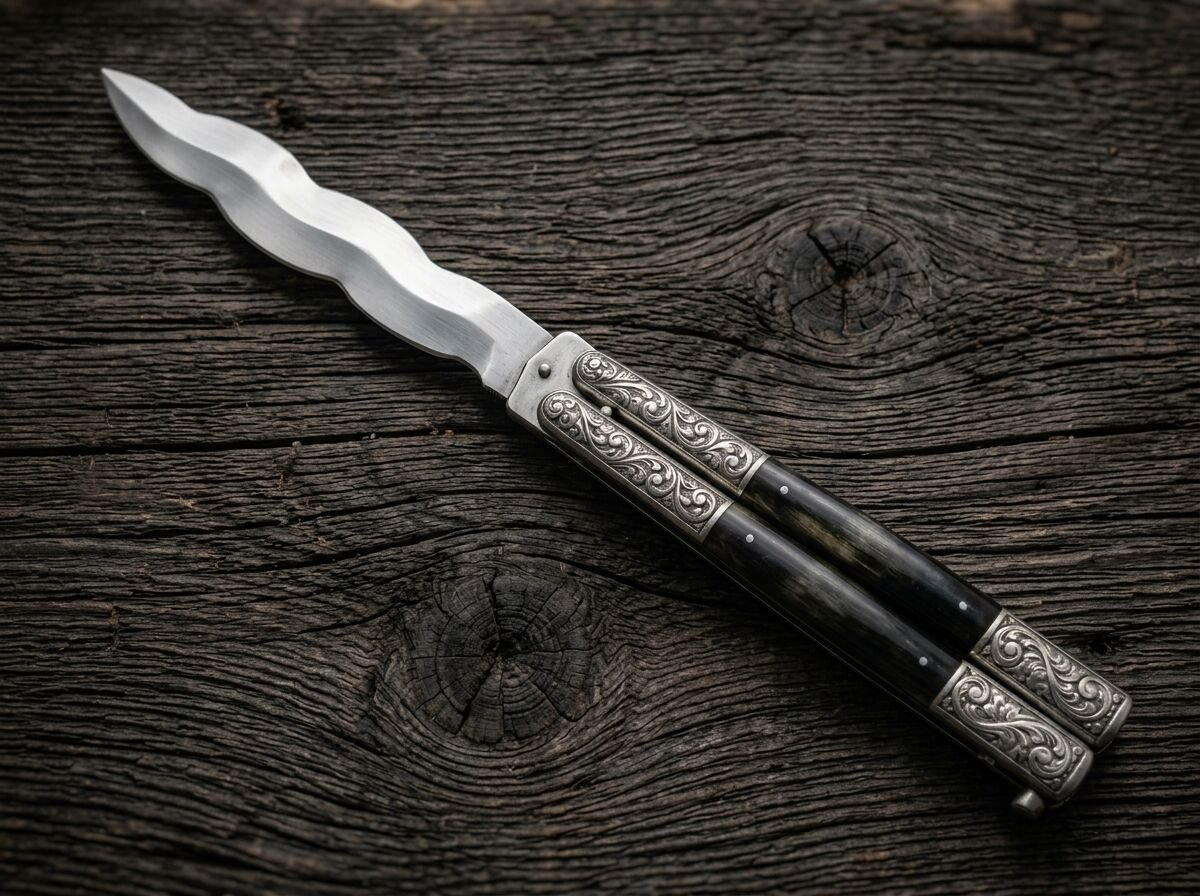
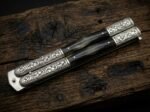
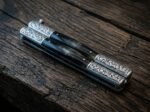
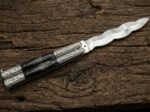
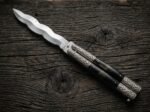
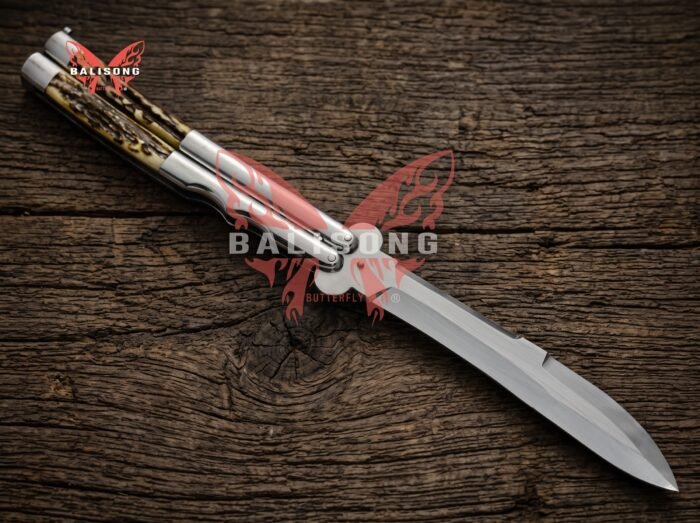
The BF-139 puts a double edge D2 blade between black horn panels with engraved steel bolsters. Horn is the material on this site that people most often buy without knowing what it is, so here is what you are actually getting.
What horn is as a balisong handle
It is keratin. The same material as your fingernails, grown by a buffalo, cut into panels and polished. It is not plastic, it is not resin, and it is not dyed wood. When it is worked on a belt it smells exactly like burning hair, which is the fastest way to tell real horn from an imitation.
Because it grew rather than being manufactured, no two panels are identical. Black horn is rarely uniformly black. Held to a light you will usually find amber streaks, a paler translucent edge, or fine darker banding running with the grain. That is the material telling you it is real.
How it behaves in the hand
- Warm. Horn does not feel cold the way steel or brass does, even in winter.
- Grippy when damp. Slightly tacky against a sweaty palm, which is more useful than it sounds during a long flipping session.
- Light. Lighter than wood of the same volume, which is why the balance on this one sits a touch further back toward the pivot.
- Quiet. Horn against steel makes a softer sound than wood against steel. Some people buy horn purely for that.
Looking after it, and the one thing that will ruin it
Horn is stable in normal conditions and will last decades. It has one enemy: extreme dryness. Left for years in a hot, dry place with no handling, horn can crack along the grain, and a cracked horn panel cannot be repaired invisibly.
The fix is trivial. Handle the knife, which puts skin oil into it, or wipe the panels with a trace of mineral oil once or twice a year. Do not soak it, do not put it in a dishwasher, do not leave it on a radiator or a car dashboard in summer. That is the entire maintenance regime.
Engraved steel bolsters
Steel bolsters rather than brass on this one, and they are engraved by hand. Steel is harder than brass, which means it holds a crisp engraved line better and it takes longer to cut. It also stays grey rather than mellowing to gold, so the contrast against black horn stays sharp instead of warming up over the years.
The D2 blade
D2 tool steel, hardened to 58-60 HRC, sharpened on both sides. Double edge means no safe spine, so learn anything new on a trainer and bring it to this knife once it is automatic.
Who this is for
Somebody who wants a dark, quiet, serious looking knife and does not mind that horn asks for a wipe of oil once a year. It is toward the top of the D2 range, and the money is in the horn selection and the hand engraving rather than in the steel.
Specifications
| Overall length |
29 cm |
| Blade length |
14 cm |
| Weight |
205 g |
| Blade |
D2 tool steel, double edge |
| Hardness |
58-60 HRC |
| Handle |
Black horn with engraved steel bolsters |
| Sheath |
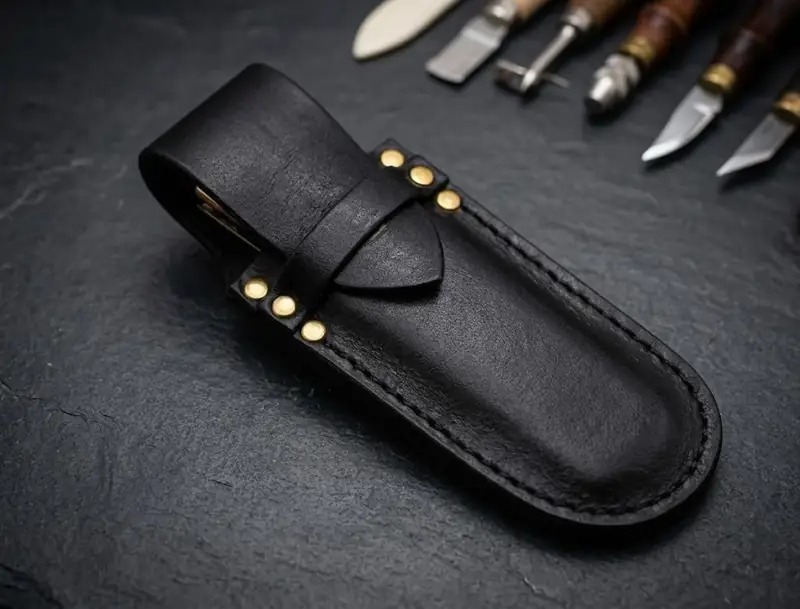
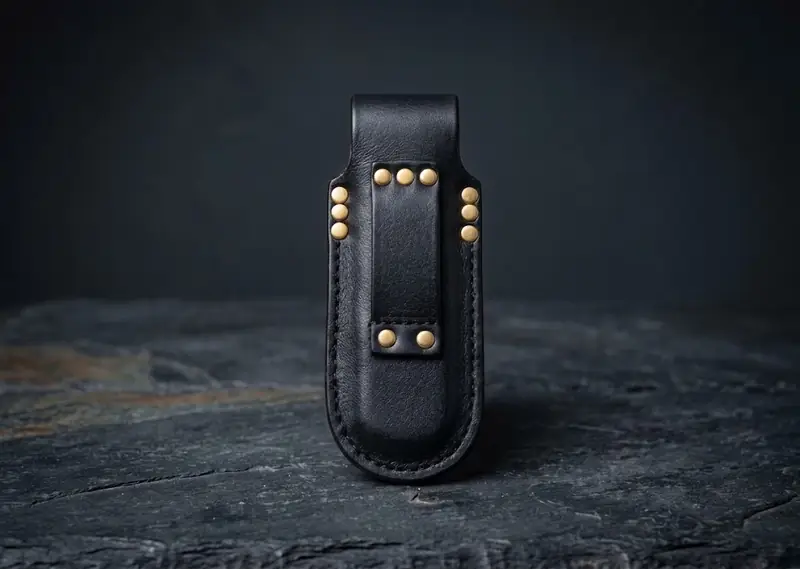
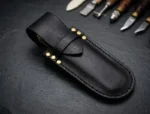
Fitted leather, included |
In the box with this D2 butterfly knife
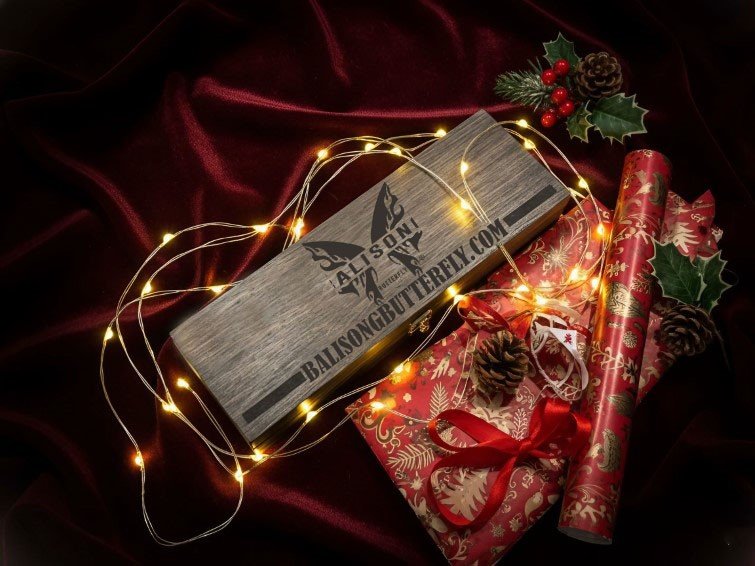
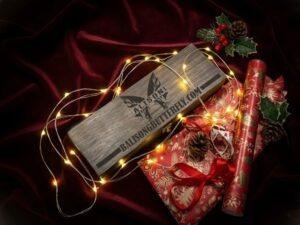
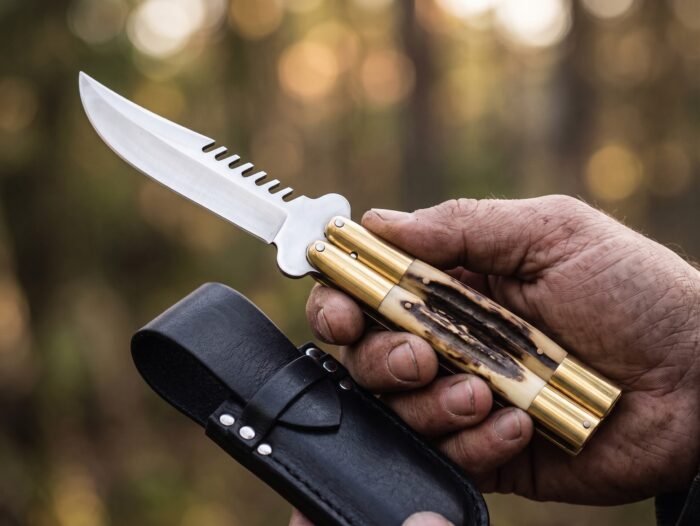
The knife, sharpened and tuned by hand before it left the bench. A fitted leather sheath, cut for this frame rather than bought by the dozen. A gift box, because a good number of these are bought for somebody else.
You can have this one unsharpened instead: same frame, same weight, no edge, and the same price either way. Choose it on this page.
Engraving is optional. Initials or short text $19, a custom logo $29, chosen before you add to cart. Shipping is free within the United States and a flat $49 everywhere else.
Black horn is keratin rather than plastic or dyed wood, and how it behaves, ages and occasionally needs a wipe of oil is covered in our handle materials guide. The Uling sits in the Balisong Prime collection. Its double edge blade and engraved bolsters are echoed in the Pamana, which pairs the same construction with stag and copper instead of horn and steel.
Buying for groomsmen? This balisong also comes as a matched set of 6, 15% less than buying six singly, and each one can carry its own engraved name.


Reviews
There are no reviews yet.