
Blog
Wipe the blade and channels with a dry or barely damp cloth after every flipping session, then put one small drop of light knife oil on each pivot every few weeks. That is ninety per cent of butterfly knife care. A deep clean, with the knife stripped or the channels flushed and dried, is a once-in-a-while job. Never put a balisong in a dishwasher, and never soak one with horn or wood handles.
That is the short version. Below is the full routine, which solvents are safe on which handle materials, how much oil is actually enough, what to use on a kitchen balisong, and the specific mistakes that turn a good knife into a project.
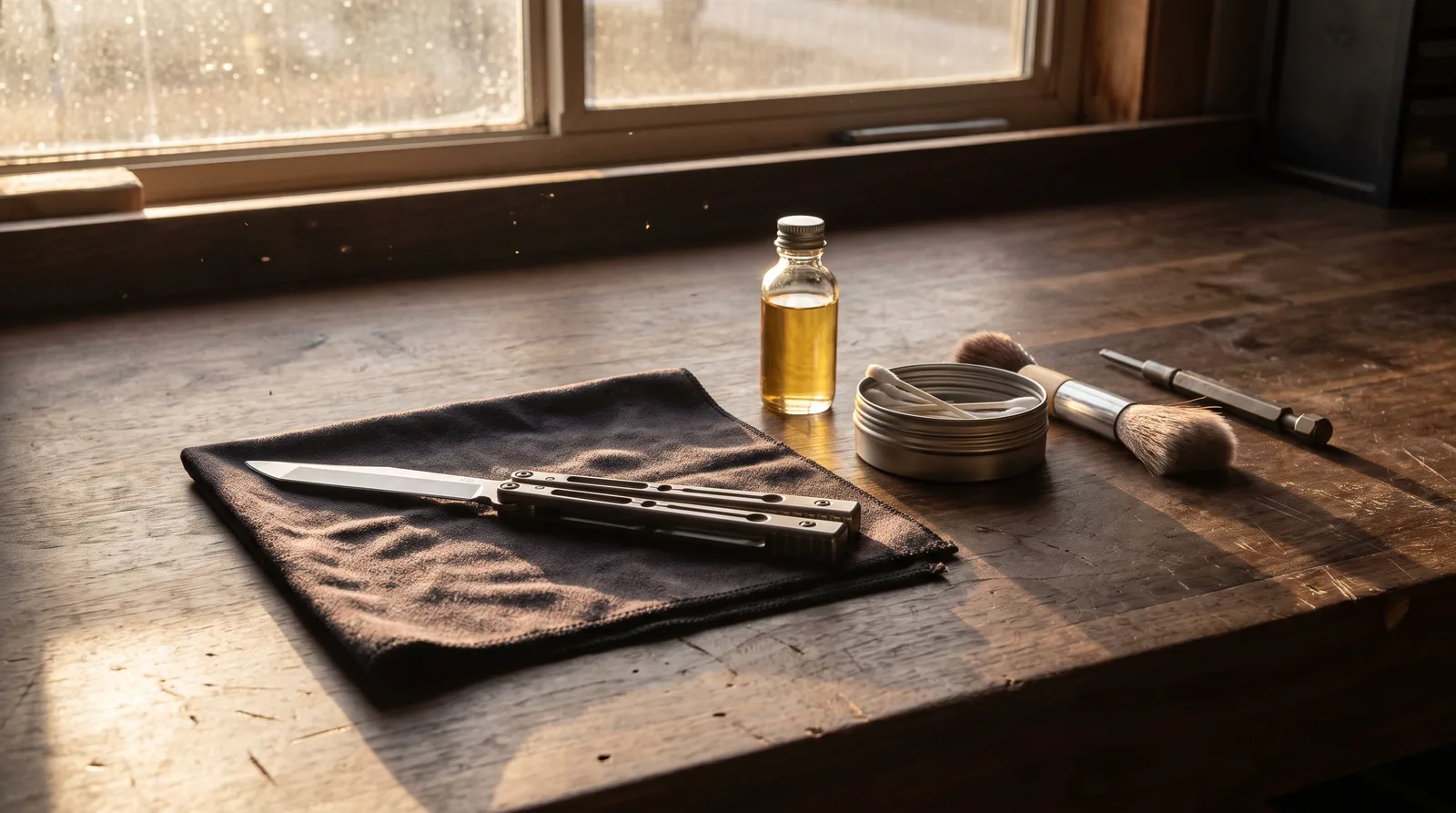
The Two-Minute Wipe That Prevents Most Problems
Almost every knife that arrives at a workshop needing serious attention got there through neglect rather than damage. Sweat, pocket lint and skin oil are what actually kill balisongs, and they are removed with a cloth in about two minutes.
- Open the knife fully and latch or hold it so the handles cannot swing.
- Wipe the blade from spine to edge, both flats, with a dry microfibre cloth. Never wipe along the edge with your fingers behind the cloth.
- Run a corner of the cloth or a cotton swab down the inside of each handle channel, where lint collects.
- Wipe the outside of the handles, especially where your hand grips.
- Swing the handles a few times. If anything sounds gritty, it needs more than a wipe.
Do this after every session with a high carbon knife, and after any session where your hands were sweaty, whatever the steel. High carbon steel will start showing spots within a day in humid conditions. That is the price of the edge it takes.
What You Need, and What to Keep Away From It
A short kit covers everything: a microfibre cloth, cotton swabs, wooden or plastic toothpicks for lifting lint out of channels, isopropyl alcohol, a light knife oil, food-grade mineral oil if you own a kitchen balisong or natural handle materials, and compressed air if you own a bearing knife.
Keep these away from the knife: steel wool and abrasive pads, household bleach and bathroom cleaners, anything with ammonia, dishwasher detergent, and any solvent you have not checked against your handle material. Also keep it away from the sink. More balisongs are damaged by being rinsed under a tap than by any solvent, because water goes into places you cannot dry.
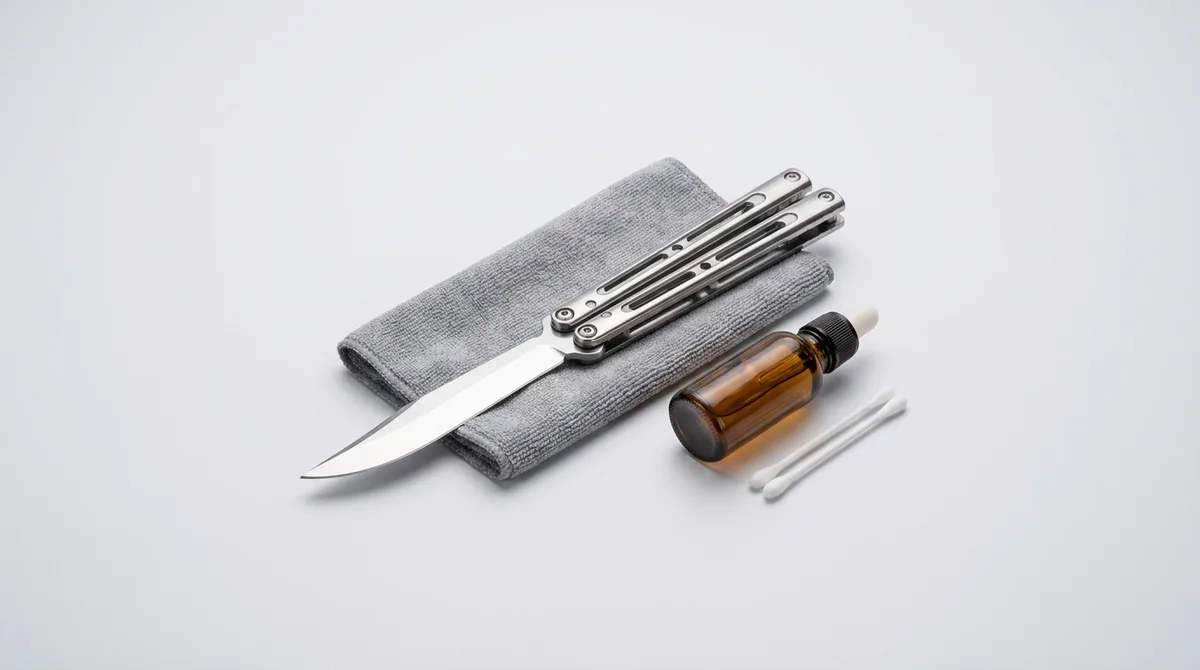
The Deep Clean, Step by Step
Do this when the swing has gone gritty, when the knife has been carried for months, or after it has been anywhere dusty or salty.
- Decide whether to disassemble. If your knife has pivot screws and you own drivers that genuinely fit, taking it apart gives the best clean. If it has peened pins, it does not come apart, so clean it assembled. If in doubt, clean it assembled.
- Photograph it before it comes apart. Washers, spacers and bearing cages all go back in a specific order and orientation, and you will not remember.
- Lift the debris out dry first. Toothpick and swab down the channels. Removing lint before you introduce any liquid stops you turning dust into paste.
- Clean the metal. Isopropyl alcohol on a cloth or swab, on the blade, tang, liners and pivot area. Alcohol flashes off quickly, which is exactly what you want near a pivot.
- Keep solvent off natural materials. Horn, bone, stag and untreated wood do not want alcohol, and they emphatically do not want acetone. Clean those with a barely damp cloth and dry them immediately.
- Dry everything properly. Compressed air, or a cloth and patience. Do not use a hairdryer or a heat gun on a knife with natural handle materials.
- Reassemble and tune. Cleaning changes the tension, so re-check the swing and the play. The method is in the tuning guide.
- Oil last. One drop per pivot, then swing to distribute, then wipe away everything that has migrated out.
Handle Materials and What They Tolerate
This is where most avoidable damage happens, because people apply the advice for one material to a knife made of another.
| Material | Safe | Avoid | Notes |
|---|---|---|---|
| Horn | Dry or barely damp cloth; a little food-grade mineral oil on a cloth | Soaking, alcohol, acetone, heat, dishwashers, prolonged sunlight | Horn is keratin and holds moisture. Dried out, it shrinks and cracks. Wipe with mineral oil occasionally, never soak the knife |
| Bone and stag | Dry cloth; a light mineral oil wipe | Soaking, hot water, strong solvents | Same failure mode as horn. Collectors oil loose bone and stag scales, but you cannot soak inserts fitted into a balisong channel |
| Untreated hardwood | Dry cloth; a wipe of mineral or dedicated wood oil | Water, soaking, alcohol, dishwashers | Wood swells when wet and shrinks as it dries, which loosens inserts |
| Stabilised wood | Damp cloth, mild soap if needed | Soaking, solvents | Resin-impregnated, so far more water-tolerant than raw wood, but not waterproof |
| Micarta | Mild soap and a damp cloth; isopropyl alcohol on a cloth | Aggressive solvents, prolonged soaking, abrasive pads | Canvas or linen in resin. Slightly porous, so it takes on stains and darkens with hand oil. Many owners consider that patina rather than damage |
| G10 | Soap and water, isopropyl alcohol, a soft brush | Very little. Abrasives will dull the texture | Fibreglass in epoxy. The most chemically tolerant common handle material and the easiest to clean |
| Brass, copper, nickel silver | Dry cloth; a metal polish if you want the shine back | Bleach, ammonia cleaners, abrasive pads | These tarnish. Tarnish is not corrosion, and on a traditional knife many owners leave it |
| Stainless and titanium | Soap and water, alcohol, most mild cleaners | Abrasives on a polished finish | Easy. Dry it anyway so water does not sit in the channel |
| Anodised aluminium | Damp cloth, mild soap | Alkaline cleaners, oven cleaner, strong solvents | The colour is in the anodised layer. Harsh chemistry strips it and it does not come back |
If you are not sure which material you have, test any liquid on a hidden spot first and wait. Most of the mistakes in this table are irreversible.
Oiling the Pivots: How Much Is Enough
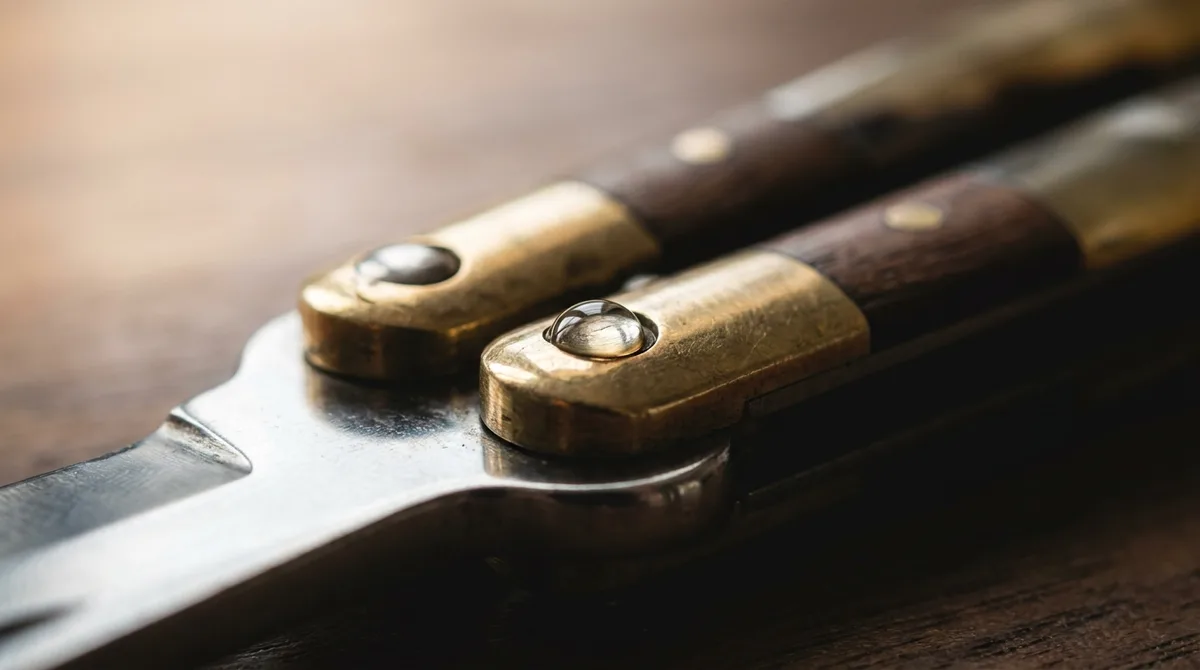
Less than you think. One small drop per pivot, per side, is the standard amount, and on most knives that means four drops in total. Apply it where the washer or bearing meets the tang, swing the handles a dozen times so it spreads, then wipe away everything that has come back out.
Excess oil is not neutral. It creeps out onto the handles, it attracts dust and lint, and dust suspended in oil is a grinding paste. A knife that has been over-oiled for a year is dirtier inside than one that was never oiled at all.
Use a light oil intended for knife pivots. Heavy oils and greases feel plush for a week and then hold every particle of dirt they meet. For rust protection on the blade itself, a dedicated corrosion-inhibiting product does a better job than pivot oil, and our knife care page names the ones we use.
Washers and Bearings Need Different Treatment
A washer pivot usually recovers from grit with a wipe, a flush of alcohol and fresh oil, without coming apart. A bearing pivot often does not, because the particles sit between the balls and the race where nothing external can reach them. If a bearing knife has gone notchy, it needs stripping, cleaning and re-oiling, and no amount of extra oil poured in from the outside will fix it.
Compressed air is genuinely useful on bearings, both to blow debris out before cleaning and to dry the assembly afterwards. Use short bursts, keep the can upright so it does not spit propellant, and hold the handles so they cannot swing. The differences between the two systems are set out in the washers vs bearings guide.
Rust, Especially on High Carbon Steel
High carbon steel rusts. That is not a fault, it is the trade you accept for how well it takes and holds an edge, and it is why traditional Filipino balisongs have been made from it for generations. Manage it rather than resent it.
Prevention is a dry blade and a very thin film of oil. Wipe after handling, do not store the knife in a leather sheath or a damp drawer, and never put it away wet. Fingerprints are mildly acidic and are the usual starting point for spotting, which is why the wipe matters more than the oil.
For light surface spotting, oil and a soft cloth will usually take it off. For heavier rust, a mild abrasive cleanser used gently and then rinsed and dried completely is the traditional answer, and our knife care page names one. Work slowly, keep it off natural handle materials, and accept that aggressive rust removal will change the finish. Deep pitting is not something a cloth fixes. Once the steel is pitted, the edge in that area is compromised and the knife needs a maker’s attention, not more scrubbing. The sharpening guide covers what to do with an edge that has been affected.
Kitchen Balisongs and Food-Safe Oil
A balisong used on food needs a different lubricant, and this is one of the few places where the right answer is specific. General knife oils are not formulated for food contact. Two options are appropriate:
- Food-grade white mineral oil. Colourless, effectively odourless, chemically neutral, cheap, and the same product used on cutting boards and butcher blocks. It is also what natural handle materials want, so one bottle covers two jobs.
- An NSF H1 registered lubricant. The H1 category covers lubricants formulated for incidental food contact. H2 is for machinery with no food contact at all, so it is the wrong category here. If a product does not state its registration, treat it as not registered.
Clean a kitchen balisong immediately after use rather than at the end of the session, because acidic foods sitting on high carbon steel will mark it within minutes. Wash by hand, dry at once, dry the channels as well as the blade, and re-oil the pivots more often than you would on a flipping knife, because you are washing the oil out every time. Our kitchen balisongs are still knives with a pivot, not utensils, and they will not survive being treated like a spoon.
What Not To Do
| Do not | Why |
|---|---|
| Put it in the dishwasher | Heat, aggressive detergent and a long wet cycle. It rusts carbon steel, strips the pivot lubricant, and destroys horn, bone and wood. There is no version of this that ends well |
| Use WD-40 as a pivot lubricant | Its maker lists lubrication among its uses, but it is a thin, solvent-carried product. It will flush the oil already in your pivot and leave very little behind. As an emergency flush for a seized, rusty pivot it has a role, but clean it out and oil properly afterwards |
| Soak a horn, bone, stag or wood-handled knife | Natural materials absorb water, swell, then shrink as they dry. The result is loose inserts and cracks that do not close up again |
| Rinse it under a running tap | Water gets into the pivot and the channel and you cannot get it back out. Rust starts in the places you cannot see |
| Use acetone on natural or anodised materials | It strips oils out of horn and bone and can attack some finishes. Keep it for cleaning old thread locker off threads |
| Use steel wool or abrasive pads on the blade | It leaves scratches that hold moisture, which makes the next rust worse than the last |
| Over-oil to compensate for not cleaning | Oil plus dust equals grinding paste. This wears pivots faster than running slightly dry |
| Store it wet, or in a leather sheath | Leather holds moisture against steel. A dry drawer or a case beats a sheath for long-term storage |
| Heat-dry a knife with natural handles | Hairdryers and heat guns drive moisture out of horn and wood far faster than they can tolerate, and cracking follows |
How Often to Do What
| Task | Daily flipping | Occasional use | Kitchen use | Collection piece |
|---|---|---|---|---|
| Wipe blade and channels | After every session | After every use | Immediately after every use | Whenever handled |
| Oil the pivots | Every few weeks | Every couple of months | After every wash | Every few months |
| Deep clean | When the swing goes gritty | Once or twice a year | Monthly | Rarely |
| Oil natural handle materials | Every few months | Every few months | Every few months | Every few months |
| Protective oil on a carbon blade | Weekly, more in humidity | Monthly | After every wash | Every few months, and before storage |
| Check pivots for play | Weekly | Monthly | Monthly | Occasionally |
Adjust for your climate. Humid, coastal and tropical conditions move every row in that table closer together, and a high carbon knife in a damp house needs attention that a stainless knife in a dry one does not. If you want to know which of those you own, the steel guide explains the differences.
Butterfly knife laws vary by state, county and city. Check your local law before buying or carrying one.
More reading: Balisong anatomy · How to tune a balisong · Washers vs bearings · Sharpening a balisong · Knife care
Frequently Asked Questions
How often should I oil my butterfly knife?
For a knife you flip daily, one small drop per pivot every few weeks is plenty. For occasional use, every couple of months. Oil when the swing feels dry or starts to squeak rather than on a fixed schedule, and always wipe away the excess: oil left sitting on the outside collects dust and turns into an abrasive.
Can I use WD-40 on a balisong?
Not as a lubricant. It is a thin, solvent-carried product that will flush out the oil already in your pivot and leave very little behind. It has a legitimate use as an emergency flush on a seized or rusty pivot, but clean the residue off afterwards and follow it with a proper knife oil.
Is it safe to wash a butterfly knife with soap and water?
Only if the handles are G10, stainless, titanium or stabilised wood, and only with a damp cloth rather than a soak or a running tap. Water in the pivot and channels causes rust you cannot see. Knives with horn, bone, stag or untreated wood inserts should never meet more than a barely damp cloth.
What oil is food safe for a kitchen balisong?
Food-grade white mineral oil is the simple answer: neutral, odourless, inexpensive and the same product used on cutting boards. Alternatively, use a lubricant registered in the NSF H1 category, which covers incidental food contact. H2 products are for equipment with no food contact and are not appropriate on a knife.
How do I clean the pivot without taking the knife apart?
Lift loose debris out dry with a toothpick and cotton swab first, then work a little isopropyl alcohol into the pivot area on a swab and swing the handles to distribute it. Dry thoroughly, ideally with compressed air, then re-oil. If the swing is still notchy afterwards, it needs disassembly.
Will a dishwasher really damage a butterfly knife?
Yes, reliably. It combines heat, a long wet cycle and a detergent designed to strip fats, which is exactly what your pivot lubricant is. Carbon steel comes out spotted, natural handle materials come out cracked or loose, and the pivot comes out dry. This applies to kitchen balisongs too.
How do I care for horn or bone handles on a balisong?
Keep them dry and keep solvents away from them. Wipe with a dry or barely damp cloth, and every few months put a little food-grade mineral oil on a cloth and work it over the surface. Horn is keratin and holds moisture, so it shrinks and cracks when it dries out or gets heated.
What should I do about rust spots on a high carbon blade?
Deal with light spotting immediately, using oil and a soft cloth. Heavier rust responds to a mild abrasive cleanser used gently, then rinsed and dried completely, keeping it clear of natural handle materials. Accept that this changes the finish. Deep pitting is past the point a cloth fixes and needs a maker.
Should I oil the blade as well as the pivots?
On carbon steel and Damascus, yes: a very thin film protects against corrosion, particularly before storage. On stainless it matters less but does no harm. Use a corrosion-inhibiting product rather than pivot oil for this job, and wipe the blade before you use it on anything you intend to eat.
Can I use compressed air on a bearing balisong?
Yes, and it is one of the more useful tools for them. Use short bursts to blow debris out before cleaning and to dry the assembly afterwards. Keep the can upright so it does not spit liquid propellant, hold the handles so they cannot swing, and re-oil afterwards because the air removes lubricant too.