
Blog
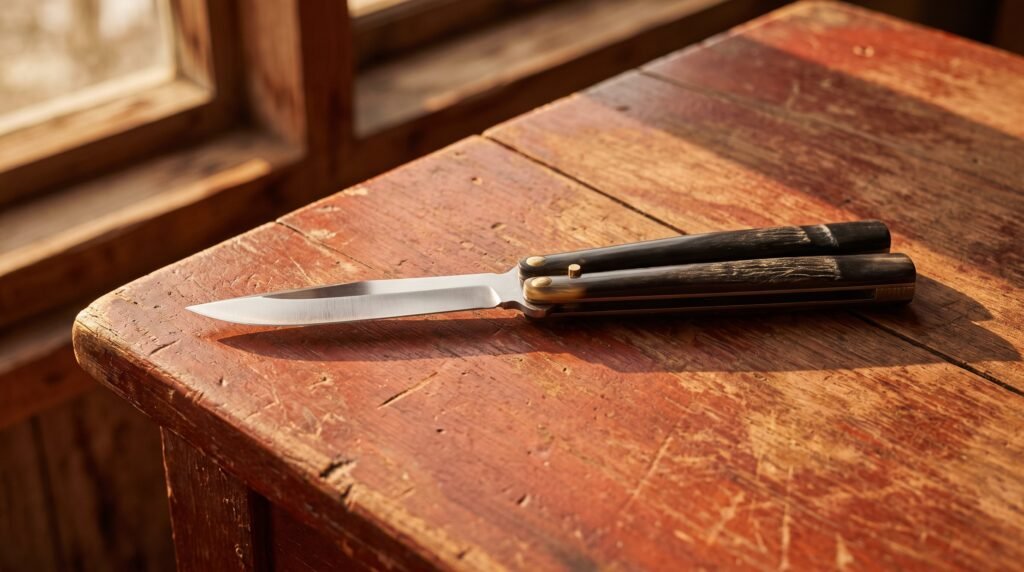
The Batangas knife, better known around the world as the balisong or butterfly knife, is a folding knife that originated in Batangas province in the Philippines, where it has been forged by hand for well over a century. Its two rotating handles fold around the blade like butterfly wings, and its spiritual home is a small barangay in the town of Taal that is literally named Balisong. A true Batangas balisong is not a factory product: it is cut, ground, fitted, and finished by individual craftsmen, often in family workshops where the skills pass from parent to child. This guide explains where the Batangas knife comes from, why the town of Taal matters so much, and how to tell an authentic handmade Filipino balisong from a mass-produced imitation.
Short answer: a Batangas knife is a balisong, the Filipino butterfly knife, named after Batangas province in the Philippines where it has been forged by hand since the early 1900s. The heart of the craft is Barangay Balisong in the town of Taal. A genuine Philippines balisong is hand cut, hand ground and hand fitted, and the classic full size measures 29 cm open, the veinte y nueve. We forge these ourselves, so here is the blunt version: most knives sold online with a Batangas story attached have never been within 7,000 miles of Taal.
What Is a Batangas Knife?
“Batangas knife” is simply another name for the balisong, taken from the province where the knife became famous. When collectors talk about a Batangas balisong, they usually mean the traditional Filipino pattern: a fan-opening folder with channel-style handles, brass or bone accents, and a blade that locks between the handles when closed. Here are the essentials at a glance:
| Question | Answer |
|---|---|
| What is it? | A folding knife with two counter-rotating handles that conceal the blade |
| Where is it from? | Batangas province, Philippines. Especially Taal and its Barangay Balisong |
| Other names | Balisong, butterfly knife, fan knife, veinte y nueve (“twenty-nine”) |
| Traditional size | About 29 cm (roughly 11 inches) fully opened |
| Traditional materials | Recycled high-carbon steel, brass, carabao horn, bone, hardwood |
| How it’s made | By hand, in small family workshops, one knife at a time |
If you want the deeper story of how this knife evolved, our full history of the balisong traces it from its earliest roots to the modern flipping scene.
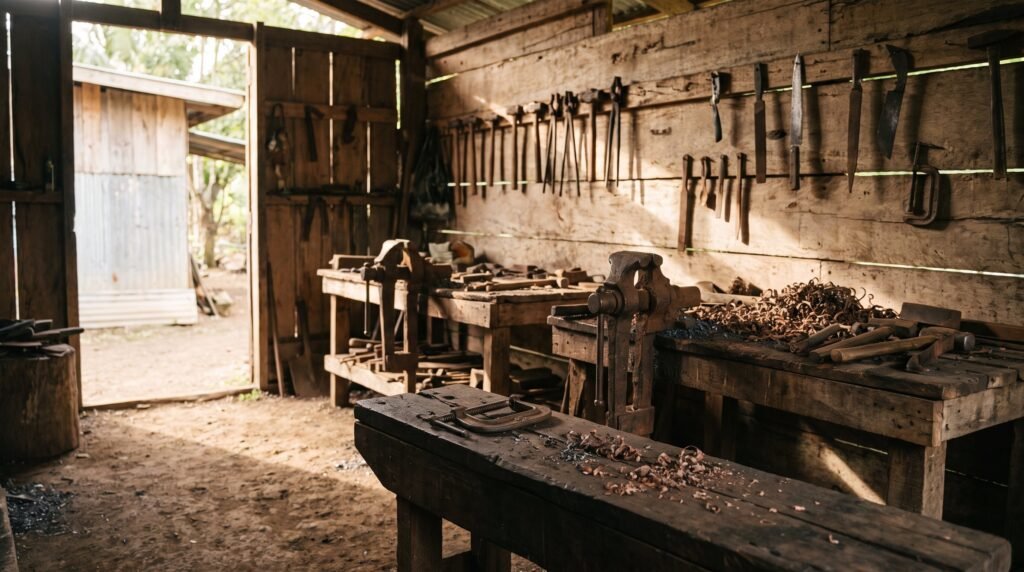
Barangay Balisong, Taal: Where the Butterfly Knife Was Born
Drive along the old highway through Taal, Batangas, and you will pass a stretch of roadside shops with blades glinting in glass cases. This is Barangay Balisong: a village so tied to the knife that the two share a name. Together with the neighboring barangay of Pandayan (from panday, the Tagalog word for blacksmith), it has long been the heart of Filipino balisong making, and Taal itself is often called the balisong capital of the Philippines.
Perfecto de Leon and the Early 1900s
Local tradition credits a craftsman named Perfecto de Leon with establishing balisong production in Taal in the early 1900s. Early makers were resourceful: blades were commonly ground from whatever high-carbon steel could be found, including worn vehicle leaf springs, bearing steel, and even steel salvaged from railroad tracks. Handles were built up from brass channels and inlaid with carabao (water buffalo) horn, horse bone, or native hardwood. From that starting point, the craft spread through the town household by household, and balisong making became a livelihood handed down through generations of Batangueño families.
Where the Name “Balisong” Comes From
There are two popular explanations for the name. The first is geographic: the knife is simply named after Barangay Balisong, the village that made it famous. The second is linguistic: many Filipinos will tell you it comes from baling sungay, usually translated “folding horn,” sometimes rendered “broken horn,” a nod to the carabao and deer horn traditionally used for the handle inserts. Historians consider the second story charming but unproven, which is fitting for a knife that has always carried a bit of folklore in its handles.
Did the Balisong Really Start in the Philippines?
Some researchers point to a French measuring tool called the pied du roi (“foot of the king”), which used a similar two-handle folding design and appeared in Europe sometime between the 1500s and the late 1700s. Whether that design ever reached Philippine shores is unclear, and hard evidence is thin. What no one disputes is this: the balisong as the world knows it, larger, faster, built as a working blade rather than a ruler, was perfected in Batangas. The Philippines did not merely adopt the butterfly knife; it defined it.
The Veinte y Nueve: The Original “29”
In Batangas, the classic balisong is nicknamed the veinte y nueve, Spanish for twenty-nine. The most practical explanation is that the traditional knife measures about 29 centimeters, or roughly 11 inches, when fully opened. Local legend offers a more colorful version: a Batangueño who, cornered by attackers, supposedly defeated twenty-nine of them with his balisong. Whichever story you prefer, the 29 cm proportion became the benchmark, and full-size handmade balisongs today still echo that classic geometry.
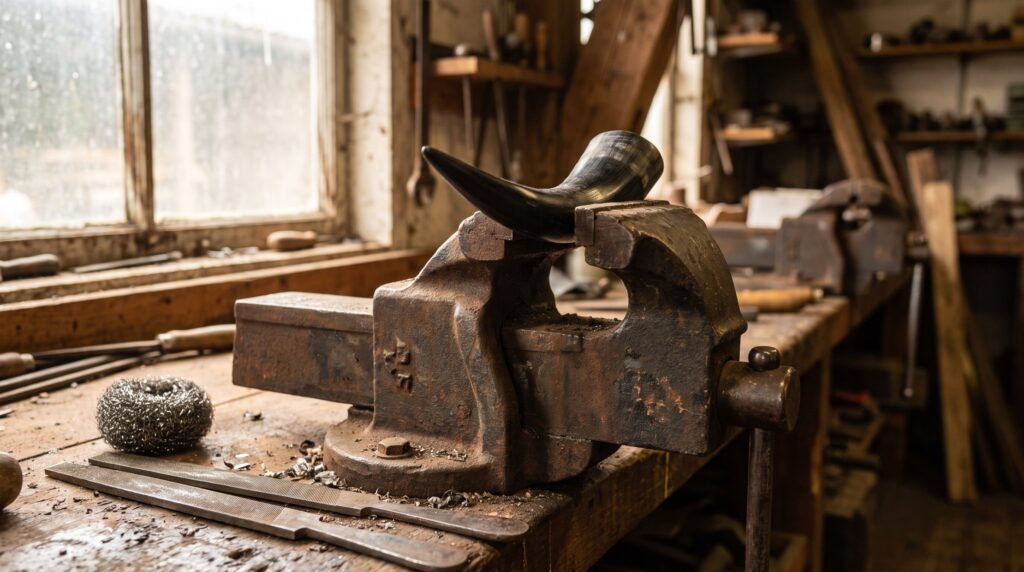
How a Traditional Batangas Balisong Is Made
A genuine Batangas-style balisong is the opposite of an assembly-line product. Each knife passes through one pair of skilled hands after another, and many of the steps have not fundamentally changed in a hundred years:
- Forging and grinding the blade. The maker shapes the blade from high-carbon or tool steel, heat-treats it, then grinds and polishes the bevels by eye and by feel.
- Building the handles. Traditional handles are channel-style: brass, steel, or copper frames that cradle the blade, fitted with inserts of horn, bone, stag, or hardwood.
- Fitting the pivots. This is the soul of the craft. The pivot holes are drilled and pinned so the handles swing freely but close on the blade without wobble: a tolerance achieved by hand-fitting, not by machine presets.
- Finishing. The latch is fitted, the inserts are shaped and polished, and the knife is tuned until it opens with the smooth, weighty flip that Batangas blades are known for.
Because every step is manual, no two handmade balisongs are identical. Grain patterns in the horn, the file work on a bolster, the exact balance in the hand. These small differences are the signature of the individual panday, and they are exactly what mass production cannot copy.
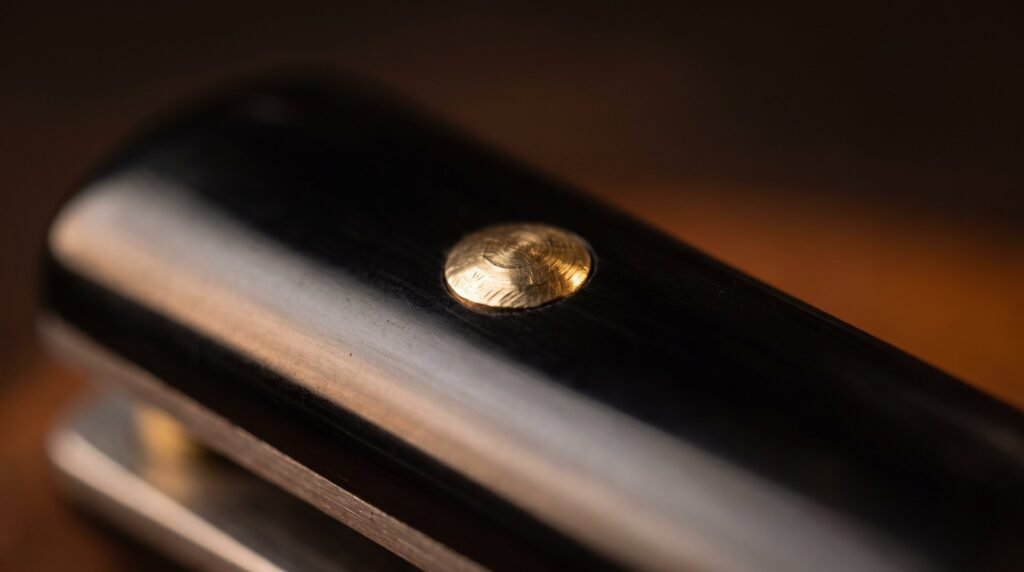
How to Identify an Authentic Batangas Balisong
With factory-made butterfly knives flooding the market, knowing what to look for protects both your money and the tradition. Hallmarks of an authentic handmade Filipino balisong include:
- Channel-style handles milled or built as solid frames, rather than thin sandwich liners held by machine screws.
- Natural materials: carabao horn, bone, stag, mother of pearl, or native hardwood inserts instead of molded plastic.
- Pinned construction: traditional makers peen brass or steel pins rather than relying on hex hardware throughout.
- Hand-ground blades with slight, honest asymmetries in the grind lines, evidence of freehand work, not CNC uniformity.
- Classic proportions in the spirit of the veinte y nueve, with a weighty, balanced feel in the hand.
- Individual character: file work, engraving, or fitted bolsters that vary from knife to knife.
| Feature | Handmade Batangas-style balisong | Mass-produced butterfly knife |
|---|---|---|
| Construction | Hand-fitted, pinned channel handles | Machine-assembled screwed liners |
| Materials | Horn, bone, stag, hardwood, brass | Plastic scales, generic alloys |
| Blade | Hand-ground carbon, D2, 440C, or Damascus steel | Stamped budget stainless |
| Uniqueness | Every knife slightly different | Thousands of identical units |
| Who made it | A named craft tradition, often family workshops | An anonymous production line |
You can see these hallmarks across our collection of authentic Filipino balisong knives, where every piece is handmade in the Batangas tradition rather than pulled from a production line.
The Batangas Balisong Tradition Today
Balisong making remains a living craft. In Taal, roadside workshops still forge and fit knives the old way, and the balisong has become a celebrated symbol of Batangueño identity: the same province, incidentally, that is famous for the embroidered barong Tagalog. Outside the Philippines, collectors increasingly seek out handmade Filipino-pattern balisongs precisely because they carry that heritage.
Our own catalog reflects the range the tradition has grown into. Classic entry points include the BF-01 Bullet Ant, a 440C original Filipino balisong (currently $151.25) and the BF-02 Argentine Ant (currently $110). At the collector end sit pieces like the handmade Damascus steel balisong with black horn handle (currently $275) and the Damascus balisong with mammoth tooth inserts (currently $549.45), patterned steel and natural materials, fitted by hand with a leather sheath, just as the tradition demands. You can browse the full range in our balisong shop, explore the Damascus steel balisong collection, or have a blade engraved as a one-of-a-kind personalized butterfly knife. If the wider world of Filipino blades interests you, the balisong sits alongside a rich family of traditional Filipino weapons.
Owning a Batangas Balisong: Care and Legality
A handmade balisong rewards a little maintenance. Carbon and Damascus steels want a light film of oil to prevent rust, natural horn and bone prefer stable humidity, and the pivots stay smooth with an occasional drop of lubricant. Our knife care guide walks through cleaning, oiling, and safe handling step by step.
A note on the law: butterfly knife regulations vary widely. In the United States, some states restrict carrying or possessing balisongs, while others treat them like any other folding knife, and rules can differ even between cities. Always check your local, state, and national laws before purchasing or carrying a balisong. Nothing in this article is legal advice. When in doubt, treat your balisong as a collectible kept at home. Practical shipping and ownership questions are also covered in our shop Q&A.
Philippines Balisong, Batangas Knife, Butterfly Knife: One Knife, Three Names
People search for “balisong Philippines”, “Philippines balisong”, “Batangas knife” and “butterfly knife Philippines”, and every one of those phrases is pointing at the same object. There is no separate Philippines balisong pattern sitting on a shelf next to a Batangas one. Batangas is the province, Taal is the town, balisong is the knife itself, and butterfly knife is what the rest of the world started calling it after the pattern left the country in soldiers’ pockets.
The distinction that actually matters is not the name on the listing. It is whether a person ground the blade. A butterfly knife from the Philippines built in a family workshop in Taal and a “Philippine style” balisong stamped out by the thousand share a silhouette and nothing else: not the steel, not the pivot fit, not the way the handles sit when you close it. We make the first kind. We are not neutral about the second.
| What people type into Google | What they are actually after |
|---|---|
| Balisong Philippines / Philippines balisong | A balisong genuinely made in the Philippines, in practice almost always Batangas |
| Batangas knife / Batangas balisong | The traditional Filipino pattern from Batangas province |
| Butterfly knife Philippines | The same knife under its Western name |
| Veinte y nueve | The 29 cm full size classic |
If you want the longer version of how the pattern travelled, we wrote that up separately in the history of the balisong.
Frequently Asked Questions
Why is the balisong called a Batangas knife?
Because the knife’s manufacturing heartland is Batangas province in the Philippines. The town of Taal, particularly Barangay Balisong and neighboring Pandayan, has produced handmade balisongs since the early 1900s, so the knife and the province became synonymous.
What does “veinte y nueve” mean?
It is Spanish for “twenty-nine,” the local nickname for the classic full-size balisong, which measures about 29 cm (roughly 11 inches) when opened. A popular legend also ties the name to a folk hero said to have fought off twenty-nine attackers.
Are balisongs still made by hand in Batangas?
Yes. Family workshops in and around Taal continue to forge, grind, and hand-fit balisongs, and roadside blade shops remain a fixture of Barangay Balisong. The craft is still commonly passed down within families.
How can I tell if a balisong is authentic and handmade?
Look for hand-fitted channel handles, pinned rather than fully screwed construction, natural materials like horn, bone, stag, or hardwood, and hand-ground blades with individual character. Mass-produced knives are identical unit to unit; handmade balisongs never are.
Are butterfly knives legal to own?
It depends on where you live. Some U.S. states and many countries restrict balisong possession or carry, while others allow ownership with few limits. Always check your local and state laws before buying or carrying one; this article is not legal advice.
How much does a handmade Filipino balisong cost?
In our shop, handmade Filipino-pattern balisongs currently start at around $110 for classic 440C models and range up to about $549 for Damascus steel pieces with premium materials such as mammoth tooth inserts. Prices vary with steel, handle materials, and the handwork involved.
Where in the Philippines does the balisong come from?
Batangas province, and specifically the town of Taal. Barangay Balisong and neighbouring Pandayan have been the centre of the craft since the early 1900s. A Philippines balisong that cannot trace itself back to that area is usually a copy of the pattern rather than a product of it.
Is a butterfly knife the same thing as a Philippines balisong?
Yes. Butterfly knife is simply the Western name for the balisong. Searches for balisong Philippines, Philippines balisong and butterfly knife Philippines all describe the same folding knife with two rotating handles that originated in Batangas.