Blog
A quality butterfly knife costs between $100 and $550 in 2026. Mass-produced imports sell for under $50, but they cut corners on steel, fit, and safety. Genuine handmade balisongs, the kind built in the Filipino tradition, start at around $109 for a 440C or VG10 blade and climb to about $549 for a Damascus steel piece with exotic handle materials like mammoth tooth. Where your money goes at each level is what this guide breaks down.
- A quality butterfly knife costs $100–$550 in 2026; sub-$50 knives are mass-produced imports with unserviceable pinned construction.
- Genuinely handmade balisongs start at around $109.45 for a 440C or VG10 blade.
- The sweet spot for a first real balisong is $110–$180. Honest steel and construction that lasts decades.
- Premium Damascus pieces with exotic handles like mammoth tooth reach $549.45.
- Blade steel is the single biggest price factor. Moving from 440C to Damascus can double or triple the price.
As makers of handmade balisongs rooted in the Batangas tradition, we currently list 159 knives priced from $109.45 to $549.45, so the numbers below come from real, live pricing. Not guesswork. We’ll also look at the sub-$50 market honestly, because knowing why a knife is cheap matters just as much as knowing why one is not.
Butterfly Knife Price at a Glance
| Price Tier | What You Get | Who It’s For |
|---|---|---|
| Under $50 | Mass-produced imports: mystery stainless steel, pinned or loose pivots, cast zinc-alloy handles, blade play out of the box | Trainers and throwaway novelty pieces |
| $100–$250 | Handmade entry point: 440C, high carbon, or VG10 blades, real horn/wood/micarta handles, hand-fitted pivots, leather sheath | First serious balisong, everyday collectors |
| $250–$550 | Premium handmade: Damascus or hand-forged D2 blades, engraved brass or copper bolsters, stag, black horn, or mammoth tooth handles | Collectors, gifts, heirloom pieces |
Factory production balisongs from large Western brands occupy their own lane. Typically $150 to $600 for machined titanium and channel-milled handles, but this guide focuses on the traditional handmade market, where the balisong was born. If you want the backstory, read our history of the balisong, which traces the knife to Batangas province in the Philippines.
Under $50: Why Mass-Produced Butterfly Knives Are So Cheap
Walk through any flea market or budget import site and you’ll find butterfly knives for $15 to $40. They’re cheap for predictable reasons:
- Unnamed “stainless steel” blades. Usually a soft, low-carbon stainless that won’t hold an edge and may arrive with an uneven grind.
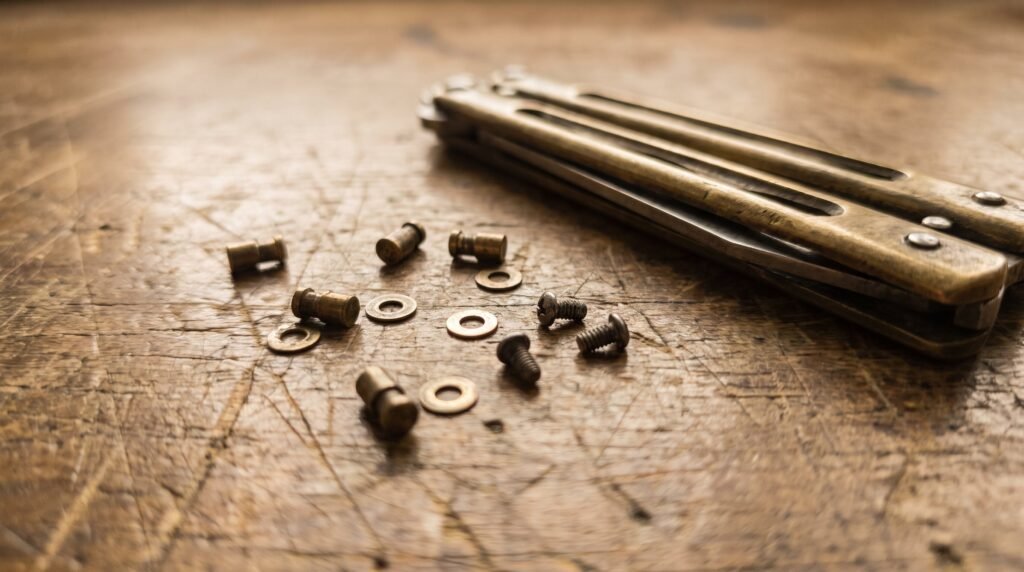
- Pinned construction. The handles are riveted rather than screwed, so you can’t adjust or service the pivots. When they loosen, and they will: the knife is done.
- Cast zinc-alloy or skeletonized steel handles. These crack under the repeated impact of flipping.
- No quality control. Blade play, off-center blades, and latches that rattle or bite are common straight out of the box.
None of this makes a cheap trainer “wrong”: a $30 blunt trainer is a sensible way to learn basic aerials without cutting yourself. But as a knife, a sub-$50 balisong is a short-term purchase. The handles loosen, the tang pins wear, and there’s no way to tighten anything back up. If you plan to actually own and use a butterfly knife for years, the honest entry point sits at around $100.
$100–$250: The Handmade Quality Entry Point
This is the heart of the handmade balisong market, and it’s where most of our own catalog lives. In our current lineup, nearly half of all knives (72 of 159) fall between $109 and $150, and another 74 sit between $150 and $250. At this level you’re paying for things a factory line can’t replicate:
- Named, proven blade steels. 440C, high carbon steel, and VG10, each hardened and ground by hand.
- Hand-fitted pivots. Each handle is fitted to its own blade, so the knife opens smoothly without the slop common in mass production.
- Natural handle materials. Horn, hardwood, and bone rather than cast alloy.
- A leather sheath included, which is rarely the case with factory knives at any price.
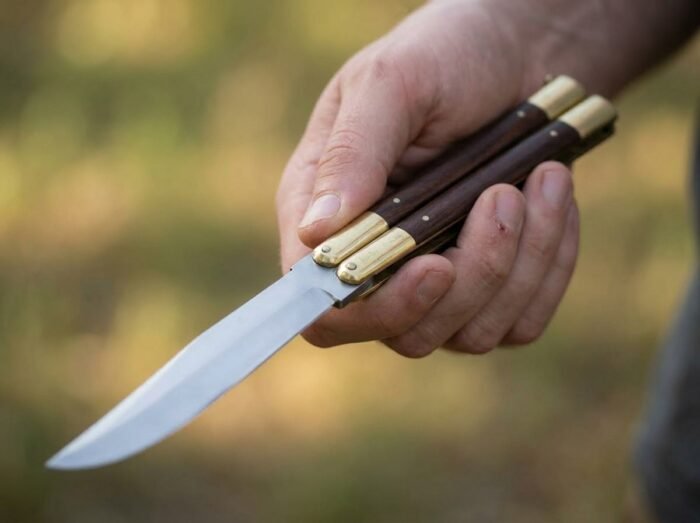
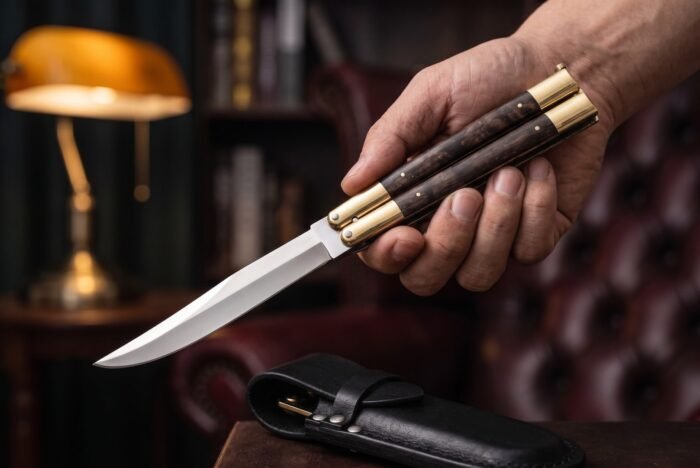
Two real examples from our shop: the BF-42 Falcon with a VG10 blade is currently $109.45. About the least you can pay for a genuinely handmade balisong, while the BF-129 Damascus tanto with a stag horn handle comes in at $154, showing that even Damascus steel becomes reachable in this tier. You can browse the full range in our authentic Filipino balisong collection.
For a first “real” butterfly knife, $110–$180 is the sweet spot: you get honest steel and construction that can be maintained and re-tightened for decades, without paying for exotic materials you may not value yet.
$250–$550: Premium Damascus, Exotic Handles, and Collector Pieces
Above $250, the price is driven less by function and more by material rarity and hours of handwork. In our catalog, 13 knives occupy this tier, and each one earns its price tag in a visible way:
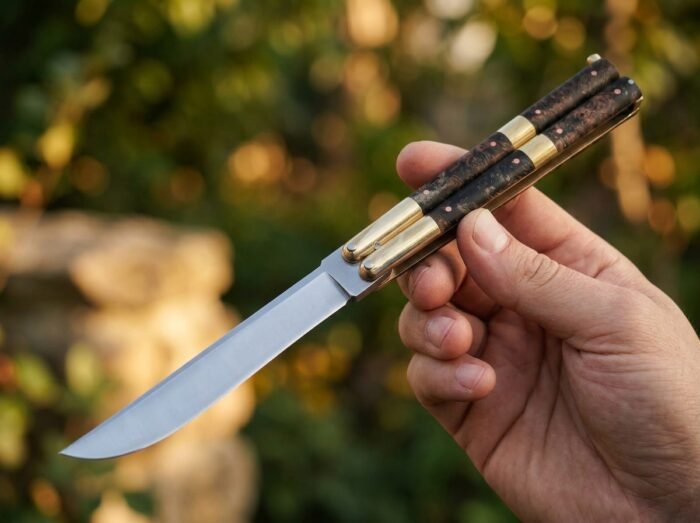
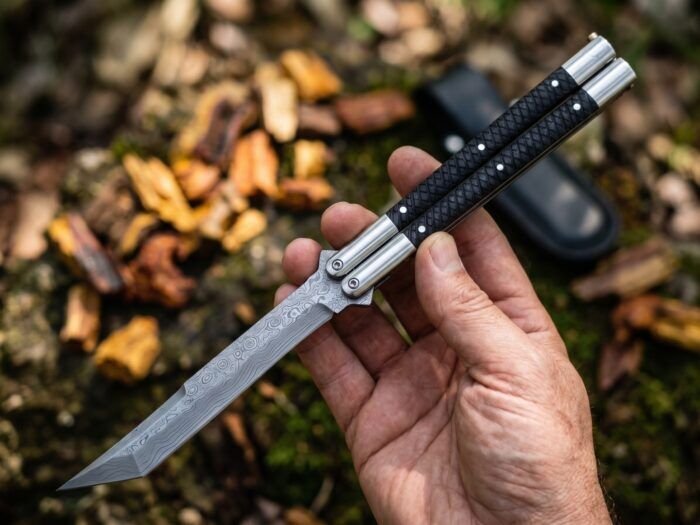
BF-162 Damascus steel balisong
$275
The BF-162 Damascus steel balisong with black horn and Damascus bolsters.
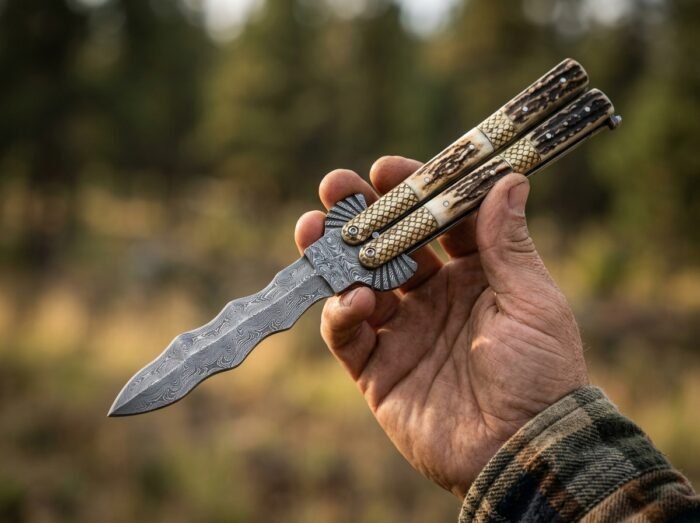
BF-149 hand-forged D2 snake blade
$357.50
The BF-149 hand-forged D2 snake blade with engraved brass bolsters and a snake-shaped leather sheath.
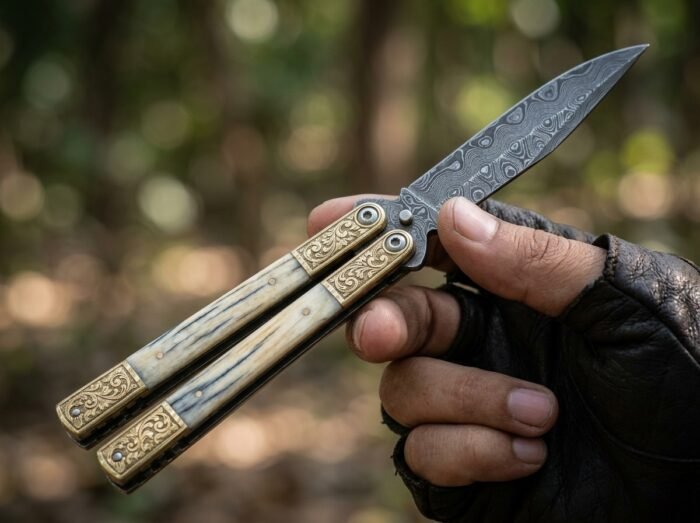
BF-142 Damascus double-edge balisong
$549.45
The BF-142 Damascus double-edge balisong with a mammoth tooth handle: the most expensive knife we make.
Pattern-welded Damascus steel is forge-welded from dozens. Sometimes hundreds. Of alternating steel layers before grinding even begins, and materials like fossilized mammoth tooth or stag horn are finite. No two handles are the same. These are the pieces people buy as milestone gifts and heirlooms. If that’s the direction you’re leaning, our Damascus steel balisong collection is the place to start.
What Actually Drives Butterfly Knife Price?
Blade steel
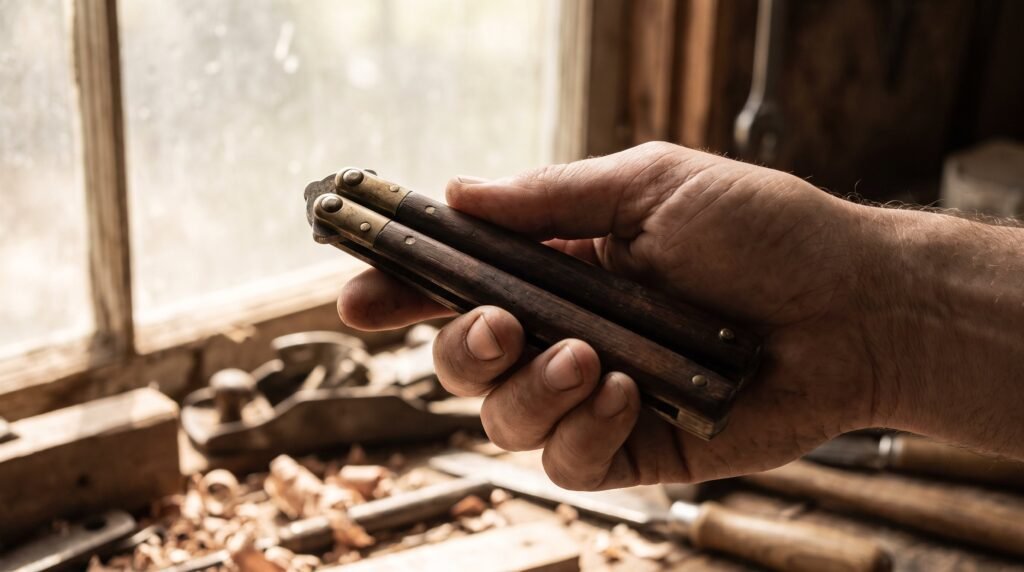
Steel is the single biggest price factor. As a rough ladder, from accessible to premium: 440C (tough, stain-resistant, easy to sharpen), high carbon steel (aggressive edge, needs oiling), VG10 (refined Japanese cutlery steel), D2 (semi-stainless tool steel with excellent wear resistance), and Damascus (pattern-welded layers, prized for both performance and appearance). Moving from 440C to Damascus can double or triple the price of an otherwise similar knife.
Handle materials and bolsters
At the budget end, handles are cast alloy. Handmade balisongs use rosewood, wenge, micarta, stag horn, black horn, camel bone, or. At the very top. Fossilized mammoth tooth. Engraved brass, copper, or steel bolsters add machining and engraving hours. Handle material is often what separates a $150 knife from a $300 one with the same blade steel.
Handmade construction versus factory production
A factory balisong is assembled from interchangeable machined parts. A handmade balisong in the Batangas tradition is built as a single unit: the blade is forged or ground, then the handles are fitted to that specific blade until the action is smooth and the lockup is solid. That labor is the reason a handmade knife can’t cost $30, and also the reason it can be serviced and passed down. It’s the same logic behind other traditional Filipino weapons: the maker’s time is the product.
Extras: sheaths, engraving, and personalization
A fitted leather sheath, file-worked spines, engraved bolsters, and custom touches all add cost. Personalized engraving is one of the best-value upgrades. It turns a knife into a gift, and you can see how that works on our personalized butterfly knives page.
How to Pick the Right Price for You
- Learning to flip? Start with an inexpensive blunt trainer, then upgrade to a live blade once your hands know the basics.
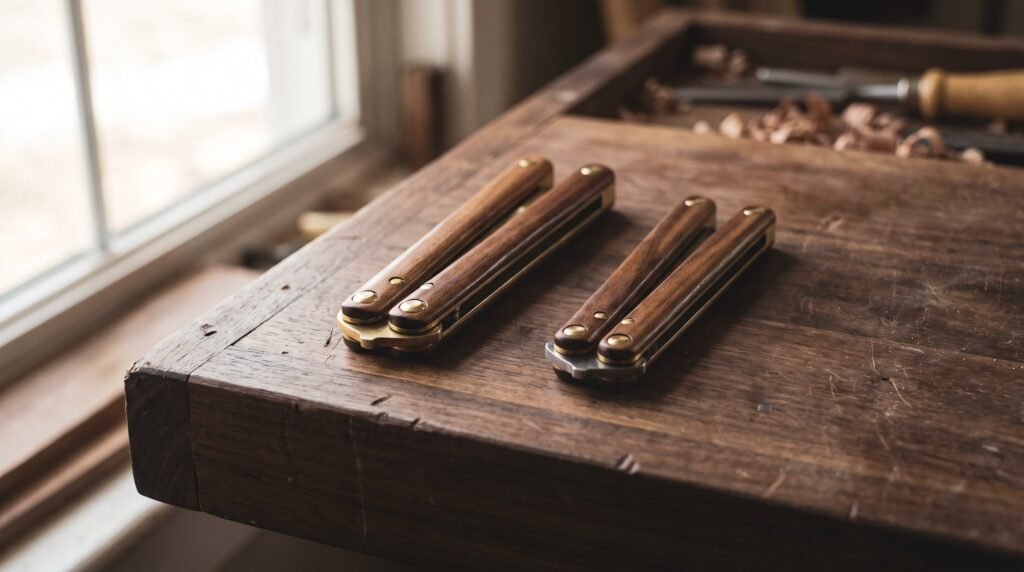
- First real balisong? Budget $110–$180 for a handmade 440C or VG10 knife. It will outlast any number of $40 imports.
- Buying a gift or collector piece? $250–$550 buys Damascus steel and handle materials nobody else will have.
Whatever you spend, protect it: a few minutes of oiling and pivot care per month keeps a handmade knife working for a lifetime. Our knife care guide covers the routine. And before you buy anywhere, check your local laws. Butterfly knife ownership and carry rules vary widely by state, country, and even city, and it’s your responsibility to confirm what’s legal where you live. If you’re unsure how ordering works, our shop Q&A answers the common questions.
Butterfly Knife Price FAQ
How much does a real butterfly knife cost?
A genuine handmade butterfly knife costs roughly $100 to $550. Our own catalog of 159 handmade balisongs runs from $109.45 to $549.45, with the largest selection between $110 and $250. Anything much cheaper is almost always mass-produced with unserviceable pinned construction.
Why are some butterfly knives under $50?
Sub-$50 knives are factory imports made with soft unnamed steel, cast alloy handles, and riveted pivots that can’t be adjusted. They’re fine as disposable trainers, but they loosen quickly and can’t be repaired, so the low price reflects a short lifespan.
Are Damascus butterfly knives worth the price?
If you value appearance and rarity, yes. Damascus blades are forge-welded from many layers of steel, so every blade carries a unique pattern, and prices reflect the added forge time. Handmade Damascus balisongs start around $154 in our shop and reach $549 with exotic handles.
What is a good price for a first butterfly knife?
Plan on $110–$180 for a handmade knife in 440C, high carbon, or VG10 steel. That gets you a serviceable, adjustable knife with real handle materials and a sheath: a tool you keep, rather than a toy you replace.
Are butterfly knives legal to buy?
Laws vary significantly by country, state, and city. Some places allow ownership but restrict carry, others restrict blade length or sales. Always check your local laws before purchasing or carrying a butterfly knife; nothing in this guide is legal advice.
What makes handmade balisongs more expensive than factory ones?
Labor. Each handmade balisong is forged, ground, fitted, and finished as a one-off, in the tradition that began in Batangas, Philippines. You pay for maker hours and natural materials instead of production-line volume, and you get a knife that can be maintained indefinitely.
Disclaimer: Knife laws differ by jurisdiction. Verify that purchasing, owning, and carrying a butterfly knife is legal in your area before ordering. Handle all live blades responsibly.
Ready to compare real prices side by side?
Browse the full balisong butterfly shop. Every knife is handmade, priced honestly, and shipped within the USA.
Related guides
Current prices for every knife are on our balisong knives page, so check there before you decide.