
Blog
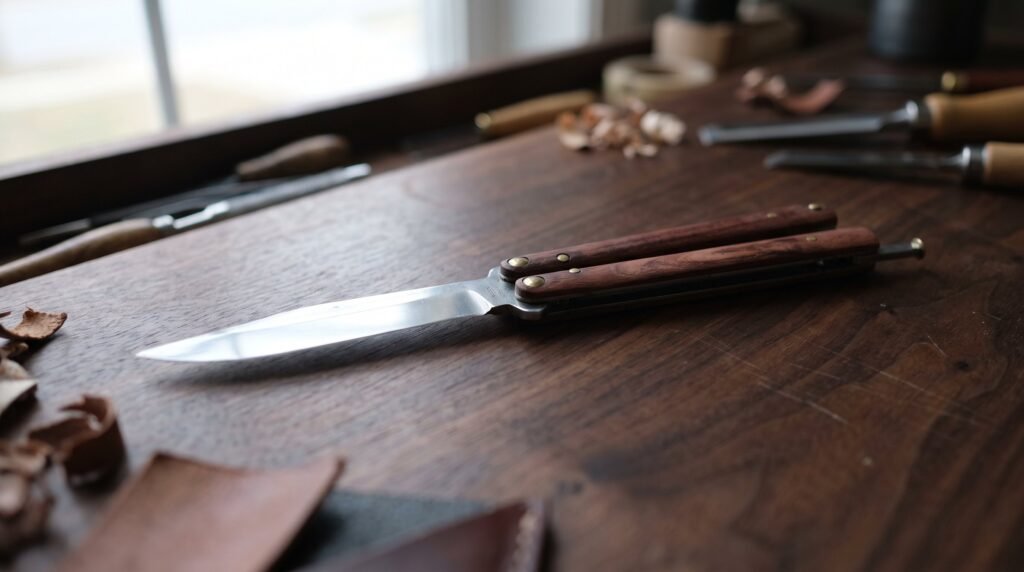
The best steel for a butterfly knife depends on how you use it: D2 tool steel offers the best mix of edge retention and value for flippers who actually cut with their knives, 440C stainless is the easiest-care choice for beginners and humid climates, and hand-forged Damascus is the pick for collectors who want a one-of-a-kind blade with real character. VG10 sits between 440C and D2 as a refined all-rounder, while plain high carbon steel rewards traditionalists who don’t mind a little maintenance. Below, we compare all five steels the way a Batangas bladesmith would, by how they behave in a working balisong, not just on a spec sheet.
Butterfly Knife Steel Comparison Table
| Steel | Edge Retention | Corrosion Resistance | Ease of Sharpening | Toughness | Typical Price (our handmade balisongs) | Best For |
|---|---|---|---|---|---|---|
| D2 | Excellent | Good (semi-stainless) | Harder, diamond or ceramic stones help | Good | Roughly $120–$360 | Flippers and EDC users who cut often |
| Damascus | Very good (depends on core steels) | Moderate, needs oiling | Moderate | Very good | Roughly $150–$550 | Collectors, gifts, heirloom pieces |
| 440C | Good | Excellent | Easy | Good | Roughly $110–$250 | Beginners, humid climates, low maintenance |
| VG10 | Very good | Very good | Moderate, takes a razor edge | Moderate | Roughly $109–$179 | All-rounders who want a fine, stainless edge |
| High Carbon | Good | Low, will patina and can rust | Very easy | Excellent | Varies by build | Traditionalists who enjoy blade upkeep |
Prices above reflect current listings in our shop at the time of writing and can change with sales and availability. Every blade we sell is individually handmade in the Batangas tradition, so no two knives, or price tags. Are exactly alike. Browse the full range in our balisong butterfly shop.
Why Blade Steel Matters More in a Balisong
A butterfly knife lives a harder life than a normal pocket knife. It gets flipped for hours, handled constantly with sweaty palms, and. If you’re learning. Dropped on the floor more times than you’d like to admit. That changes what “best steel” means:
- Corrosion resistance matters more. Skin oils and sweat sit on the blade and pivot area every time you flip. A steel that shrugs off moisture saves you cleaning time.
- Toughness matters more. Drops onto concrete stress the edge and the tang. A brittle, over-hardened blade can chip where a tougher one just picks up a scuff.
- Edge retention matters if you actually cut. Pure flippers often use trainers, but if your live blade is also your working knife, wear resistance decides how often you’re at the sharpening stones.
- Heat treatment matters most of all. The same steel can behave very differently depending on who hardened and tempered it. This is where handmade knives from experienced smiths separate themselves from mass-produced factory blades that chase the lowest cost per unit.
Balisongs have been forged in Batangas, Philippines for generations. Long before modern “super steels” existed, and the local makers learned to get remarkable performance out of whatever steel they could source, from truck leaf springs to imported stainless. That craft knowledge is the real foundation of a good blade. You can read more about that lineage in our history of the balisong.
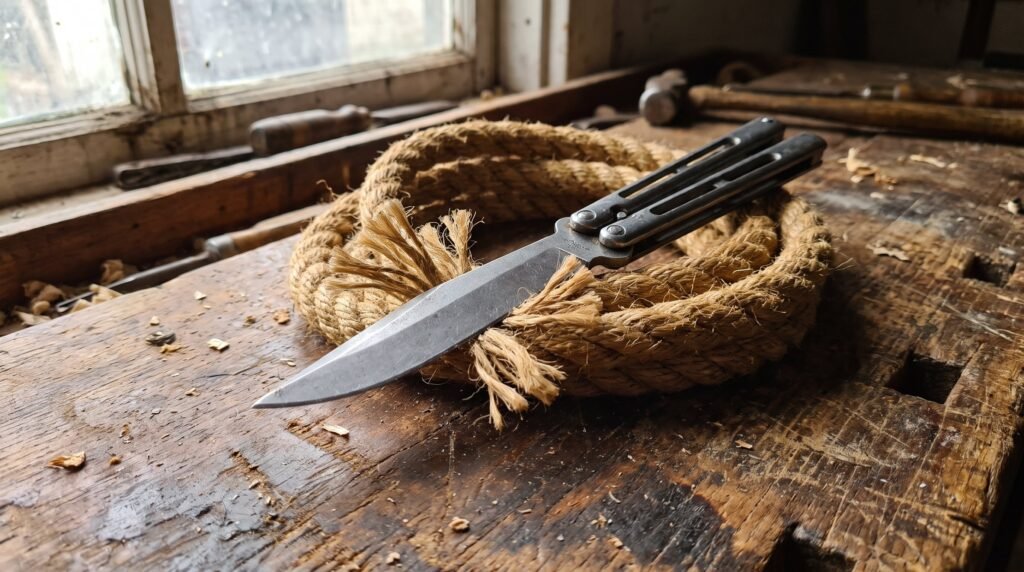
D2 Tool Steel: The Workhorse for Flippers Who Cut
D2 is an air-hardening tool steel originally developed for industrial dies. Machinery that stamps and cuts other metal all day. With around 1.5% carbon and roughly 12% chromium, it sits just below the threshold for true stainless steel, which is why knifemakers call it “semi-stainless.” Much of its chromium is tied up in hard carbides rather than free to fight rust, and those carbides are exactly what give D2 its outstanding wear resistance.
D2 strengths
- Excellent edge retention. Among the best of the steels in this comparison
- High hardness potential (commonly heat treated to around 58–62 HRC)
- Good enough corrosion resistance for everyday carry with basic care
- Proven, decades-old steel with predictable behavior when heat treated well
D2 trade-offs
- Slower to sharpen. Those wear-resistant carbides resist your stones too; diamond or ceramic abrasives make life easier
- Not fully stainless. Wipe it down after heavy handling and give it a light coat of oil in humid climates
- Can chip rather than roll if the heat treatment runs it too hard, so the maker’s skill matters
For a balisong that doubles as a genuine everyday cutting tool, D2 is hard to beat at its price. Our handmade D2 balisongs pair the steel with traditional handle materials. For example, the D2 balisong with stag and rosewood handle (BF-158), currently around $173, or the D2 tanto-blade balisong with stag and brass bolsters (BF-150) at around $275. Both come with a leather sheath, and each is ground and finished by hand rather than stamped out on a production line.
Damascus Steel: Performance With a Story in Every Layer
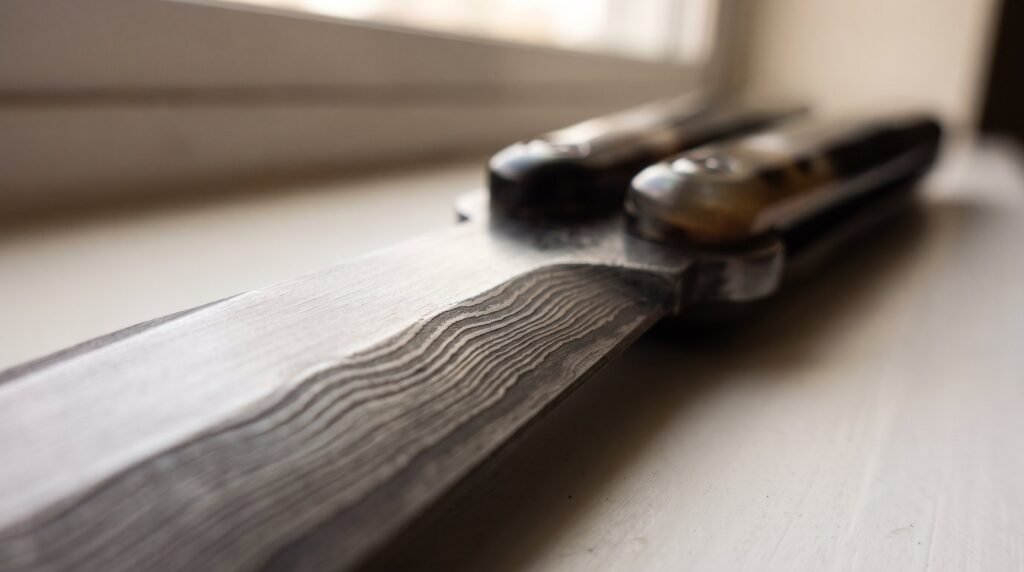
Modern Damascus is pattern-welded steel: a smith stacks alternating layers of two or more steels. Commonly a high carbon cutting steel with a nickel-bearing contrast steel. Then forge-welds, folds, and etches the billet to reveal the flowing pattern. Because every billet is folded by hand, no two Damascus blades ever share the same pattern. That makes a Damascus balisong as much a piece of functional art as a knife. To see how other smiths lay out their patterns, the Damascus knives at Ransack Viking are handmade in the Czech Republic and worth a browse.
Damascus strengths
- Unique, unrepeatable pattern on every single blade
- Very good toughness: the layered structure handles impact well
- Strong cutting performance when built around a quality high carbon core
- Heirloom and gift appeal that no factory finish can match
Damascus trade-offs
- Most hand-forged Damascus is carbon-steel based, so it needs regular oiling to prevent rust and preserve the etched pattern
- Performance varies with the steels and heat treatment used. Buy from makers who forge honestly, not from sellers of acid-etched “fake Damascus” patterns printed on plain stainless
- Genuine hand-forged blades cost more, reflecting the hours of forge work involved
Damascus is where handmade truly shows its value. Mass-produced knives cannot replicate the character of a hand-forged, hand-folded billet. Our Damascus steel balisong collection ranges from pieces like the Filipino traditional series Damascus tanto with stag horn handle (BF-129) at around $154, through the black horn Damascus balisong (BF-162) at around $275, up to showpieces like the double-edge Damascus balisong with mammoth tooth handle (BF-142) at around $549.
440C Stainless: The Classic Balisong Steel
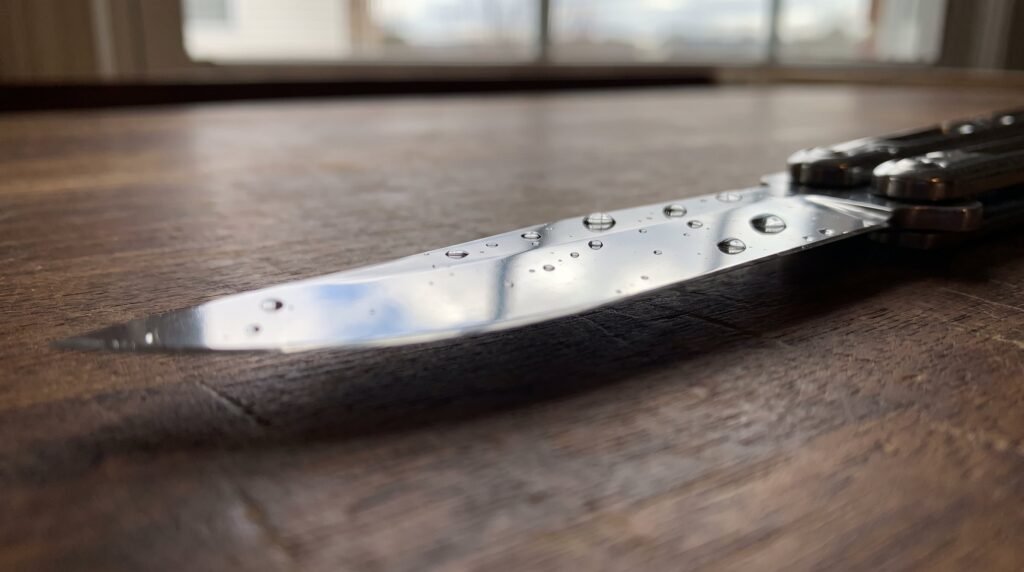
440C is a high-carbon martensitic stainless steel with roughly 16–18% chromium. Enough free chromium to make it genuinely stainless. It was considered a premium knife steel for decades and remains one of the most sensible choices for a balisong, especially a first live blade. It hardens to around 58–60 HRC, takes a clean edge quickly, and forgives the kind of neglect that would spot a carbon blade overnight.
440C strengths
- Excellent corrosion resistance. Ideal for sweaty flipping sessions and humid climates
- Easy to sharpen on ordinary stones; beginners can maintain it themselves
- Good balance of hardness and toughness for a knife that gets dropped during practice
- Among the most affordable entries into a genuine handmade balisong
440C trade-offs
- Edge retention is good, not great. Expect more frequent touch-ups than D2 or VG10 if you cut a lot
- Lacks the exotic appeal of Damascus or powder steels, if that matters to you
Our Original Filipino Balisong series includes several 440C models made in the traditional Batangas style, such as the Cockatoo 440C balisong (BF-24) at around $115 and the Chicken 440C balisong (BF-23) at around $165. You’ll find the full traditional lineup in our authentic Filipino balisong collection.
VG10: The Refined All-Rounder
VG10 is a Japanese stainless steel famous in the kitchen-knife world, with about 1% carbon, 15% chromium, and additions of cobalt, molybdenum, and vanadium. In a balisong it delivers a noticeably keen, fine edge with better retention than 440C and better corrosion resistance than D2: a genuine middle path.
- Edge: takes a razor-fine edge and holds it well for a stainless steel
- Corrosion: very good; comfortable as a low-maintenance carry
- Sharpening: moderate effort; responds beautifully to waterstones
- Caution: at high hardness (around 59–61 HRC) it prefers clean cutting over prying or hard impacts
Our VG10 models in the Original Filipino series, like the Goat VG10 balisong (BF-52) at around $122, keep the traditional Batangas format while giving you a modern Japanese cutting steel.
High Carbon Steel: The Traditionalist’s Choice
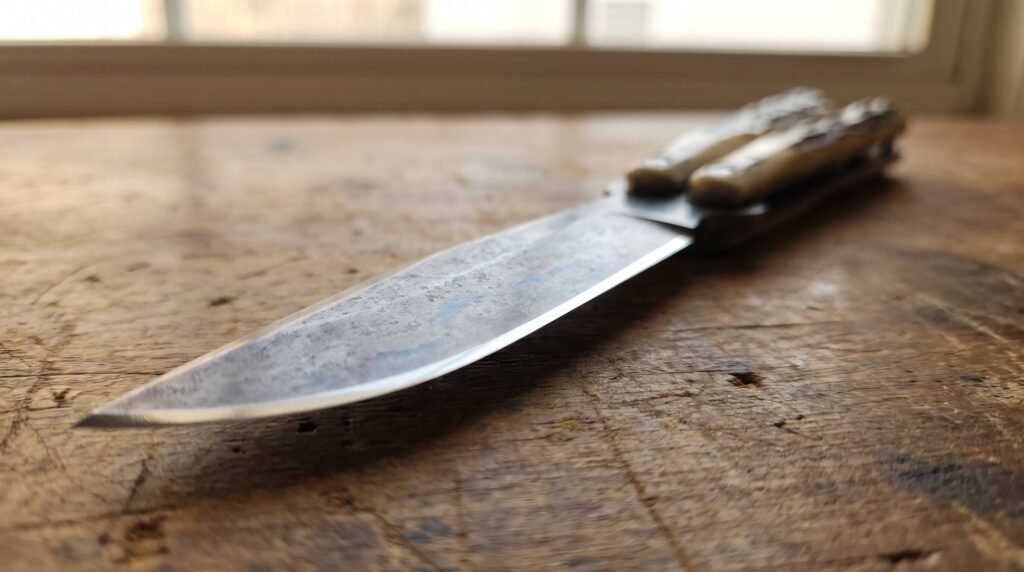
Before stainless steels reached the Philippines, Batangas smiths forged balisongs from plain high carbon steel. Often recycled from leaf springs and files. Steels in this family (like 1095 and its relatives) are tough, simple to sharpen to a wicked edge, and develop a grey patina with use that many owners love.
- Pros: excellent toughness, very easy sharpening, deep traditional roots, keen edges
- Cons: will rust if neglected; needs wiping and oiling after handling, especially near salt air or humidity
If you like the ritual of caring for a blade, and want a knife closest in spirit to the originals carried in Batangas. High carbon delivers. Explore our traditional Filipino weapons collection for pieces built in that older spirit.
Which Steel Should You Choose?
For beginners
Choose 440C. It’s forgiving, affordable, easy to sharpen, and won’t punish you for forgetting to oil it after a long flipping session.
For everyday carry and real cutting
Choose D2, or VG10 if you live somewhere humid. D2 holds its edge longest; VG10 gives up a little wear resistance for easier care and a finer edge.
For collectors and gifts
Choose Damascus. No two hand-forged blades are alike, and pieces with stag, horn, or mammoth tooth handles become family heirlooms. If it’s a gift, consider adding engraving through our personalized butterfly knives service.
For traditionalists
Choose high carbon or a carbon-core Damascus and embrace the patina. It’s how balisongs looked and aged for a century in Batangas.
Whatever Steel You Pick, Care Keeps It Sharp
Steel chemistry sets the ceiling, but maintenance decides how close you get to it. Wipe the blade after handling, keep the pivots clean and lightly lubricated, oil carbon and Damascus blades before storage, and never store any knife in a leather sheath long-term (leather traps moisture). Our knife care guide walks through the full routine for each steel type, and if you have a question we haven’t covered, ask us via the shop Q&A.
A note on legality: butterfly knife laws vary widely by country, state, and even city. Always check your local laws before purchasing or carrying a balisong. Nothing in this article is legal advice.
Frequently Asked Questions
What is the best steel for a butterfly knife overall?
There’s no single winner. D2 offers the best edge retention for the money, 440C is the easiest to maintain and sharpen, VG10 balances both, and hand-forged Damascus adds unmatched character and toughness. Match the steel to how you’ll actually use the knife: cutting, flipping, carrying, or collecting.
Is Damascus steel good for balisongs, or just for looks?
Genuine pattern-welded Damascus built on quality high carbon steel cuts and holds an edge very well and is notably tough. The caution is fake “Damascus”. Acid-etched patterns on cheap stainless. Common in mass-produced knives. Hand-forged Damascus from a real smith performs as good as it looks.
Does D2 steel rust on a butterfly knife?
D2 is semi-stainless: it resists corrosion far better than plain carbon steel but not as well as 440C or VG10. With a quick wipe-down after flipping and an occasional light coat of oil, a D2 balisong stays clean even with daily handling.
Is 440C steel good for a beginner’s first balisong?
Yes. It’s arguably the ideal first live blade. 440C is genuinely stainless, easy to sharpen on ordinary stones, tough enough to survive learning drops, and it keeps handmade balisongs at an accessible price point, with our 440C models starting around $110.
Which balisong steel is easiest to sharpen?
Plain high carbon steel is the easiest, followed closely by 440C. Both respond quickly to basic sharpening stones. VG10 takes moderate effort, and D2 is the slowest because its hard carbides resist abrasion; diamond or ceramic stones speed it up considerably.
Are butterfly knives legal to own?
It depends entirely on where you live. Some places allow ownership but restrict carry; others ban balisongs outright. Laws change, so always verify your current local, state, and national laws before buying or carrying a butterfly knife.