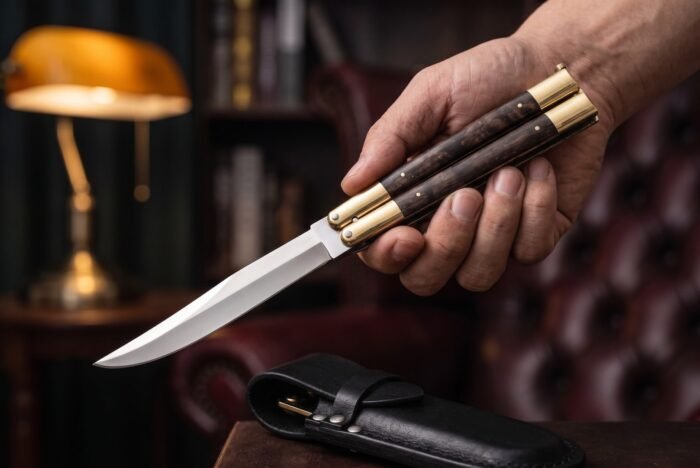
Blog
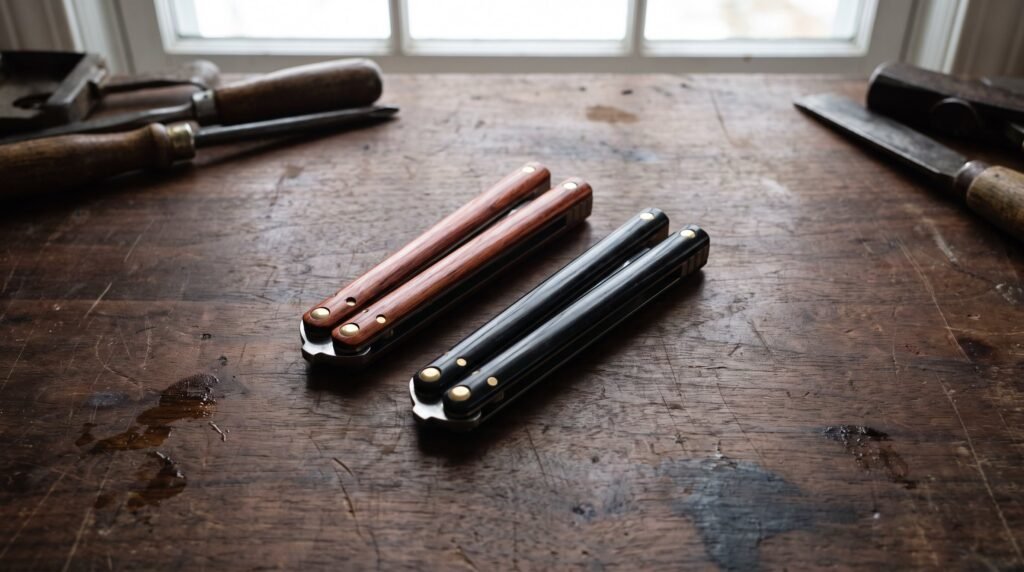
A balisong and a butterfly knife are the same knife. “Balisong” is the original Filipino name: a Tagalog word rooted in the province of Batangas, where these folding knives have been hand-forged for over a century. “Butterfly knife” is the nickname Western markets gave the same design, inspired by the way its two rotating handles open like a pair of wings. So when people search for balisong vs butterfly knife, the honest answer is that there is no difference in the knife itself. Only in the name, and in the story each name carries. That story, however, is worth knowing, because the name a maker uses often tells you a lot about where (and how) the knife was made.
If you are working out which blade shape to buy, we have a separate guide to butterfly knife blade types covering all eight shapes we make.
- Balisong and butterfly knife are two names for the exact same knife: a folder with two counter-rotating handles.
- “Balisong” is the original Tagalog name from Batangas, Philippines; “butterfly knife” is the 20th-century Western nickname.
- Traditional balisongs are individually hand-forged with natural materials; mass-produced butterfly knives are machined in identical factory batches.
- The distinction that really matters is trainer (blunt) vs live blade (sharpened). Beginners should always learn on a trainer.
- Balisong laws vary by country, state, and city. Always check current local regulations before buying or carrying one.
Balisong vs Butterfly Knife: The Short Answer
Both terms describe a folding pocket knife with two handles that counter-rotate around the tang of the blade. When closed, the handles conceal the blade completely; when opened. Often with the fast, fluid manipulations known as flipping: the handles lock together to form a solid grip.
- Balisong: the traditional Filipino name, used in the Philippines and by collectors who care about the knife’s heritage.
- Butterfly knife: the common English-language name, popularized in the United States and Europe in the 20th century.
- Batangas knife / fan knife / click clack. Regional and slang names for exactly the same design.
If you want the full origin story. From Batangas blacksmiths to Hollywood screens. Our detailed guide to the history of the balisong traces the whole journey.
Where the Word “Balisong” Comes From
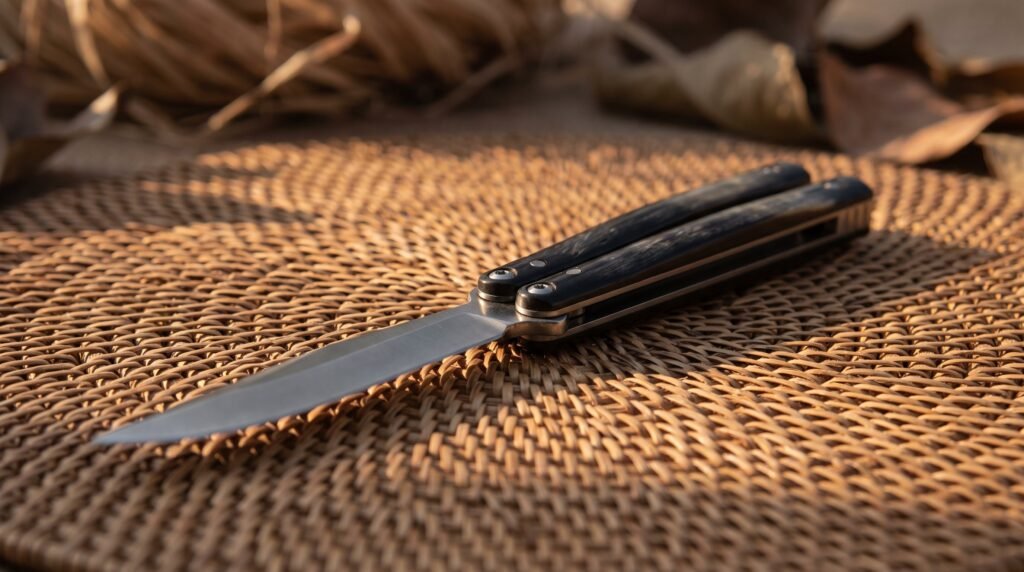
The etymology points straight back to Batangas, a province south of Manila that remains the heartland of Filipino bladesmithing. Two explanations are commonly given:
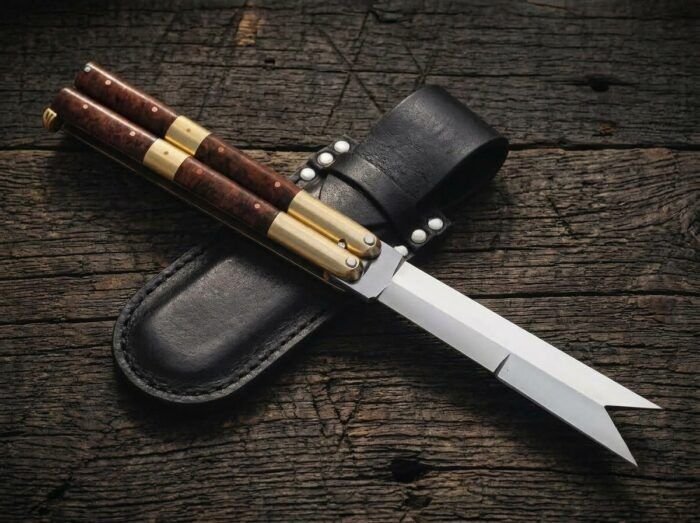
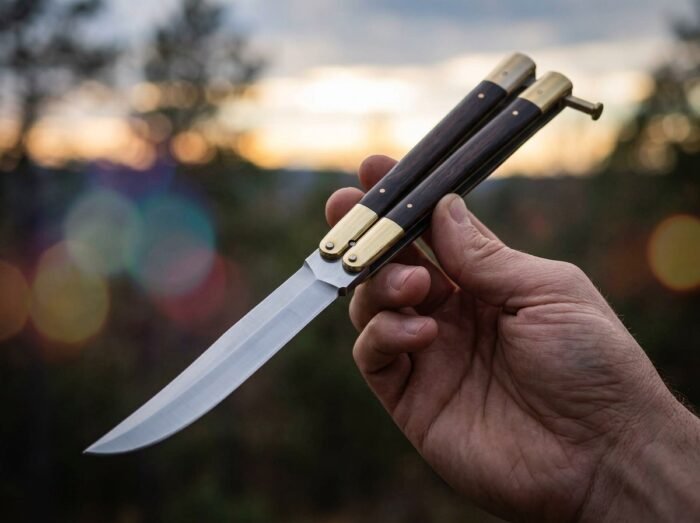
1. Barrio Balisong, Taal, Batangas
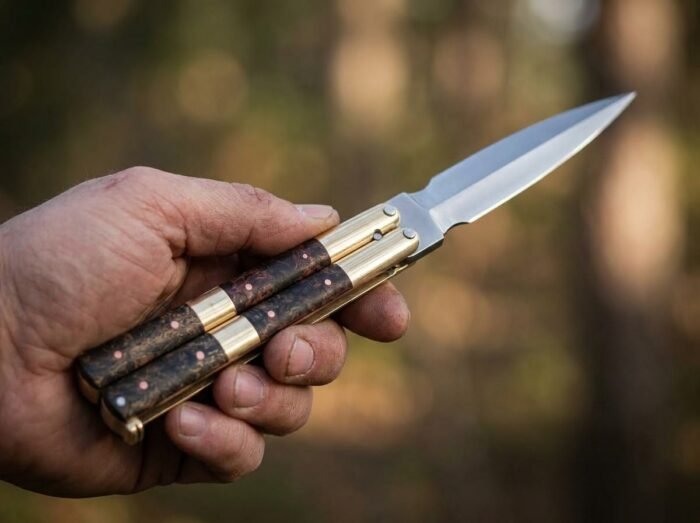
The most widely accepted account is that the knife takes its name from Barangay Balisong, a village in the town of Taal where generations of blacksmiths turned knife-making into a community craft. To this day, workshops in and around Taal produce balisongs by hand, and the knife is considered a cultural symbol of the province.
2. “Baling sungay”. Broken horn
A second, more folkloric theory holds that “balisong” comes from the Tagalog phrase baling sungay, meaning “broken” or “folding horn,” a nod to the carabao horn and bone traditionally used for the handles. Historians treat this version with more caution, but it survives because it describes something real: authentic Filipino balisongs really were, and often still are. Fitted with natural horn, bone, and native hardwood handles rather than machined aluminum.
Either way, the word is inseparable from Batangas. That is why the knife is also called the Batangas knife, and why a traditional full-size model. About 29 centimeters (11 inches) open. Is known locally by the Spanish-derived nickname veintinueve, “twenty-nine.”
Why the West Says “Butterfly Knife”
American servicemen stationed in the Philippines around the World War II era brought balisongs home, and the design needed an English name. “Butterfly knife” stuck for an obvious reason: watch a skilled flipper open one and the two handles flare and close like butterfly wings. Other English nicknames followed. “fan knife” for the fanning motion, and “click clack” for the unmistakable sound of the handles meeting.
By the 1980s, mass manufacturers in the United States, Japan, and later China were producing butterfly knives at industrial scale, and the English name came to dominate catalogs and search engines. The Filipino name never disappeared, though. Among collectors and in the flipping community, “balisong” is generally the preferred, more respectful term, precisely because it acknowledges where the knife comes from.
One Knife, Many Names
| Name | Origin | What it signals |
|---|---|---|
| Balisong | Tagalog / Batangas, Philippines | The original name; preferred by collectors and the Filipino community |
| Butterfly knife | United States, 20th century | The common Western market name for the same knife |
| Batangas knife | Philippines | Named for the province where the craft was born |
| Fan knife | English-speaking markets | Describes the fanning opening motion |
| Veintinueve (“29”) | Taal, Batangas | Local nickname for the traditional 29 cm full-size balisong |
| Click clack | Slang | Named for the sound of the handles tapping together |
Same Knife, But Not Always the Same Craftsmanship
While the two names describe one design, in practice they have drifted toward describing two very different markets:
Traditional balisongs
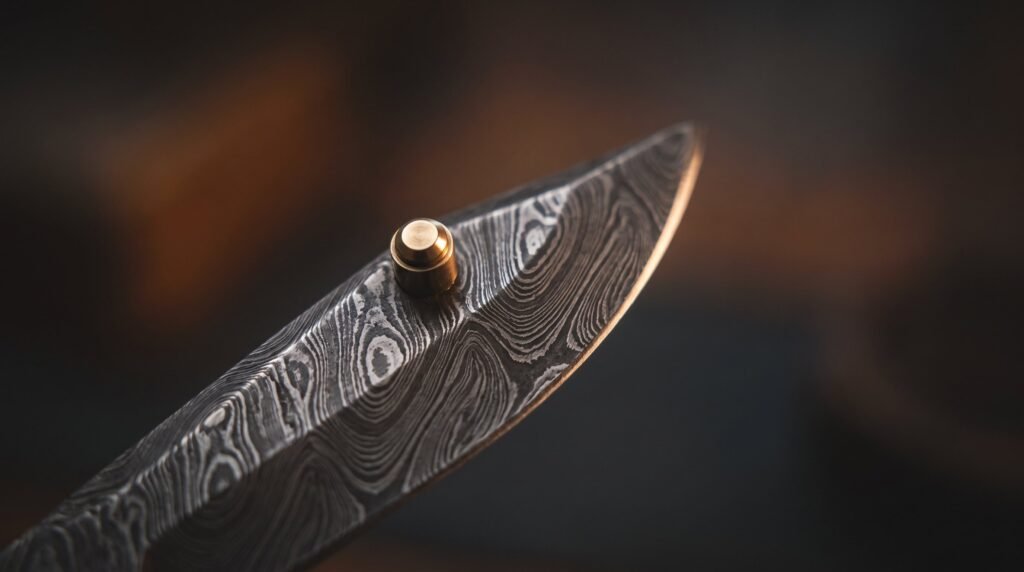
Individually hand-forged. A Batangas-style balisong is shaped, ground, fitted, and finished by a craftsman, typically with natural handle materials. Stag horn, carabao horn, rosewood, wenge, brass bolsters, and a blade of hand-worked carbon steel, D2 tool steel, or pattern-welded Damascus. No two are identical.
Mass-produced butterfly knives
Come off CNC machines in identical batches, usually with aluminum, titanium, or G-10 handles. They can be excellent flipping tools, but they are products of a factory, not of a bladesmithing tradition.
Neither is “wrong”. They simply serve different buyers. If what draws you to this knife is the Filipino heritage behind it, look for pieces made the traditional way. Our authentic Filipino balisong collection is built entirely around that handmade approach, and pieces like the Handmade Damascus Steel Balisong with Black Horn Handle (BF-162). Currently $275, down from $500. Show what the tradition looks like when it meets premium Damascus steel. For a hardwood take on the classic, the D2 Steel Balisong with Engraved Wenge Wood Handle (BF-161) pairs a tool-steel blade with hand-carved timber, and each knife ships with a leather sheath.
Trainer vs Live Blade: The Distinction That Actually Matters
If there is one genuinely important distinction in this world, it is not balisong vs butterfly knife. It is trainer vs live blade.
Balisong trainers
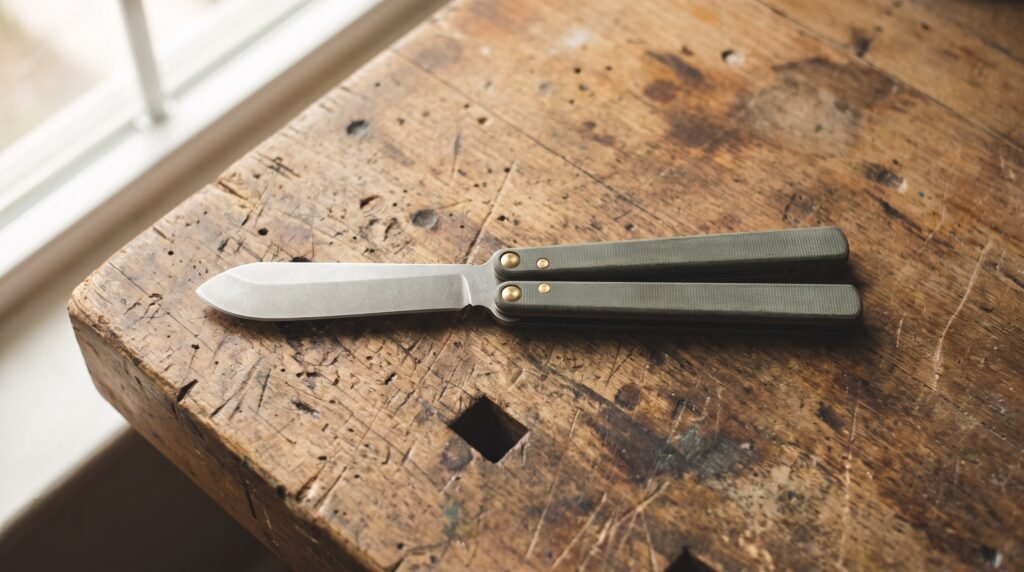
A trainer has a completely blunt, unsharpened “blade,” usually with visible cutouts or squared edges so it can never be mistaken for a weapon. Trainers exist so flippers can learn aerials, twirls, and rollovers without stitches, and in some jurisdictions they are legal where sharpened balisongs are restricted.
Live blades
A live blade is a real, sharpened knife: a working tool and a collectible. Traditional Batangas balisongs are live blades: they were made as everyday utility knives for farmers, fishermen, and tradesmen long before flipping became a hobby. A live blade demands respect, maintenance, and secure storage; our knife care guide covers how to keep a handmade balisong clean, oiled, and rust-free for decades.
Safety note: never attempt flipping tricks with a live blade until you have mastered them on a trainer, and always practice away from other people.
A Word on Legality
Balisong laws vary dramatically by country, state, and even city. In the United States, some states permit ownership, others restrict carry, and a few ban sharpened balisongs outright while allowing blunt trainers. Laws also change. Court decisions have overturned long-standing bans in recent years. Before purchasing or carrying any balisong, check the current laws in your state and municipality.
Nothing in this article is legal advice. Our shop Q&A page answers common ordering and shipping questions.
Which Name Should You Use?
Use whichever your audience understands, but if you care about the knife’s story, “balisong” is the word that honors it. The knife was born in Batangas workshops, named in Tagalog, and carried into the world by Filipino hands. Calling it a balisong keeps that lineage visible in a market crowded with factory-made lookalikes. Whether you are drawn to a classic stag-and-rosewood piece like the BF-158 D2 Steel Balisong, want a one-of-a-kind personalized butterfly knife engraved to order, or are exploring the wider family of traditional Filipino weapons, the handmade original is still being forged today. You can browse the full range in our balisong shop.
Own the Original, Not the Imitation
Every balisong in our collection is hand-forged in the Batangas tradition. Natural horn and hardwood handles, hand-ground blades, and a leather sheath with every knife.
Frequently Asked Questions
Is a balisong the same as a butterfly knife?
Yes. Balisong and butterfly knife are two names for the same folding knife with two counter-rotating handles. “Balisong” is the original Tagalog name from Batangas, Philippines; “butterfly knife” is the Western nickname inspired by the wing-like motion of the handles.
What does “balisong” mean in Tagalog?
The name most likely comes from Barangay Balisong in Taal, Batangas, the village where the craft flourished. A popular folk etymology also links it to the Tagalog phrase baling sungay (“broken/folding horn”), referring to the animal-horn handles used on traditional knives.
Why is it called a butterfly knife?
When the knife is opened, its two handles swing outward and back together like a pair of butterfly wings. American soldiers who encountered balisongs in the Philippines popularized the nickname, and Western manufacturers adopted it in their catalogs.
What is the difference between a balisong trainer and a live blade?
A trainer has a blunt, unsharpened blade designed purely for practicing flipping tricks safely. A live blade is a real sharpened knife. Beginners should always learn tricks on a trainer, and live blades should be handled as working tools, not toys.
Are balisongs legal to own?
It depends entirely on where you live. Some U.S. states allow ownership, some restrict carrying, and a few prohibit sharpened balisongs altogether. Laws change frequently, so always check the current regulations in your state and city before buying or carrying one.
How can I tell an authentic Filipino balisong from a mass-produced one?
Authentic Filipino balisongs are hand-forged individually, typically with natural handle materials such as stag horn, carabao horn, or native hardwoods, hand-ground blades, and small maker-to-maker variations. Mass-produced butterfly knives are machined in identical batches, usually with aluminum or titanium handles.